Ball pythons are reasonably low-maintenance snakes compared to many reptiles, but they do have specific environmental needs that directly affect their health, feeding behavior, and stress levels. If you’re setting up a tank for the first time or upgrading an existing one this guide walks you through every decision you’ll need to make, with practical examples, realistic costs, and honest advice about what works and what doesn’t.
Quick Answer: What Does a Ball Python Tank Setup Need?
A proper ball python tank needs:
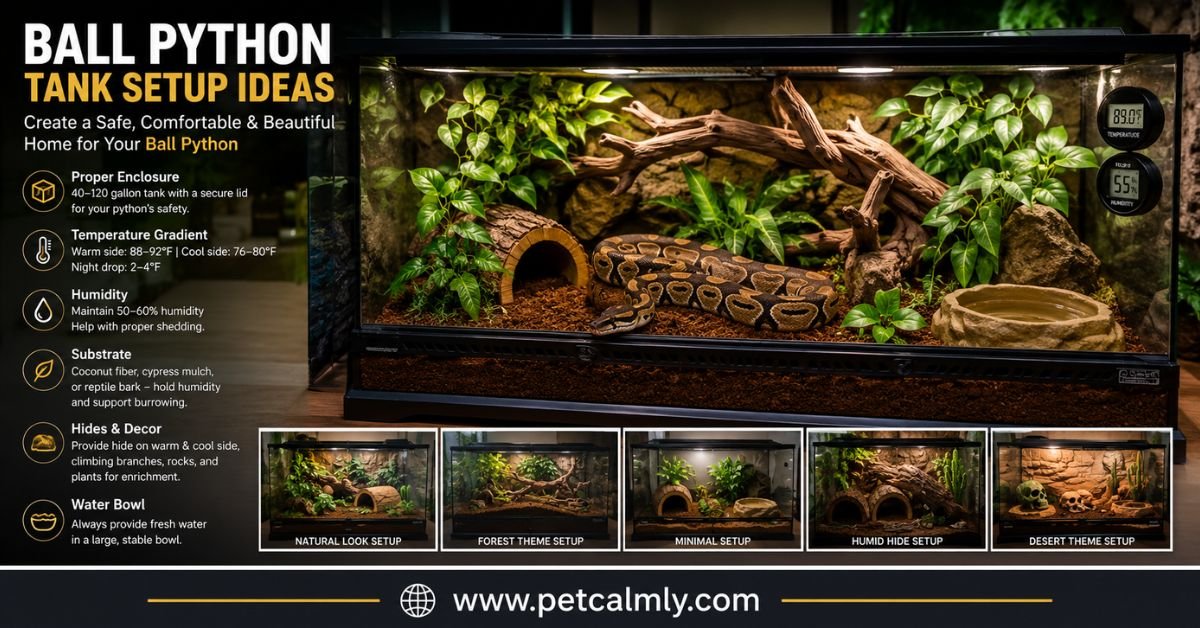
- Enclosure: 40-gallon breeder (36″ x 18″ x 18″) or larger for adults
- Temperature: Warm side 85–90°F, cool side 75–80°F with under-tank heater or heat tape
- Humidity: 40–60%, measured with a digital hygrometer
- Two hides: One on the warm side, one on the cool side
- Substrate: Cypress mulch, aspen, or coconut husk (4–6 inches deep)
- Water bowl: Large enough to soak in, changed daily
- Décor: Branches, plants (real or fake), and minimal clutter to reduce stress
The biggest mistake owners make is using a tank that’s too small, underestimating heating needs, or not providing proper hides. These issues create stressed snakes that may refuse food, develop respiratory problems, or spend most of their time hiding unseen.
Understanding What Ball Pythons Actually Need in Their Tank
Before choosing specific products, it helps to understand what ball pythons are doing in the wild and what that tells us about captive care.
Ball pythons come from the grasslands and savannas of West Africa. They’re ambush predators that spend much of their day coiled in burrows or under vegetation, emerging mainly at dusk to hunt. This behavior matters because it explains why your tank setup should prioritize two things: secure hiding spaces and a clear temperature gradient.
In nature, ball pythons move between warmer and cooler spots depending on their digestion, stress levels, and thermoregulation needs. A snake that feels exposed will hide constantly. A snake that’s too cold won’t digest food properly. A snake in the wrong humidity range can develop respiratory infections. Your job is to create an environment where a ball python can regulate itself comfortably.
Here’s what that really looks like: Your ball python should have enough space to move around without feeling vulnerable, temperature options at both ends of the tank, and multiple hiding spots. It doesn’t need a massive enclosure with tons of climbing space (ball pythons aren’t climbers), but it does need enough room to thermoregulate effectively and explore at least a little.
Tank Size and Enclosure Types: Choosing the Right Home
What size tank do ball pythons actually need?
This is where myth often collides with reality. For years, people recommended 20-gallon tanks for ball pythons. This guidance has been largely replaced by reptile experts who’ve observed that larger tanks actually reduce stress and improve feeding behavior.
For adult ball pythons, a 40-gallon breeder tank (36″ × 18″ × 18″) is the practical minimum. This gives your snake enough space to create a temperature gradient (an area that’s warm on one end and cool on the other) without requiring an enormous footprint. It’s large enough that your python won’t feel confined, but not so massive that you can’t monitor feeding or cleaning.
For juveniles or hatchlings, a 20-gallon long (30″ × 12″ × 12″) works temporarily, but plan to upgrade within 6–12 months. Young snakes actually benefit from slightly smaller starter enclosures because vast empty spaces can make them feel vulnerable during feeding. But they grow quickly, and stunting growth with inadequate space isn’t worth the money saved.
Types of Enclosures
Glass aquariums (like 40-gallon breeders)
- Pros: Affordable, easy to heat evenly, good for observing your snake
- Cons: Heavy, can be harder to maintain humidity in extremely dry climates, less secure than front-opening
Front-opening enclosures (Dubia boxes, Zen enclosures, or custom builds)
- Pros: Easier access without disturbing your snake from above, better humidity retention, professional appearance
- Cons: Higher cost, limited availability for sizes smaller than 40 gallons
- Real-world note: If you handle your python frequently, a front-opening enclosure reduces stress during access
Plastic tubs with ventilation holes (DIY option)
- Pros: Extremely budget-friendly ($20–$50), excellent for humidity control, lightweight
- Cons: Less aesthetic, can be harder to heat properly, less durable long-term
- Who uses this: Experienced keepers, breeders managing multiple snakes, budget-conscious beginners
Avoid glass terrariums or tanks smaller than 20 gallons, and skip cube-shaped or tall tanks that don’t give your snake the horizontal space it needs to create a temperature gradient. Ball pythons spend their time moving along the ground, not climbing, so height is wasted space.
Heating and Temperature Control: Getting This Right
This is the area where most beginner mistakes happen, and it’s also the most important for your ball python’s health.
Ball pythons need a temperature gradient: a warm side where they can digest food and regulate metabolism, and a cooler side where they can rest. Without this gradient, your python gets stressed, stops eating, or develops improper digestion.
Temperature Requirements
- Warm side basking spot: 85–90°F (29–32°C). This is where your snake should be able to rest comfortably while digesting
- Cool side: 75–80°F (24–27°C). Your python needs to be able to move to this area to thermoregulate
- Nighttime: Can drop to 75°F, but doesn’t need to go lower
- Avoid hot spots above 95°F: This can cause burns or stress
Heating Methods
Under-tank heat pads (most common for beginners)
- Cost: $20–$50
- How it works: Adheres to the underside of your tank beneath the warm-side hide
- Pros: Affordable, reliable, easy to control with a thermostat
- Cons: Creates a hotspot directly under the tank unless regulated
- Real-world usage: Works fine with a thermostat (which is non-negotiable)
Heat tape
- Cost: $25–$60
- How it works: Long heating element that runs along the tank side or bottom
- Pros: Distributes heat more evenly than a pad, good for larger enclosures
- Cons: More complex to install, needs more careful thermostat management
- Best for: Larger tanks or multiple hides in one warm area
Radiant heat panels (overhead)
- Cost: $80–$150
- How it works: Mounted on the ceiling or side of the enclosure, mimics natural solar heat
- Pros: More natural thermoregulation, distributes heat evenly, humane feeling
- Cons: Expensive, requires more setup knowledge, can be overkill for one snake
- Best for: Owners who want the most natural setup possible
Ceramic heat emitters or under-tank heaters without thermostats
- Real talk: Don’t use these alone. Heat sources without thermostats easily reach temperatures that burn snakes. This is one area where cutting corners genuinely harms your pet.
Thermostats Are Non-Negotiable
A thermostat controls your heat source and prevents your enclosure from overheating. This is not optionalit’s a safety device. Use either:
- On/off thermostat ($20–$40): Turns the heat on and off based on temperature. Simple and effective.
- Rheostat/dimmer thermostat ($40–$80): Allows precise temperature adjustment without cycling on and off as much.
You’ll also need a temperature gauge. A digital thermometer with a probe is more accurate than adhesive strip thermometers, which are notoriously inaccurate.
How to set it up properly:
- Place your heat source (pad or tape) under or along one side of the tank
- Place the thermostat probe directly on the heat source location where your snake will rest
- Set the thermostat to 88°F
- Let the enclosure stabilize for 24 hours before adding your python
- Verify the temperature with a second thermometer on both the warm and cool sides
Humidity and Moisture: Why It Matters More Than You Think
Ball pythons need humidity between 40–60%. Too low, and they develop respiratory infections or shed improperly. Too high, and you create an environment for mold and bacterial growth.
Many beginners either ignore humidity entirely or create tropical rainforest humidity (which is wrong for ball pythons and actually stressful for them).
Why Ball Pythons Need Humidity at All
Ball pythons aren’t desert snakes, and they aren’t rainforest snakes either. They inhabit semi-humid grasslands where moisture is available but not overwhelming. In captivity, they need humidity primarily for:
- Shedding properly (inadequate humidity causes stuck shed)
- Respiratory health
- Eye health
- Maintaining proper skin moisture
Low humidity causes more problems than high humidity, but both extremes create stress.
How to Measure and Maintain Humidity
Measuring humidity:
- Use a digital hygrometer ($8–$15), not analog gauges
- Place it on the cool side of the tank where you can read it easily
- Check it daily for the first week to understand your tank’s natural humidity levels
Maintaining the right humidity:
- Provide a water bowl large enough for your python to soak in (at least 4–6 inches in diameter)
- Use a substrate that retains moisture (cypress mulch or coconut husk are good choices)
- In dry climates, add a humidity hide (see below)
- Don’t mist or spray—this creates excessive moisture
If humidity is too low:
- Add a humid hide (see substrate section)
- Use a substrate with better moisture retention
- Cover part of the tank with a towel or foil to reduce airflow
- Check your thermostat settings; high temperatures reduce humidity
If humidity is too high:
- Increase ventilation slightly
- Reduce water bowl size temporarily
- Switch to a drier substrate like aspen
- Make sure feces and uneaten food are removed promptly to prevent mold
What does improper humidity look like?
- Stuck shed (especially around the eyes or tail)
- Wheezing or open-mouth breathing (respiratory infection)
- Lethargy or refusal to eat
- Visible mold or fungus in the enclosure
Substrate Choices and Flooring: What Actually Works
Substrate the flooring material affects humidity, cleanliness, burrowing comfort, and injury risk. Your choice here is more important than many owners realize.
Best Substrate Options for Ball Pythons
Cypress mulch
- Moisture retention: Excellent (holds humidity well)
- Cost: $8–$15 per bag
- Realism: Mimics natural environment nicely
- Pros: Soft, comfortable, retains humidity naturally, has mild anti-fungal properties
- Cons: Can be dusty; needs careful sourcing to avoid contaminated bags
- Best for: Most owners, especially in dry climates
- Real-world note: This is the go-to choice for experienced keepers. Buy from reptile suppliers, not landscaping suppliers.
Coconut husk or coco fiber
- Moisture retention: Good (similar to cypress)
- Cost: $6–$12 per brick
- Pros: Affordable, bricks expand when wet (easy to calculate amounts), low dust
- Cons: Can develop mold if too wet, less natural looking
- Best for: Budget-conscious keepers, humid climates
- Setup tip: Mix with aspen to improve airflow if humidity is running high
Aspen shavings
- Moisture retention: Poor (doesn’t hold humidity)
- Cost: $4–$10 per bag
- Pros: Very affordable, minimal mold risk, easy to spot-clean
- Cons: Doesn’t provide humidity, doesn’t allow burrowing behavior
- Best for: Keepers in already-humid climates or those using humidity hides
- Real talk: Works fine if you’re diligent about humidity management, but isn’t ideal for ball pythons’ needs
Avoid:
- Cedar and pine (toxic to reptiles)
- Calcium sand or sand mixes (impaction risk, respiratory irritation)
- Newspaper alone (doesn’t allow burrowing or humidity regulation)
- Reptile bark marketed for ball pythons (often too coarse)
How Deep Should Substrate Be?
Ball pythons aren’t burrowers like some snakes, but they appreciate being able to partially burrow under their hides. Use 4–6 inches of substrate. This provides enough depth for your snake to adjust its position and for humidity to regulate naturally without being excessive.
Hides, Décor, and Enrichment: Creating a Stress-Reduced Environment
This is the section where most setups either succeed or fail. A tank that looks great to humans but provides poor hiding spots creates a stressed snake. A snake in constant stress doesn’t eat well, is prone to illness, and shows signs of anxiety (excessive striking, refusal to leave hides).
Why Hides Matter
Ball pythons spend most of their day hidden. In the wild, they coil in underground burrows. A snake without secure hiding spots experiences constant low-level stress—it never truly feels safe. This affects:
- Feeding response (stressed snakes may refuse food)
- Digestion and metabolism
- Immune function
- Overall health and lifespan
Hide Requirements
You need a minimum of two hides: one on the warm side and one on the cool side. Your python should be able to enter the hide, fully coil, and not be visible from outside.
Warm-side hide (over or near the heat source):
- Should be small and enclosed (not a large open space)
- Should maintain temperature from your heat source
- Examples: Rock cave, small plastic hide box, cork bark tube, or even an upside-down clay pot
- Cost: $5–$25
- Purpose: Allows your python to thermoregulate while feeling secure during digestion
Cool-side hide:
- Should be similarly enclosed and comfortable
- Doesn’t need to be heated
- Can be the same type of hide as the warm side
- Cost: $5–$25
- Purpose: A retreat area when your snake needs to cool down
Additional hides (optional but beneficial):
- A mid-range hide (neutral temperature area) gives your python more thermoregulation options
- Multiple hides reduce stress and allow more natural behavior
Décor That Adds Value
Unlike some reptiles, ball pythons don’t need elaborate décor for enrichment. They’re content in relatively simple setups. But a few thoughtful additions improve quality of life:
Branches and driftwood
- Provides naturalistic climbing options (even though ball pythons rarely climb, they may explore)
- Costs $5–$20
- Choose smooth, splinter-free wood from reptile suppliers (not yard branches)
- Avoid stacking branches in a way that creates instability or sharp angles
Live plants (optional)
- Snake plants, pothos, or bird’s nest ferns are hardy and safe
- Costs $8–$20 per plant
- Improves humidity and aesthetics
- Ball pythons rarely interact with plants; this is mostly for you
Fake plants
- Budget option; costs $3–$15
- Choose non-toxic plastic plants without sharp edges
- Avoid anything that could snag scales
Water bowl as décor:
- A proper-sized water bowl is both functional and contributes to the visual setup
- Large ceramic or plastic bowls in natural colors look better than small pet bowls
What NOT to Include
- Small decorations that could be accidentally ingested (gravel, pebbles, smaller décor pieces)
- Sharp rocks or rough driftwood that could injure your python
- Anything with gaps where your snake could get stuck
- Excessive clutter that makes the tank feel crowded
Water Setup and Hydration: An Overlooked Essential
Ball pythons get most of their water from the prey they eat, but they also need access to fresh water for drinking and soaking. Many owners provide inadequate water bowls and wonder why their snakes have shedding issues or appear dehydrated.
Water Bowl Requirements
Size:
- Use a bowl large enough for your python to partially or fully submerge (at least 4–6 inches in diameter)
- A ball python should be able to put its head in without squeezing
- Bowl too small = your snake won’t use it; bowl too large = harder to maintain
Material:
- Ceramic or plastic dishes designed for reptiles (costs $5–$15)
- Heavy enough that your python can’t tip it over while moving through the tank
- Avoid anything with sharp edges
Location:
- Place on the cool side of the tank (not under the heat source)
- Position where your snake can easily access it without traveling through the hottest part of the tank
- Many keepers place it near the cool-side hide
Water Maintenance
- Change water daily
- Clean the bowl 2–3 times weekly with warm water (no soap, unless you rinse thoroughly)
- Check for feces or shed skin in the bowl
- Ensure water doesn’t pool elsewhere in the tank, creating mold or bacterial issues
Does Your Ball Python Drink?
You may rarely see your python drink, but that doesn’t mean it’s not hydrating. Many snakes drink and soak when you’re not watching. Signs of proper hydration include:
- Clear, bright eyes
- Smooth, complete sheds
- Normal feeding behavior
- Skin that’s not excessively wrinkled or dull
If your python isn’t shedding properly despite adequate humidity, it may be dehydrated. Ensure the water bowl is clean and easily accessible.
Common Ball Python Tank Setup Mistakes (And How to Avoid Them)
Learning from others’ mistakes is faster than making your own. Here are the most common errors that create problems:
Mistake 1: Tank Too Small
The problem: A 20-gallon tank or smaller creates stress. Your python never feels secure, may refuse food, and has limited thermoregulation options.
The fix: Invest in at least a 40-gallon breeder tank for an adult. A few extra dollars on the tank saves hundreds in veterinary bills down the line.
Real-world impact: Owners who upgrade to larger tanks report their snakes begin feeding more reliably and showing more natural behavior.
Mistake 2: Heat Source Without a Thermostat
The problem: An unregulated heat source can reach 100°F+ and burn your snake. Even if it doesn’t burn visibly, excessive heat stresses the snake and damages its immune system.
The fix: Use a thermostat. Always. There’s no exception here.
Cost perspective: A thermostat is $20–$80. A veterinary visit for a burned or stressed snake is $150–$500+.
Mistake 3: Inadequate Hides or Hides in the Wrong Location
The problem: Your python lives in constant stress, refuses food, and may develop neurotic behaviors (repetitive striking at glass, etc.).
The fix: Provide two solid hides—one warm, one cool. Make sure each hide fully conceals your snake. If you can see your python coiled in a hide easily, the hide is too large.
Test: When your python enters a hide, it should be completely out of sight except for the entrance hole.
Mistake 4: Ignoring Humidity Completely
The problem: Stuck shed, respiratory infections, and difficulty feeding.
The fix: Check humidity with a digital hygrometer. Maintain 40–60%. Use appropriate substrate and a large water bowl.
Red flag: If your python has a stuck shed after five days, something is wrong with humidity or your snake’s health. Consult a vet.
Mistake 5: Using the Wrong Substrate or Inadequate Depth
The problem: Poor humidity retention, mold issues, or inadequate burrowing comfort, leading to stress and respiratory problems.
The fix: Use cypress mulch, coconut husk, or coconut husk blend. Depth should be 4–6 inches. Replace partially when soiled, fully every 4 weeks.
Mistake 6: Overcrowding with Décor
The problem: A tank full of rocks, plants, and ornaments that looks good to humans but feels overwhelming to your snake, creating hiding spots that are too small or unstable.
The fix: Keep décor minimal and intentional. Your snake’s comfort matters more than Instagram aesthetics.
Honest take: A simple setup with proper hides, consistent temperature, and good humidity outperforms a beautiful but poorly designed setup every single time.
Mistake 7: Placing the Water Bowl in the Wrong Location
The problem: Water bowl under or near heat source, causing water to become warm and stagnant. Or bowl positioned so your python has to traverse the hottest area to drink.
The fix: Place water on the cool side near the cool-side hide. Check daily that water is fresh.
Setting Up on a Budget: Quality Tank Setup Without Breaking the Bank
A proper ball python tank setup doesn’t require an expensive collection of specialty items. Here’s a realistic budget breakdown and where to save money without sacrificing quality:
Budget Breakdown (For Adult Ball Python, One-Time Setup)
Essentials (non-negotiable):
- 40-gallon breeder tank: $30–$60
- Under-tank heat pad: $25–$40
- Thermostat: $25–$50
- Two hides: $10–$30
- Substrate (cypress mulch): $12–$20
- Water bowl: $8–$15
- Thermometer (digital): $10–$15
- Hygrometer (digital): $8–$12
- Total essentials: $128–$242
Nice-to-have items:
- Décor (branches, plants, etc.): $20–$50
- Feeding setup tools: $10–$20
- Total optional: $30–$70
Realistic first-month cost: $158–$312
Where You Can (Safely) Save Money
Budget hide options: Plastic containers with entrance holes cut out cost $2–$5 each. They work just as well as $20 decorated hides.
DIY substrate containers: Instead of buying expensive humidity hides, create a moist hide using a plastic storage container with sphagnum moss. Cost: $3–$8.
Cheap décor alternatives: Smooth branches from outside (thoroughly washed and baked at 300°F for 20 minutes to kill parasites) cost nothing but prep time.
Second-hand tanks: Facebook Marketplace and Craigslist often have used aquariums in good condition for 50% off retail.
Where NOT to Cut Corners
- Heat source and thermostat: Buy quality to prevent burns
- Tank size: Don’t start with “small and upgrade later” it’s more expensive long-term
- Thermometer and hygrometer: Digital versions are cheap; analog gauges are unreliable
Ball Python Tank Setup Checklist
Before bringing your python home, verify this checklist:
Enclosure:
- ☐ Tank is at least 40 gallons (36″ × 18″ × 18″) for adults
- ☐ Tank is clean and has no cracks or sharp edges
- ☐ Tank has a secure lid (ball pythons are surprisingly good at escaping)
Heating:
- ☐ Heat source installed (under-tank pad or heat tape)
- ☐ Thermostat connected and tested
- ☐ Warm side stabilized at 85–90°F
- ☐ Cool side between 75–80°F
- ☐ Tested for 24 hours before adding snake
Substrate and Hides:
- ☐ 4–6 inches of appropriate substrate (cypress mulch preferred)
- ☐ Warm-side hide placed over heat source
- ☐ Cool-side hide on opposite end
- ☐ Both hides fully conceal snake when entered
- ☐ Hides are stable and won’t collapse
Water and Humidity:
- ☐ Water bowl placed on cool side (4–6 inch diameter minimum)
- ☐ Fresh, clean water in bowl
- ☐ Digital hygrometer installed (not strip thermometer)
- ☐ Humidity reading between 40–60%
- ☐ Digital thermometer probes placed on both warm and cool sides
Safety:
- ☐ No escape routes (check corner gaps, around lid)
- ☐ No sharp decorations or rough edges
- ☐ No small objects that could be ingested
- ☐ Tank positioned away from direct sunlight, drafts, and excessive noise
Frequently Asked Questions
1: What’s the smallest tank I can use for a ball python?
A 20-gallon long works temporarily for hatchlings or juveniles under 18 inches. For adults, 40 gallons is the practical minimum. Some keepers use larger tanks (60+ gallons) without issues, but going smaller than 40 gallons for an adult creates stress and behavioral problems.
2: Can I keep multiple ball pythons in one tank?
No. Ball pythons are solitary and cannibalistic. Cohabitation causes stress, feeding issues, and occasional injury or death. Each python needs its own enclosure.
3: Do ball pythons need a heat lamp or basking light?
Ball pythons don’t bask like some reptiles. Under-tank heaters or heat tape work fine. If you prefer overhead heating for aesthetic or behavioral reasons, use a radiant heat panel, not a bright lamp that could stress your snake.
4: How often should I replace the substrate?
Spot-clean feces and shed skin immediately. Do a full substrate change every 3–4 weeks. In high-humidity setups, you may need to change it more frequently to prevent mold.
5: What should I do if my ball python’s shed is stuck?
Stuck shed usually indicates low humidity or dehydration. Increase humidity by misting around (not on) the snake, offering a humid hide, or using a substrate that retains moisture better. If stuck shed persists after a few days or involves the eyes (spectacles), contact a veterinarian. Improper shedding can indicate respiratory infection or other health issues.
6: Is it normal for a ball python not to eat for weeks or months?
Fasting for several weeks (especially in winter or after recent feeding) is normal for ball pythons. However, refusal to eat combined with inactivity, behavioral changes, or respiratory symptoms may indicate stress, poor tank conditions, or illness. If your python hasn’t eaten in 2 months and shows other symptoms, consult a veterinarian.
7: Can I house my ball python in a glass cube-shaped tank?
Cube tanks aren’t ideal because they don’t provide the horizontal space ball pythons use to create a thermoregulatory gradient. Rectangular tanks (like 40-gallon breeders) are better. Ball pythons need to move horizontally to thermoregulate, not vertically.
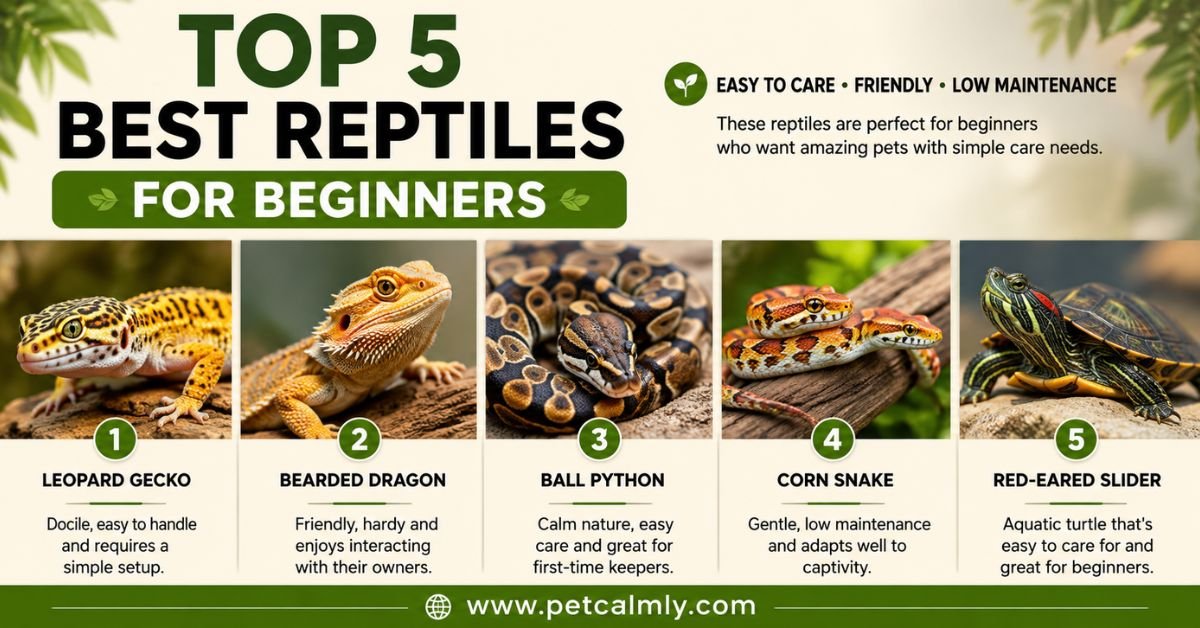
More Information About Pets, Please Visit Our Website: Top 5 Best Reptiles for Beginners
Corn Snake Care
Corn Snake Shedding Problems
Corn Snake Diet Feeding Schedule
Corn Snake Diet in the Wild
How to Tell If a Corn Snake Is Healthy
When to Consult a Veterinarian
Proper tank setup prevents many health issues, but some problems require professional help. Contact a reptile veterinarian if you notice:
- Respiratory symptoms: Wheezing, open-mouth breathing, mucus around mouth or nose
- Shedding problems: Stuck shed that doesn’t resolve with humidity adjustments; spectacle (eye covering) stuck for more than 5 days
- Feeding issues: Refusal to eat combined with behavioral changes, lethargy, or weight loss over several weeks
- Visible injuries: Burns, cuts, or swelling
- Behavioral changes: Sudden aggression, inability to move properly, or extreme lethargy lasting more than a few days
- Digestive problems: Regurgitation after eating, or inability to defecate for several weeks
A reptile vet can assess whether your tank setup is contributing to the problem and recommend adjustments.
Conclusion
A well-designed ball python tank doesn’t have to be complicated or expensive. It needs to do four things consistently:
- Provide secure hiding so your python feels safe
- Maintain appropriate temperature with a warm side and cool side
- Keep humidity in the 40–60% range to support shedding and respiratory health
- Offer fresh water and keep the enclosure clean
Owners who prioritize these fundamentals report fewer feeding issues, better shedding, less stressed behavior, and generally healthier, longer-lived snakes.
If you’re new to keeping ball pythons, don’t feel pressure to create the “perfect” setup immediately. Start with the essentials appropriate tank size, reliable heating, two good hides, and proper humidity. As you learn your individual snake’s preferences, you can add enrichment and refinements.
Your ball python doesn’t need an elaborate display tank. It needs a safe, predictable environment where it can thermoregulate, hide when stressed, and eat reliably. That’s the setup that truly matters.