Short direct answer
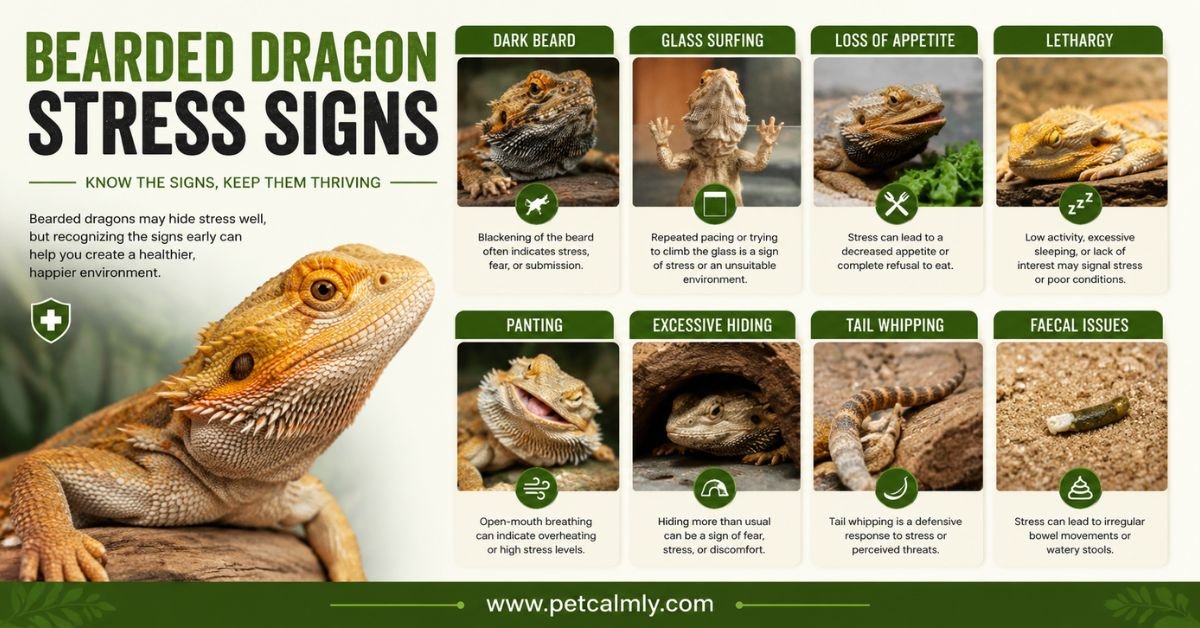
Bearded dragon stress signs can include dark or black beard coloration, glass surfing, hiding more than usual, loss of appetite, frequent stress marks, aggressive behavior, puffing up, rapid breathing, lethargy, or refusing to bask. Temporary stress is common after moving to a new home, handling, or habitat changes, but ongoing stress may point to husbandry problems or illness. Identifying the cause early and correcting it helps your bearded dragon feel safe, healthy, and comfortable.
Introduction
Bearded dragons are known for their calm personalities, but they are also very good at showing when something isn’t right. Sometimes those signals are obvious, like a black beard or frantic scratching at the glass. Other times they’re much more subtle, such as eating less or spending longer than usual hiding under a log.
For new owners, these behaviors can be confusing. Is your dragon simply adjusting to a new environment, or is it experiencing serious stress? Understanding the difference is one of the most important parts of responsible reptile care.
Stress isn’t a disease by itself. Instead, it’s your bearded dragon’s way of responding to something that feels unsafe, uncomfortable, or unfamiliar. While short-term stress is normal, ongoing stress can weaken the immune system, affect digestion, interfere with shedding, and reduce overall quality of life.
In this guide, you’ll learn how to recognize bearded dragon stress signs, understand why they happen, identify common environmental triggers, and know when simple changes at home are enough or when it’s time to visit an exotic veterinarian.
Why Understanding Bearded Dragon Stress Signs Matters
Stress affects more than your dragon’s mood. It can influence nearly every part of its health.
A stressed bearded dragon may:
- Eat less or stop eating altogether
- Lose weight over time
- Become less active
- Have trouble shedding
- Become defensive during handling
- Develop weaker immune defenses
- Recover more slowly from illness
Because many illnesses begin with subtle behavior changes, noticing stress early gives owners the best chance to solve problems before they become serious.
What Does Stress Look Like in a Bearded Dragon?
Stress is a physical and behavioral response to situations your bearded dragon perceives as threatening or uncomfortable.
Unlike dogs or cats, reptiles don’t express emotions the same way. Instead, they communicate through body posture, skin color changes, appetite, movement, and activity levels.
Some stress responses last only a few minutes, while others continue for days or weeks if the underlying problem isn’t addressed.
Common Bearded Dragon Stress Signs to Watch For
Some signs are mild and temporary, while others may indicate significant discomfort.
Black Beard
A black beard is one of the most recognized bearded dragon stress signs.
The skin under the chin darkens dramatically when the beard is expanded. This response can happen because of:
- Fear
- Pain
- Territorial behavior
- Feeling threatened
- Sudden environmental changes
- Illness
A brief black beard isn’t always alarming. However, if it appears frequently or lasts for hours alongside poor appetite or lethargy, investigate the cause carefully.
Dark Stress Marks on the Belly
Many younger bearded dragons naturally display dark belly markings.
However, darker-than-normal stress marks that appear suddenly can suggest discomfort.
Possible causes include:
- Incorrect temperatures
- New surroundings
- Frequent handling
- Loud noises
- Poor lighting
- Illness
Stress marks alone don’t confirm a medical problem, but they should never be ignored when combined with other symptoms.
Glass Surfing
Glass surfing happens when a bearded dragon repeatedly runs or scratches against the enclosure walls.
Owners often describe it as “trying to climb invisible walls.”
This behavior may indicate:
- Enclosure that’s too small
- Reflection causing territorial behavior
- Wanting to explore
- Incorrect habitat setup
- Temperature problems
- Chronic stress
Occasional glass surfing isn’t unusual, especially in young dragons. Constant glass surfing usually signals that something in the enclosure needs attention.
Hiding More Than Normal
Healthy bearded dragons enjoy resting in hides, especially during cooler parts of the day.
However, excessive hiding can be a warning sign.
Your dragon may hide because of:
- Feeling unsafe
- New surroundings
- Too much activity nearby
- Incorrect lighting
- Illness
- Preparing for brumation
Look at the whole picture instead of focusing on hiding alone.
Ask yourself:
- Is your dragon still eating?
- Is it basking normally?
- Has its weight changed?
- Is it alert when awake?
Loss of Appetite
Reduced appetite is one of the earliest signs that something may be wrong.
Stress commonly affects feeding after:
- Moving into a new home
- Cage upgrades
- Long car rides
- Introduction to another reptile
- Major room changes
Most healthy dragons resume eating within several days after mild stress.
If appetite doesn’t improve or continues declining, further investigation is necessary.
Puffing Up the Beard and Body
Bearded dragons often inflate their beard or body to appear larger.
This behavior helps them defend themselves from perceived threats.
Common triggers include:
- Seeing another dragon
- Reflections in glass
- Loud household activity
- New pets
- Unfamiliar people
- Sudden movements
Repeated puffing without an obvious reason deserves closer observation.
Aggressive Behavior
A normally friendly dragon may suddenly:
- Open its mouth
- Hiss
- Lunge
- Bite
- Whip its tail
- Flatten its body
Aggression often develops because the dragon feels cornered rather than truly aggressive.
Understanding what triggered the reaction is more helpful than assuming your pet has developed a “bad attitude.”
Rapid Breathing
Heavy breathing sometimes occurs during stressful events such as:
- Veterinary visits
- Travel
- Handling
- Encountering another animal
However, rapid breathing combined with wheezing, mucus, or weakness may indicate a respiratory illness rather than simple stress.
Lethargy
A stressed bearded dragon may appear unusually inactive.
Instead of climbing, basking, or exploring, it may stay in one place for long periods.
Lethargy can also result from:
- Low temperatures
- Poor UVB exposure
- Illness
- Parasites
- Brumation
- Dehydration
This is why husbandry should always be checked before assuming stress is the only cause.
Refusing to Bask
Basking is essential for digestion and overall health.
If your dragon suddenly avoids its basking spot, consider:
- Basking area too hot
- Basking area too cold
- UVB bulb expired
- Bright light causing discomfort
- Stress from nearby activity
A dragon that refuses to bask for several days should have its enclosure evaluated carefully.
Constant Escape Attempts
Repeated attempts to escape the enclosure may suggest:
- Feeling unsafe
- Incorrect temperatures
- Lack of enrichment
- Small habitat
- Visual stress from reflections
Many owners mistake this as simply wanting to explore.
Sometimes that’s true—but persistent escape behavior usually means something in the enclosure isn’t meeting your dragon’s needs.
Quick Reference Table: Bearded Dragon Stress Signs
| Stress Sign | Possible Meaning | Monitor or Act? |
|---|---|---|
| Black beard | Fear, pain, illness, territorial display | Act if persistent |
| Stress marks | Mild to moderate stress | Monitor with other symptoms |
| Glass surfing | Environmental dissatisfaction | Check habitat |
| Loss of appetite | Stress or illness | Act if lasting several days |
| Hiding constantly | Fear, illness, poor setup | Evaluate environment |
| Aggression | Feeling threatened | Reduce stress triggers |
| Puffing beard | Defensive behavior | Observe context |
| Refusing to bask | Husbandry issue or illness | Check temperatures immediately |
| Rapid breathing | Temporary stress or illness | Seek help if persistent |
| Lethargy | Stress, illness, husbandry problem | Investigate promptly |
What Causes Stress in Bearded Dragons?
Understanding the cause is just as important as recognizing the symptoms. In many cases, fixing the source of stress leads to noticeable improvement within days.
1. Moving to a New Home
One of the most common causes of stress is relocation.
New sights, smells, sounds, and routines can overwhelm even healthy dragons.
During the first week or two, it’s normal to notice:
- Less eating
- More hiding
- Dark stress marks
- Reduced activity
- Occasional black beard
Give your dragon time to adjust while keeping handling to a minimum.
2. Incorrect Habitat Temperatures
Temperature problems are among the biggest causes of chronic stress.
A bearded dragon relies on external heat to regulate body functions. If the enclosure is too cold or too hot, it can affect digestion, appetite, activity, and behavior.
A proper setup should provide:
- A warm basking area
- A cooler side for temperature regulation
- Stable daytime temperatures
- Appropriate nighttime cooling
Using accurate digital thermometers at both ends of the enclosure helps ensure your dragon can thermoregulate effectively.
3. Poor UVB Lighting
Without proper UVB exposure, bearded dragons struggle to produce vitamin D3 and use calcium efficiently.
Inadequate UVB can lead to:
- Weakness
- Reduced appetite
- Low activity
- Poor growth in juveniles
- Chronic stress
Even if a UVB bulb still lights up, its UV output decreases over time. Replacing bulbs according to the manufacturer’s recommendations is an important part of routine care.
4. Overhandling
Many dragons become wonderfully tame, but trust takes time.
Handling too often especially during the first few weeks can overwhelm a new pet.
Signs of handling-related stress include:
- Running away when approached
- Puffing up
- Black beard
- Squirming constantly
- Trying to jump from your hands
Short, calm handling sessions are usually more successful than long interactions.
5. Loud or Busy Environments
Bearded dragons notice far more than many owners realize.
Stress may increase if the enclosure is placed near:
- Televisions
- Loud speakers
- Children’s play areas
- Frequently slammed doors
- Barking dogs
- Curious cats
- Constant foot traffic
A quieter location with predictable daily activity often helps dragons feel more secure.
How to Tell Normal Adjustment From Serious Stress
Not every change in behavior means something is wrong. Bearded dragons often need time to adapt after moving to a new home, changing enclosures, or experiencing a different daily routine.
The key is to watch how long the behavior lasts and whether it improves or gets worse.
Signs of Normal Adjustment Stress
A healthy bearded dragon may show temporary stress for several days after a major change.
Common adjustment behaviors include:
- Eating a little less
- Spending more time hiding
- Mild stress marks
- Exploring less
- Being cautious during handling
- Sleeping a bit more than usual
As long as your dragon remains alert, maintains a healthy body condition, and gradually returns to normal, these behaviors are usually part of the adjustment process.
Signs Stress May Be Becoming a Health Problem
Stress deserves closer attention if you notice:
- Refusing food for an extended period
- Significant weight loss
- Constant black beard
- Persistent lethargy
- Difficulty breathing
- Swollen joints
- Diarrhea that doesn’t improve
- Vomiting or regurgitation
- Sunken eyes
- Severe dehydration
These signs suggest that stress may not be the only issue. Illness, parasites, metabolic bone disease, or other medical conditions should also be considered.
Additional Causes of Bearded Dragon Stress
Sometimes the cause isn’t immediately obvious. Looking at your dragon’s entire environment often reveals hidden stressors.
Enclosure That Is Too Small
A cramped habitat limits natural behaviors such as climbing, basking, exploring, and moving between warm and cool areas.
A bearded dragon that constantly presses against the glass or appears restless may simply need more space.
A spacious enclosure with multiple basking areas, climbing opportunities, and hiding places helps reduce chronic stress.
Incorrect Humidity
Although bearded dragons come from dry regions of Australia, they still need balanced humidity.
Humidity that is consistently too high may contribute to:
- Respiratory problems
- Discomfort
- Poor shedding
- Increased stress
Very low humidity during shedding can also make removing old skin more difficult.
Using a reliable digital hygrometer helps keep humidity within an appropriate range.
Poor Enclosure Design
Even if temperatures are correct, a poorly arranged habitat can make a dragon feel exposed.
Signs of an uncomfortable enclosure include:
- No secure hiding spots
- Very little climbing space
- Slippery flooring
- Overcrowded decorations
- Constant exposure from every side
A well-designed enclosure should allow your dragon to choose between basking, exploring, climbing, and hiding whenever it wants.
Seeing Other Bearded Dragons
Bearded dragons are naturally solitary.
Housing two adults together or allowing them to constantly see each other through glass can lead to ongoing stress.
Common behaviors include:
- Head bobbing
- Black beard
- Arm waving
- Glass surfing
- Reduced appetite
- Aggression
Even if they never physically fight, visual contact alone can be stressful.
Other Household Pets
Dogs and cats often become fascinated with reptile enclosures.
While your dog may simply be curious, your bearded dragon may interpret the attention as a predator watching it.
If another pet frequently sits near the enclosure, your dragon may:
- Hide more
- Refuse food
- Stay dark in color
- Avoid basking
Whenever possible, keep the enclosure in a quiet area where other pets cannot constantly watch or disturb your reptile.
Frequent Enclosure Changes
Owners often enjoy rearranging decorations.
Unfortunately, major changes every few days may leave a bearded dragon feeling uncertain.
Moving:
- Hides
- Rocks
- Branches
- Food dishes
- Basking platforms
too frequently can interrupt your dragon’s sense of security.
Small improvements are fine, but avoid completely redesigning the habitat on a regular basis.
How to Calm a Stressed Bearded Dragon
Helping a stressed bearded dragon isn’t about doing one big thing. It’s about removing stressors and creating a stable, predictable environment.
Step 1: Check Husbandry First
Before assuming stress is emotional, inspect the enclosure carefully.
Review:
- Basking temperature
- Cool side temperature
- UVB lighting
- Humidity
- Heating schedule
- Cleanliness
- Water availability
Many stress-related behaviors improve once husbandry issues are corrected.
Step 2: Give Your Dragon Time
If your dragon recently came home or experienced a major change, avoid excessive interaction.
Allow several days of quiet adjustment.
During this time:
- Feed on a regular schedule.
- Avoid unnecessary handling.
- Keep noise levels low.
- Maintain consistent lighting.
Patience is often the best medicine.
Step 3: Create Safe Hiding Spaces
A secure hide allows your dragon to feel protected when it needs privacy.
Good hiding places should:
- Be easy to enter
- Stay dry
- Remain stable
- Be large enough for the entire body
- Sit in both warm and cooler parts of the enclosure if possible
Remember, hiding is a healthy behavior when balanced with normal basking and eating.
Step 4: Improve the Basking Area
A dragon that enjoys basking usually feels more comfortable.
Make sure the basking platform:
- Is sturdy
- Allows full-body exposure to heat
- Sits under appropriate UVB lighting
- Is easy to climb
- Isn’t positioned directly under household traffic
Many dragons become noticeably calmer once their basking area feels secure.
Step 5: Handle Gently
Trust develops slowly.
Instead of reaching from above like a predator, approach from the side.
Support the entire body using both hands.
Keep sessions short at first.
If your dragon shows obvious stress, return it calmly to its enclosure and try again another day.
Step 6: Maintain a Consistent Routine
Bearded dragons thrive on predictability.
Try to keep:
- Feeding times similar each day
- Lights turning on and off consistently
- Cleaning schedules regular
- Handling sessions predictable
Routine helps reduce uncertainty, especially for younger dragons.
Feeding a Stressed Bearded Dragon
Stress commonly affects appetite.
Rather than forcing food, encourage eating with familiar favorites while maintaining a balanced diet.
Offer fresh food every day.
Depending on age, appropriate foods may include:
Vegetables
- Collard greens
- Mustard greens
- Turnip greens
- Dandelion greens
- Squash
- Bell peppers
Insects
- Dubia roaches
- Crickets
- Black soldier fly larvae
- Silkworms
Avoid offering excessive treats simply because your dragon refuses healthy foods.
A temporary appetite reduction after mild stress is often normal.
Hydration During Stress
Some stressed dragons drink less than usual.
Help maintain hydration by:
- Providing fresh water daily
- Offering water-rich vegetables when appropriate
- Lightly misting vegetables instead of the dragon
- Monitoring for signs of dehydration
Watch for:
- Wrinkled skin
- Sticky saliva
- Sunken eyes
- Thick urates
Persistent dehydration should always be evaluated by an exotic veterinarian.
Can Stress Cause Shedding Problems?
Yes.
Although stress doesn’t directly cause shedding issues, it can interfere with the normal shedding process.
A stressed dragon may:
- Eat less
- Bask less
- Become dehydrated
All of these factors can contribute to retained shed.
Never peel off loose skin.
Instead:
- Maintain proper humidity.
- Ensure correct basking temperatures.
- Provide rough climbing surfaces for natural rubbing.
- Keep your dragon well hydrated.
Can Stress Cause Weight Loss?
Yes, especially if it affects appetite for an extended period.
Weight loss often develops gradually because stressed dragons may:
- Eat fewer insects
- Ignore vegetables
- Bask less efficiently
- Digest food poorly
Using a small digital kitchen scale once every week or two can help you notice changes before they become serious.
6 Common Mistakes That Make Stress Worse
Even experienced owners sometimes increase stress without realizing it.
1: Handling Too Soon
New owners naturally want to bond immediately.
However, giving your dragon several days to settle before regular handling usually builds trust faster than forcing interaction.
2: Ignoring Temperature Problems
Many stress behaviors disappear once proper heating is restored.
Always verify temperatures with accurate digital thermometers instead of relying on guesswork.
3: Using Old UVB Bulbs
A bulb that still produces visible light may no longer provide enough UVB.
Replacing UVB bulbs on schedule is essential for long-term health.
4: Tapping on the Glass
Repeated tapping startles many reptiles.
Instead, approach calmly and allow your dragon to notice you naturally.
5: Keeping the Enclosure in a Busy Room
Constant activity can prevent your dragon from fully relaxing.
Choose a location away from loud televisions, speakers, and heavy household traffic whenever possible.
6: Overfeeding Treats
Offering too many insects or sugary fruits to encourage eating may create nutritional imbalance.
Stick to a varied, species-appropriate diet while monitoring appetite.
Simple Daily Checklist for Reducing Stress
Use this quick checklist to help your bearded dragon feel safe every day.
✔ Check basking and cool-side temperatures
✔ Confirm UVB light is working and properly positioned
✔ Replace fresh greens daily
✔ Remove uneaten insects after feeding
✔ Provide clean drinking water
✔ Spot-clean waste promptly
✔ Watch for normal basking behavior
✔ Observe appetite and activity
✔ Avoid sudden environmental changes
✔ Handle gently and only when your dragon seems comfortable
When Should You Worry About Bearded Dragon Stress Signs?
Occasional stress is a normal part of life for most bearded dragons. Moving to a new home, introducing a new enclosure, or a short car ride can temporarily change their behavior.
However, stress should begin to improve once your dragon feels safe and its environment meets its needs.
You should be concerned if the stress signs:
- Continue for more than one to two weeks without improvement
- Become more severe over time
- Are accompanied by illness symptoms
- Prevent your dragon from eating or basking normally
- Cause noticeable weight loss
When stress lasts too long, it can affect your bearded dragon’s overall health and make recovery more difficult.
Health Problems That Can Look Like Stress
Many illnesses cause symptoms that resemble stress. That’s why it’s important not to assume every behavior change is simply anxiety or adjustment.
Parasites
Internal parasites are common in reptiles and can cause:
- Poor appetite
- Weight loss
- Loose stools
- Low energy
- Stress-like behavior
A fecal examination by an exotic veterinarian is often needed to confirm the diagnosis.
Metabolic Bone Disease (MBD)
Poor calcium intake or inadequate UVB lighting can lead to metabolic bone disease.
Early signs may include:
- Weakness
- Difficulty climbing
- Tremors
- Soft jaw
- Reduced appetite
Without treatment, MBD can become life-threatening.
Respiratory Infections
If your dragon has rapid breathing along with any of the following, illness is more likely than simple stress:
- Wheezing
- Clicking sounds
- Mucus around the nose or mouth
- Open-mouth breathing while resting
- Frequent coughing movements
Respiratory infections require prompt veterinary care.
Impaction
Difficulty passing stool can make a bearded dragon uncomfortable and less active.
Signs may include:
- Loss of appetite
- Straining
- Swollen abdomen
- Reduced movement
- Avoiding food
Impaction may result from swallowing unsuitable substrate, dehydration, or improper temperatures.
Dehydration
A dehydrated dragon may show:
- Sunken eyes
- Wrinkled skin
- Thick saliva
- Dry-looking mouth
- Lethargy
Keeping fresh water available and feeding moisture-rich vegetables can help maintain hydration, but severe dehydration requires veterinary treatment.
When to Contact an Exotic Veterinarian
Some situations should never be managed at home alone.
Arrange a veterinary appointment if your bearded dragon:
- Refuses food for an extended period outside normal brumation
- Continues losing weight
- Has a black beard that doesn’t improve
- Stops basking completely
- Has repeated diarrhea
- Vomits or regurgitates
- Shows difficulty breathing
- Cannot move normally
- Appears severely weak
- Has blood in the stool
Early treatment often leads to a faster recovery and can prevent more serious complications.
Can Chronic Stress Affect a Bearded Dragon’s Health?
Yes. Long-term stress affects much more than behavior.
Over time, chronic stress may contribute to:
- Reduced appetite
- Poor growth in young dragons
- Weight loss
- Weak immune function
- Frequent illness
- Difficulty shedding
- Lower activity levels
- Reduced breeding success in adults
Stress doesn’t always cause these problems directly, but it can make your dragon more vulnerable to them.
How to Prevent Bearded Dragon Stress
Preventing stress is usually easier than treating it.
Focus on creating a stable, enriching environment that allows your dragon to behave naturally.
Provide a Proper Habitat
A suitable enclosure should include:
- Enough space to move comfortably
- A proper basking platform
- Correct temperature gradient
- High-quality UVB lighting
- Secure hiding places
- Safe climbing opportunities
Meeting these basic needs is the foundation of a healthy, relaxed bearded dragon.
Keep a Consistent Daily Routine
Reptiles respond well to predictable schedules.
Try to:
- Feed at similar times each day.
- Turn lights on and off consistently.
- Avoid frequent enclosure rearrangements.
- Keep handling sessions calm and predictable.
Routine reduces uncertainty and helps your dragon feel secure.
Handle With Patience
Not every bearded dragon enjoys frequent handling.
Watch your pet’s body language before picking it up.
If your dragon appears calm and curious, short handling sessions can strengthen trust.
If it puffs its beard, flattens its body, or runs away, give it more time before trying again.
Reduce Environmental Stress
Simple changes can make a big difference.
Consider:
- Moving the enclosure away from loud televisions.
- Preventing cats or dogs from staring into the enclosure.
- Limiting sudden loud noises.
- Avoiding constant foot traffic around the habitat.
A peaceful environment allows your dragon to rest and behave naturally.
Monitor Health Regularly
Healthy dragons usually show consistent patterns.
Pay attention to:
- Appetite
- Weight
- Activity level
- Shedding
- Stool quality
- Skin color
- Basking behavior
Small changes are often easier to address before they become major problems.
Bearded Dragon Stress Signs: Quick Care Checklist
Use this checklist whenever your dragon starts behaving differently.
| Question | Yes | No |
|---|---|---|
| Is the basking temperature correct? | ☐ | ☐ |
| Is the UVB bulb still within its recommended replacement schedule? | ☐ | ☐ |
| Is your dragon eating normally? | ☐ | ☐ |
| Is fresh water available? | ☐ | ☐ |
| Is the enclosure clean? | ☐ | ☐ |
| Does your dragon have a secure hide? | ☐ | ☐ |
| Has anything changed recently in the environment? | ☐ | ☐ |
| Are other pets causing stress? | ☐ | ☐ |
| Is your dragon maintaining its weight? | ☐ | ☐ |
| Have stress signs improved after correcting husbandry? | ☐ | ☐ |
If you answer “No” to several of these questions, review your husbandry and consult an exotic veterinarian if your dragon does not improve.
Frequently Asked Questions
1. How long do stress signs last in a bearded dragon?
Mild stress from moving to a new home or changing the enclosure often improves within a few days to two weeks. If symptoms continue beyond that or become worse, review your husbandry and consult an exotic veterinarian.
2. Do bearded dragons stop eating when they are stressed?
Yes. Stress can temporarily reduce appetite, especially after relocation, travel, or major habitat changes. However, prolonged refusal to eat should always be investigated to rule out illness or husbandry problems.
3. Is a black beard always a sign of stress?
No. A black beard can also appear during territorial displays, breeding behavior, or when a bearded dragon is in pain. Look at the overall behavior rather than relying on one sign alone.
4. Can handling cause stress in a bearded dragon?
Yes. New or nervous dragons may become stressed if handled too frequently or incorrectly. Short, gentle sessions and allowing time to build trust usually work best.
5. Can incorrect lighting make a bearded dragon stressed?
Absolutely. Poor UVB lighting or incorrect basking temperatures can lead to discomfort, reduced appetite, lethargy, and behaviors that resemble emotional stress. Proper lighting is one of the most important parts of bearded dragon care.
6. Can a stressed bearded dragon recover completely?
In most cases, yes. Once the underlying cause is identified and corrected, healthy bearded dragons often return to their normal behavior. The sooner problems are addressed, the better the chances of a full recovery.
More Information About Pets, Please Visit Our Website: Bearded Dragon Tank Setup Guide
What Does Baby Bearded Dragon Poop Look Like?
How Often Should a Bearded Dragon Poop?
How to Calm a Stressed Bearded Dragon
Bearded Dragon Shedding Problems
How Often Should I Feed My Bearded Dragon Vegetables?
Conclusion
Recognizing bearded dragon stress signs is one of the most valuable skills any reptile owner can develop. Behaviors such as a black beard, glass surfing, hiding, loss of appetite, or stress marks are your pet’s way of communicating that something isn’t quite right.
The good news is that many stress-related problems are linked to husbandry and can be improved by checking temperatures, providing proper UVB lighting, creating a secure enclosure, and maintaining a consistent routine. Careful observation and small adjustments often make a noticeable difference.
At the same time, it’s important not to dismiss persistent stress as “normal.” If your bearded dragon continues to refuse food, loses weight, struggles to breathe, or remains lethargic despite improvements in its environment, an examination by an experienced exotic veterinarian is the safest next step.
With patience, attentive care, and a well-designed habitat, most bearded dragons become confident, active companions that display their natural curiosity and calm temperament.