Short direct answer
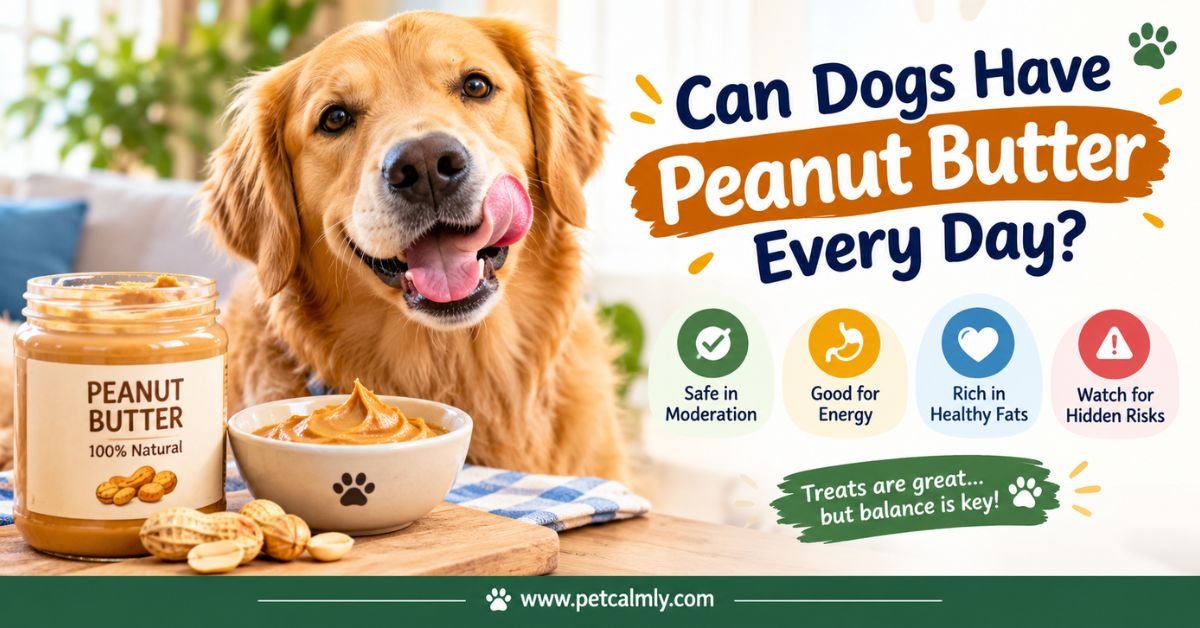
Can dogs have peanut butter every day? Yes, most healthy dogs can enjoy a small amount of plain, xylitol-free peanut butter daily, as long as it fits inside their treat calories. That usually means about half a teaspoon to one teaspoon for a small dog and up to one tablespoon for a large dog. Always check the label for xylitol first, because that sweetener is toxic to dogs. Daily is allowed, but it is never required.
Here is the fast safety check before you reach for the jar:
- Xylitol is a hard no. It is sometimes listed as birch sugar, and even a small amount can become an emergency.
- Peanut butter counts as a treat. It is rich in calories, so it should fit inside your dog’s treat allowance, not sit on top of it.
- Some dogs need a vet’s okay first. That includes dogs with a history of pancreatitis, weight problems, diabetes, or kidney disease.
Why Daily Peanut Butter Feels Like Such a Big Question
Most dog owners know the moment. You open the jar, and your dog appears from nowhere, tail going, eyes locked on the spoon. Saying no feels cruel. Then a small voice asks whether this is actually okay, especially if it has quietly become a daily habit.
That worry is a good sign. It means you are paying attention. The truth also sits somewhere between the internet’s two loud camps, one calling peanut butter a superfood for dogs and the other calling it dangerous. Neither is quite right.
Plain peanut butter is a reasonable treat for many dogs. The problems come from three things: the wrong ingredients, the wrong amount, and the wrong dog. This guide covers all three, so you can decide with confidence instead of guessing.
You will also find answers to the questions people tend to ask next. How much is too much? Which jar is safe? Can puppies have it? What if my dog just ate half the jar? Let’s start with what is actually in that spoonful.
Is Peanut Butter Good for Dogs? What Is Actually in That Spoonful
Peanut butter is not a health food for dogs, and it is not a villain either. It is a tasty, calorie-dense treat with a few nutritional perks. Understanding both sides helps you set realistic expectations.
What peanut butter offers your dog
Peanuts are legumes, and they provide protein, unsaturated fats, and small amounts of vitamin E, niacin (a B vitamin), and minerals such as magnesium. These are real nutrients. However, a complete and balanced dog food already supplies what your dog needs, so peanut butter adds very little that your dog is missing.
The bigger benefit is practical. Peanut butter is sticky, smelly, and loved by most dogs. That makes it a handy tool for training, for hiding medication, and for keeping a bored dog busy.
Why dogs go crazy for it
Dogs have a powerful sense of smell, and peanut butter is rich in fat. Fat carries flavor and aroma, and dogs are drawn to it. The thick texture also invites long, slow licking, which many dogs find soothing.
So when your dog stares at the spoon, it is not just begging. It is responding to a food that is genuinely hard to resist.
What peanut butter does not do
It does not replace a balanced diet. It does not fix itchy skin, dull coat, or low energy. And it does not make a dog healthier just because the label says natural. Think of it as a high-value reward, not a supplement.
How Much Peanut Butter Can a Dog Have Per Day?
The right amount depends mostly on your dog’s size and how many other treats they eat. Because peanut butter is so dense in calories, a small slip in portion size adds up fast.
The 10 percent treat rule
Veterinary nutrition guidelines, including those from the American Animal Hospital Association, commonly suggest that treats make up no more than about 10 percent of a dog’s daily calories. The other 90 percent should come from a complete and balanced diet.
A level tablespoon of peanut butter has roughly 90 to 100 calories, though brands vary. A 20-pound adult dog often needs somewhere between 400 and 600 calories a day, depending on age and activity. Ten percent of that is only 40 to 60 calories. One tablespoon would use up the entire treat budget, and then some.
A simple peanut butter serving guide by dog size
The amounts below are conservative rules of thumb for a healthy adult dog, not a prescription. They assume peanut butter is the main treat that day.
| Dog size | Typical weight | Daily peanut butter limit |
|---|---|---|
| Toy | Under 10 lb | Up to ½ teaspoon |
| Small | 10–25 lb | ½ to 1 teaspoon |
| Medium | 26–50 lb | 1 to 2 teaspoons |
| Large | 51–90 lb | 2 teaspoons to 1 tablespoon |
| Giant | Over 90 lb | 1 to 1½ tablespoons |
If your dog also gets biscuits, dental chews, or training treats, trim the peanut butter to make room. Dogs that are overweight, very inactive, or seniors usually need smaller portions than the table shows.
Why a spoon is a poor measuring tool
A heaped dinner spoon can hold two or three times what a level measuring spoon does. That is how a half-teaspoon treat turns into a mini meal without anyone noticing. If you give peanut butter regularly, use a real measuring spoon for a week. It resets your eye.
Can dogs have peanut butter every day, or is every few days better?
For a healthy dog, a daily portion within the limits above is generally fine. Still, there is no nutritional reason to feed it every single day. Many owners find that three or four times a week is plenty, and it keeps the treat special.
Variety helps too. Rotating rewards, such as small pieces of cooked chicken or a few green beans, spreads out calories and lowers the chance of building a habit that is hard to change.
Xylitol and Other Peanut Butter Ingredients That Can Hurt Dogs
The peanut itself is rarely the problem. The danger usually hides in what else is in the jar. This is the most important safety section in the article, so it is worth a slow read.
Why xylitol is so dangerous
Xylitol is a sugar substitute used in some sugar-free products, including certain brands of peanut butter and other nut butters. In people it is harmless. In dogs, it can trigger a rapid release of insulin, which makes blood sugar crash. Larger doses can also cause serious liver damage.
Signs can start quickly, often within an hour. They include vomiting, weakness, wobbliness, collapse, and seizures. The ASPCA Animal Poison Control Center, the FDA, and the AVMA all warn dog owners about it.
Because xylitol is added to products that change over time, never assume a jar is safe just because it was safe last month. Companies change recipes, and some launch new sugar-free or protein versions of familiar products.
How to read a peanut butter label in 30 seconds
Flip the jar and read the ingredient list, not the front. The front is marketing. The back is the truth.
| What you see on the label | What it means for your dog |
|---|---|
| Peanuts only, or peanuts and a little salt | Best choice |
| Xylitol, birch sugar, or birch bark sugar | Do not feed. Emergency risk |
| Sugar-free or reduced sugar | Check very carefully for xylitol |
| Added sugar, honey, or syrup | Not toxic, but adds empty calories |
| Chocolate, cocoa, or raisins | Toxic to dogs. Do not feed |
| Palm oil or hydrogenated oils | Not poisonous, but adds unnecessary fat |
Other ingredients worth watching
Salt is the next most common issue. A little is fine, but heavily salted spreads add sodium your dog does not need, especially if they have heart or kidney concerns. Added sugar and flavorings do not poison dogs, yet they raise calories without adding value.
Swirled or flavored peanut butters deserve extra suspicion. Chocolate peanut butter spreads and mixes with dried fruit can contain ingredients that are harmful to dogs, so stick with the plain jar.
Health Risks of Giving Peanut Butter Every Day
Even with a perfectly safe jar, daily feeding has trade-offs. None of these risks mean you must quit. They simply explain why portion size matters so much.
Weight gain sneaks up slowly
Extra calories rarely cause trouble in a week. They cause trouble over months. An extra tablespoon a day on a small dog can quietly add up to weight gain, and extra weight strains joints, breathing, and the heart. Because the change is gradual, many owners only notice when a vet points it out.
If you can feel your dog’s ribs easily under a thin layer of padding, you are probably in a good range. If you cannot, it is time to trim treats.
Pancreatitis and fatty foods
Pancreatitis is inflammation of the pancreas. High-fat foods are a well-known trigger in some dogs, especially after a sudden large serving. Merck Veterinary Manual and VCA Animal Hospitals both describe diet as one factor in pancreatitis.
A small spoon is unlikely to cause it in a healthy dog. A whole jar in one sitting is a different story. Signs include repeated vomiting, a hunched posture, belly pain, and loss of appetite. If you see them, call your vet.
Salt and sensitive stomachs
Salted peanut butter adds sodium over time. For most healthy dogs this is minor, but it matters more for dogs with heart disease or kidney problems. Rich foods can also upset sensitive stomachs, leading to loose stools or gas.
If your dog’s stomach is already unsettled, peanut butter is not a kind choice. Our guide on why dogs throw up undigested food covers when digestive upset needs attention.
Allergies are uncommon but possible
Food allergies in dogs more often involve proteins such as beef, dairy, or chicken, so peanut allergies are less common. Still, any dog can react to any food. Watch for itching, hives, swollen lips or face, ear problems, or vomiting after a new food. Introduce peanut butter slowly, starting with a lick, and wait a day before offering more.
What Is the Best Peanut Butter for Dogs?
The best peanut butter for dogs is the boring kind. Simple ingredients, no xylitol, and as little salt and sugar as possible.
What to look for on the jar
- A short ingredient list. Peanuts alone is ideal. Peanuts plus a pinch of salt is also fine.
- No xylitol or birch sugar. Check every time you buy.
- No added sugar or sweeteners. Your dog does not need them.
- Low or no added salt. Unsalted versions are easy to find.
- No chocolate, raisins, or other mix-ins.
Creamy and crunchy are both fine. Crunchy pieces can be a choking concern for very small dogs, so creamy is the safer pick for toy breeds and puppies.
Dog-specific and homemade options
Some pet stores sell peanut butter made for dogs. These are usually simple and designed with dogs in mind, though you should still read the label. You can also make your own by blending plain roasted, unsalted peanuts until smooth. Store it in the fridge and use it within a couple of weeks.
Storing it safely
Keep the jar sealed and out of reach. Dogs that learn where the jar lives can be surprisingly determined, and a counter-surfed jar is one of the most common ways dogs end up with far too much. A high cupboard is cheap insurance.
Smart Ways to Serve Peanut Butter Without Overdoing It
How you serve peanut butter matters almost as much as how much. The goal is to get the most enjoyment out of the smallest amount.
Lick mats and frozen Kongs
A thin smear across a lick mat can keep a dog busy for ten minutes or more. Because the work is licking, not gulping, a small amount goes a long way. For a stuffed toy, mix a teaspoon of peanut butter with their regular kibble or a little plain pumpkin, then freeze it. This stretches the treat and slows your dog down.
Owners who use lick toys to soothe restless dogs may also like our guide to the best dog anxiety toys.
Hiding pills
A tiny ball of peanut butter around a pill works for many dogs. Check with your vet first, since some medications should be given on an empty stomach or without fatty food. And double-check the label for xylitol, because medicated dogs are often already vulnerable.
Training and building calm habits
Peanut butter is a high-value reward, so save it for jobs that are hard for your dog. Think nail trims, vet visits, crate practice, or passing another dog calmly. A lick of peanut butter during a stressful moment can help your dog link the experience with something pleasant.
Use a small dab on a spoon or spatula, not a big scoop. The reward works because it is exciting, not because it is large.
Real-life examples
These everyday situations come up often with dog owners:
- The small dog with a daily habit. A 12-pound dog gets a heaped teaspoon every morning plus a few biscuits. That seems small, but it is a large share of his daily calories. Fix: switch to a level half-teaspoon and cut a biscuit.
- The big dog who wins the jar. A Labrador pulls a jar off the counter and finishes it. Fix: check the label for xylitol right away, then call the vet. Do not wait for symptoms.
- The nervous groomer visit. A rescue dog hates nail trims. A little peanut butter on a lick mat during trims, not every day, slowly turns a stressful job into a better one.
Which Dogs Should Skip Peanut Butter or Ask the Vet First?
Healthy adult dogs usually handle peanut butter well. For some dogs, though, it is smarter to check with your veterinarian before it becomes a regular treat.
- Dogs with a history of pancreatitis. High-fat foods can be a trigger, so most vets will want you to avoid it.
- Overweight dogs or dogs on a weight-loss plan. The calories are hard to fit in. A low-calorie treat is a better fit.
- Dogs with diabetes. Added sugar and the calorie load can complicate blood sugar control.
- Dogs with kidney or heart disease. Salt and fat levels may matter, so ask what amount, if any, is appropriate.
- Dogs with known food allergies. Introduce new foods only with your vet’s guidance.
- Puppies. A small amount is generally fine once a puppy is eating solid food, but puppies have tiny stomachs and are easy to overfeed. Use creamy peanut butter, keep portions very small, and ask your vet at the next visit.
- Senior dogs. Their calorie needs often drop, so shrink the portion and watch their weight.
If you are unsure which group your dog falls into, a quick call to your vet is the simplest answer. It takes two minutes and removes the guesswork.
When Should You Worry After Your Dog Eats Peanut Butter?
Most of the time, nothing happens. Knowing the difference between a harmless moment and a real problem is what keeps you calm.
Emergency: possible xylitol
If there is any chance your dog ate peanut butter containing xylitol, treat it as an emergency, even if your dog looks fine. Do not wait for symptoms and do not try to make your dog vomit unless a vet tells you to.
Call your nearest emergency vet or a poison hotline right away. In the United States, you can reach the ASPCA Animal Poison Control Center at 888-426-4435 or Pet Poison Helpline at 855-764-7661. Consultation fees may apply. Keep the jar with you so you can read out the ingredients and the amount eaten.
Mild upset: watch and call if it continues
If your dog ate too much plain peanut butter, such as a large scoop or most of a jar, expect a possible upset stomach. Soft stool, gas, or a single episode of vomiting can happen. Offer water, skip further treats, and monitor closely.
Call your vet if vomiting repeats, if your dog seems painful or bloated, or if they stop eating. A large amount of fat can also trigger pancreatitis in some dogs.
Allergic reaction: urgent
Swollen lips or face, hives, intense itching, trouble breathing, or sudden collapse are signs of a serious reaction. Go to an emergency vet immediately.
A quick comparison
| Situation | What to do |
|---|---|
| Peanut butter contains xylitol or birch sugar | Emergency vet or poison hotline now |
| Face swelling, hives, or breathing trouble | Emergency vet now |
| Repeated vomiting, belly pain, no appetite | Call your vet the same day |
| One loose stool after a larger serving | Monitor at home, skip treats |
| Normal portion, normal behavior | No action needed |
What Should Pet Owners Do? A Simple Daily Routine
You do not need a complicated system. A few habits make daily peanut butter safe and easy to manage.
- Read the label every time. Look for xylitol or birch sugar, even on brands you trust.
- Pick plain and simple. Peanuts, maybe a little salt, nothing else.
- Measure the portion. Use a level measuring spoon based on your dog’s size.
- Count it as a treat. Reduce other treats on peanut butter days.
- Serve it slowly. Use a lick mat or a frozen stuffed toy to make a small amount last.
- Store it out of reach. A jar on the counter is an invitation.
- Watch your dog’s weight and stool. Check ribs, energy, and digestion every few weeks.
- Ask your vet when in doubt. Especially for puppies, seniors, and dogs with health conditions.
If you realize you have been giving too much, there is no need for guilt. Simply cut back to the right portion and keep an eye on their weight. Dogs are resilient, and small changes work.
Conclusion
So, can dogs have peanut butter every day? For most healthy dogs, yes, in small, measured amounts of plain, xylitol-free peanut butter. The real keys are the label, the portion, and knowing your own dog’s health.
You do not have to give it daily to be a good owner, and you do not have to feel guilty when you do. Treat it as a special reward, keep the jar out of reach, and call your vet when something does not feel right.
This article is general education and does not replace advice from your own veterinarian, who knows your dog’s history.
More Information About Pets, Please Visit Our Website: What Human Food Can Dogs Eat Safely?
Healthy Homemade Dog Treat Recipes
Homemade dog treats recipes vet approved
Can I Feed My Dog Meat Everyday?
Can Dogs Eat Rice Every Day?
What Human Food Can Dogs Eat Safely?
Why Is My Dog Drinking Too Much Water?
Frequently Asked Questions
1: Can puppies have peanut butter?
Once a puppy is eating solid food, a tiny amount of plain, xylitol-free, creamy peanut butter is generally fine. Think a lick or a quarter teaspoon, not a spoonful. Puppies overeat easily and have sensitive stomachs, so keep it rare and ask your vet at the next checkup.
2: Is crunchy or creamy peanut butter better for dogs?
Both are safe if the ingredients are right. Creamy is the safer choice for toy breeds and puppies because crunchy bits can be a choking risk. For larger dogs, crunchy is fine.
3: Is peanut butter poisonous to dogs?
Plain peanut butter is not poisonous to dogs. The danger comes from xylitol, which can be in some sugar-free peanut butters, and from other added ingredients such as chocolate. Always check the ingredient list.
4: Can I hide my dog’s pill in peanut butter?
Often, yes. Many dogs take pills easily this way. First, ask your vet whether the medication can be given with food or fat. Then confirm the jar is xylitol-free and use only a small amount.
5: Can I give peanut butter to a dog with an upset stomach?
It is usually better not to. Peanut butter is rich and fatty, which can make nausea or diarrhea worse. If your dog’s stomach is off for more than a day, or they are vomiting repeatedly, call your vet instead of experimenting with foods.
6: What should I do if my dog ate a whole jar of peanut butter?
First, check the label for xylitol. If it contains xylitol or birch sugar, call an emergency vet or poison hotline immediately. If it is plain peanut butter, call your vet for advice, since a large amount of fat and salt can cause stomach upset or pancreatitis. Watch for vomiting, belly pain, or lethargy.