Short direct answer
The best calming music for dogs with anxiety is usually soft classical music, slow piano tracks, reggae, or specially designed dog-calming sound therapy. Music with a slow tempo, gentle rhythms, and low-frequency sounds can help reduce stress, barking, pacing, and separation anxiety in many dogs.
Best Calming Music for Dogs With Anxiety: A Complete Guide for Pet Owners
Many dogs struggle with anxiety. Some panic when left alone. Others become nervous during storms, fireworks, vet visits, or even normal daily changes. While training and routine matter, calming music can also make a surprisingly big difference.
Many pet owners notice their dogs relax faster when soft music plays in the background. Some dogs stop pacing. Others fall asleep more easily. Nervous barking may decrease, and anxious behaviors can become less intense.
The good news is that calming music is simple, safe, and easy to try at home.
This guide explains the best calming music for dogs with anxiety, how it works, what types of sounds help most, common mistakes to avoid, and practical ways to use music effectively.
Why Music Helps Dogs Feel Less Anxious
Dogs hear the world differently than humans. Their hearing is much more sensitive, especially to pitch and sudden sounds.
Fast, loud, or unpredictable noises can overstimulate an anxious dog. On the other hand, slow and steady sounds may help regulate their nervous system.
Music can help by:
- Masking scary outside noises
- Creating a predictable environment
- Slowing heart rate and breathing
- Reducing hyper-alert behavior
- Helping dogs settle during alone time
- Supporting better sleep and relaxation
Think of calming music like a soft emotional blanket for your dog. It does not “cure” anxiety, but it can lower stress levels and create a more peaceful environment.
What Type of Music Is Best for Dogs With Anxiety?
Not all music works the same way for dogs.
Some genres calm dogs effectively, while others may increase excitement or stress.
Classical Music Often Works Best
Research and real-world experience both show that classical music is one of the most effective choices for anxious dogs.
Dogs tend to respond well to:
- Slow piano music
- Soft violin pieces
- Gentle orchestral tracks
- Low-volume instrumental music
The slow rhythm helps create a calm atmosphere.
Music by composers such as Mozart, Beethoven, and Chopin is commonly used in shelters, veterinary clinics, and homes with anxious pets.
Why Classical Music Helps
Classical music usually has:
- Predictable patterns
- Smooth transitions
- Lower sound intensity
- Fewer harsh beats
These qualities can help nervous dogs relax more naturally.
Reggae and Soft Rock May Calm Some Dogs
Interestingly, some studies suggest reggae and soft rock may also help reduce canine stress.
Certain dogs respond well to:
- Light acoustic guitar
- Slow reggae rhythms
- Gentle soft rock playlists
These styles may provide soothing background noise without overstimulating sensitive dogs.
However, every dog is different. One dog may love piano music, while another relaxes better with soft guitar melodies.
Music Specially Made for Dogs
Today, many audio creators design music specifically for dogs with anxiety.
These tracks often include:
- Slower tempos
- Simplified melodies
- Reduced high-pitched frequencies
- Heartbeat-like rhythms
- Nature sounds
Some dog-calming tracks even mimic sounds puppies hear while resting near their mother.
This type of sound therapy can help dogs during:
- Separation anxiety
- Crate training
- Fireworks
- Thunderstorms
- Travel stress
- Recovery after surgery
Sounds That Usually Make Anxiety Worse
Some music styles can overstimulate dogs instead of calming them.
Avoid:
- Heavy metal
- Loud rap music
- Aggressive electronic beats
- Fast dance music
- Sudden volume changes
- Loud television audio
Dogs with anxiety often react badly to unpredictable sounds.
For example, a dog already nervous during a thunderstorm may become more stressed if loud action movie sounds play in the background.
Signs That Music Is Helping Your Dog
Every dog reacts differently, but calming music often produces noticeable behavioral changes.
Positive Signs to Watch For
Your dog may:
- Lie down more quickly
- Stop pacing
- Bark less
- Breathe more slowly
- Relax their ears and body posture
- Fall asleep easier
- Stay calmer when alone
Some dogs even begin associating the music with safety and comfort over time.
For example, a rescue dog with separation anxiety may initially whine when left alone. After several weeks of calming music during departures, the dog may settle faster and show less panic.
How Long Does It Take for Music to Work?
Some dogs relax within minutes. Others need repeated exposure before noticeable improvements happen.
Usually:
- Mild anxiety: improvement may appear quickly
- Moderate anxiety: several days or weeks
- Severe anxiety: music alone may not be enough
Consistency matters more than volume or expensive equipment.
Using calming music daily often works better than only during stressful events.
Best Situations to Use Calming Music
Calming music can help in many everyday situations.
During Separation Anxiety
Many dogs panic when owners leave home.
Soft music creates background familiarity and reduces silence-triggered stress. It can also help block outdoor noises that may trigger barking.
Try starting music 10–15 minutes before leaving the house.
During Thunderstorms or Fireworks
Storms and fireworks are major anxiety triggers for many dogs.
Low, steady music can partially mask frightening sounds and reduce panic reactions.
Pair the music with:
- Closed curtains
- A safe resting area
- A favorite blanket
- Gentle reassurance
For Crate Training
Some dogs dislike crates because they feel isolated.
Calming music can make the crate environment feel safer and more relaxing.
Many puppies especially benefit from soft nighttime music during early crate training.
At Bedtime
Dogs with nighttime anxiety may struggle to settle down.
Soft music before sleep can help create a calming bedtime routine.
Dogs thrive on predictable habits, and bedtime music can become a comforting signal that it is time to rest.
Does Music Help All Dogs?
No. Some dogs respond strongly, while others show little change.
Factors that influence effectiveness include:
- Personality
- Breed
- Age
- Past trauma
- Noise sensitivity
- Severity of anxiety
For example:
- A mildly anxious Labrador may relax quickly
- A severely traumatized rescue dog may need behavioral therapy too
Music works best as part of a broader anxiety-management plan.
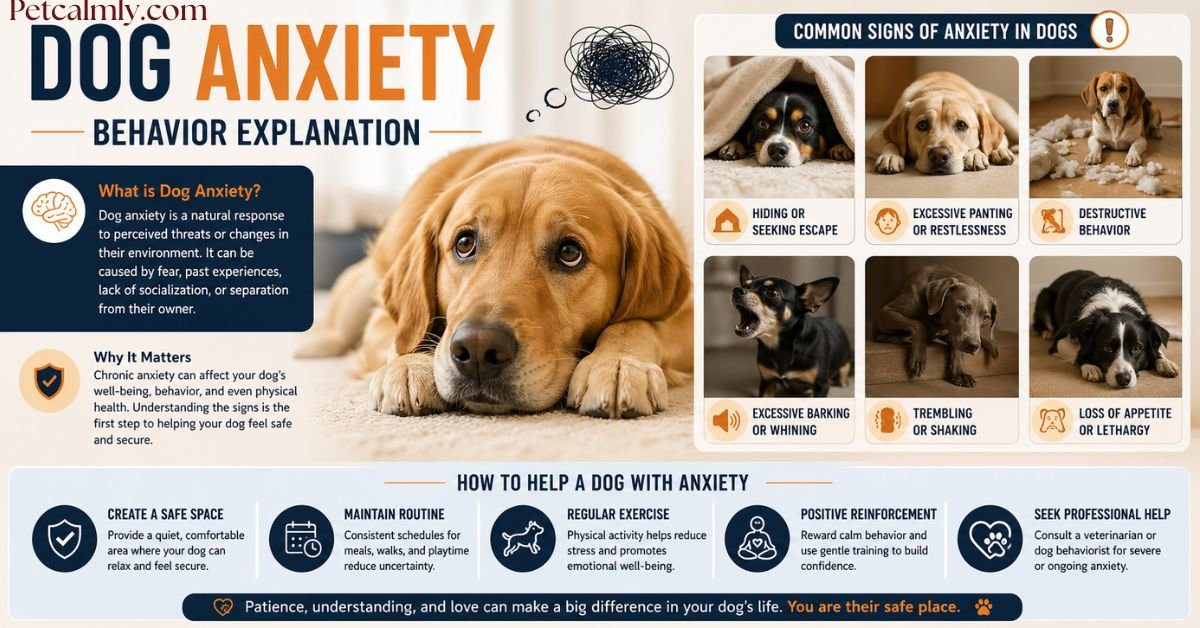
3 Common Dog Anxiety Behaviors
Understanding anxiety signs helps owners know when support is needed.
Mild Anxiety Signs
- Lip licking
- Yawning
- Restlessness
- Clinginess
- Mild whining
Moderate Anxiety Signs
- Excessive barking
- Pacing
- Trembling
- Destructive chewing
- Refusing food
Severe Anxiety Signs
- Self-harm
- Escaping attempts
- Panic attacks
- Aggressive fear responses
- Constant distress when alone
Dogs with severe symptoms usually need veterinary or professional behavioral support in addition to calming tools like music.
When Should You Be Concerned?
Some anxiety behaviors are more serious than others.
You should pay close attention if your dog:
- Stops eating regularly
- Injures themselves while anxious
- Damages doors or windows trying to escape
- Shows aggression from fear
- Cannot settle for long periods
- Has worsening symptoms over time
Chronic anxiety affects a dog’s overall health and quality of life.
In severe cases, untreated stress may contribute to digestive issues, sleep problems, weakened immunity, and behavioral decline.
A veterinarian can help rule out medical conditions and recommend treatment options.
What Should Pet Owners Do?
Music works best when combined with supportive daily habits.
Create a Calm Routine
Dogs feel safer when life is predictable.
Try to maintain:
- Consistent feeding times
- Regular walks
- Stable sleeping routines
- Predictable alone-time practice
Routine lowers uncertainty, which often reduces anxiety.
Use Music Before Anxiety Starts
Do not wait until your dog is already panicking.
Start calming music early:
- Before guests arrive
- Before leaving home
- Before storms begin
- Before bedtime
Prevention usually works better than reaction.
Keep Volume Low
Many owners accidentally play music too loudly.
Dogs have extremely sensitive hearing. The music should remain soft and gentle.
If the volume feels loud to you, it is probably too loud for your dog.
Pair Music With Positive Experiences
Music becomes more effective when associated with safety.
You can combine calming music with:
- Treats
- Relaxing petting
- Comfortable bedding
- Puzzle toys
- Quiet resting time
Over time, your dog may hear the music and automatically feel calmer.
Provide Physical and Mental Exercise
A bored dog is often a more anxious dog.
Daily exercise helps release nervous energy.
Helpful activities include:
- Walks
- Sniffing games
- Training sessions
- Food puzzles
- Gentle play
Mental stimulation is especially important for intelligent working breeds.
Avoid Punishing Anxiety
Never punish fearful behavior.
Yelling at an anxious dog can increase fear and confusion.
Instead:
- Stay calm
- Redirect gently
- Reward relaxed behavior
- Create safe spaces
Support builds trust, while punishment often worsens anxiety.
How to Set Up a Calming Music Routine
A simple routine can improve results significantly.
Example Daily Routine
Morning
- Short walk
- Calm feeding time
- Soft music during owner departure
Afternoon
- Puzzle toy
- Quiet rest period
- Background calming playlist
Evening
- Exercise session
- Relaxing family time
- Bedtime music at low volume
Consistency helps dogs learn that calm periods are safe.
Can Puppies Benefit From Calming Music?
Yes. Puppies often experience stress during:
- Crate training
- First nights alone
- New home adjustment
- Socialization periods
Soft music may help puppies settle faster and sleep more peacefully.
Young dogs are still learning about the world. Calm environments help build emotional confidence.
Do Senior Dogs Respond Well to Music?
Older dogs can also benefit greatly.
Senior dogs may develop anxiety from:
- Cognitive decline
- Hearing changes
- Reduced vision
- Increased sensitivity to routine changes
Gentle music can help older dogs feel more secure, especially at night.
Some senior dogs with canine cognitive dysfunction appear calmer when familiar soothing sounds play consistently.
Best Features to Look for in Dog-Calming Music
If choosing playlists or audio tracks, look for these qualities.
Slow Tempo
Slower rhythms encourage relaxation.
Aim for calm, steady pacing rather than energetic beats.
Instrumental Sounds
Lyrics may distract some dogs.
Instrumental tracks usually work best.
Minimal Sudden Changes
Avoid songs with:
- Loud choruses
- Sudden drums
- Sharp sound effects
Smooth transitions help anxious dogs stay settled.
Long Continuous Tracks
Frequent pauses or advertisements may startle dogs.
Long uninterrupted playlists work better for relaxation.
Mistakes Pet Owners Often Make
Even caring owners sometimes unintentionally reduce the effectiveness of calming music.
Changing Music Too Frequently
Dogs benefit from consistency.
Switching playlists constantly may reduce the calming association.
Using Music as the Only Solution
Music helps, but severe anxiety usually needs additional support.
Training, exercise, safe environments, and veterinary guidance may still be necessary.
Leaving Loud TVs On
Some owners think television calms dogs.
However, action scenes, shouting, and commercials may increase stress instead.
Ignoring Underlying Causes
Music cannot fix untreated medical problems or major behavioral disorders.
Pain, illness, trauma, and neurological issues can all contribute to anxiety.
Real-Life Example: How Music Helped an Anxious Dog
Bella, a rescue Border Collie mix, panicked every time her owners left for work.
She barked nonstop, scratched doors, and paced for hours.
Her owners started using soft piano music before departures while also practicing short separation exercises.
Within several weeks:
- Barking reduced
- Pacing became shorter
- Bella relaxed faster after departures
Music alone did not solve everything, but it became an important part of her anxiety-management routine.
Can Music Replace Anxiety Medication?
Usually not for severe cases.
Dogs with intense anxiety may still need:
- Behavioral therapy
- Veterinary guidance
- Prescription medication
- Structured desensitization training
However, calming music can support these treatments naturally and safely.
Many veterinarians recommend combining environmental calming tools with professional treatment plans.
Natural Ways to Combine Music With Anxiety Relief
Music often works even better alongside other calming methods.
Helpful combinations include:
- Comfortable safe spaces
- Anxiety wraps
- Pheromone diffusers
- Daily exercise
- Predictable routines
- Reward-based training
- Interactive toys
Layering calming strategies usually produces better results than relying on one method alone.
Conclusion
The best calming music for dogs with anxiety is usually soft, slow, and predictable. Classical music, gentle instrumental tracks, reggae, and specially designed dog-calming playlists often help nervous dogs feel safer and more relaxed.
While music is not a miracle cure, it can become a powerful tool for reducing stress during storms, alone time, bedtime, crate training, and other anxiety-triggering situations.
Every dog is unique. Some respond quickly, while others need time and consistency. The key is creating a calm environment, maintaining routines, and combining music with supportive care.
If your dog shows severe anxiety, ongoing fear, or destructive panic behaviors, consult a veterinarian or professional trainer for additional help.
More Information About Pets, Please Visit Our Website: Calming Dog Food Pets at Home
Frequently Asked Questions
1: What music frequency calms dogs?
Dogs usually respond best to low-frequency, soft, slow-paced sounds. Gentle instrumental music with steady rhythms tends to feel less stressful and more relaxing.
2: Can dogs sleep better with calming music?
Yes. Many dogs fall asleep faster when soft calming music plays quietly in the background, especially anxious puppies and senior dogs.
3: Is classical music really good for dogs?
In many cases, yes. Classical music is one of the most researched calming music styles for dogs because it often lowers stress-related behaviors.
4: Should I leave music on all day for my dog?
You can leave soft calming music on for several hours, especially during alone time. However, dogs also benefit from quiet periods and normal rest.
5: Does calming music help separation anxiety in dogs?
It can help reduce stress and create comfort during owner absences. However, severe separation anxiety usually requires training and behavioral support too.
6: Are there dogs that dislike calming music?
Yes. Some dogs may ignore music completely or prefer different sounds. Each dog has unique preferences, so owners may need to test several calming styles.