Short direct answer
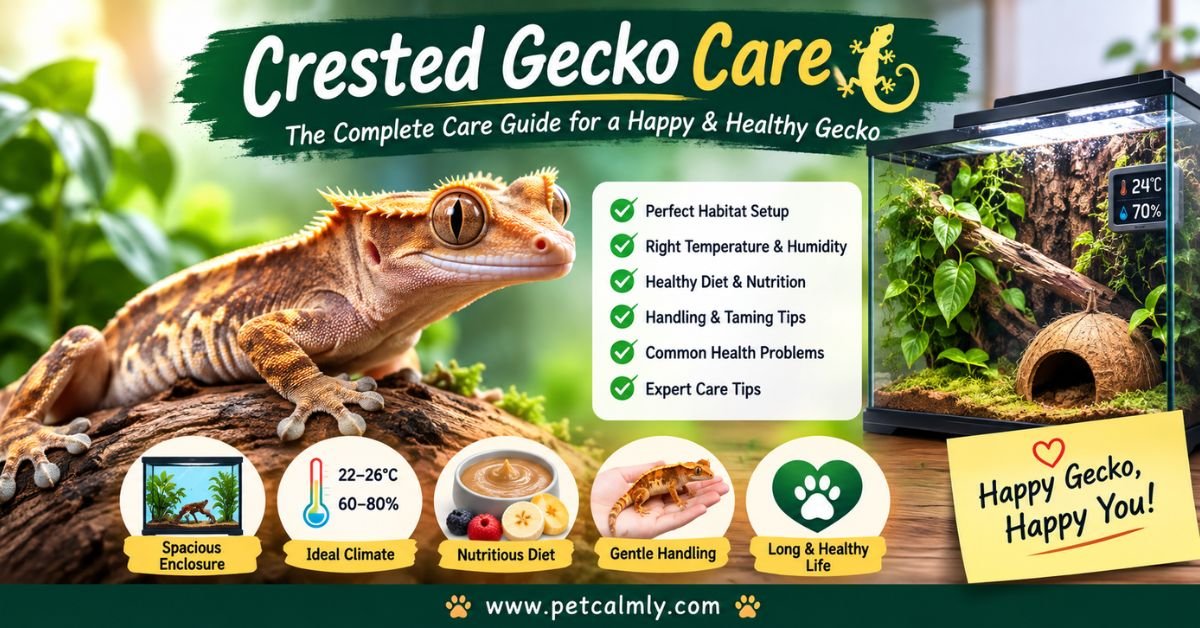
Crested gecko care comes down to five essentials: a humid, well-planted enclosure kept between 72–78°F, a calcium-rich diet of commercial gecko food supplemented with live insects, gentle and consistent handling, regular misting for hydration and shedding, and close attention to signs of stress or illness. Get these right, and crested geckos are one of the easiest, most rewarding reptiles a first-time owner can keep often living 15 to 20 years with minimal fuss.
Why Crested Geckos Are Such a Popular First Reptile
If you’ve just brought home a crested gecko or you’re still deciding whether one is right for you you’re in good company. These little “eyelash geckos,” named for the soft fringe of skin above their eyes, have become one of the most recommended reptiles for beginners, and for good reason.
They don’t need heat lamps or UVB in most setups. They’re not picky eaters. They tolerate handling reasonably well once settled. And unlike many reptiles, a crested gecko that drops its tail simply… doesn’t grow one back. It’s not a medical emergency it’s just part of who they are, and honestly, most owners barely notice after the first week of adjustment.
That said, “easy” doesn’t mean “no effort.” Crested geckos still have specific humidity, temperature, and dietary needs that, if ignored, lead to slow, quiet health decline rather than obvious symptoms. This guide walks through everything from enclosure setup to feeding schedules to the exact signs that mean it’s time to call a reptile vet so you can raise a genuinely thriving gecko, not just a surviving one.
Crested Gecko Habitat Setup: What Your Gecko Actually Needs
Tank Size and Enclosure Type
A single adult crested gecko does well in a vertical enclosure of at least 18x18x24 inches. Vertical space matters more than floor space here crested geckos are arboreal, meaning they spend most of their life climbing rather than walking along the ground. A tall, densely planted tank mimics the rainforest canopy they’d naturally live in.
Glass terrariums with front-opening doors and mesh tops (for ventilation) work well. Avoid enclosures that are too small “for now, until they grow” juveniles benefit from the same vertical climbing opportunities as adults, just with more hiding spots and shorter distances between them so they don’t feel exposed.
Substrate and Décor
A safe, moisture-retentive substrate is one of the most overlooked parts of crested gecko care. Options that work well include:
- Coconut fiber (coco coir) mixed with sphagnum moss
- Commercial bioactive soil blends made for tropical reptiles
- Reptile-safe topsoil without added fertilizers or perlite chunks
Avoid loose sand, gravel, or walnut shell substrates these hold too little humidity and can cause impaction if accidentally swallowed during feeding.
Fill the enclosure with cork bark rounds, sturdy branches, and artificial or live plants (pothos and silk ficus are popular, low-maintenance choices). The goal is a tank where your gecko can climb, hide, and feel secure at multiple levels — not an open, exposed box.
Temperature and Humidity: The Two Numbers That Matter Most
This is where most beginner mistakes happen. Crested geckos come from the cooler, humid mountain forests of New Caledonia, and they’re genuinely sensitive to heat.
| Factor | Ideal Range | Why It Matters |
|---|---|---|
| Daytime temperature | 72–78°F | Above 82°F for extended periods can cause heat stress or death |
| Nighttime temperature | 65–72°F | A natural drop is fine and even beneficial |
| Humidity | 50–80%, cycling | High humidity aids shedding; needs to dry out slightly between mistings |
| Lighting | Low-level UVB (optional but recommended) | Supports calcium metabolism alongside supplements |
Most homes stay within a safe temperature range for crested geckos without any heating equipment which is part of why they’re beginner-friendly. If your room regularly climbs above 80°F in summer, though, that’s a real concern worth solving with fans or AC rather than something to wait out.
Humidity is maintained through daily misting (by hand or an automatic mister) rather than a heat source. A digital hygrometer and thermometer combo not the cheap sticker kind is worth the small investment, because guessing at humidity levels is how dehydration and poor sheds happen unnoticed.
Crested Gecko Diet: What to Feed and How Often
The Foundation: Commercial Crested Gecko Diet (CGD)
Most experienced keepers rely on a powdered commercial crested gecko diet brands like Pangea or Repashy are widely used mixed with water into a smooth paste. This isn’t a shortcut; it’s genuinely considered a nutritionally complete diet by many breeders and reptile veterinarians, because it’s formulated to include the calcium, vitamins, and fruit-based nutrition crested geckos need.
Feeding schedule for CGD:
- Juveniles (under 6 months): small amount every day
- Sub-adults: every other day
- Adults: 2–3 times per week
Offer the paste in a shallow dish, left overnight, then removed and cleaned the next day to prevent mold or bacterial growth.
Live Insects: Enrichment, Not Just Nutrition
While CGD alone can sustain a healthy gecko, most keepers offer gut-loaded crickets or dubia roaches once or twice a week. This isn’t strictly required, but it does two things: it adds dietary variety, and it gives your gecko a chance to express natural hunting behavior, which is genuinely good for their mental stimulation.
Dust insects lightly with a calcium supplement (without D3 if you’re also using UVB lighting, with D3 if you aren’t) before offering them.
Foods and Habits to Avoid
- Don’t feed wild-caught insects — pesticide risk
- Don’t offer fruit alone as a staple — it lacks the balanced calcium-to-phosphorus ratio CGD provides
- Don’t leave live insects unsupervised in the tank overnight; crickets can nibble on a sleeping gecko
- Don’t switch foods abruptly — introduce new CGD flavors gradually to avoid digestive upset
Handling and Taming: Building Trust Without Rushing It
New owners often want to hold their gecko right away, but crested geckos do best when handling starts slow. For the first week after bringing one home, minimize handling almost entirely let them settle into the new sights, smells, and sounds first.
After that, short handling sessions (5–10 minutes) a few times a week help build tolerance. A few practical pointers:
- Let your gecko walk onto your hand rather than grabbing them
- Keep sessions low to the ground or over a soft surface crested geckos are jumpers, and falls from height are a real injury risk
- Watch for stress signs like barking (a soft chirping sound), tail waving, or attempts to bolt
- Never grab or restrain the tail it detaches easily as a defense mechanism and won’t regrow
Over time, most crested geckos become calm, even a little curious, about gentle handling. Some individuals stay more skittish than others, and that’s normal too personality varies gecko to gecko, the same way it does in cats or dogs.
Shedding: What’s Normal and What’s Not
Crested geckos shed their skin roughly every 4–6 weeks, more often in younger, growing geckos. A healthy shed happens in one piece or a few large sections, usually overnight, and your gecko may even eat the shed skin this is completely normal and not something to worry about.
Signs a shed isn’t going well:
- Retained skin around the toes, tail tip, or eyelids for more than a couple of days
- Visibly dull, dry-looking skin that doesn’t come off with normal humidity
- A constricted, discolored toe or tail tip (a sign retained shed is cutting off circulation)
Retained shed is almost always a humidity problem. Raising humidity through more frequent misting, or offering a humid hide (a small enclosed space lined with damp moss), usually resolves it. If retained skin has already caused swelling or discoloration, that crosses into a situation worth a same-week vet visit rather than a wait-and-see approach.
6 Common Crested Gecko Care Mistakes New Owners Make
- Overheating the tank — placing the enclosure near a window or using a heat lamp meant for other reptiles
- Handling too soon or too often — before the gecko has settled in
- Letting humidity swing too low — leading to poor sheds and dehydration
- Overfeeding insects and underfeeding CGD — leading to unbalanced nutrition
- Using the wrong substrate — increasing impaction risk
- Skipping the quarantine period for new geckos — introducing parasites or illness to existing pets
Most of these mistakes come from good intentions new owners wanting to interact with or feed their gecko generously. Recognizing them early is really the whole difference between a gecko that merely survives and one that visibly thrives.
When Should You Worry? Signs That Need Veterinary Attention
General care mistakes are usually fixable at home. The signs below are different they suggest your gecko needs a reptile-experienced veterinarian, not just a habitat adjustment:
- Noticeable weight loss or a visibly thin tail base
- Sunken eyes or lethargy that doesn’t improve with corrected humidity
- Loss of appetite lasting more than a week in an adult (shorter in juveniles)
- Swollen or discolored limbs, jaw, or tail
- Difficulty gripping surfaces or climbing a possible sign of metabolic bone disease from calcium deficiency
- Visible parasites, unusual discharge, or persistent open wounds
According to the Merck Veterinary Manual, metabolic bone disease remains one of the most common preventable health issues in captive reptiles, typically linked to inadequate calcium or vitamin D3 intake which is exactly why consistent supplementation matters even when a gecko seems outwardly fine.
If you notice any of the signs above, it’s worth finding an exotics or reptile-specialized vet rather than a general small-animal practice, since gecko physiology and dosing differ significantly from cats and dogs.
What Should Pet Owners Do Day-to-Day?
A simple, sustainable care routine looks like this:
Daily:
- Mist the enclosure once (or twice in dry climates) to maintain humidity
- Check temperature and humidity readings
- Offer fresh CGD paste for juveniles, or check on standing dish for adults
Weekly:
- Offer gut-loaded insects 1–2 times
- Spot-clean substrate and remove uneaten food
- Observe shedding progress and overall activity level
Monthly:
- Deep-clean the enclosure and décor
- Check body condition (tail thickness, weight if you have a gram scale)
- Replace or refresh live plants and substrate sections as needed
This rhythm takes maybe 10–15 minutes a day once you’re settled into it far less demanding than most people expect from a reptile.
Conclusion
Crested gecko care rewards consistency far more than perfection. You don’t need an elaborate setup or expert-level reptile experience to keep one happily for well over a decade you need stable humidity, a balanced diet, patient handling, and the ability to notice when something’s off. Most problems in captive geckos develop slowly, which means the owners who check in daily, even briefly, tend to catch issues long before they become serious. Start with the basics in this guide, adjust based on what your specific gecko tells you through behavior, and you’ll likely find like so many keepers before you that crested geckos are just as easy to love as they are to care for.
More Information About Pets, Please Visit Our Website: Crested Gecko Tank Setup Ideas
Pet Lizard Care Requirements
How Long Do Bearded Dragons Live?
What Is the Easiest Pet Reptile to Take Care Of?
Frequently Asked Questions
1. How often should I mist my crested gecko’s tank?
Most keepers mist once or twice daily, aiming for humidity between 50–80% that’s allowed to dry out somewhat between mistings rather than staying constantly soaked.
2. Do crested geckos need UVB lighting?
It’s not strictly required if you’re using vitamin D3 supplements, but low-level UVB is increasingly recommended by reptile keepers as a beneficial addition that supports natural calcium metabolism.
3. Can crested geckos live together in the same tank?
Two females can sometimes cohabit successfully in a large enclosure, but males should never be housed together, and mixed-sex pairs will breed something only experienced keepers should plan for intentionally.
4. Why did my crested gecko’s tail fall off?
Tail loss (autotomy) is a natural defense response to stress, rough handling, or perceived threat. It doesn’t grow back, but it isn’t dangerous, and most geckos adjust fine to a “frog butt” appearance.
5. How long do crested geckos live?
With proper care, crested geckos commonly live 15 to 20 years, making them a genuine long-term commitment rather than a short-lived starter pet.
6. What’s the ideal temperature for a crested gecko enclosure?
Aim for 72–78°F during the day with a slight nighttime drop. Sustained temperatures above 82°F are a real health risk and should be corrected quickly.