Short direct answer
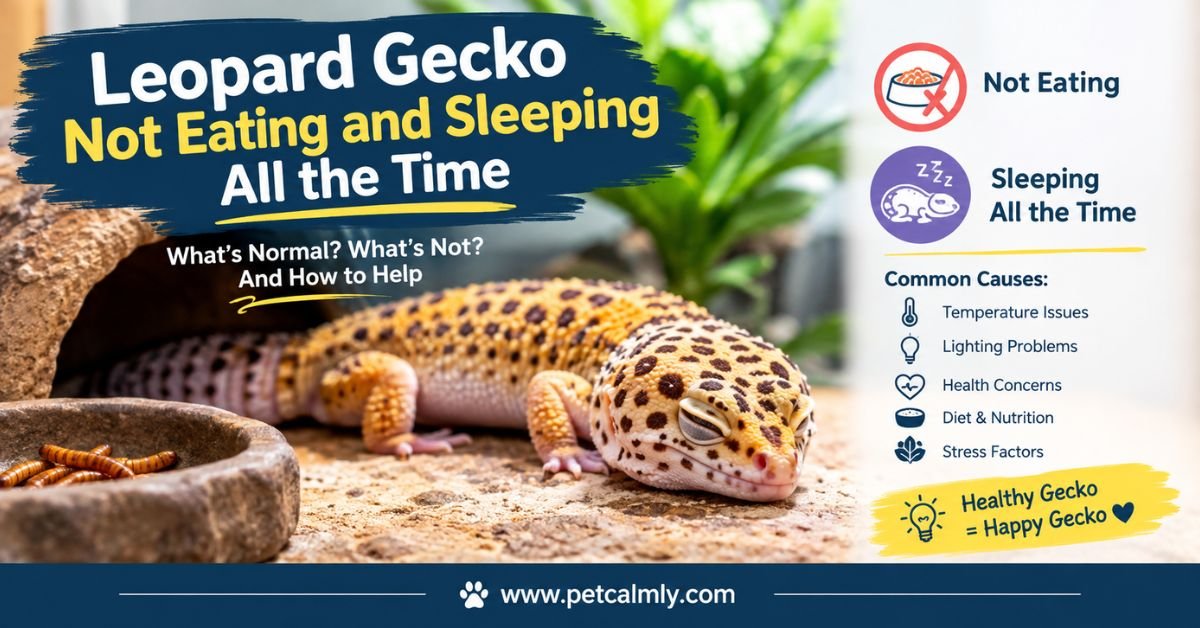
A leopard gecko that isn’t eating and seems to be sleeping all the time is usually reacting to something in its environment or going through a normal biological phase most commonly incorrect tank temperatures, brumation (a natural winter slowdown), shedding, or stress from recent handling or a new enclosure. It can also signal impaction, parasites, or illness if it’s paired with weight loss, a swollen belly, or lethargy that doesn’t improve. The first step is always checking your heat setup, because a cold gecko is a gecko that stops doing almost everything, including eating.
If you’ve been watching your gecko curl up in its hide day after day, barely poking its head out even when you drop in a juicy mealworm, you’re probably somewhere between confused and worried right now. That’s a completely reasonable place to be. Leopard geckos aren’t the most expressive animals they don’t whine or pace like a dog would when something’s wrong so a sudden drop in appetite and activity is often the only signal you get.
The good news is that this is one of the more common concerns leopard gecko owners run into, and in most cases, the cause is fixable once you know where to look. This guide walks through exactly why your gecko might be doing this, how to tell the difference between “normal” and “something’s actually wrong,” and what steps to take next.
Why Is My Leopard Gecko Not Eating and Sleeping All the Time?
Leopard geckos are crepuscular, meaning they’re naturally most active at dawn and dusk and spend a large chunk of the day resting. So some sleepiness is completely normal. What you’re looking for is a change from your gecko’s usual pattern if a normally food-motivated gecko suddenly stops coming out, stops eating, and seems unusually still, something has shifted.
The most common causes fall into a few categories: environmental problems, natural life-cycle events, stress, and health issues. Here’s a closer look at each.
1. Incorrect Tank Temperature
This is, by far, the most frequent reason for appetite loss in leopard geckos. They’re ectothermic, which means they rely entirely on outside heat to digest food and stay active. If the warm side of the enclosure isn’t hitting the right range, digestion slows down or stops, and your gecko’s body essentially tells it not to eat because it can’t process anything anyway.
What the range should look like:
| Zone | Ideal Temperature |
|---|---|
| Warm side (basking spot) | 88–92°F (31–33°C) |
| Cool side | 75–80°F (24–27°C) |
| Nighttime drop | Not below 65°F (18°C) |
A lot of owners assume their tank is warm enough because the room feels comfortable to them, but human comfort and reptile-appropriate heat are two very different things. A digital thermometer with a probe (not just a stick-on strip) is the only reliable way to know what’s actually happening inside the enclosure, especially at substrate level where your gecko spends most of its time.
2. Brumation (Not Hibernation)
If it’s fall or winter where you live, and your gecko is otherwise healthy-looking — good weight, clear eyes, normal skin — brumation is a strong possibility. This is a natural slowdown triggered by shorter daylight hours and cooler ambient temperatures, even indoors. Wild leopard geckos brumate to conserve energy through cooler months, and captive geckos can retain some of that instinct.
During brumation, a gecko might:
- Eat very little or not at all for weeks
- Sleep far more than usual
- Still drink water occasionally
- Maintain a stable, non-shrinking body weight for a while
Brumation is generally more common in adult geckos over a year old and is less typical — and more concerning — in juveniles, who need consistent nutrition to grow properly.
3. Shedding
Leopard geckos often go quiet in the day or two before a shed. Their skin can feel tight or itchy, and many geckos simply prefer to hide until the process is done rather than move around and risk damaging the new skin underneath. You may notice their color looking duller or slightly grey right before this happens.
4. Stress From a New Environment or Handling
New geckos, or geckos that just went through a tank move, a substrate change, or too much handling too soon, often go off food for a while. This is especially common in geckos that were recently brought home from a pet store or breeder — the change in surroundings, smells, and routine can be genuinely unsettling for them, even though nothing is “wrong” in a medical sense.
5. Impaction
Impaction happens when something usually loose substrate, an oversized feeder insect, or indigestible material — blocks the digestive tract. This is more serious and tends to come with a visibly swollen or firm belly, along with reduced appetite and lower activity. Loose substrates like sand or fine calcium sand carry a higher impaction risk than reptile carpet, paper towel, or tile, particularly for younger geckos.
6. Parasites or Illness
Internal parasites, respiratory infections, or other illnesses can cause a gecko to eat less and rest more, often alongside other signs like weight loss, discoloration, lethargy that doesn’t lift even in warm conditions, or unusual stool. This is where a home fix isn’t enough, and a reptile veterinarian needs to get involved.
How to Tell the Difference Between Normal Behavior and a Real Problem
This is usually the part owners struggle with most, so here’s a simple way to think about it.
Likely normal (brumation, shedding, or mild stress) if:
- Your gecko’s weight has stayed roughly the same
- Its skin, eyes, and body look otherwise healthy
- It’s still drinking water
- Temperatures in the tank are confirmed correct
- The behavior lines up with a seasonal change or a recent shed
Worth paying closer attention to if:
- Your gecko has visibly lost weight, especially around the tail (a leopard gecko’s tail stores fat, so a thin or shrinking tail is one of the clearest early warning signs)
- The belly looks swollen, hard, or lopsided
- It hasn’t eaten in more than 2–3 weeks and is a juvenile
- It seems weak, unresponsive, or has trouble moving normally
- You notice discharge from the eyes, nose, or mouth
- Stool looks unusual or hasn’t appeared in a long time
A quick, practical way to track this at home is to weigh your gecko on a small kitchen scale once a week and jot the number down. A stable weight over several weeks is reassuring even if appetite is low. A steady downward trend is your cue to get a vet involved sooner rather than later.
What Pet Owners Should Do Step by Step
If your gecko has stopped eating and is sleeping more than usual, work through this in order rather than jumping straight to worst-case conclusions.
- Check and log your tank temperatures at both the warm and cool ends, using a probe thermometer, at different times of day.
- Check humidity levels. Most leopard geckos do best around 30–40% ambient humidity, with a slightly higher humid hide for shedding support.
- Look at the tail. A plump tail is a good sign; a thin, shrinking tail means the body is drawing on fat reserves and needs attention.
- Feel and look at the belly gently for firmness or swelling.
- Check the substrate you’re using and whether it could pose an impaction risk.
- Reduce handling for a few days to rule out stress, especially with a newer gecko.
- Offer food, then leave it. Try a few appropriately sized feeders (roughly the size of the gecko’s head or smaller) in the evening and don’t force interaction if it doesn’t respond.
- Track the timeline. Note the date appetite dropped, current season, last shed, and weight if you have a scale.
- Call a reptile-experienced vet if it’s been several weeks without eating (or sooner for a juvenile), if weight is dropping, or if you notice any of the warning signs above.
When Should You Worry?
Occasional skipped meals are rarely an emergency for a healthy adult gecko they can safely go one to two weeks without eating, and in brumation, even longer, as long as body condition holds up. What changes the picture is a combination of signs rather than any single one.
Treat it as urgent and contact a veterinarian promptly if your gecko shows:
- A visibly shrinking or very thin tail
- A hard, swollen, or asymmetric belly
- No food intake for 3+ weeks in an adult, or 1–2 weeks in a juvenile or hatchling
- Lethargy that persists even after temperatures are corrected
- Any discharge, labored breathing, or open-mouth breathing
- Limpness, difficulty gripping surfaces, or tremors
According to the Merck Veterinary Manual, prolonged anorexia in reptiles combined with weight loss often points to an underlying husbandry or health issue rather than a benign pause, which is why the tail-and-weight check matters so much before assuming it’s “just brumation.”
5 Common Mistakes Owners Make
- Assuming room temperature is enclosure temperature. These are rarely the same, especially at floor level inside a tank.
- Handling a stressed gecko more to “cheer it up.” This usually backfires and adds to the stress load.
- Switching foods repeatedly to try to tempt appetite, which can make an already unsettled gecko warier of new things.
- Waiting too long on a juvenile. Young, growing geckos have far less fat reserve to fall back on than adults and decline faster.
- Misreading impaction as “just being lazy.” A swollen belly is not a sleepy-gecko sign; it needs to be checked properly.
Prevention: Keeping Appetite and Activity Stable Long-Term
- Maintain consistent, verified temperatures year-round with a reliable thermostat, not just a dimmer switch.
- Use a probe thermometer at both ends of the tank, checked periodically, not a one-time setup you forget about.
- Choose a safe, impaction-conscious substrate, especially for younger geckos.
- Keep a light, predictable handling routine so your gecko has time to settle after any change.
- Feed appropriately sized prey nothing wider than the space between your gecko’s eyes.
- Keep a simple log of feeding, shedding, and weight so early changes are easy to catch.
A Real-World Example
It’s common for an owner to notice their previously reliable eater has skipped feedings for a week, first assuming the worst. In many of these cases, once a probe thermometer goes into the warm hide, it turns out the basking spot is sitting several degrees below where it needs to be, often because a bulb has aged and dimmed. Once heat is corrected, appetite frequently picks back up within days. This is exactly why temperature is the first thing to rule out, before jumping to more worrying explanations.
Conclusion
A leopard gecko that isn’t eating and is sleeping more than usual is telling you something changed it’s just not always something serious. Start with the basics: temperature, humidity, substrate, and recent life events like shedding or a seasonal slowdown. Track weight and tail condition over time rather than reacting to a single skipped meal. And if the signs point beyond normal a shrinking tail, a swollen belly, or weeks without eating don’t wait it out. A reptile-experienced vet can rule out impaction, parasites, or illness far more reliably than guesswork at home.
More Information About Pets, Please Visit Our Website: How Long Do Bearded Dragons Live?
Common Leopard Gecko Diseases
Crested Gecko Care
Crested Gecko Tank Setup Ideas
Frequently Asked Questions
1: How long can a leopard gecko go without eating?
A healthy adult leopard gecko can typically go one to two weeks without eating with no serious concern, and longer during brumation as long as its weight and tail condition stay stable. Juveniles have much smaller fat reserves and shouldn’t go more than about a week without close attention.
2: Is it normal for a leopard gecko to sleep all day?
Yes, to a degree. Leopard geckos are crepuscular, meaning they’re naturally more active at dawn and dusk and rest for large parts of the day. A concern arises when sleepiness increases sharply, extends into normally active hours, and comes with reduced appetite.
3: How do I know if my leopard gecko is brumating or sick?
Brumating geckos usually keep a stable weight, look physically healthy, and this happens during cooler months or shorter daylight hours. A sick gecko is more likely to show weight loss, a thinning tail, unusual stool, discharge, or lethargy that doesn’t improve once temperatures are confirmed correct.
4: What temperature is too cold for a leopard gecko?
Nighttime temperatures dropping below roughly 65°F (18°C), or a basking spot that doesn’t reach at least 88°F (31°C), can be cold enough to slow digestion and reduce appetite significantly.
5: Should I force-feed my leopard gecko if it won’t eat?
No. Force-feeding a leopard gecko without veterinary guidance can cause serious harm, including aspiration. If appetite loss continues after correcting temperature and ruling out shedding or brumation, a reptile vet should guide any feeding intervention.
6: Can stress alone stop a leopard gecko from eating?
Yes. A new enclosure, a recent move, excessive handling, or even a new tank mate’s scent nearby can be enough to suppress appetite for several days to a couple of weeks in an otherwise healthy gecko.