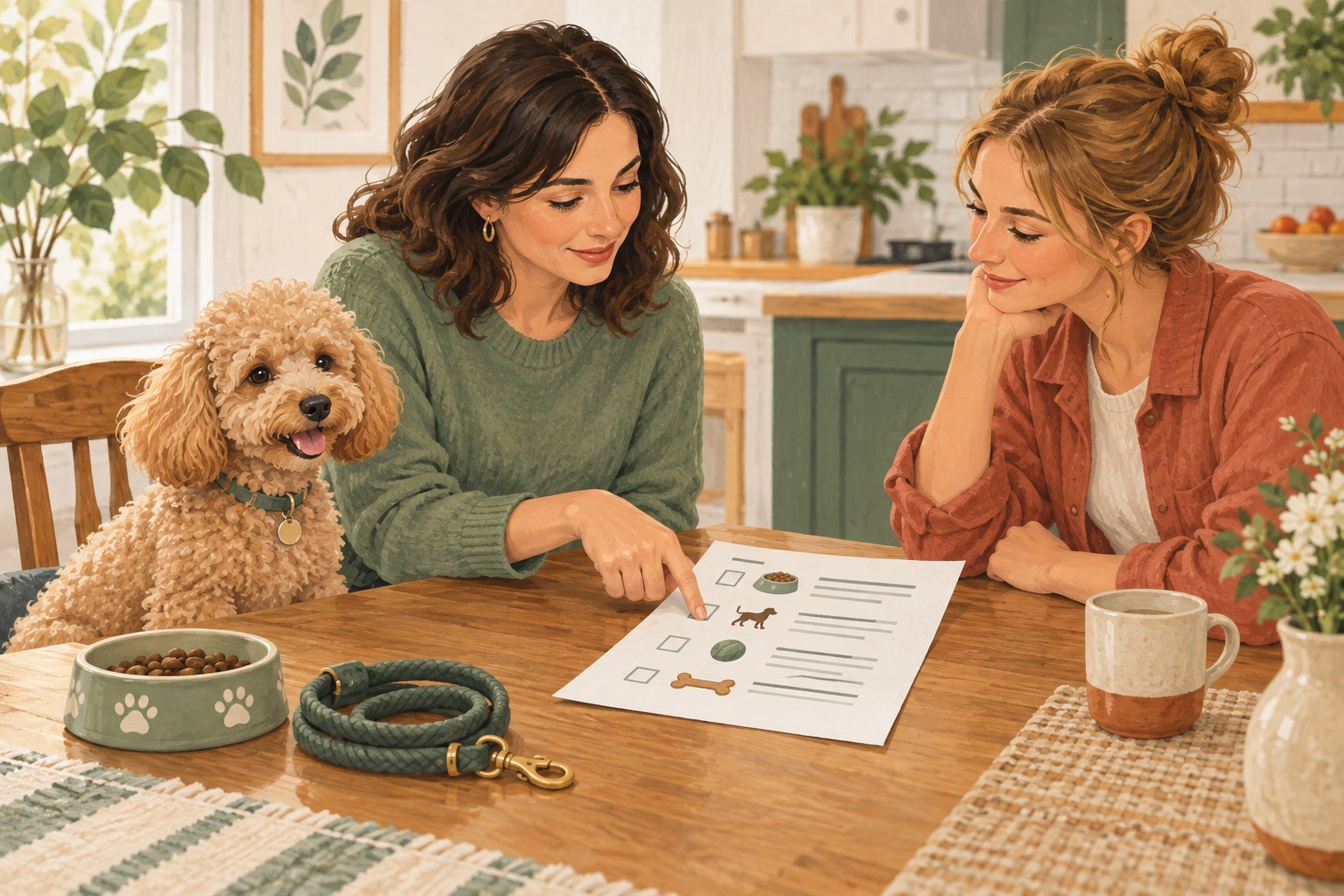
A sitter arrives at dinner time. The food is easy to find, but the scoop is unmarked, two bottles sit beside the bowl, and nobody remembers whether breakfast included a supplement. A short written handoff can answer those questions before you leave.
Use one page for the everyday essentials, with separate veterinary instructions attached when needed. This guide focuses on routine care for adult dogs. Puppies, dogs recovering from illness, and dogs with medical conditions need an individual plan from their veterinary team.
Write down the meal the sitter will actually serve
Name the exact food and recipe, the amount per meal, the unit, and the feeding times. Distinguish a meal portion from the daily total. A kitchen scale or the same clearly marked measuring cup is more useful than “one scoop.”
Put preparation and storage instructions beside the food. If meals are portioned in advance, label each container with the dog’s name, date and meal. Keep the original packaging available so the sitter can check ingredients and storage directions.
List permitted treats and the daily allowance, including food used in training or puzzle toys. Write down allergies and foods to avoid. Keep fresh water available, and show the sitter where bowls and cleaning supplies are kept.
VCA’s feeding guidance supports measured portions and a regular feeding routine. Keep your dog’s established plan during the handoff rather than asking the sitter to work out a new ration.
Make supplement instructions specific
For every existing supplement, record the full product name, amount and unit, timing, how it is given, storage instructions, and the last serving given. Write “none” if there are no supplements. Keep prescription medicines on a separate veterinary schedule and attach it.
If your dog’s established plan includes a liquid probiotic for dogs to mix with meals, demonstrate the graduated measuring device and copy the current bottle’s directions into the plan. Record the actual volume in mL; “a dropper” can mean different amounts to different people.
Discuss supplement suitability with your veterinarian before the stay. The sitter should follow the existing written plan and avoid adding products or changing amounts. If a serving is missed, repeated accidentally, or only partly eaten, record what happened and ask the owner or veterinary clinic what to do before giving more.
Describe an ordinary day
Note toilet opportunities, usual walks, rest periods, sleeping arrangements and how long the dog is normally comfortable alone. Mention the harness, familiar cues and any handling sensitivities. Explain practical limits, such as avoiding stairs, off-leash areas or unfamiliar dogs.
For more guidance on keeping feeding, walks and rest consistent, see our daily dog care routine guide.
Add one or two details that help the sitter recognize normal behavior: “usually finishes breakfast” or “sleeps in the downstairs bed after the morning walk.” Keep access instructions and household security details in a private message, separate from the care sheet.
Record changes with times and observable details
A useful care log says what happened, when it happened and what the sitter did next. Note food offered and left over, unusual drinking, stool changes, vomiting, toilet difficulties, energy and movement. A photo may help the veterinarian if it can be taken safely.
For example: “7:10 a.m. — Offered Milo’s labeled 90 g breakfast. About 30 g remained at 7:25. No vomiting observed. Owner messaged at 7:30.” This is a fictional entry showing how to write a log, not a feeding recommendation.
Avoid guessing that a change is caused by stress, food or a supplement. Record any recent change to the routine and let the veterinary team interpret symptoms. Agree on a daily update time, while reporting concerning changes as they happen.
Agree on who to call and when
List the owner, a backup contact, the regular veterinarian and an emergency clinic that can provide care during the stay. Include phone numbers, the clinic address and the transport plan. Save the numbers in the sitter’s phone as well as on paper.
The American Veterinary Medical Association recommends planning emergency care authorization before an owner leaves. Ask the clinics what forms they require and arrange payment access privately. Agree who can authorize treatment if you cannot be reached.
Contact an emergency veterinarian immediately for breathing difficulty, collapse, uncontrolled bleeding, serious injury, suspected poisoning, or repeated attempts to vomit without producing anything, especially with a swollen abdomen. These are among the warning signs described in VCA’s emergency guidance.
Repeated vomiting or diarrhea, blood in stool, marked weakness, or difficulty passing urine also need prompt veterinary advice. Follow the clinic’s triage instructions. During an obvious emergency, do not wait for the owner’s reply. Give human medicines or induce vomiting only if a veterinarian specifically instructs you to.
Rehearse the handoff before leaving
Ask the sitter to show you one measured meal, explain the supplement schedule and point to the emergency contact. Date the sheet, remove older versions and agree who records each completed task. For longer stays, continue the daily log on a separate page or shared note.
The reusable sheet on the next page keeps the main instructions together. Fill it in for your own dog, and attach any veterinary plan that needs more space.
Daniel Drabo represents Pure Majesty Pets, a dog-supplement business. He is not a veterinarian. This article provides general care-planning information and does not replace individual veterinary advice.
Printable Dog-Care Handoff Sheet
Complete before the stay and keep with the dog’s supplies. Attach veterinary instructions as needed.
Dog and dates Name ____________________ Stay ______________ Updated __________
Owner Name ________________________ Phone __________________________
Backup contact Name ________________________ Phone __________________________
Meals and water
Food and recipe ___________________________________________________________
Each meal Amount + unit __________________ Times __________________________
Treats and allergies Allowance __________________ Avoid _____________________________
Preparation and storage _______________________________________________________
Keep fresh water available. Note unusual drinking or a change in appetite.
Existing supplements and medicines
Supplement or none Product __________________ Amount + unit ________________________
Directions Time / method / storage _________________________________________
Last given Date + time __________________ By whom __________________________
Medicines None / veterinary schedule attached _______________________________
If missed, partly eaten or given twice, record details and ask before giving more.
Routine and usual behavior
Toilet and walks ___________________________________________________________
Rest and alone time ___________________________________________________________
Usual appetite and stool _______________________________________________________
Energy and handling Usual behavior / limits _________________________________________
Veterinary contacts and action plan
Regular vet Name _________________________ Phone _________________________
Emergency clinic Name / phone __________________________________________________
Address and transport ___________________________________________________________
If owner unreachable Authorized person / clinic form location ___________________________
Individual call triggers ___________________________________________________________
Call an emergency vet immediately for breathing difficulty, collapse, severe bleeding, suspected poisoning, serious injury or repeated unsuccessful retching. Follow clinic advice; do not wait for an owner reply in an obvious emergency.
Daily log and updates
Update time __________________ Time / task / amount / change / action / initials
________________________________________________________________________ ________________________________________________________________________