Short direct answer
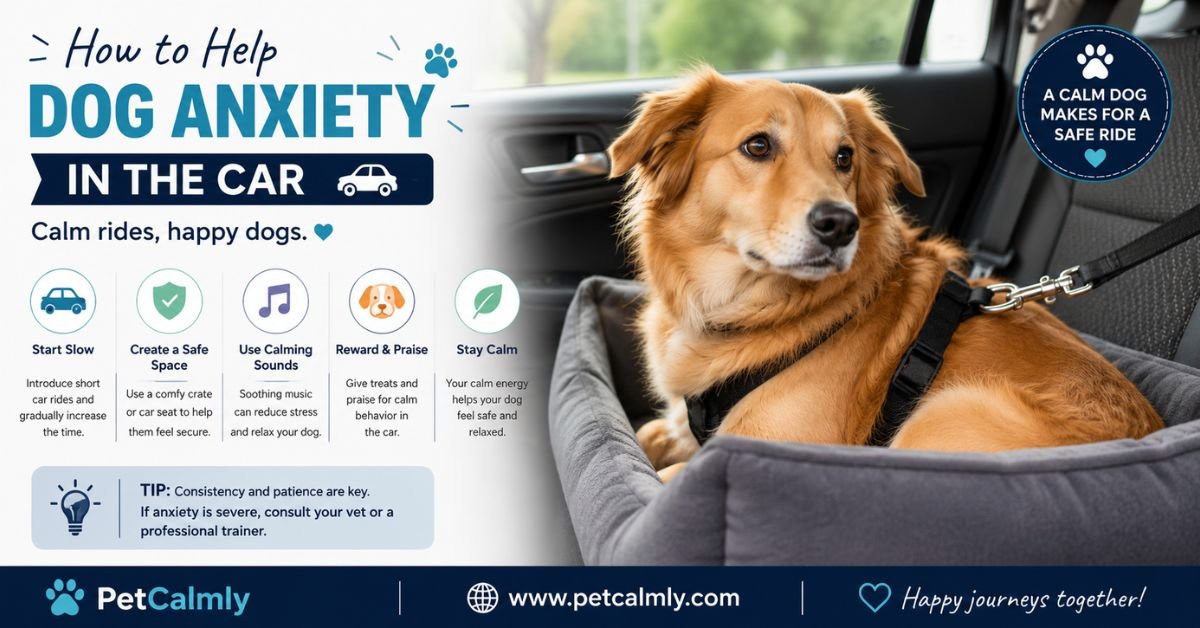
To help dog anxiety in car rides, start with short, positive trips that end somewhere your dog loves, use a secure and comfortable crate or seatbelt harness, keep the car calm with familiar scents and low noise, and build up ride duration slowly. Anxiety in the car usually stems from motion sickness, past negative associations, or lack of exposure not stubbornness. With patience, gradual desensitization, and the right setup, most dogs can learn to feel safe on the road again.
If your dog’s car anxiety is severe, sudden, or paired with vomiting, shaking uncontrollably, or attempts to escape, a veterinary visit is worth scheduling before you continue training on your own.
Why Car Rides Trigger Anxiety in Dogs
Dogs don’t reason about car travel the way we do. They can’t tell themselves “we’re just going to the park” they respond to what their body and senses are telling them in the moment, and for a lot of dogs, that information feels genuinely threatening.
A car is a small, enclosed, moving space that shakes, hums, and smells like exhaust and hot vinyl. For a dog whose main way of understanding the world is through smell and physical sensation, that’s a lot to process at once. Add unpredictable stops, sharp turns, and the vibration of the engine, and it’s easy to see why some dogs shut down or panic.
There’s also the association piece. Many dogs only ride in the car to go to the vet, the groomer, or somewhere else stressful. Over time, the car itself becomes a signal that something unpleasant is about to happen even if the ride itself feels fine.
Common Root Causes of Car Anxiety in Dogs
- Motion sickness — nausea from the inner ear adjusting to movement, especially common in puppies whose vestibular system is still developing
- Negative association — car rides that historically end at the vet clinic or somewhere frightening
- Lack of early exposure — dogs adopted as adults who were never gradually introduced to car travel as puppies
- Loud or unpredictable environment — traffic noise, sudden braking, or other pets barking in the car
- Restraint discomfort — an ill-fitting harness or a crate that feels unstable during turns
- General anxiety disorder — dogs who are anxious in multiple situations, not just the car, may need broader behavioral support
Recognizing which of these applies to your dog changes how you approach training. A dog who is nauseous needs a different plan than a dog who is scared of the vet.
How to Tell If Your Dog Is Anxious vs. Carsick
Owners often assume drooling and whining mean fear, when sometimes it’s nausea and treating one like the other rarely works.
Signs that point more toward anxiety:
- Trembling before the car even starts moving
- Trying to escape, hide, or refuse to get in
- Panting heavily while seated still and not moving much
- Whale eye (showing the whites of the eyes), tucked tail, flattened ears
- Barking or howling that seems distress-driven rather than excited
Signs that point more toward motion sickness:
- Lip licking and excessive drooling that starts once the car is moving
- Vomiting shortly after the ride begins
- Lethargy or reluctance to move once out of the car
- Anxiety that seems to ease once the car stops, rather than lingering afterward
Some dogs experience both at once, especially if nausea from early rides created a lasting fear of the car itself. That overlap is common, and it’s one reason a single “quick fix” rarely works for every dog.
Step-by-Step: How to Help Dog Anxiety in Car Rides
This is the part most guides rush through. Real progress with car anxiety happens gradually — trying to “push through” a bad ride usually reinforces the fear rather than resolving it.
Step 1: Start With the Car Parked, Not Moving
Before asking your dog to ride anywhere, let them get comfortable with the car while it’s off. Open the doors, toss in a few treats or a favorite toy, and let your dog explore and climb in and out on their own terms. No pressure, no lifting them in.
Do this for a few short sessions until your dog seems relaxed getting in and out and hanging around the car.
Step 2: Practice Sitting in the Car With the Engine Off
Once your dog is comfortable getting in, sit with them in the car for a few minutes without starting the engine. Bring high-value treats or a chew they only get in this context. Keep sessions short — two to five minutes is enough at first.
This step teaches your dog that being inside the car, by itself, isn’t dangerous.
Step 3: Start the Engine Without Driving
Turn the car on and let it idle for a minute or two while your dog stays relaxed and rewarded. The vibration and sound of the engine is often the first real trigger point, so this step deserves its own session rather than skipping straight to driving.
Step 4: Take Extremely Short Drives
Once your dog tolerates the engine running, drive to the end of the driveway or around the block — literally a minute or two. End the ride somewhere pleasant, like back home for playtime, not immediately at the vet or groomer.
Gradually increase the distance over several sessions, always watching your dog’s body language rather than following a fixed schedule. Some dogs are ready to extend the ride after two sessions; others need two weeks. Both are normal.
Step 5: Build a Positive Destination Pattern
Dogs generalize quickly from patterns. If every car ride leads somewhere stressful, the anxiety will keep resurfacing no matter how well you desensitize the ride itself. Mix in trips to the park, a friend’s yard, or just a nice sniff walk somewhere new, so the car isn’t only associated with the vet.
Step 6: Secure and Comfortable Restraint
An unsecured dog sliding around the back seat during turns will almost always be more anxious than one who feels stable. Depending on your dog’s size and temperament, this might mean:
- A well-ventilated, appropriately sized crate secured so it can’t shift
- A crash-tested dog seatbelt harness
- A backseat hammock or barrier that limits sliding and keeps the dog from climbing into the front
Comfort matters as much as safety here. A crate that’s too small or a harness that pinches will undo a lot of the progress from earlier steps.
Practical Tools That Genuinely Help
None of these fix car anxiety on their own, but they support the training process and make each ride more manageable.
| Tool | What It Helps With | Notes |
|---|---|---|
| Calming pheromone spray (e.g., dog-appeasing pheromone products) | General car anxiety | Apply to bedding 15–20 minutes before the ride, not directly on the dog |
| Snug-fitting anxiety wrap or vest | Physical stress response | Works well for dogs who respond to gentle, consistent pressure |
| Window shades or covered crate | Motion sickness and visual overstimulation | Reduces the disorienting effect of passing scenery |
| Familiar blanket or worn t-shirt with your scent | Emotional comfort | Especially helpful for young or newly adopted dogs |
| Puzzle feeder or long-lasting chew | Distraction and positive association | Only use once your dog is comfortable enough to eat calmly |
| White noise or calm music | Reducing traffic noise sensitivity | Some dogs respond well to classical or specifically formulated pet playlists |
If your dog’s anxiety is significant, ask your veterinarian about anti-nausea medication or short-term anti-anxiety support for car travel specifically. This isn’t a sign of failure for some dogs, biology needs medical support before behavior training can fully work.
Mistakes That Make Car Anxiety Worse
A lot of well-meaning owners accidentally slow down their dog’s progress. Here are the patterns worth avoiding.
- Forcing your dog into the car. Physically lifting or dragging a resistant dog teaches them the car is something to be afraid of, not something they can trust.
- Only driving to stressful places. If 90% of car trips end at the vet, no amount of treats will fully undo that pattern.
- Skipping steps to save time. Jumping straight to a 30-minute drive because you’re in a hurry usually resets progress rather than speeding it up.
- Comforting with high-pitched, worried tones. Soothing your dog in an anxious voice can actually confirm to them that something is wrong. A calm, normal tone works better.
- Ignoring physical discomfort. An overheating car, a crate that slides, or a harness that rubs will keep anxiety alive no matter how much training you do.
- Giving up after one bad ride. Setbacks happen. One difficult trip doesn’t undo weeks of progress it just means the next session should be shorter and easier.
When Should You Worry: Signs That Need Veterinary Attention
Most car anxiety responds well to gradual training, but there are situations where it’s worth involving your veterinarian rather than continuing to train alone.
Talk to your vet if your dog:
- Vomits on nearly every car ride, even short ones
- Shows signs of panic so severe they injure themselves trying to escape
- Has sudden-onset car anxiety with no clear trigger, which can sometimes point to pain, vision changes, or hearing loss rather than fear
- Shakes, drools, or paces even in a fully parked, stationary car
- Shows anxiety symptoms in many other situations too, not just the car, suggesting a broader anxiety condition
A veterinarian or a certified veterinary behaviorist can rule out medical causes and, if needed, discuss short-term medication to make training possible. This is a legitimate and common part of managing car anxiety not a last resort to feel bad about.
What Pet Owners Should Do Before Every Car Ride
A short pre-ride routine can make a noticeable difference, especially for dogs who are still building confidence.
- Take your dog for a short walk or bathroom break before loading up, so they’re not anxious about needing to go
- Avoid feeding a large meal right before driving, which can worsen nausea
- Keep the car cool and well-ventilated
- Bring familiar bedding, a chew, or a toy your dog associates with calm
- Load your dog calmly, without rushing or dramatic encouragement
- Start the drive smoothly — hard acceleration and sharp turns amplify motion sickness and stress
Real-Life Example: A Gradual Recovery
Consider a rescue dog who was only ever transported to shelters and vet clinics before adoption. For that dog, the car isn’t neutral — it’s historically meant upheaval. Owners in this situation often see the fastest progress not from any single trick, but from consistently pairing the car with nothing happening: sitting in it, snacking in it, napping near it, with no destination attached. Only after the car itself feels boring and safe does adding movement tend to go smoothly.
This kind of patient, low-pressure approach tends to outperform any single product or gadget, because it addresses the actual source of the fear rather than just masking the symptoms during the ride.
Frequently Asked Questions
1: Why is my dog suddenly anxious in the car when they used to be fine?
Sudden changes in car behavior are often linked to a specific bad experience (a rough ride, an accident, a scary vet visit) or a physical cause like ear pain, joint discomfort, or vision changes that make movement uncomfortable. If there’s no obvious trigger, a veterinary check-up is a reasonable first step.
2: Does Benadryl help with dog car anxiety?
Some over-the-counter antihistamines are sometimes used for mild motion sickness in dogs, but they don’t address fear-based anxiety and shouldn’t be given without first checking the correct dosage and safety with your veterinarian. Anxiety and nausea often need different types of support.
3: How long does it take to fix car anxiety in dogs?
It varies widely. Some dogs improve within a couple of weeks of consistent short sessions, while dogs with a long history of negative associations may take several months. Progress is rarely linear, and that’s normal.
4: Should I comfort my dog when they’re scared in the car?
Yes, but calmly. Speaking in a normal, steady tone and offering gentle physical contact (if your dog wants it) is supportive. Over-the-top, high-pitched reassurance can unintentionally signal that something is wrong.
5: Can puppies grow out of car anxiety?
Some puppies do become more comfortable simply through repeated, positive exposure as they mature. However, anxiety that isn’t addressed early can also become more established with age, so it’s worth actively working on it rather than waiting it out.
6: What is the best way to crate a dog with car anxiety?
Choose a crate sized so your dog can stand, turn, and lie down comfortably, secure it so it can’t slide or tip during turns, and place familiar bedding inside. A partially covered crate can reduce visual overstimulation for dogs who react to passing scenery.
More Information About Pets, Please Visit Our Website: How to Stop Dog Separation Anxiety Barking
How to Make a Dog Anxiety Wrap
What Are Signs That Your Dog Has Separation Anxiety?
Best Dog Anxiety Medication Over the Counter
How to Reduce Dog Anxiety During Thunderstorms
Last Days of Dog With Kidney Failure Symptoms
Conclusion
Helping a dog through car anxiety takes patience more than any single product or trick. The dogs who improve fastest are usually the ones whose owners slow the process down building comfort in a parked car before ever turning the key, and making sure the car isn’t only associated with something stressful. Some setbacks are part of the process, not a sign that it isn’t working.
If your dog’s anxiety is severe, sudden, or tied to physical symptoms like vomiting or shaking even in a stationary car, loop in your veterinarian. Between consistent, gradual training and the right support, most dogs can learn that the car isn’t something to fear.