Short direct answer
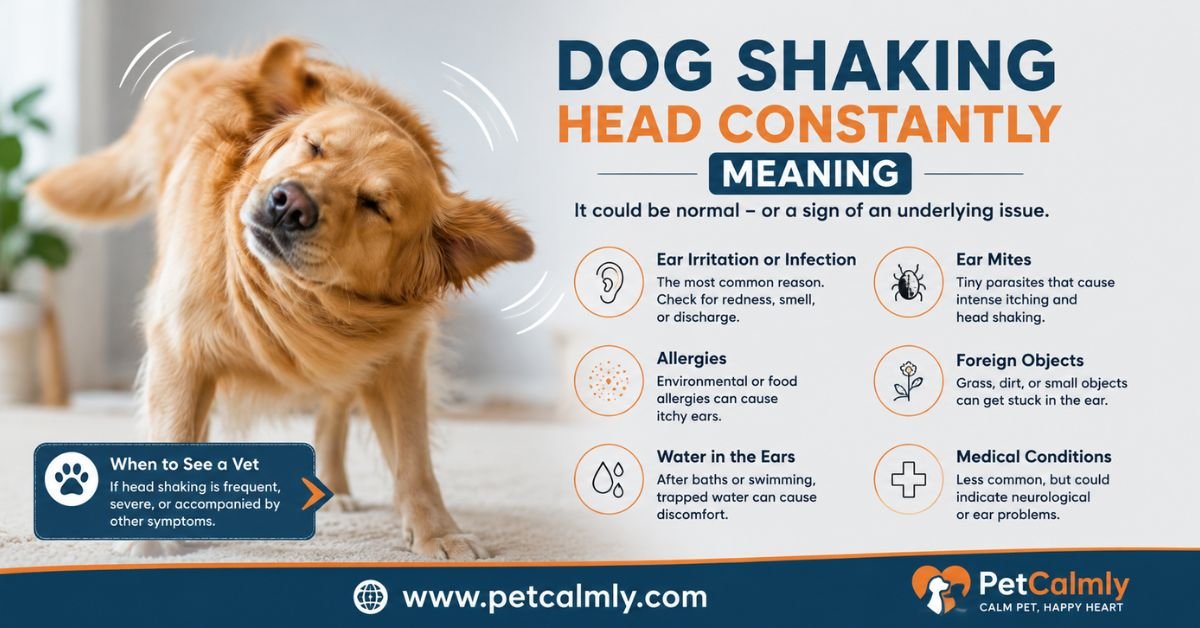
A dog that keeps shaking its head is almost always trying to relieve irritation, itchiness, or discomfort somewhere in or around the ears. The most common causes are ear infections (bacterial or yeast), ear mites, allergies, water trapped in the ear canal, or a foreign object like a grass seed lodged inside. Occasional head shaking after a bath or a roll in the grass is normal. But constant, repeated shaking especially paired with scratching, head tilting, odor, or redness usually points to an active ear problem that needs attention, and sometimes a vet visit.
Why This Behavior Worries So Many Owners (And Why That’s Fair)
If you’ve spent the last hour watching your dog flap its ears and rub its head against the couch cushions, you already know how unsettling it feels. It’s not just annoying background noise it looks uncomfortable, and dogs can’t tell us in words what’s wrong. That gap between “something is clearly bothering him” and “I don’t know what it is” is exactly where most owners land when they start searching for answers.
The good news is that head shaking is one of the more decodable dog behaviors. It has a fairly short list of usual suspects, and most of them are manageable once you know what you’re looking at. This guide walks through the real causes, how to tell them apart at home, what typical treatment looks like, and just as important when this stops being a wait-and-see situation.
What Constant Head Shaking Usually Means
Dogs shake their heads as a reflex to clear or relieve something happening inside the ear canal, on the ear flap (pinna), or occasionally around the face and neck. Think of it as the canine version of shaking water out of your ear after swimming except when it happens over and over, it’s rarely just water.
Here’s the pattern worth paying attention to: a single shake or two is usually nothing. A dog that shakes its head every few minutes, tilts its head to one side, or won’t stop pawing at its ear is telling you there’s ongoing irritation that isn’t resolving on its own.
Common Reasons Dogs Shake Their Heads Repeatedly
- Ear infections (bacterial or yeast-based) — by far the most frequent cause vets see
- Ear mites — tiny parasites that cause intense itching, more common in puppies and cats but seen in dogs too
- Allergies (environmental or food-related) — inflamed ears are often a symptom of a broader allergic reaction
- Water trapped in the ear canal — common after swimming or bathing
- Foreign objects — grass awns, seeds, or debris that work their way into the ear, especially in dogs who spend time in tall grass or brush
- Excess wax buildup — sometimes normal, sometimes a sign the ear isn’t draining properly
- Ear hematoma — a blood-filled swelling on the ear flap, often caused by the shaking itself
- Skin conditions affecting the ear flap — such as dermatitis or hair follicle issues
Not every case needs professional treatment, but several of these infections, mites, foreign objects, and hematomas genuinely do. We’ll break down how to tell them apart below.
How to Tell What’s Actually Going On: Symptom-by-Symptom Breakdown
Before you can decide what to do, it helps to actually look at (and smell) the ear. Most owners skip this step out of nervousness, but a calm two-minute check tells you far more than guessing.
Ear Infections (Bacterial or Yeast)
This is the single most common reason behind repeated head shaking in dogs. Signs typically include:
- A strong, yeasty or musty odor coming from the ear
- Dark brown, yellow, or black discharge
- Redness or swelling inside the ear canal
- The dog flinching or pulling away when the ear is touched
- Head shaking combined with scratching at the same ear
Yeast infections tend to smell sweetish or “corny,” while bacterial infections often smell sharper or more unpleasant. Either way, once an infection sets in, it typically doesn’t resolve without targeted treatment — cleaning alone usually isn’t enough.
Ear Mites
Mites are more common in puppies, shelter dogs, or dogs recently around cats (mites move easily between species). Telltale signs:
- Dry, dark, crumbly discharge that resembles coffee grounds
- Intense itching the dog seems almost frantic at times
- Minimal odor compared to a bacterial infection
- Visible scratching at both ears, not just one
Allergies
Allergy-related ear irritation tends to show up alongside other symptoms rather than on its own:
- Itchy paws or frequent paw-licking
- Red, inflamed skin around the face, belly, or armpits
- Recurring ear issues that come back every few months, especially seasonally
- Symptoms that worsen after a specific food, walk location, or time of year
If your dog’s ear troubles keep returning every spring or after switching foods, an underlying allergy is worth discussing with your vet rather than only treating the ear each time it flares up.
Water in the Ear
This one is usually the easiest to identify because of timing:
- Head shaking starts right after a bath, swim, or being outside in rain
- No odor, no discharge, no redness
- The shaking settles down within a few hours
If your dog swims often, this pattern may repeat regularly and isn’t a concern on its own — though repeated moisture can set the stage for infection over time, especially in floppy-eared breeds.
Foreign Object in the Ear
This tends to come on suddenly and intensely:
- Sudden, frantic head shaking that wasn’t happening the day before
- Whining or yelping when the head moves a certain way
- Often follows time spent in tall grass, fields, or wooded trails
- One-sided symptoms (just one ear affected)
Grass awns are notorious for this because their barbed shape lets them travel deeper into the ear canal rather than working their way back out.
Quick Comparison Table: Spotting the Difference at Home
| Cause | Discharge/Odor | Timing | Other Signs |
|---|---|---|---|
| Bacterial infection | Strong odor, yellow/brown discharge | Gradual onset | Redness, pain when touched |
| Yeast infection | Sweetish odor, brown waxy discharge | Gradual, often recurring | Itchiness, sometimes greasy skin |
| Ear mites | Dark, crumbly, minimal odor | Gradual, worsens over days | Intense itching, both ears |
| Allergies | Variable, mild odor | Seasonal or recurring | Paw licking, skin redness elsewhere |
| Water in ear | None | Immediately after bath/swim | Resolves within hours |
| Foreign object | Usually none early on | Sudden onset | One-sided, whining, pain |
Breeds and Situations Where This Comes Up More Often
Some dogs are simply more prone to ear trouble because of their anatomy or lifestyle:
- Floppy-eared breeds (Cocker Spaniels, Basset Hounds, Labs, Golden Retrievers) — reduced airflow keeps the ear canal warmer and moister, which favors yeast and bacteria
- Dogs with allergies or sensitive skin — Bulldogs, Shar-Peis, and West Highland White Terriers are frequently affected
- Water-loving dogs — Retrievers and spaniels that swim often need more consistent ear drying
- Dogs who roam in tall grass or brush — higher risk of foreign objects lodging in the ear
- Puppies and shelter dogs — more likely to pick up ear mites from close contact with other animals
None of this means these dogs are destined for ear problems it just means a little extra attention to ear hygiene pays off more for them than for a short-haired, upright-eared dog that stays out of water.
Common Mistakes Owners Make (And What to Do Instead)
- Using cotton swabs deep in the ear canal. This tends to push debris further in rather than removing it, and can injure the eardrum. Clean only the visible parts of the outer ear.
- Assuming it will resolve on its own. Mild water-related shaking usually does. Infections and mites typically don’t they tend to worsen without treatment.
- Over-cleaning healthy ears. Cleaning too often can strip natural protective oils and irritate the skin, sometimes creating the very problem you’re trying to prevent.
- Guessing at over-the-counter treatments. Ear medications are often specific to the type of infection (yeast vs. bacterial vs. mites). The wrong product can delay real treatment or mask symptoms temporarily.
- Ignoring a head tilt. A tilt that doesn’t go away, especially paired with stumbling or loss of balance, is a different situation from simple irritation and deserves prompt veterinary attention.
What Pet Owners Should Do: A Practical Step-by-Step Approach
- Look and smell before you do anything else. Gently lift the ear flap and check for redness, discharge, odor, or visible debris.
- Note the timing. Did this start right after a bath or swim? Or has it been building for a few days?
- Check both ears, not just the one being scratched. Sometimes the more obvious ear masks a milder issue in the other.
- If it looks and smells normal, monitor for 24 hours. Occasional shaking after water exposure often settles on its own.
- If you notice odor, discharge, redness, pain, or a head tilt, book a vet visit rather than starting home treatment. Getting the type of infection identified (via a simple ear swab test) makes treatment far more effective than guessing.
- Avoid inserting anything into the ear canal beyond what your vet specifically recommends.
- Once treatment starts, follow the full course even if symptoms improve early stopping too soon is one of the most common reasons ear infections come back.
A Realistic Example
A reader once described her three-year-old Cocker Spaniel shaking his head every evening for about a week, with no obvious discharge at first. She assumed it was just an itch and let it go. By day eight, there was a faint sweet smell and some brown residue on the inside of his ear flap a fairly classic yeast infection pattern. A vet visit and about two weeks of prescribed drops cleared it up, but she mentioned wishing she’d checked for odor and discharge on day one rather than waiting. That week-long gap is fairly typical mild symptoms often get written off as “just an itch” until they become more obvious.
When Should You Worry? Signs That Need a Vet’s Attention
Head shaking on its own isn’t usually an emergency, but certain combinations of symptoms mean it’s time to stop watching and start treating. Contact your veterinarian if you notice:
- A strong odor or visible discharge from the ear
- Redness, swelling, or heat inside the ear canal
- Your dog yelping or pulling away when the ear area is touched
- A head tilt that persists beyond a few hours
- Loss of balance, circling, or unusual eye movements (these can indicate a deeper or inner ear issue)
- Swelling on the ear flap itself, which may indicate a hematoma forming from repeated shaking
- Symptoms lasting more than 2–3 days without improvement
- Recurring ear issues every few weeks or months
According to the Cornell University College of Veterinary Medicine, chronic or recurring ear infections are often linked to an underlying cause commonly allergies that needs to be identified and managed separately from the ear symptoms themselves, or the infections tend to keep coming back.
Prevention: Keeping Ears Healthy Long-Term
- Dry ears thoroughly after baths or swimming, especially for floppy-eared breeds, using a soft towel or vet-approved drying solution
- Check ears weekly as part of a regular grooming routine, even when nothing seems wrong
- Use a vet-recommended ear cleaner periodically for dogs prone to buildup, rather than reacting only after symptoms appear
- Trim excess hair around the ear opening for breeds where hair growth restricts airflow
- Address allergies at the source if your dog has recurring ear issues, since treating the ear alone won’t stop them from coming back
- Avoid letting dogs roam unsupervised in tall grass during seed season if foreign objects have been an issue before
Small, consistent habits like these prevent far more ear problems than any single treatment does after the fact.
Conclusion
Constant head shaking is your dog’s way of telling you something specific is bothering an ear and in most cases, a quick look and sniff test will point you toward the likely cause, whether that’s an infection, mites, water, allergies, or something lodged inside. The behavior itself isn’t something to panic over, but it also isn’t something to ignore for days on end. When in doubt, especially with odor, discharge, pain, or a head tilt involved, a vet visit that includes a proper ear exam will get your dog real relief far faster than home guesswork.
More Information About Pets, Please Visit Our Website: Healthy Homemade Dog Treat Recipes
How to Help an Overweight Dog Lose Weight
How to Choose the Best Dog Food for My Dog
How to Tell If Your Dog Has a Fever
Dog Poop Color Chart
Dog Sleeping Positions Meaning
Why Is My Dog Panting So Much?
Why Does My Dog Eat Grass All the Time?
Why Do Dogs Shake Their Bodies
How to Calm Puppy Separation Anxiety
Homemade dog treats recipes vet approved
Frequently Asked Questions
1: Why does my dog keep shaking his head but there’s no discharge?
Absence of visible discharge doesn’t rule out a problem early-stage infections, mild allergies, or something as simple as trapped water can all cause shaking before any discharge develops. If it continues beyond a day or two, a vet check is the safest next step.
2: Is it normal for a dog to shake its head after a bath?
Yes, occasional shaking right after a bath or swim is normal as your dog clears water from the ear canal. It should settle within a few hours; if it continues into the next day, something else may be going on.
3: Can allergies cause a dog to shake its head constantly?
Yes. Allergic reactions often inflame the ear canal, leading to itchiness and repeated shaking. This is especially common in dogs with recurring ear issues tied to certain seasons or foods.
4: How do I know if my dog has ear mites or an infection?
Ear mites typically produce dark, dry, coffee-ground-like debris with little odor, while infections usually come with a noticeable smell and wetter discharge. A vet can confirm the exact cause with a quick ear swab under a microscope.
5: Should I clean my dog’s ears myself if he’s shaking his head?
Light cleaning of the visible outer ear is generally fine, but avoid inserting anything into the canal. If there’s odor, discharge, redness, or pain, it’s better to have a vet examine the ear before cleaning, since some conditions require diagnosis before treatment.
6: When does head shaking mean I need to see a vet immediately?
Seek veterinary care promptly if you notice a persistent head tilt, loss of balance, swelling on the ear flap, strong odor, or visible pain these signs suggest more than surface-level irritation and shouldn’t wait more than a day or two.