Short direct answer
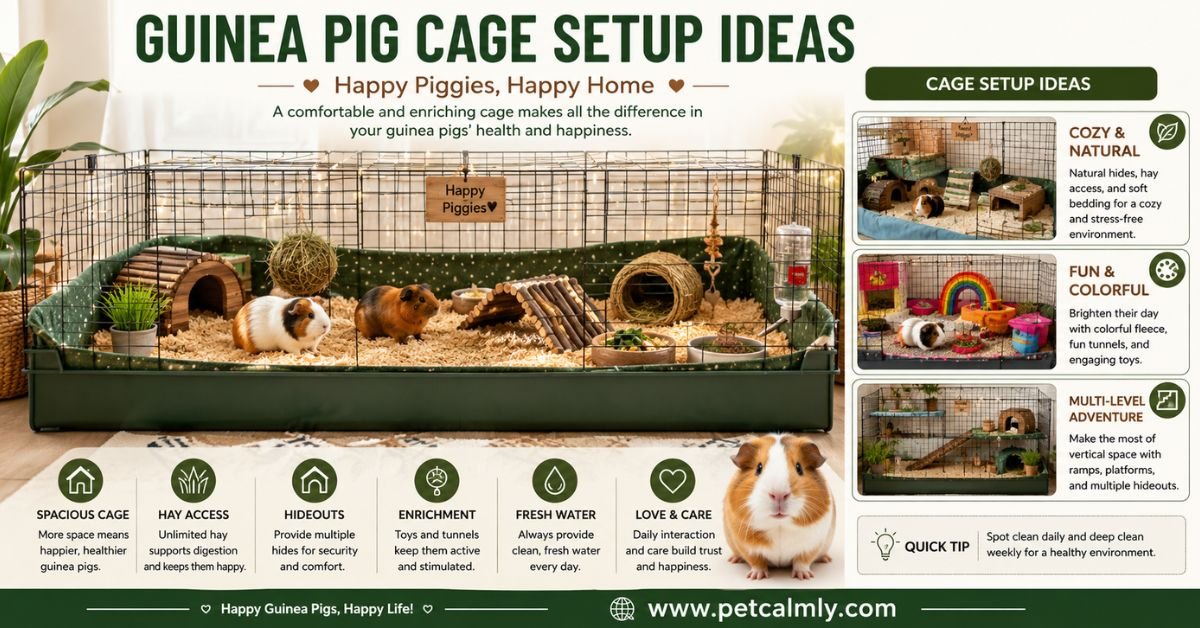
The best guinea pig cage setup ideas focus on space, comfort, enrichment, and easy cleaning. A well-designed guinea pig habitat should include a large enclosure, soft bedding, multiple hideouts, hay stations, food and water areas, toys, tunnels, and designated activity zones. The ideal setup encourages natural behaviors like exploring, hiding, foraging, and exercising while keeping your guinea pig safe and stress-free.
If you’re wondering how to create the perfect guinea pig home, start with a spacious cage and build it around your pet’s daily needs rather than appearance alone.
Introduction
Bringing home a guinea pig is exciting, but many owners quickly discover that choosing a cage is only the first step. The real challenge is creating a setup that keeps your guinea pig physically healthy, mentally stimulated, and comfortable every day.
A poorly arranged cage can lead to boredom, stress, inactivity, territorial issues, and hygiene problems. On the other hand, a thoughtfully designed habitat encourages natural behaviors and makes life easier for both you and your pet.
Whether you’re setting up a cage for a single guinea pig, a bonded pair, or a growing herd, these guinea pig cage setup ideas will help you create a functional, enriching, and easy-to-maintain living space.
Why Your Guinea Pig Cage Setup Matters
A guinea pig spends most of its life inside its enclosure. Unlike dogs and cats, guinea pigs depend heavily on their environment for exercise, enrichment, and security.
A good setup helps support:
- Physical activity
- Mental stimulation
- Healthy eating habits
- Better social interactions
- Reduced stress
- Easier cleaning routines
- Improved overall wellbeing
Guinea pigs are prey animals. They naturally seek shelter, avoid open spaces, and prefer predictable environments. A thoughtful cage layout helps them feel safe while still encouraging exploration.
Guinea Pig Cage Size Requirements Before Planning Your Setup
Before decorating or organizing a cage, make sure the enclosure itself is large enough.
Recommended Guinea Pig Cage Sizes
| Number of Guinea Pigs | Minimum Cage Size |
|---|---|
| 1 Guinea Pig | 7.5 sq ft |
| 2 Guinea Pigs | 10.5 sq ft |
| 3 Guinea Pigs | 13 sq ft |
| 4 Guinea Pigs | 16 sq ft or more |
Larger is always better.
Many commercial pet store cages are too small for long-term housing, which limits your setup options and your guinea pig’s quality of life.
Essential Areas Every Guinea Pig Cage Should Include
Before looking at creative cage designs, understand the core zones every guinea pig habitat needs.
Sleeping and Hiding Area
Guinea pigs need secure places where they can retreat and rest.
Good options include:
- Wooden houses
- Fleece forests
- Plastic hideouts
- Fabric tunnels
- Corner shelters
Aim for at least one hideout per guinea pig plus an extra one.
Feeding Station
Keep food resources organized in one section.
Include:
- Unlimited hay
- Pellet bowl
- Fresh vegetable area
- Water bottle or bowl
Separating feeding areas can reduce competition between cage mates.
Exercise Zone
Leave open space for:
- Zoomies
- Popcorning
- Running laps
- Social interaction
Avoid overcrowding the cage with decorations.
Foraging Area
Foraging encourages natural behavior and prevents boredom.
Ideas include:
- Hay piles
- Treat puzzles
- Paper bags stuffed with hay
- Cardboard tubes
- Scatter feeding
25 Guinea Pig Cage Setup Ideas You Can Try
1. The Natural Meadow Setup
Create a nature-inspired habitat using:
- Grass mats
- Wooden hideouts
- Willow tunnels
- Hay-filled corners
This setup mimics natural exploration opportunities.
2. Corner Hideout Layout
Place hideouts in opposite corners.
Benefits:
- Reduces territorial disputes
- Creates multiple safe zones
- Encourages movement between areas
Ideal for pairs.
3. Open-Concept Cage Design
Keep the center of the cage clear.
Place accessories around the perimeter.
This allows:
- More exercise
- Better visibility
- Easier cleaning
4. Fleece Bedding Paradise
Use absorbent fleece liners combined with:
- Pee pads
- Cozy beds
- Soft tunnels
Many owners prefer fleece because it is reusable and comfortable.
5. Hay Loft Station
Create a dedicated hay corner with:
- Hay rack
- Large hay pile
- Nearby water source
Guinea pigs often eat and drink repeatedly throughout the day.
6. Tunnel Adventure Setup
Connect different cage zones using:
- Flexible tunnels
- Wooden bridges
- Fabric tubes
This encourages exploration and activity.
7. Multi-Hideout Layout
Place several hiding spots throughout the enclosure.
Benefits include:
- Reduced stress
- Better confidence
- Less dominance behavior
8. Seasonal Enrichment Setup
Rotate accessories monthly.
Examples:
- Autumn forage toys
- Spring-themed hideouts
- Summer cooling mats
- Winter fleece nests
Changing environments keeps things interesting.
9. Cardboard Playground Design
Use safe cardboard items such as:
- Boxes
- Tunnels
- Mazes
- Bridges
Replace worn pieces regularly.
10. Senior Guinea Pig Setup
Older guinea pigs benefit from:
- Low-entry hideouts
- Extra bedding
- Easy food access
- Fewer climbing obstacles
Comfort becomes the priority.
11. Bonded Pair Layout
For two guinea pigs:
- Two food bowls
- Two hideouts
- Multiple exits from shelters
This helps prevent resource guarding.
12. Herd-Friendly Setup
For three or more guinea pigs:
- Multiple hay stations
- Several water sources
- Wide pathways
Crowding often causes tension.
13. Foraging-Focused Habitat
Hide food around the cage.
Examples:
- Hay-filled boxes
- Vegetable treasure hunts
- Treat puzzles
This stimulates natural searching behavior.
14. Budget-Friendly DIY Cage Setup
Affordable materials include:
- Cardboard houses
- Paper bags
- Fleece scraps
- PVC tunnels
Enrichment doesn’t have to be expensive.
15. Minimalist Cage Design
Focus on essentials:
- Large open area
- One hay station
- Hideouts
- Food and water
Simple setups can work very well.
16. Woodland-Themed Habitat
Use:
- Wooden accessories
- Bark tunnels
- Natural textures
Always choose guinea pig-safe materials.
17. Cozy Winter Setup
Add:
- Fleece forests
- Extra blankets
- Warm sleeping corners
Avoid placing cages near drafts.
18. Cooling Summer Layout
During hot weather:
- Ceramic tiles
- Frozen water bottles wrapped in fabric
- Increased airflow
Monitor temperatures carefully.
19. Interactive Toy Zone
Create a dedicated enrichment area.
Include:
- Chew toys
- Willow balls
- Hanging forage items
Rotate toys weekly.
20. Beginner-Friendly Starter Setup
Keep it simple:
- Spacious cage
- Hay rack
- Water bottle
- Hideout
- Soft bedding
You can add enrichment later.
21. L-Shaped Cage Layout
If using modular cages, create an L-shape.
Benefits:
- Better traffic flow
- More exploration opportunities
- Natural separation of zones
22. Café Corner Feeding Area
Dedicate one corner to eating.
Include:
- Hay
- Pellets
- Water
- Vegetable dishes
Many guinea pigs appreciate routine.
23. Tunnel Network Design
Create pathways connecting:
- Hideouts
- Feeding stations
- Play areas
This setup works especially well for active guinea pigs.
24. Observation Platform Setup
Low platforms can provide:
- Environmental variety
- Additional resting spots
Ensure ramps are gentle and safe.
25. Ultimate Enrichment Habitat
Combine:
- Multiple hideouts
- Foraging stations
- Tunnels
- Chew toys
- Open exercise space
This balanced design supports both physical and mental wellbeing.
Best Bedding Choices for a Guinea Pig Cage Setup
The bedding you choose affects cleanliness, odor control, and comfort.
Popular Bedding Options
| Bedding Type | Pros | Cons |
| Fleece Liners | Reusable, soft | Requires washing |
| Paper Bedding | Absorbent | Ongoing cost |
| Aspen Shavings | Natural | Can be messy |
| Hemp Bedding | Good odor control | Less available |
Avoid:
- Cedar shavings
- Pine shavings that are not kiln-dried
- Scented bedding products
Common Guinea Pig Cage Setup Mistakes
Many new owners accidentally create problems while trying to improve their cage.
Overcrowding the Cage
Too many accessories reduce running space.
Remember:
Movement is enrichment too.
Not Providing Enough Hideouts
Guinea pigs need secure retreats.
Without them, stress levels often increase.
Placing Everything in One Area
Spread resources throughout the enclosure.
This encourages movement and exploration.
Ignoring Cleaning Accessibility
A beautiful setup is useless if cleaning becomes difficult.
Design with maintenance in mind.
Using Unsafe Decorations
Avoid:
- Sharp edges
- Toxic woods
- Small choking hazards
- Unsafe fabrics
How to Rearrange a Guinea Pig Cage Without Causing Stress
Guinea pigs enjoy some consistency.
When updating the layout:
- Keep primary hideouts familiar.
- Change only a few items at a time.
- Leave food locations predictable initially.
- Monitor behavior after changes.
Small adjustments often work better than complete redesigns.
Signs Your Guinea Pig Likes Its Cage Setup
Positive signs include:
- Frequent popcorning
- Exploring confidently
- Relaxed sleeping positions
- Normal eating habits
- Comfortable social interactions
- Zoomies around the cage
These behaviors usually indicate a secure and enriching environment.
Signs Your Guinea Pig May Be Unhappy With the Setup
Watch for:
- Excessive hiding
- Reduced appetite
- Aggression toward cage mates
- Repetitive pacing
- Lack of activity
- Constant nervousness
If behavior changes suddenly, consider both environmental and health-related causes.
When Should You Worry About Your Guinea Pig’s Behavior?
While cage design influences behavior, not every issue is environmental.
Contact an experienced exotic animal veterinarian if your guinea pig shows:
- Refusal to eat
- Rapid weight loss
- Breathing difficulties
- Persistent lethargy
- Severe aggression
- Signs of pain
Behavior changes can sometimes signal illness rather than boredom or stress.
What Should Pet Owners Do to Create the Best Guinea Pig Cage Setup?
Follow this simple checklist:
Daily
- Refresh hay
- Check water
- Remove soiled bedding
- Observe behavior
Weekly
- Deep clean the cage
- Rotate enrichment items
- Wash fleece liners
- Inspect accessories for damage
Monthly
- Rearrange selected enrichment zones
- Replace worn toys
- Review cage organization
Consistency is often more important than expensive accessories.
Guinea Pig Cage Setup Checklist
Before finishing your enclosure, make sure you have:
✔ Proper cage size
✔ Unlimited hay access
✔ Fresh water
✔ Food station
✔ Multiple hideouts
✔ Comfortable bedding
✔ Safe chew toys
✔ Exercise space
✔ Enrichment opportunities
✔ Easy cleaning access
Frequently Asked Questions
1: What is the best cage setup for two guinea pigs?
A large cage with at least two hideouts, multiple feeding areas, unlimited hay, and plenty of open running space works best for bonded pairs.
2: How often should I rearrange my guinea pig’s cage?
Most guinea pigs benefit from minor changes every few weeks. Frequent complete redesigns may cause unnecessary stress.
3: Can guinea pigs have ramps in their cage?
Yes, if the ramps are gentle, stable, and non-slip. Avoid steep climbing structures.
4: What should be inside a guinea pig cage every day?
Essential items include hay, water, food, bedding, hideouts, and enough open space for exercise.
5: Do guinea pigs get bored in the same cage setup?
They can. Rotating toys, tunnels, and foraging activities helps keep their environment stimulating.
6: Is fleece or paper bedding better for guinea pigs?
Both can work well. Fleece is reusable and soft, while paper bedding is absorbent and convenient. The best choice depends on your cleaning routine and preferences.
More Information About Pets, Please Visit Our Website: Signs of a Sick Guinea Pig
Conclusion
The best guinea pig cage setup ideas combine comfort, safety, enrichment, and practicality. While attractive cage designs can be fun, your guinea pig cares most about having enough space to run, places to hide, easy access to hay, and opportunities to explore.
Start with the fundamentals, then add enrichment gradually. A thoughtfully arranged cage doesn’t just look good—it supports your guinea pig’s physical health, emotional wellbeing, and natural behaviors every day.
For more guinea pig care guides, consider linking readers to related articles on cage size requirements, bedding comparisons, guinea pig toys, and daily care routines to build a complete habitat care resource.