Short direct answer
Cleaning a bearded dragon tank involves removing waste every day, changing dirty substrate as needed, washing food and water bowls daily, and thoroughly disinfecting the enclosure every 2–4 weeks using a reptile-safe disinfectant. A clean habitat helps prevent harmful bacteria, mold, parasites, unpleasant odors, and health problems while keeping your bearded dragon active, comfortable, and stress-free.
Introduction
A clean tank is one of the most important parts of bearded dragon care. While proper lighting, heat, and nutrition often get the most attention, enclosure hygiene directly affects your pet’s health and quality of life.
Many new owners wonder whether they should clean the tank every day or wait until it looks dirty. Others worry about using the wrong cleaning products or accidentally exposing their dragon to harmful chemicals.
The good news is that cleaning a bearded dragon tank isn’t difficult once you have a routine. A few minutes of daily maintenance and regular deep cleaning can dramatically reduce bacteria, odors, parasites, and the risk of illness.
In this guide, you’ll learn exactly how to clean a bearded dragon tank, what supplies are safe to use, how often each cleaning task should be done, and common mistakes to avoid. Whether you’ve just brought home your first beardie or want to improve your current routine, this guide will help you create a cleaner, healthier environment.
Why Cleaning a Bearded Dragon Tank Is So Important
Cleaning isn’t just about keeping the enclosure looking nice. It’s about protecting your bearded dragon from problems that develop slowly over time.
A dirty enclosure can lead to:
- Growth of harmful bacteria
- Mold and fungal contamination
- Parasites spreading more easily
- Poor air quality
- Bad odors
- Skin infections
- Contaminated food and water
- Increased stress
Because bearded dragons spend nearly all of their time inside their enclosure, they come into frequent contact with every surface. If waste, old food, or moisture builds up, germs can multiply quickly.
A clean enclosure helps support:
- Healthy digestion
- Better appetite
- Cleaner skin and scales
- Successful shedding
- Lower stress levels
- Better overall hygiene
Many experienced reptile keepers notice that bearded dragons are often more active and willing to bask after their enclosure has been cleaned. While every dragon has its own personality, a fresh environment can reduce unnecessary stress caused by dirty surroundings.
What You’ll Need Before Cleaning a Bearded Dragon Tank
Having dedicated cleaning supplies makes the process easier and helps prevent cross-contamination with household items.
Basic Cleaning Supplies Checklist
Keep these items together in a container reserved for reptile care.
- Disposable gloves
- Paper towels
- Soft microfiber cloth
- Small trash bags
- Reptile-safe disinfectant
- Spray bottle with clean water
- Soft sponge or non-abrasive scrub pad
- Plastic scraper for dried waste
- Small cleaning brush
- Replacement substrate (if applicable)
If you use reusable cloths or brushes, wash and dry them thoroughly after every cleaning session.
Cleaning Products That Are Safe for Bearded Dragons
Choosing the right cleaning product matters. Household cleaners may leave behind residues that can irritate your bearded dragon’s skin or respiratory system.
Safe options include:
- Commercial reptile-safe disinfectants
- Veterinary-approved reptile enclosure cleaners
- Diluted chlorhexidine solution when used according to product directions
- Diluted white vinegar for removing hard water deposits on glass (follow with a clean water rinse and never use it as a disinfectant)
Avoid using products that contain:
- Ammonia
- Bleach without proper dilution and rinsing
- Strong perfumes
- Essential oils
- Phenol-based disinfectants
- Window cleaners
- Multipurpose kitchen sprays
Even products marketed as “natural” may not be safe around reptiles.
How Often Should You Clean a Bearded Dragon Tank?
Different cleaning tasks need to be done at different times. Waiting until the tank looks dirty usually means bacteria have already started to build up.
Daily Cleaning Tasks
Daily maintenance only takes a few minutes.
Every day:
- Remove feces immediately.
- Remove urates.
- Pick up uneaten insects.
- Throw away leftover vegetables before they spoil.
- Wipe obvious messes from surfaces.
- Replace dirty water with fresh water.
- Check for mold or damp substrate.
Daily spot cleaning prevents small messes from becoming larger sanitation problems.
Weekly Cleaning Tasks
Once each week, spend a little extra time cleaning.
Weekly tasks include:
- Wipe down enclosure walls.
- Clean food dishes thoroughly.
- Wash water bowls with hot water.
- Remove loose debris.
- Clean basking rocks if soiled.
- Check decorations for hidden waste.
- Inspect corners where bacteria often collect.
This routine helps keep the enclosure fresh between deep cleanings.
Deep Cleaning Schedule
A complete deep cleaning is generally recommended every 2 to 4 weeks, depending on factors such as:
- Tank size
- Number of bearded dragons (they are usually housed alone)
- Type of substrate
- Feeding habits
- Overall cleanliness
Some enclosures need deep cleaning more often, especially if they use loose substrate or if the dragon frequently soils multiple areas.
Step-by-Step Daily Cleaning Routine for a Bearded Dragon Tank
Daily cleaning is the easiest way to keep the enclosure healthy without spending hours on maintenance.
Step 1: Move Your Bearded Dragon Only If Necessary
For quick spot cleaning, you often don’t need to remove your bearded dragon.
If your dragon is basking comfortably away from the mess, simply clean around them.
If you’re cleaning close to where they’re resting, gently move them into a secure temporary container with good ventilation.
Avoid excessive handling if possible, as frequent unnecessary movement can cause stress.
Step 2: Remove Waste Immediately
Using paper towels or a reptile scoop:
- Pick up feces.
- Remove urates.
- Dispose of soiled substrate.
- Clean any residue left behind.
The longer waste remains in the enclosure, the greater the chance of bacterial growth and unpleasant odors.
Step 3: Remove Leftover Food
Fresh vegetables begin to wilt quickly under heat lamps.
At the end of each feeding period:
- Remove leafy greens.
- Remove fruit pieces if offered occasionally.
- Take out any dead feeder insects.
- Remove uneaten live insects that could bite or stress your dragon.
This simple habit helps prevent mold and keeps pests away.
Step 4: Wash Food and Water Dishes
Food bowls can collect saliva, vegetable juices, and bacteria.
Each day:
- Empty the dishes.
- Wash with hot water.
- Use a reptile-safe cleaner if needed.
- Rinse thoroughly.
- Dry completely before placing them back.
Fresh, clean dishes encourage healthy eating and drinking habits.
Step 5: Check the Substrate
Take a quick look at the enclosure floor.
Look for:
- Damp spots
- Mold
- Insect remains
- Shed skin
- Hidden feces
- Food buried in loose substrate
Remove any contaminated material immediately.
Weekly Cleaning Routine for a Bearded Dragon Tank
Daily cleaning handles visible messes, but a weekly routine targets areas that often collect dust, bacteria, and hidden debris. Spending 20–30 minutes once a week can help prevent odors and reduce the need for emergency cleanups later.
Wipe Down Interior Glass
Even if the glass looks clean, it can collect:
- Water spots
- Dust
- Smudges
- Dried food splashes
- Mineral deposits
Spray a reptile-safe cleaner onto a cloth not directly into the enclosure and wipe all interior glass panels. Finish by wiping with a clean, damp cloth to remove any residue.
Clean glass also improves visibility, making it easier to monitor your bearded dragon’s behavior and health.
Clean Frequently Touched Surfaces
Your bearded dragon spends much of the day climbing, basking, and exploring. These high-use areas should be cleaned weekly:
- Basking platform
- Climbing branches
- Rocks
- Hides
- Feeding ledges
- Ramps
- Hammocks
Remove any dried waste with a plastic scraper, then wipe each surface with a reptile-safe disinfectant according to the product instructions. Allow surfaces to dry completely before placing them back in the enclosure.
Inspect Every Corner of the Enclosure
Waste doesn’t always stay in plain sight. During your weekly cleaning, inspect:
- Behind hides
- Under decorations
- Around the edges of the substrate
- Ventilation corners
- Tank seams
- Around thermometer and hygrometer probes
These hidden spots often collect debris that can lead to bacterial growth if left unnoticed.
Check for Early Signs of Problems
Weekly cleaning is also a good opportunity to examine the enclosure for issues that could affect your pet’s health.
Look for:
- Mold growth
- Excess moisture
- Cracked decorations
- Sharp edges
- Loose rocks
- Damaged hides
- Worn hammocks
- Signs of feeder insects escaping into the enclosure
Catching these problems early can prevent injuries and make future cleanings much easier.
Beginner Mistakes to Avoid During Routine Cleaning
Many first-time owners have good intentions but unknowingly make cleaning mistakes that can create unnecessary risks.
Avoid these common errors:
- Leaving waste in the tank until the end of the day.
- Using scented household cleaners or disinfectant wipes.
- Cleaning only visible areas while ignoring corners and decorations.
- Returning damp accessories before they’re fully dry.
- Reusing dirty cloths or sponges without washing them.
- Forgetting to remove uneaten vegetables after feeding.
Building a consistent routine is far more effective than doing occasional intensive cleanups.
How to Deep Clean a Bearded Dragon Tank Safely
Deep cleaning removes bacteria, dried waste, hidden debris, and buildup that daily and weekly cleaning can’t reach. While spot cleaning keeps the enclosure tidy, a thorough deep clean helps create a healthier environment and reduces the risk of infections or unpleasant odors.
For most healthy adult bearded dragons, a deep clean every 2–4 weeks works well. However, if your dragon is sick, has parasites, or frequently soils the enclosure, you may need to clean more often under the guidance of your exotic veterinarian.
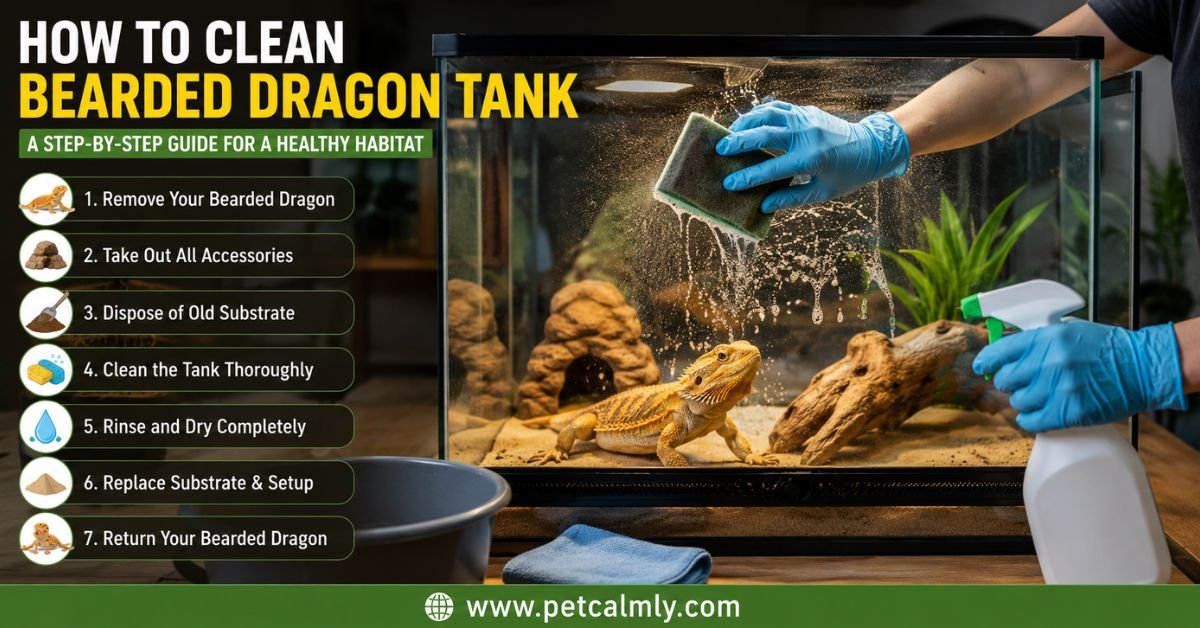
Step-by-Step Guide to Deep Cleaning a Bearded Dragon Tank
Following the same order each time makes cleaning faster and helps ensure you don’t miss anything.
Step 1: Prepare a Safe Temporary Space
Before you begin, move your bearded dragon to a secure temporary container.
Choose a container that is:
- Well-ventilated
- Escape-proof
- Easy to clean
- Large enough for your dragon to turn around comfortably
If the room is cool, avoid leaving your bearded dragon in the temporary container for an extended period. Complete the cleaning efficiently so your pet can return to its properly heated enclosure.
Tip: Never place your dragon in direct sunlight inside a plastic container. It can overheat surprisingly quickly.
Step 2: Turn Off Electrical Equipment
For safety, unplug:
- Heat lamp
- UVB light
- Ceramic heat emitter
- Thermostats connected to removable equipment
- Decorative lighting
Allow hot bulbs and fixtures to cool completely before handling them.
This protects both you and your equipment from accidental damage.
Step 3: Remove Everything From the Tank
Take out every removable item, including:
- Food bowl
- Water dish
- Basking rock
- Branches
- Driftwood
- Hides
- Artificial plants
- Hammocks
- Climbing décor
- Thermometer probes if removable
Cleaning each item separately helps eliminate bacteria hiding underneath.
Step 4: Dispose of Dirty Substrate
How you remove the substrate depends on what type you use.
For Paper Towels or Newspaper
- Roll up carefully.
- Dispose of immediately.
- Wipe away any remaining debris.
For Tile or Slate
- Remove loose dirt.
- Lift removable tiles if possible.
- Clean underneath where waste may collect.
For Loose Substrate
If you use an appropriate loose substrate for an adult bearded dragon:
- Scoop out all substrate.
- Dispose of heavily contaminated material.
- Clean the empty enclosure thoroughly before adding fresh substrate.
Never reuse substrate that has been contaminated with feces, mold, or spilled food.
Step 5: Scrub the Tank Interior
Once the enclosure is empty:
- Remove dried waste using a plastic scraper.
- Wipe away dust and loose debris.
- Apply reptile-safe disinfectant.
- Let it sit for the contact time listed on the label.
- Gently scrub corners, seams, and edges.
- Rinse if required by the product instructions.
- Dry thoroughly.
Pay extra attention to:
- Tank corners
- Silicone seams
- Door tracks
- Ventilation openings
These are common places where bacteria and organic debris collect.
How to Disinfect a Bearded Dragon Tank Without Harming Your Pet
Cleaning removes dirt, but disinfecting helps reduce harmful microorganisms. Both steps are important, especially after illness or persistent odors.
Use a Reptile-Safe Disinfectant
Choose a product specifically designed for reptile enclosures or one recommended by your veterinarian.
Always follow the manufacturer’s instructions, including:
- Proper dilution
- Contact time
- Rinsing requirements
- Drying recommendations
More disinfectant is not better. Using too much can leave residues that may irritate your bearded dragon’s skin or respiratory system.
Should You Use Bleach?
Bleach is sometimes used in animal care settings, but it requires careful dilution, thorough rinsing, and complete drying to be used safely. For most pet owners, a commercially available reptile-safe disinfectant is the simpler and lower-risk choice.
If you choose to use diluted bleach, never mix it with vinegar, ammonia, or other cleaning products. Mixing household chemicals can release dangerous gases.
Allow the Tank to Dry Completely
Moisture trapped inside the enclosure can encourage mold growth and increase humidity beyond the ideal range for a bearded dragon.
Before reassembling the habitat:
- Wipe away excess moisture.
- Allow surfaces to air dry completely.
- Check corners and seams for lingering dampness.
A completely dry enclosure is just as important as a clean one.
How to Clean Different Types of Bearded Dragon Substrate
Not all substrates require the same cleaning routine. Understanding your substrate helps extend its life while maintaining good hygiene.
Paper Towels
Paper towels are popular for:
- Baby bearded dragons
- Quarantine setups
- Sick reptiles
- Veterinary recovery
Cleaning is simple.
- Replace whenever soiled.
- Perform a complete replacement during deep cleaning.
- Never flip dirty paper towels over to reuse them.
Reptile Carpet
Reptile carpet should be removed and washed regularly.
Cleaning steps:
- Shake off loose debris.
- Wash using hot water and a reptile-safe cleaner.
- Scrub trapped dirt with a soft brush.
- Rinse thoroughly.
- Let it dry completely before reuse.
Many owners keep two carpets so one can dry while the other is in use.
Ceramic or Slate Tile
Tile is one of the easiest substrates to keep clean.
Benefits include:
- Easy waste removal
- Doesn’t trap odors easily
- Durable
- Simple to disinfect
Remove each tile if possible and clean both sides before replacing it.
Loose Natural Substrate
Some experienced keepers use naturalistic loose substrates for healthy adult dragons.
If you choose this option:
- Remove waste immediately.
- Replace contaminated areas.
- Stir the substrate occasionally to check for hidden moisture.
- Replace the entire substrate when it becomes dirty or develops odors.
Loose substrate should never smell sour or moldy.
How to Clean Bearded Dragon Decorations
Décor often collects dried waste in places that are easy to overlook.
Cleaning Rocks
Natural rocks should be:
- Scrubbed thoroughly.
- Rinsed well.
- Allowed to dry completely.
Inspect for cracks that may trap bacteria.
Cleaning Branches and Driftwood
Branches can collect:
- Food particles
- Waste
- Shed skin
- Dust
Use a soft brush to remove debris before disinfecting.
Replace branches if they begin to rot, split excessively, or develop mold.
Cleaning Hides
Dark hides often hide more than your dragon.
Check for:
- Hidden feces
- Food remains
- Moisture buildup
Wash both the inside and outside surfaces before returning them to the enclosure.
Cleaning Hammocks
Fabric hammocks should be cleaned regularly.
Depending on the material:
- Hand wash with hot water.
- Use a reptile-safe cleaner if needed.
- Rinse thoroughly.
- Allow to dry completely.
Replace hammocks that become frayed or difficult to sanitize.
How to Clean Food and Water Bowls Properly
Food and water dishes are among the most frequently contaminated items in the enclosure.
Food Bowls
After every feeding:
- Remove leftover vegetables.
- Wash the bowl with hot water.
- Scrub away dried food.
- Rinse thoroughly.
- Dry before reuse.
Fresh produce spoils quickly under basking lights, so don’t leave it in the enclosure all day.
Water Bowls
Even if your bearded dragon rarely drinks from its bowl, clean it daily.
Water bowls can collect:
- Dust
- Insect debris
- Fecal contamination
- Food particles
Refill with fresh, clean water after washing.
How to Clean the Glass Without Leaving Streaks
Dirty glass makes it harder to observe your dragon and can reduce the overall appearance of the enclosure.
For clear glass:
- Remove dust with a dry microfiber cloth.
- Use a reptile-safe glass cleaner or a damp cloth.
- Wipe in circular motions.
- Finish with a clean microfiber cloth.
Avoid spraying cleaning products directly into the enclosure while your bearded dragon is inside.
How to Remove Bad Odors From a Bearded Dragon Tank
A healthy bearded dragon enclosure should have very little smell. Strong odors usually indicate that waste, spoiled food, excess moisture, or dirty substrate has been left too long.
Instead of masking odors with air fresheners or scented products, identify and fix the source.
Common causes of unpleasant smells include:
- Feces left in the enclosure
- Rotting vegetables
- Dead feeder insects
- Dirty water bowls
- Damp substrate
- Mold growth
- Waste trapped beneath decorations
Removing the source is always more effective and safer than covering the smell with fragrances.
Tips to Keep the Tank Cleaner Between Deep Cleanings
Small daily habits can make a big difference.
Try these practical tips:
- Remove waste as soon as you notice it.
- Feed insects in a separate container if appropriate.
- Take out uneaten greens within a few hours.
- Replace dirty substrate promptly.
- Wipe up water spills immediately.
- Keep extra paper towels and cleaning supplies nearby.
- Wash your hands before and after handling your dragon or cleaning the enclosure.
- Inspect hidden areas during your weekly routine instead of waiting for deep cleaning day.
Consistent maintenance reduces stress for both you and your bearded dragon while helping the enclosure stay clean for longer.
Common Deep Cleaning Mistakes to Avoid
Even experienced keepers can overlook small details during a deep clean. Avoid these common mistakes:
- Putting your bearded dragon back before the enclosure is completely dry.
- Forgetting to clean underneath heavy decorations.
- Reusing dirty substrate to save time or money.
- Mixing different cleaning chemicals.
- Using scented sprays or essential oils near the enclosure.
- Skipping the disinfectant’s recommended contact time.
- Returning dirty accessories to an otherwise clean tank.
- Neglecting to inspect décor for cracks, mold, or wear.
A careful, consistent cleaning routine is safer than rushing through the process.
Bearded Dragon Tank Cleaning Schedule
One of the easiest ways to keep your bearded dragon healthy is to follow a simple cleaning schedule instead of waiting until the enclosure looks dirty. Consistency helps prevent bacteria, odors, mold, and unnecessary stress for your pet.
| Task | How Often | Why It Matters |
|---|---|---|
| Remove feces and urates | Daily (as soon as possible) | Prevents bacteria and bad odors |
| Remove uneaten vegetables | Daily | Prevents mold and spoiled food |
| Remove dead feeder insects | Daily | Reduces bacteria and pests |
| Replace drinking water | Daily | Keeps water clean and fresh |
| Wash food and water bowls | Daily | Prevents bacterial buildup |
| Check substrate for damp areas | Daily | Helps prevent mold |
| Wipe dirty glass and surfaces | Weekly | Removes dust and waste residue |
| Clean rocks, hides, and branches | Weekly | Eliminates hidden bacteria |
| Inspect décor for damage | Weekly | Prevents injuries |
| Deep clean and disinfect enclosure | Every 2–4 weeks | Removes bacteria and hidden contamination |
| Replace worn accessories | As needed | Maintains a safe habitat |
Following this schedule is easier than trying to clean everything at once after weeks of buildup.
Seasonal Tips for Cleaning a Bearded Dragon Tank
Your cleaning routine may need slight adjustments throughout the year because temperature and humidity can affect how quickly bacteria and mold develop.
Summer Cleaning Tips
Warm weather can cause food to spoil faster.
During hotter months:
- Remove vegetables sooner.
- Check water bowls more often.
- Watch for increased humidity.
- Monitor for mold growth.
- Improve ventilation if needed.
If your home becomes especially warm, inspect the enclosure twice a day for spoiled food.
Winter Cleaning Tips
During winter:
- Avoid leaving your dragon in a cool temporary container for too long.
- Allow basking equipment to warm the enclosure before returning your pet.
- Continue daily spot cleaning even if your dragon is less active.
- Check that reduced activity isn’t causing waste to remain hidden longer.
Some bearded dragons become less active during cooler months or may show signs of brumation. If your dragon is healthy and your veterinarian has ruled out illness, avoid disturbing them more than necessary while still keeping the enclosure clean.
How to Keep a Bioactive Bearded Dragon Tank Clean
Some experienced keepers choose a bioactive enclosure, where beneficial organisms help break down waste naturally.
Even in a bioactive setup, cleaning is still necessary.
You’ll still need to:
- Remove visible feces.
- Remove uneaten food.
- Clean water dishes daily.
- Monitor humidity.
- Replace contaminated substrate if needed.
- Check for mold.
- Inspect the cleanup crew’s health.
A bioactive enclosure is not maintenance-free. Think of it as a system that reduces some work rather than eliminating it.
Signs Your Bearded Dragon Tank Isn’t Clean Enough
Sometimes the enclosure may appear tidy while hidden problems are developing.
Watch for these warning signs.
Persistent Bad Odors
A healthy enclosure shouldn’t produce a strong smell.
If odors continue after routine cleaning, check for:
- Waste hidden beneath decorations
- Dirty substrate
- Mold
- Dead insects
- Standing moisture
Persistent odors usually indicate that something has been missed.
Mold Growth
Mold may appear as:
- White fuzzy patches
- Green spots
- Black discoloration
Mold should never be ignored.
Remove contaminated materials immediately and determine why excess moisture is present.
Cloudy Water Bowl
Water should always look fresh.
Cloudy water often contains:
- Food residue
- Dust
- Bacteria
Replace it immediately and wash the bowl thoroughly.
Dirty Glass Every Day
If the enclosure glass becomes dirty unusually quickly, your dragon may be scattering food, splashing water, or tracking waste around the habitat.
This may simply mean your cleaning routine needs slight adjustments.
Increased Flies or Small Insects
Tiny flies around the enclosure often indicate:
- Rotting vegetables
- Forgotten feeder insects
- Organic waste
- Excess moisture
Prompt cleaning usually resolves the problem.
Can a Dirty Tank Make a Bearded Dragon Sick?
Yes. Poor enclosure hygiene can increase the risk of health problems, although not every dirty tank immediately causes illness.
A consistently unclean enclosure may contribute to:
- Bacterial infections
- Skin irritation
- Parasites spreading more easily
- Digestive problems
- Poor appetite
- Respiratory irritation from mold or excessive ammonia
- Stress-related behaviors
Good hygiene works alongside proper heating, UVB lighting, nutrition, and regular health checks to support your bearded dragon’s overall well-being.
When Should You Worry?
Most routine cleaning problems are easy to fix. However, certain situations deserve closer attention.
Contact an exotic animal veterinarian if your bearded dragon has:
- Persistent diarrhea
- Blood in the stool
- Refuses food for an extended period (outside of normal brumation, if applicable)
- Sudden weight loss
- Swelling or open sores
- Difficulty moving
- Wheezing or labored breathing
- Parasites confirmed in the enclosure
- Signs of severe dehydration
- Repeated infections despite maintaining a clean habitat
If your dragon is being treated for an illness, your veterinarian may recommend disinfecting the enclosure more frequently to reduce the risk of reinfection.
What Should Pet Owners Do?
If you’re feeling overwhelmed, don’t aim for a perfect enclosure every day. Instead, focus on building a routine.
Here’s a practical plan:
- Spend five minutes each morning removing waste and checking food.
- Wash food and water bowls daily.
- Set aside one day each week for a more detailed clean.
- Schedule a deep clean every 2–4 weeks.
- Keep extra substrate and cleaning supplies on hand.
- Observe your bearded dragon during every cleaning session. Changes in appetite, activity, or droppings are often noticed while maintaining the enclosure.
A consistent routine is easier to maintain than occasional marathon cleaning sessions.
Common Cleaning Questions New Owners Forget to Ask
Many beginners focus on how often to clean but overlook a few practical details.
Should I wear gloves?
It’s a good idea. Gloves reduce the chance of spreading bacteria between your hands and the enclosure. Wash your hands thoroughly after every cleaning, even if you wear gloves.
Can I clean while my bearded dragon is inside?
For quick spot cleaning, yes—if your dragon isn’t in the area you’re cleaning. For deep cleaning, move your pet to a safe temporary container to avoid stress and accidental exposure to cleaning products.
Is tap water safe for cleaning?
In most areas, tap water is fine for washing the enclosure and accessories. If your local water has heavy mineral deposits, you may notice white residue on the glass, which can usually be removed with diluted white vinegar followed by a thorough rinse.
Do I need separate cleaning tools?
Yes. It’s best to keep brushes, cloths, buckets, and scrapers used for your reptile separate from household cleaning tools to reduce the risk of cross-contamination.
Frequently Asked Questions
1. How often should I clean a bearded dragon tank?
Spot clean every day by removing waste and leftover food. Wash bowls daily, clean surfaces weekly, and perform a full deep clean every 2–4 weeks, depending on the enclosure setup and how quickly it becomes dirty.
2. What is the safest cleaner for a bearded dragon tank?
A reptile-safe disinfectant made for reptile enclosures is the safest choice. Always follow the manufacturer’s instructions for dilution, contact time, rinsing, and drying.
3. Can I use vinegar to clean a bearded dragon enclosure?
Diluted white vinegar can help remove hard water stains from glass, but it is not a reliable disinfectant. After using vinegar, rinse the surface with clean water before your bearded dragon returns to the enclosure.
4. Do I have to remove my bearded dragon during cleaning?
For quick spot cleaning, usually not. For deep cleaning or when using disinfectants, move your dragon to a secure temporary container until the enclosure is completely clean, dry, and warmed back to the correct temperature.
5. Why does my bearded dragon tank smell bad?
Strong odors are usually caused by leftover waste, spoiled vegetables, dirty substrate, mold, or standing moisture. Removing the source of the odor is more effective and safer than using scented products.
6. Can a dirty tank cause parasites?
A dirty enclosure doesn’t create parasites on its own, but poor hygiene can allow parasite eggs or infectious organisms already present to spread more easily. Regular cleaning, good sanitation, and routine veterinary care help reduce this risk.
More Information About Pets, Please Visit Our Website: Bearded Dragon Humidity Level
120 Gallon Bearded Dragon Tank
Conclusion
Learning how to clean a bearded dragon tank is one of the most valuable skills a reptile owner can develop. While it may seem like a chore at first, regular cleaning quickly becomes part of a simple routine that protects your pet’s health and keeps the enclosure looking its best.
Remember that successful tank maintenance isn’t about using the strongest cleaner or scrubbing every surface every day. It’s about consistency. Removing waste promptly, washing bowls daily, performing weekly maintenance, and scheduling regular deep cleans can significantly reduce bacteria, odors, and preventable health issues.
As you become familiar with your bearded dragon’s habits, you’ll likely notice patterns—where they prefer to bask, where they usually defecate, and which decorations collect the most debris. These observations make future cleaning faster and more effective.
A clean enclosure, combined with proper UVB lighting, correct basking temperatures, a balanced diet, and regular health monitoring, provides the foundation for a happy, active bearded dragon that can thrive for many years.