Short direct answer
To remove matted dog hair without cutting, work the mat loose from the outer edges inward using your fingers, apply a dog-safe detangling spray or conditioner to soften it, then gently separate the tangled strands with a metal dematting comb or slicker brush in small sections. Never pull straight through a mat that tugs on the skin and causes pain. If the mat is tight against the skin, doesn’t loosen after several minutes of gentle work, or your dog reacts painfully, it’s safer to let a groomer shave it out rather than force it.
That’s the short version. Below is everything else you actually need to know why mats form in the first place, the exact tools that make this job easier, the mistakes that make matting worse, and how to tell when a mat has crossed the line from “annoying” to “needs professional help.”
Why Does Dog Hair Mat in the First Place?
Matting isn’t random. It’s what happens when loose, shed undercoat gets trapped instead of falling away, and it twists together with the topcoat every time your dog moves, scratches, or lies down. Once a few hairs knot, more hair gets caught in that same spot, and the tangle tightens like a knot pulling on itself.
Dogs with double coats Golden Retrievers, Pomeranians, Huskies shed enormous amounts of undercoat, especially during seasonal blowouts. If that loose fur isn’t brushed out regularly, it has nowhere to go but into a mat. Dogs with curly or wavy single coats, like Poodles and Doodle mixes, mat for a different reason: their hair doesn’t shed out on its own at all, so every strand that would normally fall out on a straight-coated dog instead stays tangled in the coat until it’s brushed or clipped.
Common Causes of Matting
- Infrequent brushing, especially during shedding season
- Moisture from swimming, baths, or rain that isn’t fully dried and brushed out
- Friction points behind the ears, under the collar, armpits, and between the toes
- Weight gain or reduced mobility, which limits how much a dog can groom itself
- Skin conditions that cause excess licking or scratching in one area
- Long or curly coats left ungroomed for several weeks
Breeds Most Prone to Matting
Certain coat types are simply higher maintenance. If you own one of these, matting isn’t a sign you’re doing something wrong it’s a predictable part of the coat type, and it just means brushing needs to be part of the weekly routine, not an occasional chore.
| Coat Type | Example Breeds | Matting Risk |
|---|---|---|
| Double coat, long fur | Golden Retriever, Collie, Pomeranian | High during shedding season |
| Curly/non-shedding | Poodle, Bichon Frise, Doodle mixes | Consistently high year-round |
| Silky long coat | Shih Tzu, Maltese, Yorkshire Terrier | High without daily brushing |
| Short double coat | Labrador, Corgi | Low, but undercoat can felt in patches |
Can Every Mat Be Removed Without Cutting?
Not always and it’s worth knowing this before you start, so you’re not fighting a losing battle for twenty minutes. A mat can usually be worked out by hand if it’s:
- Loose enough that you can slide two fingers underneath it
- Smaller than about the size of a coin
- Not sitting directly against the skin
- Recently formed, rather than weeks old
A mat is unlikely to come out without cutting if it’s:
- Felted tight against the skin, with no visible separation between hair and skin
- Large, covering several inches, especially near the belly, armpits, or behind the ears
- Old enough that it’s compacted into a hard, board-like pad
- Causing your dog to flinch, yelp, or pull away when touched
If you’re not sure which category you’re dealing with, gently try to pull the mat apart at the very edge with your fingers first. If it starts to loosen even a little, hand and comb work is worth trying. If it feels like a solid felt pad that doesn’t budge at all, that’s usually your answer already.
What You’ll Need Before You Start
Having the right tools ready before you begin makes a real difference half of the frustration owners describe comes from trying to detangle with the wrong brush, which just tugs at the skin without actually separating the hair.
A basic dematting kit includes:
- A dog-safe detangling spray or leave-in conditioner
- A metal dematting comb or dematting rake with rounded, safety-tipped blades
- A slicker brush for finishing
- A wide-tooth comb for checking your work
- Treats and patience this is a slow process, not a five-minute fix
- A towel or mat to sit your dog on, somewhere calm and well-lit
Skip scissors, human hairbrushes, and anything with sharp, unguarded teeth. These are the tools most likely to nick skin that’s often folded or puckered right underneath a mat, which you can’t always see from the outside.
Step-by-Step: How to Remove Matted Dog Hair Without Cutting
This process works best in short sessions rather than one long, stressful sitting. Ten focused minutes with a calm dog beats forty minutes of both of you getting frustrated.
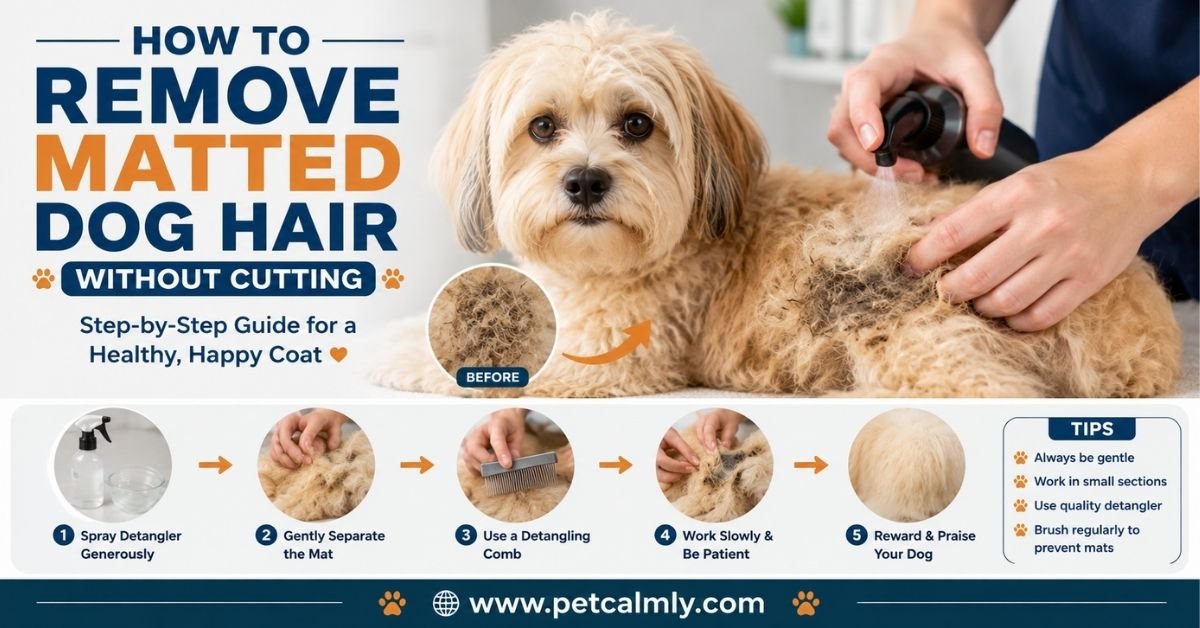
Step 1: Soften the Mat First
Spray the mat generously with a dog-safe detangling spray or a diluted leave-in conditioner. Let it sit for two to three minutes. Dry hair resists separation damp, conditioned hair slides apart far more easily. Avoid soaking the mat in water alone; wet mats without conditioner can actually tighten further as they dry.
Step 2: Hold the Base, Not the Tip
This is the single most important technique, and it’s the one most owners get backward. Pinch the coat at the base of the mat, right where it meets the skin, between two fingers. This takes tension off the skin. Then use your other hand to work the tangled hair above your fingers. If you only work from the tip, every tug pulls directly on the skin underneath which is exactly what makes dogs associate brushing with pain.
Step 3: Separate From the Outer Edge Inward
Start picking apart the mat from its outer edge using your fingers or the end of a comb, working in tiny sections. Think of it as unraveling, not brushing. Trying to comb straight through the center of a mat usually just tightens it further.
Step 4: Switch to a Dematting Tool for the Core
Once the outer layers are loosened, use a dematting comb with rounded safety blades to work through the denser core. Use short, gentle strokes, always supporting the skin underneath with your other hand. Stop every 30 seconds to check how your dog is doing a tail tuck, lip lick, or turning to look at the spot are all signs to ease off and reapply detangler.
Step 5: Finish With a Slicker Brush
Once the mat has loosened into separate strands, switch to a slicker brush to smooth the area and check for any remaining knots underneath. Run a wide-tooth comb through afterward if it glides through without catching, the mat is fully out.
Step 6: Check the Skin Underneath
Once the hair is free, part it and look at the skin. You’re checking for redness, irritation, tiny cuts, or hot spots that were hidden under the mat. This is common, especially with mats that had been there a while, and it’s worth knowing about even if the coat now looks fine.
Mistakes That Make Matting Worse
A lot of the frustration owners run into comes down to a handful of habits that feel logical but actually work against you.
- Brushing only the top coat. This can leave the coat looking smooth on the surface while mats form invisibly underneath, close to the skin — a pattern groomers sometimes call “hidden matting.”
- Bathing a matted dog before detangling. Water tightens mats like a wet knot in a shoelace, making them significantly harder to remove afterward.
- Using a slicker brush alone on a tight mat. Slicker brushes are excellent for finishing and maintenance, but on a dense mat they tend to skate over the top rather than separate it.
- Rushing through in one long session. Dogs pick up on tension. A ten-minute session done calmly is more productive than a forty-minute session where your dog starts squirming halfway through.
- Cutting “just this one mat” with regular scissors. Skin often folds up inside a mat, and scissors can catch it without you realizing until it’s too late. If cutting becomes necessary, blunt-tipped grooming scissors used flat against the skin, or clippers, are the safer route.
Preventing Mats Before They Start
The most reliable way to avoid this whole process is to stay ahead of it, rather than deal with it after mats have already formed.
- Brush two to three times a week for most coat types, and daily for curly or silky-coated breeds
- Brush all the way down to the skin, not just over the top layer
- Pay extra attention to friction zones: behind the ears, under the collar, armpits, tail base, and between the toes
- Dry your dog fully and brush through after every bath or swim, before the coat air-dries into any tangled sections
- Book a trim on a regular schedule if you have a non-shedding or curly-coated breed even owners who love longer coats often find a light trim every 6–8 weeks prevents the felting that leads to bigger mats later
- Keep an eye on weight and mobility, since dogs who groom themselves less due to stiffness or extra weight tend to mat more in hard-to-reach spots
A quick two-minute check-in most days, even without a full brushing session, catches small tangles while they’re still easy to work through by hand.
When Should You Worry? Signs a Mat Needs Professional Attention
Most mats are a grooming issue, not a medical one but a few signs mean it’s time to stop trying to work it out yourself and call a groomer or vet instead.
- The mat is pulling the skin taut, and your dog yelps or pulls away when it’s touched
- You can see the skin is red, raw, or has an odor coming from underneath the mat
- The mat is large enough that it’s restricting movement, particularly around the legs, tail, or groin
- Fly strike or maggots are visible this happens with severely matted, soiled coats left outdoors and needs same-day veterinary care
- Your dog has become head-shy or aggressive around brushing, which often points to a painful mat that’s been there a while
According to the Cornell University College of Veterinary Medicine, severely matted coats can trap moisture and debris against the skin, which creates conditions for skin infections and can mask injuries underneath. This is one reason groomers will often recommend shaving a badly matted area rather than risk further skin damage trying to comb it out.
What Should Pet Owners Do From Here?
If you’ve tried the steps above and the mat is loosening, keep going in short sessions over a few days rather than forcing it all out in one sitting. There’s no rush, and a calmer process is genuinely better for your dog’s trust in being brushed going forward.
If the mat isn’t budging, or you’re seeing any of the warning signs above, the most responsible next step is a professional groomer. Groomers have safety-guarded clippers designed to get underneath mats without touching skin, something that’s very difficult to replicate with home tools on tight matting. This isn’t a failure on your part some mats, especially ones that have been there for weeks, genuinely aren’t safe to remove by hand.
If you notice broken skin, swelling, discharge, or your dog seems to be in pain beyond normal brushing discomfort, that’s a situation for a veterinarian rather than a groomer, since it may involve treating irritated or infected skin underneath the coat.
Conclusion
Removing matted dog hair without cutting comes down to patience, the right tools, and working with the coat instead of against it softening the mat, supporting the skin at the base, and separating it in small sections from the outside in. Most fresh, moderate mats will come out this way with a bit of persistence. Tight, old, or skin-level mats are a different story, and recognizing that early saves your dog unnecessary discomfort and saves you a frustrating afternoon. Regular brushing between sessions is what keeps this from becoming a recurring battle in the first place.
More Information About Pets, Please Visit Our Website: Best Protein Food for Dogs
Can Dogs Eat Rice Every Day?
Best Dog Food for Skin Allergies
What Human Food Can Dogs Eat Safely?
Homemade Food for Dogs With Allergies
How Often Should Dogs Eat Raw Meat?
How Long Can a Dog Hold its Pee
Why Is My Dog Drinking So Much Water?
Frequently Asked Questions
1: Can you remove a matted dog without shaving it?
Often, yes as long as the mat is loose enough to separate by hand and isn’t sitting tight against the skin. Softening the hair with a detangler and working from the outer edge inward with a dematting comb is usually enough for small to moderate mats. Tight, felted mats close to the skin are much harder to remove safely without shaving.
2: Is it painful for a dog to have mats removed?
It can be if the mat is pulled from the tip rather than supported at the base. Mats themselves are often already uncomfortable, since they pull on the skin with every movement. Removing them correctly with the base held to release tension should be far less uncomfortable than leaving the mat in place.
3: What household items help loosen dog mats?
A cornstarch-based detangling powder or a diluted leave-in conditioner made for dogs can help loosen mild mats. Coconut oil is sometimes used in small amounts, though it can leave the coat greasy and attract dirt if overused. Avoid human hair products, as many contain ingredients that aren’t meant for a dog’s skin.
4: How long does it take to remove a mat without cutting?
A small, fresh mat can often be worked out in 5–15 minutes. Larger or older mats may need several short sessions over a few days rather than one long sitting, especially if your dog needs breaks.
5: Why does my dog have mats even though I brush regularly?
Brushing only the top layer of the coat is a common cause mats often form close to the skin, in areas like behind the ears or under the collar, where they’re easy to miss. Switching to a routine that brushes all the way down to the skin, especially in friction zones, usually solves this.
6: When is it safer to just cut a mat out?
When the mat is tight against the skin, doesn’t loosen with detangler and gentle separation, or is clearly causing pain. At that point, blunt-tipped grooming scissors used flat against the skin, or a groomer’s clippers, are safer than continuing to pull at it by hand.