Short direct answer
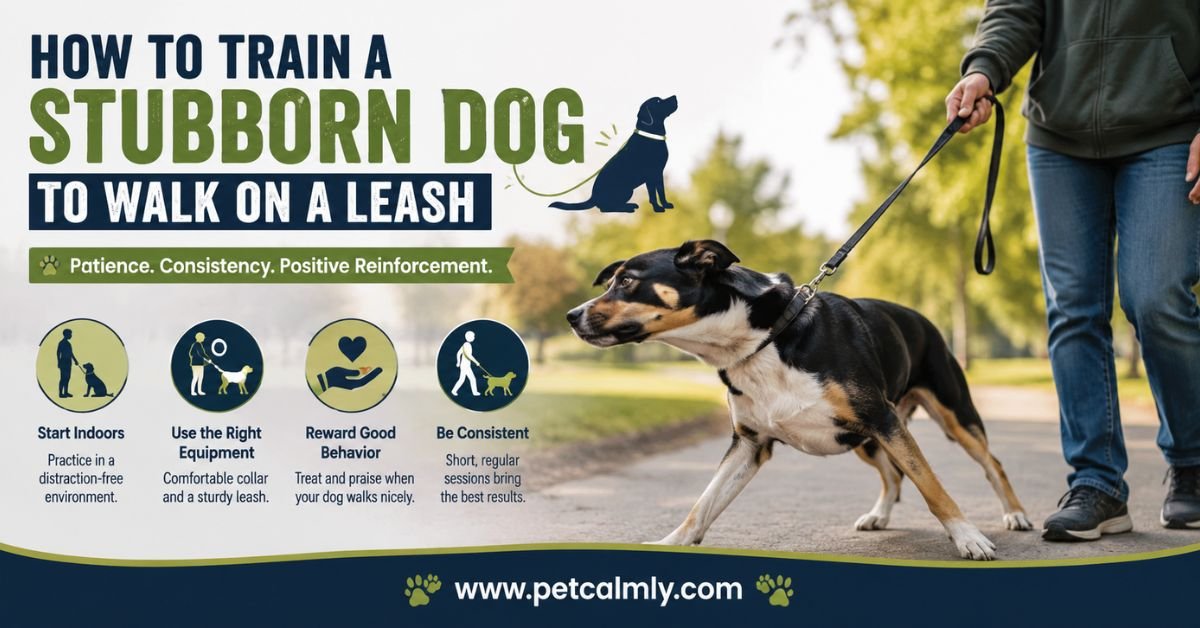
To train a stubborn dog to walk on a leash, stop pulling back when they pull forward, reward loose-leash walking with treats and praise the moment the leash goes slack, and practice in short, low-distraction sessions before working up to busier environments. Most “stubborn” leash behavior isn’t defiance it’s a dog who hasn’t yet learned that a loose leash gets them where they want to go faster than a tight one does. Consistency, the right equipment, and realistic expectations matter more than corrections or willpower.
Why Your Dog Isn’t Actually Being “Stubborn”
If you’ve ever stood on a sidewalk while your dog plants all four feet and refuses to budge or gets dragged sideways by every squirrel, scent, and stranger it’s easy to label them stubborn. It feels personal. Like they’re choosing to ignore you.
They’re not.
Dogs don’t walk nicely on a leash by instinct. In the wild, or even in a fenced yard, there’s no reason for a dog to match a human’s pace, stop at curbs, or ignore the smell of another dog’s urine on a fire hydrant. Leash walking is a learned skill, and for a lot of dogs, nobody ever actually taught it they just got clipped to a leash and expected to figure it out.
What looks like stubbornness is usually one of these things:
- The leash has never been paired with reward. Pulling gets them to the smell faster, so pulling works.
- They’re overstimulated, not defiant too many sights, sounds, and smells to process, so they freeze or bolt.
- The equipment is uncomfortable or scary, so they resist moving at all.
- They were never walked as a puppy and are essentially starting from zero as an adult dog.
- Underlying anxiety or fear is making the outside world feel unsafe rather than exciting.
Understanding why your dog pulls, freezes, or ignores you changes how you train them. A dog who pulls toward everything interesting needs a different approach than a dog who refuses to move at all.
What “Stubborn” Leash Behavior Actually Looks Like
Before jumping into training, it helps to identify which pattern you’re dealing with, since the fix isn’t identical for each one.
| Behavior | What’s Likely Happening | First Fix to Try |
|---|---|---|
| Pulling hard toward smells, dogs, or people | High excitement, leash equals access to fun things | Stop-and-go method (below) |
| Planting feet, refusing to walk | Fear, overwhelm, or unfamiliar surface/environment | Slow desensitization, no forcing |
| Lunging at other dogs or people | Frustration, fear, or lack of socialization | Distance management + counter-conditioning |
| Zig-zagging, sniffing constantly | Normal dog behavior, not defiance | Scheduled “sniff breaks” |
| Sitting down mid-walk and refusing to move | Could be behavioral or physical discomfort | Rule out pain first (see vet section below) |
If your dog suddenly starts refusing walks after previously enjoying them, that’s worth paying attention to — it can be behavioral, but it can also be a sign of joint pain, an injury, or another medical issue. We’ll cover when to involve a vet later in this article.
Before You Start Training: Get the Equipment Right
A lot of leash struggles are made worse by gear that fights against the dog’s natural movement or gives you no real control. You don’t need anything expensive, but a few choices make a measurable difference.
What tends to work well for stubborn or reactive pullers:
- A front-clip harness, which gently redirects a pulling dog back toward you instead of letting them drive forward with their full chest strength
- A 4–6 foot standard leash rather than a retractable one retractables teach dogs that pulling extends their range, which directly undermines loose-leash training
- High-value treats cut small, kept in an easily accessible pouch or pocket
What tends to work against you:
- Back-clip harnesses on dogs who pull hard, since they can turn pulling into a comfortable, sled-dog-like posture
- Retractable leashes during training walks
- Collars alone on dogs who lunge or pull hard, due to the strain on the neck and trachea
If your dog coughs, gags, or wheezes on a regular collar and leash, a harness is worth switching to regardless of training stage — it distributes pressure across the chest instead of the throat.
The Core Method: Loose-Leash Walking Through Stop-and-Go
This is the foundation most professional trainers rely on, and it works for the majority of dogs who pull because they’re excited rather than afraid.
How It Works, Step by Step
- Start in your quietest, lowest-distraction space — your hallway, backyard, or an empty driveway, not the dog park.
- Clip on the leash and simply wait. Don’t say anything. Don’t move.
- The instant there’s slack in the leash, mark it — a clicker, or a cheerful “yes” — and take a step forward.
- The moment your dog pulls tight, stop walking completely. Don’t yank, don’t say “no,” just become a statue.
- Wait for the leash to loosen again — even a small step back, or turning to look at you — then mark it and continue walking.
- Repeat. In the beginning, this might mean you move three feet in five minutes. That’s normal.
Your dog learns, through repetition rather than lecture, that a tight leash makes the world stop and a loose leash makes it keep moving. This is far more durable than a correction-based approach, because the dog is solving the puzzle themselves instead of just avoiding punishment.
Why This Works Better Than Pulling Back or “Corrections”
When you pull back against a pulling dog, you trigger something called the opposition reflex dogs (like most animals) instinctively lean into pressure rather than away from it. That tug-of-war you’re locked in isn’t your dog being defiant; it’s a built-in physical reflex working against you. Stopping instead of pulling sidesteps the reflex entirely.
Practical Training Plan for a Stubborn Puller
Real progress happens in stages, not overnight. Here’s a realistic week-by-week structure many owners find manageable.
Week 1 — Indoors and Backyard Only
- 5-minute sessions, twice a day
- Focus purely on “leash tightens we stop”
- No expectation of actual “walking” yet this is about the concept sinking in
Week 2 — Quiet Outdoor Areas
- Move to a quiet street or early-morning timing when distractions are lower
- Keep sessions to 10–15 minutes
- Bring treats and reward check-ins (your dog glancing at you) generously
Week 3 — Slightly Busier Environments
- Introduce mild distractions: a parked car, a person across the street
- If your dog struggles, you’ve likely moved too fast — go back a step, not forward
- Practice “find it” games, tossing a treat on the ground to reset focus after a distraction
Week 4 and Beyond Real-World Walks
- Gradually build toward your actual neighborhood route
- Expect setbacks near high-value triggers (other dogs, squirrels) even after progress elsewhere
- Keep sessions positive end on a win, even a small one, rather than pushing until your dog is frustrated
This pacing will look different for every dog. A confident Labrador might move through these stages in two weeks; an anxious rescue might need two months on week one alone. That’s not failure that’s the dog’s own timeline.
When the Problem Is Fear, Not Excitement
Not every “stubborn” dog is straining at the leash toward something fun. Some dogs plant their feet and simply won’t move, and pulling, coaxing, or picking them up teaches them that shutting down gets them carried which reinforces the wrong behavior.
What tends to help:
- Sit or crouch near your dog at their level instead of pulling from ahead
- Toss a treat a foot or two in the direction you want to go, letting them choose to move for it
- Keep initial sessions absurdly short even reaching the mailbox and turning around counts as a win
- Avoid flooding them with a long walk in a new environment; build tolerance in small doses instead
Dogs who freeze out of fear are communicating that the environment feels unsafe to them. Forcing movement can damage trust and make future walks harder, not easier.
Common Mistakes That Keep Dogs “Stuck” on Leash Training
- Only practicing during actual walks. Training sessions and “getting exercise” walks are different goals — mixing them slows progress because you can’t fully focus on technique when your dog also needs to burn energy.
- Inconsistent household rules. If one family member lets the dog pull to the tree while another stops every time, the dog gets mixed signals and progress stalls.
- Skipping the “boring” indoor phase. It’s tempting to go straight to the neighborhood, but dogs generalize slowly — a skill learned indoors doesn’t automatically transfer outside without practice.
- Using the leash as the only correction tool. Yanking or jerking the leash can create leash reactivity or anxiety around walks, even in dogs who were previously fine with it.
- Expecting a fixed timeline. Comparing your dog’s pace to a neighbor’s dog, or to online videos, sets you up for frustration that your dog can sense.
When You Should Worry: Signs It’s Not Just a Training Issue
Most leash struggles are behavioral and respond well to consistent training. But a few signs point toward something that needs a veterinarian’s input rather than more practice.
Talk to your vet if your dog:
- Suddenly refuses walks after previously walking fine, especially if it happened abruptly
- Yelps, limps, or hesitates on certain surfaces (stairs, grass, pavement)
- Pants heavily, seems reluctant to move, or lies down mid-walk even in mild weather
- Shows signs of pain when the harness or collar is touched, such as flinching or snapping
- Has a persistent cough or gagging that seems tied to leash pressure, which can point to tracheal sensitivity
- Is a senior dog with new reluctance to walk, which can indicate arthritis or joint pain rather than behavior
Sudden changes in a dog’s activity tolerance or gait are frequently linked to orthopedic or neurological issues rather than behavior, particularly in middle-aged and senior dogs. A vet visit rules out physical causes before you invest more time in training a behavior that might actually be pain avoidance.
What Pet Owners Should Do Day to Day
Once you’ve ruled out a medical cause and confirmed this is a training issue, the day-to-day habits matter more than any single “trick.”
- Walk at the same time each day where possible — predictability lowers a dog’s baseline stress, which makes training easier
- Keep a treat pouch by the door so you’re never scrambling to reward good moments
- Separate “training walks” from “sniff walks” — let your dog have unstructured sniffing time on a long line as a completely separate activity from structured leash practice
- Track small wins, like an extra ten feet of loose-leash walking this week compared to last — progress in leash training is rarely linear or dramatic
- Ask for help early from a certified trainer (look for credentials such as CPDT-KA) if you’re not seeing any movement after 3–4 weeks of consistent practice, especially with fear-based or reactive dogs
Does Breed Affect How “Stubborn” a Dog Seems on Leash?
Breed background plays a real role here, even if it’s not the whole story. Dogs bred for independent work scent hounds like Beagles, sled-type breeds like Huskies, or terriers bred to chase often seem more “stubborn” simply because their instincts pull them toward following a smell or a moving target rather than checking in with a handler. That’s not disobedience; it’s centuries of selective breeding working exactly as designed.
A few patterns worth knowing:
- Scent hounds (Beagles, Bassets, Bloodhounds) often walk with their nose glued to the ground, which can look like ignoring you but is closer to sensory overload — the smell genuinely competes with your voice for their attention.
- Working and herding breeds (Huskies, Malamutes, Border Collies) frequently pull hard because they’re bred for sustained forward motion, and under-exercised dogs in this group often show the strongest pulling.
- Small breeds are sometimes labeled stubborn when they’re actually reluctant due to cold, wet pavement, or a harness that pinches worth checking fit before assuming it’s behavioral.
- Brachycephalic breeds (Bulldogs, Pugs, French Bulldogs) may resist walks due to breathing difficulty rather than defiance, especially in heat or humidity, and are particularly poor candidates for any collar-based leash pressure.
None of this changes the training method the stop-and-go approach and short session structure still apply but knowing your dog’s breed tendencies helps set realistic expectations and prevents you from mistaking instinct for defiance.
A Simple Pre-Walk Checklist
A few quick checks before every training walk can prevent a lot of frustration:
- Harness or collar fits snugly but allows two fingers of space underneath
- Treats are cut small and easy to grab quickly
- You’ve picked a quiet route or time of day, especially in early weeks
- You’re mentally prepared for a short session five focused minutes beats twenty frustrated ones
- Your dog has had a bathroom break already, so the walk is about training, not urgency
- You’re not rushing to be somewhere rushed handlers tend to tighten the leash unconsciously, which undoes the training
A Realistic Example
Consider a dog who bolts to the end of the leash the second the front door opens, then drags their owner down the block toward every other dog in sight. That’s a classic excitement-driven puller. The stop-and-go method, paired with a front-clip harness and a few weeks of short indoor sessions before ever attempting the full block, tends to produce visible change — not a perfectly loose leash overnight, but noticeably less strain and more check-ins with the owner.
Compare that to a dog who freezes at the bottom of the porch steps and refuses to come down. That’s not the same problem, even though both might get labeled “stubborn.” The freezing dog needs patience, treats tossed toward the goal, and permission to go at their own pace — pulling on the leash here usually backfires.
Same starting label. Two completely different training plans.
Building Loose-Leash Walking Into Everyday Life
Training doesn’t have to live only in dedicated 10-minute sessions. Small, repeated moments throughout the day reinforce the habit without adding extra time to your schedule.
- Doorway manners matter more than people think. If your dog bursts out the front door at full speed, that burst of momentum often carries straight into pulling. Practicing a calm “sit and wait” at the door before clipping the leash sets the tone before the walk even starts.
- Use everyday walks as low-stakes practice, not just formal sessions. A trip to check the mail or walk to the car is a free rep of the same skill.
- Reward check-ins, not just loose leash. A dog who glances up at you mid-walk, even while the leash is loose, is offering attention worth reinforcing it builds the habit of looking to you for guidance in distracting moments.
- Keep sessions short even once your dog improves. A well-trained dog can still get overtired or overstimulated on a long walk in a new place, and a tired dog is more likely to revert to pulling out of sheer momentum.
Owners who fold training into daily routine rather than treating it as a separate project tend to see steadier, more lasting results than those who only practice in formal sessions.
More Information About Pets, Please Visit Our Website: How to Stop Leash Pulling in Dogs
Do Dogs Understand Cat Body Language?
What causes sudden anxiety in dogs?
Dog Acting Strange Suddenly at Night
Puppy separation anxiety training tips
Strange Dog Behavior Before Death
Why Is My Dog Suddenly Scared of My Other Dog?
Frequently Asked Questions
1: Why does my dog pull so hard on the leash even after training?
Pulling that resurfaces after progress usually means the environment introduced something new and exciting (a squirrel, another dog, a smell) that temporarily overrides the training. This is normal go back to shorter, lower-distraction sessions to reinforce the habit rather than assuming the training “failed.”
2: Is it better to use a harness or a collar for a dog that won’t walk nicely?
A front-clip harness is generally easier to manage for dogs who pull, since it reduces the physical leverage they have and avoids pressure on the throat. Collars can work for dogs who already walk calmly, but they’re not ideal for active leash training.
3: How long does it take to train a stubborn dog to walk on a leash?
It varies widely by dog, but many owners see noticeable improvement within 3–6 weeks of consistent, short daily sessions. Dogs with fear-based leash issues or a history of poor experiences on leash may take longer, and that’s normal.
4: Can an older dog still learn to walk properly on a leash?
Yes. Age doesn’t prevent learning, though older dogs may need shorter sessions and should be checked by a vet first to rule out joint pain or mobility issues that could be mistaken for stubbornness.
5: Should I keep walking my dog even if they pull the whole time?
It’s fine to continue walks for exercise and mental stimulation, but treat those as separate from focused training sessions. Letting pulling happen unchecked during every walk can slow progress, since the dog keeps getting rewarded (by reaching the smell or spot faster) for the exact behavior you’re trying to reduce.
6; My dog refuses to walk at all is this normal?
It can be, especially in puppies, rescue dogs, or dogs with limited walking history fear or unfamiliarity is a common cause. However, sudden refusal in a dog who previously walked fine is worth a vet check to rule out pain or illness before assuming it’s purely behavioral.
Conclusion
A dog who fights the leash isn’t broken, and they’re not doing it to frustrate you. They’re responding the only way they know how to an experience nobody’s fully explained to them yet. The stop-and-go method, the right harness, and short, consistent sessions solve the vast majority of leash struggles not through force, but by making the loose leash the obviously better option from the dog’s point of view.
If you’ve ruled out pain, stayed consistent for several weeks, and you’re still not seeing progress especially with fear or reactivity involved that’s a reasonable point to bring in a certified trainer or veterinary behaviorist rather than a sign you’ve done something wrong.