Short direct answer
Training a stubborn dog starts with figuring out why your dog seems resistant most “stubborn” behavior is really confusion, fear, boredom, or a training method that doesn’t match your dog’s personality. The most effective fix is to shorten your training sessions, raise the value of your rewards, remove distractions until your dog can succeed consistently, and stay calm and predictable instead of repeating commands or getting frustrated. Dogs labeled “stubborn” are almost always dogs who haven’t yet been shown, in a way they understand, why listening is worth it.
Why Your Dog Isn’t Actually “Stubborn” (Even Though It Feels That Way)
If you’re reading this at 9 p.m. after your dog ignored “come” for the fifth time in the backyard, “stubborn” probably feels like the right word. It’s not personal, though it’s rarely defiance in the way we experience it as humans.
Dogs don’t sit there weighing whether to respect your authority. What looks like stubbornness is usually one of a few specific things happening underneath the surface:
- The dog genuinely doesn’t understand what you’re asking in this context
- The reward isn’t worth more than what’s already holding their attention
- Something in the environment feels more urgent than you do right now
- Past training created confusion, anxiety, or inconsistency
- The breed’s original job (herding, guarding, scent work, independence) is working against a generic obedience approach
Once you start seeing the behavior this way, training stops feeling like a battle of wills and starts feeling like a puzzle you can actually solve.
The Real Reasons Dogs Seem Hard to Train
1: Breed Instinct Is Doing Exactly What It Was Built to Do
Some breeds were never designed to look to a human for constant direction. Beagles were bred to follow scent trails independently. Huskies were bred to problem-solve and pull without waiting for instructions. Terriers were bred to make split-second decisions hunting vermin. When these dogs “ignore” you, their brain is often doing precisely the job generations of breeding selected for.
This doesn’t mean these breeds can’t be trained beautifully it means the approach has to work with their instincts, not against them.
2: Fear or Anxiety Can Look Identical to Defiance
A dog who freezes, stalls, or refuses to move on a walk isn’t necessarily being difficult. Fear-based shutdown and stubborn refusal can look almost identical from the outside. A dog who’s nervous about a noise, a surface, or a stranger nearby may simply be unable to process a command in that moment, not unwilling to obey it.
3: Past Training Created Confusion
If a dog has been corrected inconsistently praised for jumping one day and scolded for it the next they can develop what looks like selective listening. It isn’t selective listening. It’s a dog who has learned that the rules change, so testing the current mood of the room becomes the safest strategy.
4: Boredom and Under-Stimulation
A dog who isn’t getting enough mental or physical exercise often channels that pent-up energy into ignoring cues, especially outdoors where the environment is more interesting than anything you’re offering. This is one of the most common and most fixable causes of “stubborn” behavior in young, high-energy dogs.
5: The Reward Isn’t Actually Rewarding
Kibble might be enough motivation in a quiet kitchen. It’s rarely enough motivation next to a squirrel. If your dog listens perfectly indoors and falls apart outside, the issue usually isn’t attitude it’s that your reward hasn’t been upgraded to match the distraction level.
Signs You’re Dealing With a Motivation Problem, Not a Behavior Problem
Before changing your approach, it helps to notice the pattern. A true motivation or communication gap tends to show up as:
- Listening well at home but not outside, or vice versa
- Responding to one family member but not another
- Performing a cue with treats present but not without them
- Hesitating before a command, as if thinking it over
- Sudden regression after previously knowing a cue well
If several of these sound familiar, the good news is that this isn’t a personality flaw it’s a training gap, and training gaps are the easiest kind of problem to close.
Step-by-Step: How to Train a Dog That Won’t Listen
Step 1: Shrink the Training Session
Long sessions ask for more focus than most dogs, especially young or high-energy ones, can sustain. Five focused minutes, two or three times a day, will outperform one twenty-minute session every time. Short sessions also mean you’re far less likely to get frustrated, which your dog will pick up on instantly.
Step 2: Upgrade the Reward to Match the Distraction
Think of rewards on a scale. Kibble might work at home. Freeze-dried liver or small pieces of chicken are often needed outside. The rule of thumb: the harder the environment is to focus in, the higher-value the reward needs to be. This isn’t bribery — it’s paying your dog fairly for a harder job.
Step 3: Remove the Distraction, Then Add It Back Gradually
If your dog can’t listen in the backyard with the neighbor’s dog barking, that’s not the moment to practice recall — that’s the moment to step back to a quieter space, rebuild the behavior, and slowly reintroduce distractions once the cue is solid. Skipping this step is the single most common reason training stalls.
Step 4: Say the Command Once
Repeating “sit, sit, SIT” teaches your dog that the first few repetitions don’t count. Say it once, wait a few seconds, and if there’s no response, quietly reset reduce distractions or increase the reward rather than repeating the word louder.
Step 5: Reward the Attempt, Not Just the Perfect Result
Especially early on, mark and reward effort in the right direction, not only the finished behavior. A dog who starts to sit but stands back up still gets acknowledgment for trying, which builds confidence faster than waiting for perfection.
Step 6: End on a Win
Finish every session with something your dog can succeed at, even if it’s simple. Ending on frustration (yours or theirs) is one of the fastest ways to make a dog dread training sessions altogether.
Training Methods That Work Well for Independent or Strong-Willed Dogs
Positive Reinforcement, Done Correctly
Reward-based training isn’t just “give a treat and hope.” Timing matters more than almost anything else — the reward needs to land within a second or two of the correct behavior, or your dog may not connect the two. A clicker, or a consistent verbal marker like “yes,” can bridge that timing gap.
Engagement-Based Training
For dogs who are naturally independent, building value in you before asking for obedience makes a real difference. Games like hand-targeting, “look at me,” or simple name-recognition drills teach a dog that checking in with you is rewarding, which becomes the foundation everything else is built on.
Life Rewards
Not every reward has to be food. For dogs motivated by the outside world, access to that world can be the reward. A dog who sits calmly before the leash goes on, or waits at the door before being released outside, learns that listening is what unlocks the fun — not an obstacle standing between them and it.
How Age Changes the “Stubborn” Picture
Puppies (Under 12 Months)
Puppies aren’t stubborn they simply haven’t built the attention span, impulse control, or vocabulary yet. A young puppy who wanders off mid-command is usually distracted, not defiant. Short, frequent sessions matter more here than at any other life stage, because a puppy’s brain tires quickly, and pushing past that point tends to create frustration rather than learning.
Adolescent Dogs (6 Months to 2 Years)
This is where most owners first reach for the word “stubborn.” Adolescence brings a temporary dip in impulse control, even in dogs who were reliable puppies. Hormonal changes, growing independence, and a widening world of interesting smells and sounds all compete for attention. This phase is temporary, but it’s also where consistent, patient training pays off the most, because habits formed now tend to stick into adulthood.
Adult and Senior Dogs
An adult dog who suddenly becomes harder to train has usually experienced a change a new environment, a shift in routine, a health issue, or a gap in consistent reinforcement. Senior dogs in particular deserve a second look before assuming stubbornness: declining hearing or vision, joint pain, or early cognitive changes can all look identical to “just not listening” from the outside.
Tools That Can Help (and Ones to Be Careful With)
Not every training tool suits every dog, and using the wrong one can quietly make resistance worse instead of better.
Generally helpful:
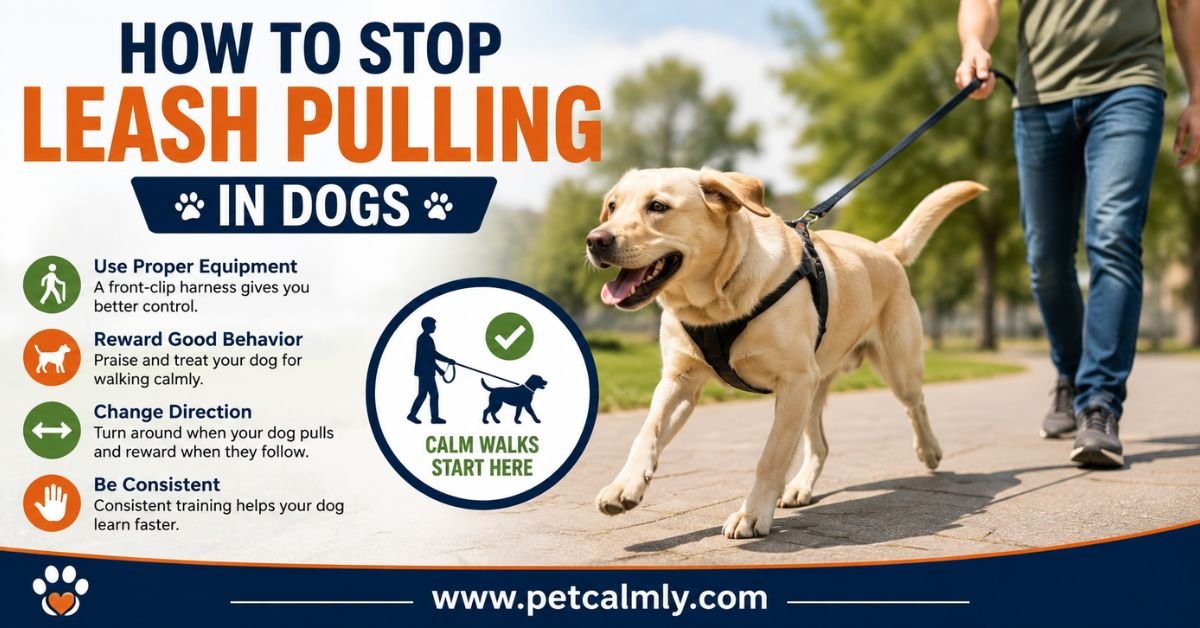
- A well-fitted front-clip harness for dogs who pull, since it reduces the physical tug-of-war that can overshadow training
- A treat pouch, so rewards are delivered quickly and consistently rather than fumbled for
- A long training leash (15–30 feet) for practicing recall safely in open spaces
- A clicker or a consistent marker word for precise, well-timed feedback
Use with caution, and ideally with professional guidance:
- Prong, choke, or shock collars, which can suppress visible behavior without addressing the underlying cause, and in some dogs increase fear or reactivity rather than resolving it
- Retractable leashes during focused training, since the inconsistent tension can make cues like “heel” harder to communicate clearly
If you’re ever unsure whether a tool is appropriate for your specific dog, a certified professional trainer can assess your dog’s temperament and recommend equipment suited to their needs.
Common Mistakes That Make Dogs Seem More Stubborn Than They Are
| Mistake | Why It Backfires | What to Do Instead |
|---|---|---|
| Repeating the command | Teaches the dog the first few repeats don’t matter | Say it once, then reset the situation |
| Raising your voice | Adds stress, which reduces a dog’s ability to think clearly | Keep your tone flat and calm, even when frustrated |
| Training only when frustrated | Dogs pick up on tension and start associating training with stress | Train proactively, in short calm sessions |
| Skipping the “boring” foundational steps | Makes advanced cues unreliable under distraction | Rebuild step by step, even if it feels slow |
| Using punishment to stop confusion | Doesn’t teach the dog what to do instead | Redirect to the correct behavior and reward it |
| Inconsistent household rules | Confuses the dog about what’s actually expected | Get every family member on the same page |
When Should You Worry? Signs It’s More Than Stubbornness
Most “stubborn” behavior is a normal training gap. But certain patterns are worth a closer look, ideally with a veterinarian or a certified professional dog trainer, rather than pushing through with more repetition:
- A previously well-trained dog suddenly stops responding to known cues
- Refusal to move, sit, or eat, paired with signs of pain (limping, hunching, whining when touched)
- Sudden aggression, growling, or snapping during training
- Extreme fear responses trembling, hiding, refusing to leave a “safe” spot
- Noticeable hearing or vision changes, especially in senior dogs
- Obsessive or repetitive behaviors like tail-chasing or excessive licking
Behavior changes that appear suddenly, rather than developing gradually, are especially worth a veterinary visit. Pain, thyroid issues, and neurological changes can all present as a dog who “just stopped listening,” and ruling out a medical cause is always a reasonable first step before assuming it’s purely a training issue, according to guidance from veterinary behavior resources like the AVMA and VCA Animal Hospitals.
What Pet Owners Should Do Next
If you’re in the middle of this right now, here’s a practical checklist to work through over the next week:
- Pick one cue your dog struggles with most and go back to basics with it in a low-distraction room
- Upgrade your treats to something your dog rarely gets otherwise
- Cut your sessions down to under five minutes
- Watch for any physical or emotional signs that might explain the resistance
- Keep a simple log of when your dog listens well versus when they don’t patterns usually show up within a few days
- If progress stalls for more than two to three weeks despite consistent effort, consider a session with a certified professional dog trainer
Small, consistent wins add up faster than most owners expect. The goal isn’t a perfect dog by next weekend it’s steady, visible progress that tells you the approach is working.
Building a Weekly Training Rhythm That Actually Sticks
Consistency beats intensity almost every time with dog training. A dog who trains for five minutes, twice a day, six days a week, will typically outpace a dog who trains for an hour once a week not because the total time is dramatically different, but because frequent short exposure builds habits, while occasional long sessions build fatigue.
A simple rhythm that works for most households:
- Morning: A five-minute session on one focus cue (sit, stay, or recall), practiced somewhere quiet
- Midday: A few minutes of engagement games hand-targeting, name recognition, or “look at me” — woven into a walk
- Evening: A relaxed five-minute session reviewing whatever felt shakiest that morning, ending on an easy win
Weekends are a good time to slowly reintroduce distractions a busier park, a friend’s dog nearby, or a new environment — once weekday cues feel solid in a calm setting. Progressing too quickly past this stage is one of the most common reasons training that was working well at home suddenly seems to fall apart outside it.
A Realistic Example
Picture a two-year-old terrier mix who sits beautifully in the kitchen but bolts the second the leash comes out. The owner assumes the dog “knows better” and is simply choosing to ignore them. In reality, the dog has never practiced “sit” anywhere near this level of excitement, and the reward being offered regular kibble can’t compete with the anticipation of a walk.
The fix isn’t more repetition of the same failing approach. It’s lowering the difficulty (practicing near the door before adding the leash), raising the reward (small pieces of real chicken instead of kibble), and building the behavior back up in layers. Within a couple of weeks of five-minute sessions, most dogs in this exact situation start to generalize the behavior successfully.
Conclusion
A dog that seems stubborn is usually a dog that’s missing one piece of the puzzle clearer communication, a stronger reward, a calmer environment, or a training style that fits their personality instead of fighting it. None of that requires harsh corrections or hours of daily drilling. It requires patience, short focused sessions, and a willingness to step back to an easier version of the exercise when things aren’t clicking.
Progress with a strong-willed dog is rarely linear, and that’s normal. The dogs who seem the most “difficult” early on are often the same ones who end up the most reliably trained, once the right approach is found.
More Information About Pets, Please Visit Our Website: How to Train a Stubborn Dog to Walk on a Leash
How to Stop Leash Pulling in Dogs
When One Dog Dies Does the Other Grieve?
Why Does My Dog Bark at Strangers on Walks?
How Long Do Dogs Stay Stuck Together After Mating
How to Stop Your Puppy From Biting Your Hands Fast
How Long to Train a Dog to Be Alone?
How to Stop Dog From Pulling On Leash When Walking
Frequently Asked Questions
1: Why does my dog listen to one person and not another?
Dogs often associate different people with different levels of consistency and reward. If one household member reinforces cues reliably and another doesn’t, the dog will naturally respond better to the person who’s more predictable.
2: Is it too late to train an older stubborn dog?
No. Older dogs can absolutely learn new behaviors and unlearn old habits it may simply take a bit more patience and repetition than training a puppy, especially if old habits have been reinforced for years.
3: How long does it take to train a stubborn dog?
It varies widely by dog, but many owners see noticeable improvement within two to four weeks of consistent, short daily sessions. Full reliability around heavy distractions can take a few months.
4: Should I use treats forever, or will my dog become dependent on them?
Treats can be gradually phased out once a behavior is reliable, shifting to intermittent rewards and praise. Most trainers recommend weaning off constant treats rather than stopping them abruptly.
5: Can certain breeds never be fully off-leash reliable?
Some breeds with strong independent or prey-driven instincts, like scent hounds or terriers, may never be as reliably off-leash as a breed bred for close human cooperation. That doesn’t mean training fails it means expectations and environments need to be realistic for that breed.
6: What’s the difference between a stubborn dog and a poorly trained dog?
Often, very little. What looks like a stubborn personality is frequently the result of inconsistent training, mismatched rewards, or unrealistic expectations for the dog’s breed and age, rather than a fixed trait.
7: Do certain breeds get labeled “stubborn” unfairly?
Yes. Breeds like Beagles, Huskies, Basset Hounds, Shiba Inus, and many terrier breeds are frequently called stubborn simply because they were bred for independent decision-making rather than constant human direction. With the right approach, these breeds train well they just need methods suited to how they naturally think