Short direct answer
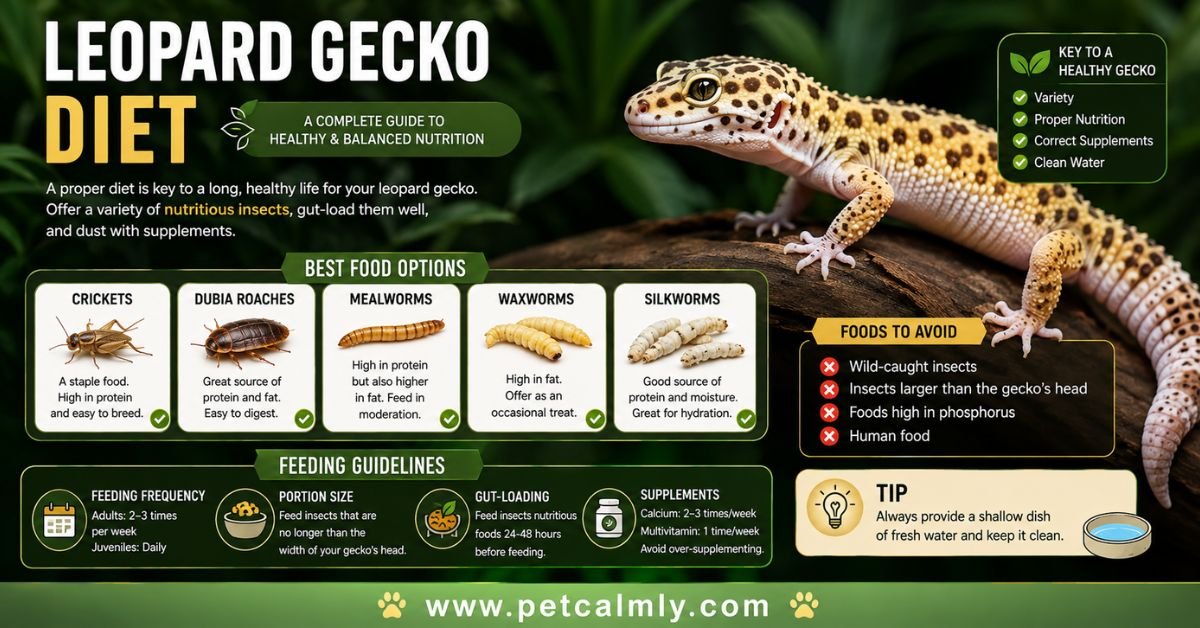
Leopard geckos are insectivores that thrive on live insects like crickets, dubia roaches, and mealworms, fed 2-4 times per week depending on age. Juveniles need daily feeding, while adults do well with 3-4 feeding days weekly. All insects should be gut-loaded and dusted with calcium and vitamin D3 supplements every other feeding. Avoid toxic foods like lightning bugs, fireflies, and certain greens, and always provide fresh water.
Why Diet Matters More Than You Might Think
When you first bring a leopard gecko home, feeding feels straightforward. You buy some crickets, toss them in the tank, and watch your gecko hunt. But here’s what most new owners don’t realize: what you feed your gecko today directly affects whether it lives a healthy 15 years or develops serious health problems by year three.
Leopard geckos in the wild eat a specific diet shaped by their natural habitat in the Middle East and Central Asia. They’re hunters with particular nutritional needs not just for survival, but for thriving. Poor diet doesn’t always show up immediately. Sometimes it takes months before a calcium deficiency leads to metabolic bone disease, or years before nutritional imbalances shorten your gecko’s lifespan.
This guide walks you through exactly what your leopard gecko needs to eat, why it matters, and how to avoid the feeding mistakes that cause most gecko health problems.
What Do Leopard Geckos Eat? Understanding Your Gecko’s Natural Diet
Leopard geckos are obligate insectivores, meaning they’ve evolved to eat insects and nothing else. Unlike some reptiles that occasionally eat plants or vegetation, your gecko’s digestive system is built entirely around hunting, catching, and processing live prey.
In their natural habitat, leopard geckos hunt insects that vary by season and availability. They’ll eat whatever they can catch beetles, grasshoppers, spiders, scorpions, ants, and small invertebrates. This dietary variety in the wild is important, because each type of insect brings slightly different nutritional profiles. A gecko eating five different insect species gets more balanced nutrition than one eating crickets alone.
The reality of captive feeding is different. Most pet leopard geckos eat the same 2-3 types of insects week after week. That’s not ideal, but it’s manageable if you choose the right insects and supplement properly.
Best Insects for Your Leopard Gecko
Not all insects are created equal. Some are nutritionally superior, easier to digest, or more closely match what your gecko would eat naturally. Here are the insects that work best for leopard geckos:
Crickets: The Staple (With Caveats)
Crickets are the most common feeder insect, and for good reason they’re affordable, widely available, and geckos love hunting them. But here’s the catch: crickets alone aren’t nutritionally complete. They’re low in calcium and high in phosphorus, which creates an imbalanced calcium-to-phosphorus ratio. This is why supplements are non-negotiable.
You’ve probably heard stories about crickets that escape and hide in corners, or ones that bite geckos at night. Both are real possibilities, but both are mostly avoidable with good feeding practices (more on that later).
Dubia Roaches: The Nutritional Winner
If you can get past the psychological hurdle, dubia roaches are arguably the best staple feeder insect for leopard geckos. They’re higher in calcium than crickets, more nutritionally dense, and they don’t bite or escape as easily. They also produce less odor and noise than crickets.
The downside? They’re less commonly available, sometimes more expensive, and they require careful handling. But many gecko owners who switch to dubia roaches notice their geckos are healthier, more active, and maintain better body condition. If you’re serious about optimal gecko nutrition, dubias are worth the effort.
Mealworms: A Caloric Option
Mealworms are fatty and calorie-dense, which makes them useful but not ideal as a primary diet. They’re great for underweight geckos or as an occasional treat, but feeding only mealworms creates nutritional gaps. They’re also low in calcium and high in fat, so they can contribute to obesity if overused.
Superworms (larger cousin of mealworms) have a similar nutritional profile but offer a bit more variety and can be exciting for geckos that enjoy the challenge of hunting larger prey.
Other Good Options
Hornworms are an excellent supplement—high in water content and protein with decent calcium levels. They’re pricier but worth including occasionally.
Discoid roaches work similarly to dubia roaches and are a legal alternative in places where dubias are restricted.
Black soldier fly larvae (BSFL) are becoming more available and offer excellent nutrition. They’re high in calcium and lower in chitin than other feeder insects, making them easier to digest.
Insects to Avoid
Never feed your leopard gecko fireflies or lightning bugs they contain toxins that are deadly to reptiles. Skip wild-caught insects unless you’re absolutely certain they haven’t been exposed to pesticides or parasites. Avoid overly large insects that could cause impaction or injury, and don’t feed insects from pet stores that look diseased or dying.
How Often Should You Feed Your Leopard Gecko?
Feeding frequency changes dramatically depending on your gecko’s age. This is one area where new owners often make mistakes that affect long-term health.
Juvenile Leopard Geckos (Under 6 Months)
Young geckos are in growth mode and need consistent nutrition. Feed them every single day, offering 5-10 appropriately-sized insects per feeding. Hatchlings should eat insects that are roughly the size of their head or smaller. As they grow, gradually increase insect size.
This daily routine might seem demanding, but it’s essential during this critical growth window. Nutritional deficiencies during juvenile development can cause permanent damage that shows up years later.
Subadult Geckos (6-12 Months)
Transition to feeding every other day or 5-6 times per week. Offer 5-10 insects per session, gradually reducing frequency as your gecko approaches adult size.
Adult Leopard Geckos (1+ Years)
Most adult geckos do well with feeding 3-4 times per week. Offer 5-8 insects per feeding. Some individuals maintain excellent health on twice-weekly feeding, while others need more frequent meals. You’ll learn your gecko’s baseline by watching body condition and behavior.
Pregnant or gravid females need more frequent feeding (5-6 times weekly) because egg production is metabolically expensive.
Age and Size Indicators
The challenge is that age isn’t always obvious, especially if you’ve adopted an adult gecko. Use these signs to gauge feeding needs:
- Active, curious behavior: Usually indicates adequate nutrition
- Visible backbone or ribs: Sign of underfeeding; increase frequency
- Rotund belly with rounded sides: Normal healthy weight
- Extremely round or pendulous belly: Sign of overfeeding; reduce frequency slightly
- Tail that looks thin or shriveled: Serious sign of malnutrition; increase feeding immediately
Gut-Loading: The Overlooked Game-Changer
Here’s something that separates knowledgeable gecko owners from average ones: gut-loading. This simple practice dramatically improves your gecko’s nutrition.
Gut-loading means feeding your feeder insects nutritious food 24-48 hours before they’re fed to your gecko. When your gecko eats a gut-loaded insect, it’s not just eating the insect it’s eating everything inside the insect’s digestive tract.
What to Gut-Load With
Feed your crickets or roaches:
- Collard greens (high in calcium)
- Kale (calcium-rich but use sparingly due to oxalates)
- Squash (nutritious and hydrating)
- Carrots (decent nutrition, good for hydration)
- High-quality fish food (commercial cricket food works too)
- Calcium powder mixed into food
You don’t need an elaborate diet simple collard greens plus calcium powder works beautifully. Keep gut-loading food moist to provide hydration to your feeder insects, which transfers to your gecko.
Why This Matters
A gut-loaded cricket has 2-3x more calcium than an unfed cricket. This is the difference between maintaining healthy bone density and developing nutritional problems. If you only remember one thing from this article, remember gut-loading.
Calcium and Vitamin Supplements: Non-Negotiable Nutrition
This is the part that confuses many new gecko owners, but it’s actually simpler than it seems.
The Calcium-Phosphorus Ratio Problem
Most feeder insects have more phosphorus than calcium the opposite of what your gecko needs. Phosphorus blocks calcium absorption, so even if your gecko eats plenty of insects, it might not be absorbing enough calcium. Supplements fix this problem by rebalancing the ratio.
What Type of Supplement
Use a calcium supplement with vitamin D3 for your leopard gecko. This is crucial because vitamin D3 helps your gecko absorb and utilize calcium. Without it, even well-fed geckos can develop deficiencies.
Common options:
- Repti Calcium with D3 (powder, dusted on insects)
- Zoo Med Reptivite (powder, vitamin complex)
- Fluker’s Calcium with D3 (powder)
All are readily available and effective when used correctly.
Supplementation Schedule
Dust insects with calcium-D3 powder during every other feeding. Alternate with plain calcium (no D3) on feeding days in between if you want to be precise, or stick with calcium-D3 every other time both approaches work fine.
Use a light dusting, not a heavy coating. A fine powder layer is all you need. Heavy overdosing of vitamin D3 is possible but rare with standard dusting practices.
Additional Vitamin Supplementation
A general vitamin supplement (multivitamin for reptiles) once or twice monthly provides vitamin A and other micronutrients. This is particularly important if you’re not using a wide variety of insects. Vitamin A deficiency shows up as closed or sunken eyes—if you see this, a vet visit is necessary.
What About Fresh Food? Do Leopard Geckos Eat Vegetables or Fruit?
This question comes up constantly, and the answer is straightforward: leopard geckos don’t eat vegetables or fruit in the wild, and they don’t need them in captivity.
Some gecko owners report their geckos occasionally nibbling soft fruits like mango or berries. This isn’t necessary, but it’s rarely harmful if it happens. Some geckos seem curious about food variety; others ignore plants entirely.
The bottom line: Don’t stress about offering vegetables. Your gecko gets everything it needs from properly-supplemented insects. If your gecko shows interest in fruit, a tiny occasional piece won’t hurt, but it’s never required.
Water and Hydration
Leopard geckos get most hydration from their food, but fresh water should always be available. Provide a shallow water bowl (they’ll drink from it, though not regularly), and mist food occasionally to increase humidity slightly. Some geckos drink droplets from leaves or tank decorations they’re getting water even if you don’t see them drink from the bowl.
If your gecko isn’t defecating regularly or its urates (white part of poop) look dry or thick, increase humidity slightly with occasional misting. Dehydration is less common than overfeeding, but it does happen.
7 Common Gecko Feeding Mistakes
After thousands of gecko-owner conversations, patterns emerge. These are the most common feeding mistakes that cause health problems:
Mistake 1: Feeding Randomly Without a Schedule
Geckos thrive on routine. Feeding at random times creates feeding stress and makes it harder to notice changes in appetite (which can signal illness). Pick specific feeding days and stick to them. Tuesday, Thursday, Saturday works perfectly. Your gecko will adjust to the rhythm.
Mistake 2: Leaving Live Insects in the Tank Too Long
After 15-20 minutes, remove any uneaten insects. Live crickets can bite or stress your gecko, especially at night. They can also damage your gecko’s eyes or tail. Daily feeding is cleaner and safer than “free-range” insects.
Mistake 3: Forgetting to Gut-Load
Many beginners feed insects straight from the container without preparation. This is probably the single biggest missed opportunity for improving gecko health. Gut-loading takes five minutes and makes an enormous difference.
Mistake 4: Over-Supplementing Vitamin D3
Too much vitamin D3 is toxic. But with standard supplementation practices (dusting every other feeding), this is extremely rare. Don’t worry about over-supplementing with normal use; just don’t add extra supplements or use multiple D3-heavy products simultaneously.
Mistake 5: Feeding Only One Insect Type
Crickets are fine as a base diet, but adding variety even occasionally improves nutrition. Rotating dubia roaches or mealworms every few weeks gives your gecko nutritional variety without major disruption.
Mistake 6: Feeding Insects That Are Too Large
A good rule: insects should be roughly the same size as your gecko’s head or smaller. Large insects can cause impaction, choking, or injury. This is especially important for young geckos.
Mistake 7: Ignoring Body Condition Changes
Geckos should have visible but not prominent ribs, a robust tail, and a rounded (not distended) belly. Weight gain or loss over a few weeks often signals feeding adjustment is needed, or it can indicate illness. Monthly weight checks help you catch problems early.
Feeding Tips for Different Life Situations
Picky or Stressed Geckos
Some geckos go through phases where they refuse to eat. If your gecko stops eating suddenly after eating normally, a vet visit is wise—appetite loss often signals illness. But if your gecko is simply uninterested in certain insects, try different prey. A gecko that ignores crickets might hunt roaches enthusiastically.
Feeding in a separate container sometimes helps the contained space makes hunting feel easier for anxious geckos. Feed for 10 minutes, then return your gecko to the main tank.
Underweight Geckos
If your gecko is visibly thin with prominent ribs, increase feeding frequency and make sure insects are well gut-loaded and supplemented. Consider higher-fat insects like mealworms occasionally. A vet should rule out parasites or illness if weight doesn’t improve with dietary changes.
Overweight Geckos
Reduce feeding frequency slightly (from 3x weekly to 2x weekly) or reduce the number of insects per feeding. Use lower-fat insects like dubia roaches instead of mealworms. An overweight gecko is at risk for fatty liver disease and metabolic problems.
Breeding Females
Females producing eggs need extra nutrition. Increase feeding to 5-6 times weekly, offer slightly more insects per feeding, and ensure supplementation is consistent. Post-breeding females often lose significant body condition and need recovery feeding.
When Should You Worry About Your Gecko’s Diet?
Most feeding problems are preventable, but sometimes warning signs appear. Know when to seek veterinary help:
Signs of Nutritional Deficiency
- Soft or rubbery feeling jaw (metabolic bone disease)
- Unusual lethargy despite warm temperatures
- Swollen limbs or deformities
- Loss of appetite lasting more than a few days
- Sunken or closed eyes (vitamin A deficiency)
- Extremely thin or shriveled tail
Signs of Overfeeding or Impaction
- Extremely distended belly
- Constipation or lack of defecation for more than 3-4 days
- Sluggish behavior combined with belly distension
- Refusal to eat despite healthy interest in movement
When to Contact a Vet
If you notice any of these signs, schedule a vet visit. Reptile veterinarians aren’t available everywhere, but if you’re having gecko health concerns, find one before emergencies happen. Nutritional problems caught early are often correctable; late-stage deficiencies cause permanent damage.
Practical Feeding Setup: Equipment and Management
Setting up an efficient feeding system makes consistent care easier.
What You Actually Need
- Feeding container (separate from main tank, optional but helpful)
- Small dishes for gut-loading food
- Calcium powder supplement
- Source of feeder insects (pet store, online breeder, or home colony)
- Timer or calendar to track feeding schedule
That’s it. You don’t need fancy equipment a plastic container, some calcium powder, and crickets work perfectly fine.
Building a Simple Insect Colony
Many long-term gecko owners eventually breed their own crickets or roaches. This provides:
- Lower cost
- Guaranteed food supply
- Fresher insects
- Better control over gut-loading
Starting a cricket colony is genuinely simple a plastic container, egg carton for hiding, and food. Roaches are even easier. If you’re interested in this level of commitment, many care guides exist online.
Feeding Your Gecko Through Temperature Fluctuations
Temperature directly affects gecko appetite and digestion. During seasonal temperature changes or if your heating fluctuates:
- Cold conditions: Geckos eat less frequently and digest more slowly. Reduce feeding frequency if temperatures drop.
- Warm conditions: Metabolism speeds up. Some geckos eat more readily in optimal heat.
- Consistent temperature (75-80°F daytime, 70-75°F nighttime): Supports steady appetite and digestion.
If you’re using temperature-controlled heating (heat tape or under-tank heater, which is recommended), feeding stays consistent year-round.
More Information About Pets, Please Visit Our Website: Leopard Gecko Not Eating and Sleeping All the Time?
Common Leopard Gecko Diseases
Leopard Gecko Shedding Tips
Bearded Dragon Tail Rot Treatment
Bearded Dragon Eye Problems
Frequently Asked Questions
1: How Many Insects Should I Feed My Leopard Gecko Per Feeding?
Juveniles: 5-10 insects daily Subadults: 5-10 insects every other day Adults: 5-8 insects, 3-4 times weekly
Adjust based on body condition. Your gecko should have visible but not prominent ribs and a robust tail.
2: Can Leopard Geckos Eat Crickets Every Single Day?
Yes, but it’s not ideal for nutrition. Crickets are an acceptable staple insect, but they lack certain nutrients that other insects provide. Gut-loading and supplementation compensate for this, but adding insect variety every few weeks improves overall nutrition.
3: Why Is My Leopard Gecko Not Eating?
Temporary appetite loss (1-3 days) isn’t unusual, especially during shedding or seasonal changes. But if your gecko refuses food for more than 3-5 days, consider these causes:
- Temperature too low (geckos digest poorly in cool temperatures)
- Stress from recent tank changes or handling
- Poor insect quality (try different feeder insects)
- Illness or parasites (vet visit recommended)
- Breeding season (males sometimes refuse food during breeding)
If your gecko is otherwise active and alert, wait a few more days. If appetite doesn’t return or your gecko shows other signs of illness, vet visit is necessary.
4: Can You Overfeed a Leopard Gecko?
Yes. Overfeeding leads to obesity, fatty liver disease, and shortened lifespan. Geckos that are regularly overfed become lethargic, develop distended bellies, and often become ill. Feed to body condition, not to appetite. A gecko that would eat 20 crickets doesn’t need 20 crickets.
5: Is It Okay to Use Frozen-Thawed Insects?
Many owners use frozen-thawed feeder insects successfully. The advantages are convenience and slightly longer shelf life. The disadvantage is that your gecko doesn’t get the hunting enrichment that live insects provide. If you use frozen insects, thaw them completely before feeding and ensure they’re fresh (not months-old).
Some geckos refuse frozen-thawed food and only eat live insects it’s a personal preference that varies by gecko.
6: What’s the Best Insect for a Picky Gecko?
This varies tremendously. Some geckos love crickets, others prefer roaches, and some get excited about mealworms. If your gecko is refusing food, try a different insect type. You might discover that your gecko hunts roaches enthusiastically while ignoring crickets.
Conclusion
Feeding your leopard gecko well isn’t just about checking a care box. The insects you provide, the supplements you dust them with, and the schedule you maintain directly determine whether your gecko lives 10 years or 15 years, whether it stays active and healthy or develops bone disease by age 5.
Most nutritional problems are completely preventable. Metabolic bone disease, vitamin deficiencies, and feeding-related health issues don’t happen to geckos getting consistent, well-supplemented diets.
Think of feeding as an investment in your gecko’s entire lifespan. Those few minutes spent gut-loading insects or dusting with calcium powder are the difference between a gecko that thrives and one that merely survives.