Short direct answer
Healthy rabbit droppings are small, round, dry pellets that are dark brown to black and about the size of a pea. If you notice softer stools, diarrhea, mucus, blood, or a complete lack of poop for more than a few hours, your rabbit may have a digestive issue that needs attention. Most changes in rabbit poop indicate diet, stress, or medical problems all things worth investigating with a vet if the change lasts more than 24 hours.
Why Your Rabbit’s Poop Matters So Much
Here’s something many new rabbit owners don’t realize: your rabbit’s digestive system is remarkably sensitive. Unlike cats and dogs, rabbits can’t vomit, which means their gastrointestinal tract can become blocked or damaged without an obvious escape route. This is why paying attention to their poop isn’t just helpful it’s actually one of the most important health checks you can do at home.
Think of your rabbit’s poop as a daily health report. It tells you whether their digestion is working smoothly, whether they’re eating the right foods, and whether something might be wrong long before they show other signs of illness.
The good news? Once you know what normal looks like, spotting abnormal poop becomes quick and intuitive. Most rabbit owners who’ve done this for a while can glance at the litter box and immediately know if something’s off.
What Does Healthy Rabbit Poop Actually Look Like?
The Visual Guide to Normal Rabbit Droppings
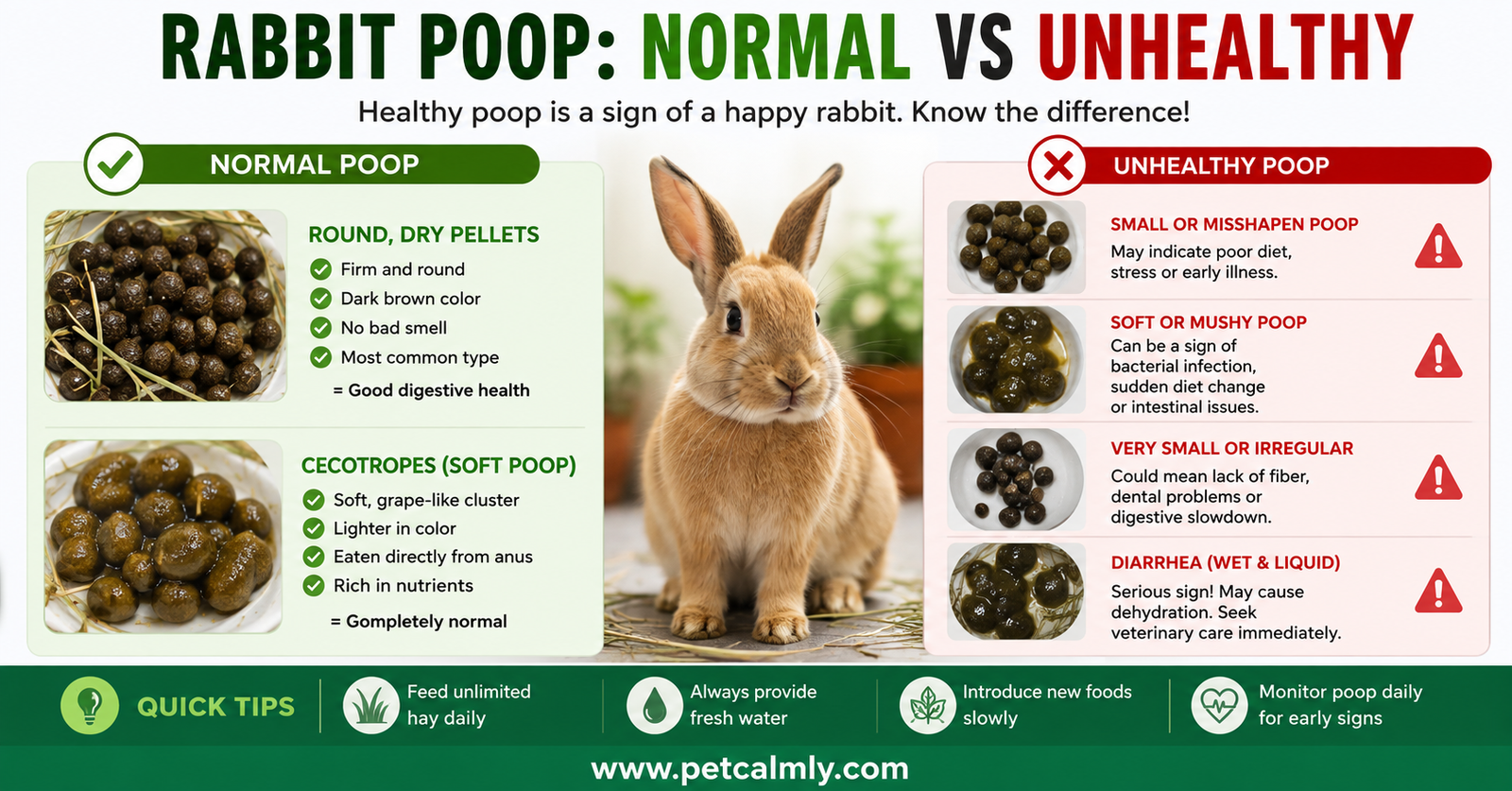
Healthy rabbit pellets have very specific characteristics. They’re small about the size of a chickpea or small pea and perfectly round or slightly oval. They should be dry and hard enough that they don’t break apart when you pick one up, and they typically have a smooth surface.
The color matters too. Normal rabbit poop ranges from dark brown to nearly black, though the exact shade depends on their diet. A rabbit eating timothy hay-based pellets might have slightly different colored poop than one eating alfalfa hay, but the texture and firmness should always be consistent.
Here’s what confuses people: rabbits produce two types of droppings. The ones you usually see in the litter box are the hard pellets we just described. But rabbits also produce softer cecotropes (pronounced “SEE-cah-tropes”) these are special soft pellets that rabbits eat directly from their rear end at night or early morning. You rarely see these because rabbits eat them immediately as part of their normal digestive process. Cecotropes contain important vitamins and nutrients, so this behavior is completely healthy and necessary.
Quantity: How Much Poop Is Normal?
A healthy rabbit produces a surprising amount of poop. You’ll typically see dozens of small pellets in their litter box daily. The exact amount depends on your rabbit’s size, diet, and activity level, but a general rule is: more poop usually means more hay consumption, which is always a good thing.
If you suddenly notice significantly less poop than usual like only a handful of pellets when your rabbit normally produces dozens that’s a red flag worth investigating, especially if it continues for more than 12 hours.
The Warning Signs: When Rabbit Poop Means Trouble
Diarrhea and Soft Stools
Diarrhea in rabbits is serious. This is where many first-time rabbit owners get confused, because in some animals, diarrhea might be minor. In rabbits, loose or watery stools can indicate problems ranging from diet changes to infections to more serious gastrointestinal issues.
True diarrhea means stools that are mushy, pasty, or liquid nothing like the normal firm pellets. You might notice it as:
- Soiled fur around the rear end
- Wet spots in the litter box instead of just dry pellets
- A sudden change in consistency, even if not completely watery
- Staining or caking on the bottom of their enclosure
If this lasts more than a few hours, or if your rabbit seems uncomfortable or lethargic, contact your vet. Diarrhea can quickly lead to dehydration in rabbits, which is dangerous.
Small or Misshapen Pellets
Sometimes rabbit poop gets smaller, thinner, or irregularly shaped. This often indicates they’re not eating enough fiber or hay. Rabbits need an enormous amount of hay about 70% of their daily calorie intake should come from quality hay.
If pellets are smaller than usual or oddly shaped:
- Increase hay availability immediately
- Reduce pellets if they’re getting too much concentrate food
- Make sure they have fresh water
- Observe for 24 hours
If the size doesn’t normalize within a day or two, or if other symptoms develop, call your vet.
Mucus or Blood in Stool
Any mucus coating on the droppings, or visible blood, requires veterinary attention. This can indicate:
- Intestinal inflammation
- Parasites
- Bacterial infection
- Stress-related issues
- More serious gastrointestinal conditions
Don’t wait to see if this improves on its own. These signs warrant a vet visit, ideally with a vet experienced in rabbit care.
No Poop (or Dramatically Reduced Output)
A rabbit that hasn’t pooped in more than 12 hours needs attention. Seriously. This could indicate:
- Gastrointestinal stasis (GI stasis) a dangerous slowdown of digestive movement
- Blockage
- Severe dehydration
- Pain that’s preventing normal movement
- Illness
GI stasis is particularly dangerous because it can spiral quickly. The longer food sits in the digestive tract without movement, the more gas and bacteria build up, which makes the problem worse.
Excessive or Sudden Increase in Poop
Interestingly, too much poop can also be a sign of problems. If your rabbit’s output suddenly doubles, this might indicate:
- Dietary change or new food
- Overeating pellets
- Stress
- Digestive upset
- Parasites
An increase in poop is usually less urgent than diarrhea, but it’s still worth investigating, especially if accompanied by other changes.
Why Rabbit Poop Changes: Common Causes and What They Mean
Diet Changes (The Most Common Culprit)
Rabbits have sensitive digestive systems that take time to adjust to new foods. When you change their hay type, introduce new pellets, add vegetables, or switch brands, their poop often responds immediately.
What you might see:
- Slightly softer stools for a day or two
- Smaller or slightly different colored pellets
- More or less poop than usual
- In some cases, temporary diarrhea
What to do:
- Introduce new foods gradually over 7-10 days, mixing small amounts with their current food
- Never switch hay brands or types suddenly transition slowly
- If you’re introducing vegetables, add just one type at a time in small quantities
- Keep detailed notes of what they eat and how their poop changes
The mistake many owners make is introducing too much new food too quickly. Even healthy foods need a gradual introduction.
Stress and Environmental Changes
Rabbits are prey animals, and stress affects their entire system including digestion.
Stressful situations for rabbits:
- Moving to a new home
- Changes in routine or schedule
- New pets or people in the house
- Loud noises
- Changes in temperature
- Changes in light or dark cycles
- Feeling unsafe or confined
When stressed, rabbits might produce:
- Smaller pellets
- Slightly softer stools
- Reduced poop output
- In some cases, cecotropes that don’t get eaten (which dry out and look like small raisins)
What to do:
- Provide a quiet, secure space
- Maintain consistent routines
- Avoid sudden environmental changes
- Ensure adequate hiding spaces
- Minimize handling if they’re already stressed
Stress-related digestive changes usually improve once the stressor is removed, but it might take 24-48 hours.
Insufficient Hay Consumption
This is the number one cause of rabbit digestive issues. Rabbits need unlimited high-quality hay, but some owners:
- Don’t provide enough hay
- Provide low-quality hay (dusty, moldy, or stemmy)
- Offer too many pellets, so rabbits fill up on concentrate
- Don’t understand that timothy hay, orchard grass, and oat hay are all appropriate options
When rabbits don’t eat enough fiber:
- Pellets become smaller and harder
- Output decreases
- They might become constipated
- GI stasis risk increases
What to do:
- Provide unlimited fresh, high-quality hay daily
- Offer multiple hay types for variety
- Reduce pellets if necessary pellets should be only 10-15% of daily intake
- Check hay quality: it should smell fresh and sweet, not musty
- Offer hay throughout the day, not just once
Parasites and Infections
Internal parasites and bacterial infections are less common than diet issues, but they happen. You might see:
- Diarrhea or soft stools
- Mucus in stool
- Worms visible in poop (rare but possible)
- Blood in stool
- Weight loss alongside digestive changes
If you suspect parasites or infection:
- Collect a fresh poop sample for your vet
- Don’t use over-the-counter treatments without veterinary guidance
- Get a fecal exam done
- Follow your vet’s medication protocol exactly
The Red Flags: When You Should Contact Your Vet
Not every poop change requires a vet visit, but some definitely do. Here’s how to tell the difference:
Contact Your Vet Immediately If:
- Your rabbit hasn’t pooped in 12+ hours
- You see diarrhea lasting more than a few hours
- There’s blood or significant mucus in the stool
- Your rabbit seems painful, hunched, or lethargic
- Poop output drops by more than 50% and doesn’t improve within 12 hours
- Your rabbit stops eating normally
- The smell of the poop is distinctly foul or different
- You notice your rabbit’s belly is distended or they’re grinding their teeth
Schedule a Vet Visit Within 24 Hours If:
- Soft stools have lasted more than 12-24 hours with no improvement
- Poop output is decreased but your rabbit seems otherwise fine
- There’s been a sudden and significant poop change with no obvious cause
- Your rabbit’s behavior has changed alongside poop changes
- You’ve already ruled out diet and stress changes
Monitor at Home If:
- You’ve just introduced new food and poop is slightly different
- You’ve recently moved or had an environmental change and poop is slightly off
- Your rabbit is stressed but poop change is minor
- You’ve changed hay brands and there’s slight adjustment
- Pellet output increased slightly but consistency is still normal
In these situations, give it 24-48 hours. Usually things normalize once the change is complete or the stressor is removed.
Preventing Poop Problems: What Every Rabbit Owner Should Know
The Hay Foundation
Everything starts with hay. Seriously, this is non-negotiable.
- Provide unlimited fresh hay daily timothy hay, orchard grass, or oat hay are ideal
- Rotate hay types for variety (many rabbits enjoy a mix)
- Store hay in a cool, dry place to maintain freshness
- Check that hay smells sweet and is free from dust and mold
- Never let the hay bowl empty rabbits should have constant access
- A rabbit should eat a pile of hay as big as their body each day
The Pellet Balance
Pellets are supplements, not the foundation of a rabbit’s diet. Too many pellets are a common cause of poop problems.
Pellet guidelines by rabbit size:
- Small rabbits (under 5 lbs): ¼ cup daily
- Medium rabbits (5-8 lbs): ½ cup daily
- Large rabbits (8+ lbs): ¾ to 1 cup daily
Split into two feedings. Always choose high-quality pellets with at least 18% fiber, and avoid colorful mix-style pellets (rabbits pick out their favorites, creating nutritional imbalance).
Vegetables: Do Them Right
Fresh vegetables are healthy, but they can cause poop changes if introduced wrong.
Best vegetables for rabbits:
- Romaine lettuce
- Arugula
- Cilantro
- Parsley
- Mint
- Bell peppers
- Cucumber (in small amounts)
- Carrot tops (more than the carrot itself)
Guidelines:
- Introduce one vegetable at a time, waiting 3-5 days before adding another
- Start with small amounts about a tablespoon for a medium rabbit
- Only introduce vegetables once your rabbit is eating plenty of hay
- Avoid iceberg lettuce, spinach, and kale (too high in oxalates or nitrates)
- Always wash vegetables thoroughly
Water: Keep It Fresh
Dehydration contributes to digestive problems and poop issues. Always have fresh water available. Change it daily, and consider:
- Offering a water bowl instead of just a bottle (some rabbits prefer bowls)
- Using bottles with metal ball bearing tips (plastic can harbor bacteria)
- Checking the bottle tip daily to ensure water flows freely
- Monitoring water consumption a rabbit should drink noticeably daily
Exercise and Movement
A sedentary rabbit is more prone to GI stasis and digestive problems. Rabbits need space to move, hop, and run.
- Provide at least 4 hours of exercise daily outside their enclosure
- Create a rabbit-safe playspace
- Encourage movement with toys and activities
- Observe which times of day your rabbit is most active usually early morning and evening
- Don’t force interaction, but allow free movement
What to Do When You Notice Poop Problems
Step 1: Observe and Document
Don’t panic. Instead:
- Take a clear photo of the abnormal poop (yes, really your vet will want to see it)
- Note the time you first noticed the change
- Describe the difference: softer? less? different color?
- Note what your rabbit ate in the past 24-48 hours
- Write down any environmental changes
- Check their behavior: are they eating, drinking, hopping normally?
Step 2: Check the Obvious
Before calling the vet, quickly verify:
- When did they last eat hay? Is there fresh hay available?
- Have you changed food, hay, or pellets recently?
- Is their water fresh and accessible?
- Is the environment temperature appropriate (rabbits are heat-sensitive)?
- Has anything stressful happened?
- Are they showing pain signs (hunched posture, tooth grinding)?
Step 3: Make Appropriate Changes
If you’ve identified a likely cause:
If it’s a diet change: Stop the new food immediately. Return to their previous diet for 48 hours. If poop normalizes, the new food was the culprit.
If it’s stress: Create a safe, quiet environment. Minimize handling. Keep routine consistent.
If it’s insufficient hay: Increase hay immediately and reduce pellets.
If the cause is unclear: Don’t start a medication or treatment wait 24 hours and monitor closely.
Step 4: Know When to Call
Use the red flags list above. When in doubt, it’s better to call and ask than to wait and worry.
When you call your vet, be ready to say:
- When the change started
- Exact description of the abnormal poop
- What they’re eating
- Whether they’re eating, drinking, and acting normally
- Any other symptoms you’ve noticed
- Whether there have been recent changes
Frequently Asked Questions
1: Why do rabbits eat their own poop?
Rabbits produce two types of droppings: hard pellets and soft cecotropes. Cecotropes are nutrient-rich and essential for rabbit health. Rabbits eat these directly from their rear end as part of normal digestion. This isn’t gross or abnormal it’s necessary. The nutrient absorption from cecotropes is crucial to rabbit health, which is why you rarely see them in the litter box.
2: How often should a rabbit poop?
Healthy rabbits produce poop almost constantly throughout the day and night. A normal rabbit might poop 200-300+ times daily, which is why their litter box fills up so quickly. This is completely normal and nothing to worry about. What matters isn’t the frequency, but consistency noticing sudden dramatic changes.
3: Can I get sick from handling rabbit poop?
Rabbit poop is generally safe to handle. Wash your hands after cleaning the litter box, as you would with any pet. The main parasites that affect rabbits (like coccidia) don’t infect humans. Use basic hygiene practices, and you’re fine.
4: What does rabbit poop that indicates GI stasis look like?
With GI stasis, you’ll typically see a dramatic decrease in poop output (sometimes to just a few pellets or nothing), possibly smaller or slightly misshapen pellets, and your rabbit will likely show other signs: hunched posture, reduced eating, lethargy, or tooth grinding. GI stasis is a medical emergency and requires immediate veterinary attention.
5: Is soft poop always diarrhea in rabbits?
Not always. Sometimes rabbits will have slightly soft stools for a day or two due to diet changes, stress, or eating too many vegetables, and it resolves on its own. But if the stools are truly watery or mushy, or if soft stools persist longer than 24 hours, that’s concerning and worth veterinary evaluation.
6: Can I use probiotics or digestive supplements for my rabbit?
Before giving your rabbit any supplement, discuss it with your vet first. While some probiotics are marketed for rabbits, the evidence supporting them is limited, and they’re not necessary for healthy rabbits. Often, poop problems are solved by diet adjustments and veterinary care, not supplements. Your vet can recommend appropriate products if actually needed.
7: What should I feed my rabbit if they have soft poop?
Remove any recent dietary changes immediately. Focus on unlimited high-quality hay and reduce pellets and vegetables for 24-48 hours. Ensure fresh water is available. If the soft poop continues beyond 24 hours, don’t self-treat contact your vet. Medications and professional guidance are often necessary.
More Information About Pets, Please Visit Our Website: Can Rabbits Eat Lettuce?
How Much Does a Rabbit Vaccination Cost?
How to Calm a Scared Rabbit
Rabbit Safe Vegetables List
How to Pick Up a Rabbit Properly
Rabbit Heat Stroke Signs Rapid Breathing Lethargy
Conclusion
You know your rabbit better than anyone. If something feels off about their poop, even if you can’t quite explain why, it’s worth investigating. Rabbit owners develop an intuition about normal, and that intuition is often right.
The good news is that most poop problems are preventable or manageable with:
- Plenty of quality hay
- Appropriate pellet portions
- Proper water access
- A calm environment
- Quick response to changes
And when problems do occur, catching them early makes all the difference. Your rabbit can’t tell you they don’t feel well, but their poop can. Learning to read it is one of the most valuable skills of rabbit ownership.
If you’re ever uncertain, reach out to your vet especially one experienced with rabbits. A quick call might save you days of worry and help keep your rabbit healthy.