Short direct answer
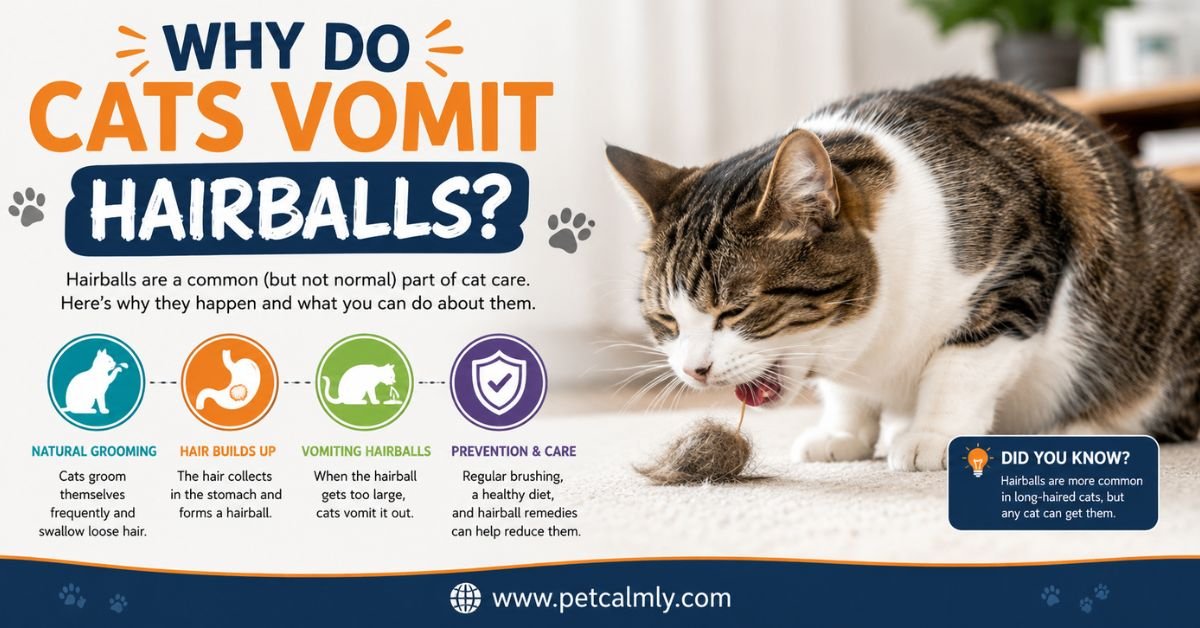
Cats vomit hairballs because they groom themselves and accidentally swallow loose fur. This fur doesn’t always pass smoothly through the digestive system. Instead, it collects in the stomach and forms a small clump called a hairball (trichobezoar). When it becomes too large or irritating, the cat coughs, retches, and eventually expels it through vomiting.
Hairballs are common, especially in long-haired breeds like Persian or Maine Coon cats, or during heavy shedding seasons. While occasional hairballs are normal, frequent vomiting may indicate grooming issues, diet problems, or digestive sensitivity that needs attention.
Introduction
If you’ve ever heard that strange hacking sound from your cat followed by a messy surprise on the floor, you already know how unpleasant hairballs can be. Many cat owners feel worried the first time it happens especially when it seems to come out of nowhere.
The truth is, hairballs are usually a normal part of feline life. But they are also a sign of how your cat’s grooming habits and digestive system are working together. Understanding why they happen helps you know when to relax and when to step in.
This guide explains everything in a simple, practical way so you can keep your cat comfortable and reduce hairball problems at home.
What Exactly Is a Hairball in Cats?
A hairball is not actually shaped like a ball most of the time. Despite the name, it is usually a cylindrical clump of fur that forms in the stomach.
How it forms:
- Cats groom themselves using their tongue
- Tiny hooks on the tongue catch loose hair
- Swallowed fur moves into the stomach
- Most passes through the intestines
- Some hair stays behind and clumps together
When the clump becomes too irritating or too large, the body forces it back up through vomiting.
Why Do Cats Vomit Hairballs? Main Causes Explained
Hairballs don’t appear randomly. Several factors contribute to them.
1. Excessive Grooming Behavior
Cats are naturally clean animals. But sometimes grooming becomes excessive due to:
- Stress or anxiety
- Boredom
- Skin irritation
- Fleas or allergies
More grooming = more swallowed hair.
2. Shedding Seasons
Cats shed heavily during:
- Spring
- Autumn
During these times, even normal grooming leads to more hair ingestion.
3. Long-Haired Cat Breeds
Breeds like:
- Persian
- Ragdoll
- Maine Coon
- Himalayan
naturally swallow more fur because they carry longer coats.
4. Poor Digestive Movement
If a cat’s gut motility slows down:
- Hair stays in the stomach longer
- Clumps form more easily
- Vomiting becomes more frequent
This can happen due to low fiber diet or dehydration.
5. Lack of Regular Brushing
If you don’t brush your cat:
- Loose fur stays on the coat
- More fur gets swallowed during grooming
- Hairball frequency increases
6. Indoor Lifestyle
Indoor cats often groom more due to:
- Less stimulation
- Routine habits
- Environmental stress
Symptoms That a Hairball Is Coming
Hairballs don’t appear instantly. Cats usually show warning signs:
Common symptoms:
- Repeated gagging or retching
- Hacking cough-like sound
- Drooling
- Loss of appetite for a short time
- Licking lips frequently
- Vomiting a tube-shaped mass of fur
What is normal:
- Occasional hairball (1–2 times per month)
What is not normal:
- Frequent vomiting (weekly or more)
- No hairball produced but constant retching
- Lethargy or weight loss
Hairball vs Vomiting: Know the Difference
Many cat owners confuse hairballs with other stomach issues.
| Hairball Vomiting | Other Vomiting Issues |
|---|---|
| Contains visible fur | No fur present |
| Preceded by coughing | Sudden vomiting |
| Usually occasional | May be frequent |
| Cat behaves normal afterward | Cat may appear sick |
If your cat is vomiting without hair, it may not be a hairball issue.
Practical Ways to Reduce Hairballs
You can’t stop grooming, but you can reduce hairball formation.
1. Regular Brushing Routine
Brushing is one of the most effective solutions.
- Short-haired cats: 2–3 times per week
- Long-haired cats: daily brushing
Benefits:
- Removes loose fur before swallowing
- Reduces shedding around the house
- Improves coat health
2. Improve Diet Quality
A balanced diet helps digestion move hair through naturally.
Look for:
- High fiber content
- Omega-3 fatty acids
- Moist food options
Fiber helps push swallowed hair through the intestines instead of letting it build up.
3. Increase Water Intake
Hydration supports smoother digestion.
Try:
- Water fountains
- Wet food mixed into meals
- Multiple water bowls around the house
4. Hairball Control Cat Food
Some commercial cat foods are designed to:
- Improve gut movement
- Reduce hair clumping
- Support digestion
These can be helpful for chronic hairball cats.
5. Reduce Stress in Cats
Stress increases grooming.
Try:
- Interactive toys
- Scratching posts
- Calm environment
- Routine feeding schedule
When Should You Worry About Hairballs?
Hairballs are usually harmless but not always.
Contact a vet if you notice:
- Vomiting multiple times per week
- No hairball is produced but gagging continues
- Loss of appetite for more than 24 hours
- Weight loss
- Constipation or difficulty passing stool
- Lethargy or hiding behavior
These signs may indicate:
- Intestinal blockage
- Gastritis
- Parasites
- Allergies
What Cat Owners Often Get Wrong
Many pet owners assume hairballs are “normal and unavoidable,” but some habits make them worse:
Common mistakes:
- Not brushing regularly
- Feeding low-quality dry food only
- Ignoring stress triggers
- Assuming all vomiting is hairballs
- Waiting too long before vet visits
Small changes often reduce hairballs significantly.
Real-Life Example (Common Situation)
A typical case many cat owners experience:
A short-haired indoor cat suddenly starts gagging once a week. The owner assumes it’s normal hairballs. After a few weeks, brushing is introduced and diet improves with more wet food. Within a month, episodes drop significantly.
This shows how grooming + diet + hydration all work together.
Prevention Checklist (Easy Daily Routine)
- Brush your cat regularly
- Provide fresh water daily
- Feed balanced, fiber-rich food
- Monitor shedding seasons
- Keep environment stress-free
- Watch grooming behavior changes
Conclusion
Hairballs are a natural part of being a cat owner, but they don’t have to be frequent or stressful. They happen because cats groom themselves and swallow loose fur but with the right care, most hairballs can be reduced significantly.
Pay attention to grooming habits, diet, and hydration. And most importantly, observe your cat’s behavior. If something changes or vomiting becomes frequent, it’s always safer to check with a veterinarian.
A healthy cat usually means fewer hairballs and a much cleaner home for you.
More Information About Pets, Please Visit Our Website: Why Is My Cat Not Eating But Acting Normal?
Frequently Asked Questions
1. How often is normal for a cat to have hairballs?
Most healthy cats may have hairballs once or twice a month. More frequent episodes may need attention.
2. Why does my cat vomit but no hairball comes out?
It could be digestive issues, food intolerance, or gastritis not a hairball problem.
3. Can hairballs be dangerous for cats?
Yes, in rare cases. Large hairballs can cause intestinal blockage if not expelled.
4. Do short-haired cats get hairballs too?
Yes, but usually less often than long-haired breeds.
5. What is the fastest way to help a cat with hairballs?
Gentle brushing, hydration, and hairball control food can help reduce them quickly.
6. Should I give my cat hairball medicine?
Only use vet-approved treatments or supplements. Avoid human medicines.