Short direct answer
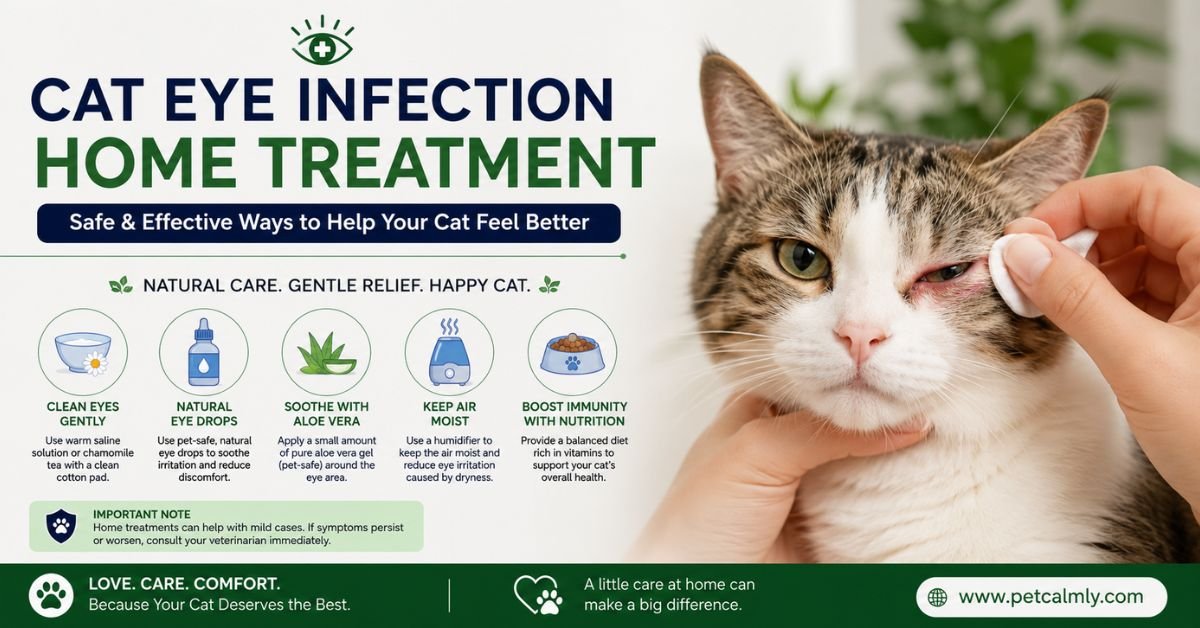
If your cat has mild eye discharge, slight redness, or crust around one eye but is otherwise acting normally, you can provide supportive home care by gently cleaning the eye with sterile saline or warm water on clean cotton pads, keeping the area free of debris, and monitoring symptoms closely. However, home treatment cannot cure bacterial, viral, fungal, or injury-related eye infections. If the eye becomes painful, swollen, cloudy, stays closed, produces yellow or green discharge, or your cat stops eating or acting normally, veterinary care is needed as soon as possible.
Introduction
A cat’s eyes are incredibly delicate. Even a small amount of irritation can quickly turn into something more serious if it’s ignored. Because many eye conditions look similar at first, it can be difficult to tell whether you’re dealing with simple irritation, allergies, a scratched cornea, or an actual infection.
The good news is that gentle home care can help keep your cat comfortable while preventing further irritation. The key is knowing which treatments are safe and which popular home remedies can make the problem much worse.
In this guide, you’ll learn when cat eye infection home treatment is appropriate, how to clean your cat’s eye safely, the warning signs that shouldn’t be ignored, and when it’s time to contact your veterinarian.
What Is a Cat Eye Infection?
A cat eye infection happens when bacteria, viruses, fungi, or other irritants inflame the tissues around the eye. The infection may affect the conjunctiva (the pink tissue lining the eyelids), the cornea (the clear surface of the eye), or nearby structures.
Eye infections range from mild to severe. Some improve quickly with veterinary medication, while others can threaten a cat’s vision if treatment is delayed.
It’s also important to remember that not every watery or red eye is an infection. Similar symptoms can be caused by:
- Dust or dirt
- Allergies
- A scratch from another cat
- Eyelash irritation
- Foreign objects
- Dry eye
- Blocked tear ducts
- Underlying viral illnesses
That’s why careful observation is just as important as home care.
Signs and Symptoms of a Cat Eye Infection
Recognizing symptoms early gives your cat the best chance of a quick recovery.
Mild Signs You May Notice First
These symptoms often appear during the early stages of irritation or infection:
- Clear or watery eye discharge
- Mild redness around the eye
- Small amounts of dried crust after sleeping
- Frequent blinking
- Occasional squinting
- Slight tearing
If your cat is eating, playing, grooming, and behaving normally, supportive home care may help keep the eye clean while you monitor for changes.
Moderate Symptoms That Need Closer Attention
As irritation worsens, you may notice:
- Thick mucus around the eye
- Yellow or green discharge
- Eyelids sticking together
- Swelling around the eye
- Constant squinting
- Increased pawing or rubbing at the face
- Light sensitivity
These signs often suggest an infection or another eye condition that should be evaluated by a veterinarian.
Serious Symptoms That Should Never Be Ignored
Seek veterinary care promptly if you notice:
- The eye stays completely closed
- A cloudy or bluish appearance
- Blood in or around the eye
- A visible scratch or wound
- A bulging eye
- Sudden vision problems
- Severe swelling
- Persistent crying or signs of pain
- Loss of appetite or unusual lethargy
Eye problems can worsen quickly, and delaying treatment may increase the risk of permanent damage.
Common Causes of Cat Eye Infections
Understanding the cause helps explain why some eye problems improve with supportive care while others require medication.
Bacterial Infections
Bacteria can enter the eye after a scratch, irritation, or another illness. These infections often produce thick yellow or green discharge and usually require prescription antibiotic eye drops or ointment.
Viral Infections
Viruses are one of the most common causes of recurring eye problems in cats. A cat recovering from a respiratory illness may develop watery eyes, sneezing, or conjunctivitis.
Viral infections can return during periods of stress, even after symptoms have disappeared.
Minor Injuries
Outdoor cats and playful indoor cats sometimes scratch each other’s faces during rough play. Even a tiny scratch on the eye can become infected if bacteria enter the damaged tissue.
Foreign Material
Dust, sand, grass seeds, loose fur, or small particles can irritate the eye and trigger excessive tearing or redness.
Sometimes flushing the eye gently is enough. Other times, the object remains trapped and requires veterinary removal.
Allergies and Environmental Irritants
Smoke, cleaning sprays, scented candles, strong perfumes, dusty litter, and seasonal pollen can all irritate sensitive eyes.
Although allergies may resemble an infection, they require different management.
Blocked Tear Ducts
Some cats naturally have poor tear drainage, causing constant watery eyes and staining around the face. While not always an infection, the damp fur can encourage bacterial growth if left uncleaned.
Breed Predisposition
Flat-faced breeds such as Persians, Himalayans, and Exotic Shorthairs often experience chronic tearing because of their facial structure.
These cats benefit from regular eye cleaning even when they aren’t sick.
Can You Treat a Cat Eye Infection at Home?
The honest answer is yes but only to a point.
Home care is meant to support your cat’s comfort and keep the eye clean, not replace professional treatment for an actual infection.
Supportive home care may be appropriate if:
- Your cat has mild watery discharge.
- The eye is only slightly red.
- Your cat keeps the eye open normally.
- They’re eating, drinking, and behaving as usual.
- Symptoms appeared recently and are not getting worse.
However, home treatment should never include guessing with medications or using products intended for people.
Home Care Can Help By:
- Removing dried discharge that causes irritation.
- Preventing crust from sealing the eyelids.
- Reducing mild discomfort with a warm compress.
- Helping you monitor whether symptoms are improving or worsening.
Home Care Cannot:
- Kill bacteria requiring antibiotics.
- Treat viral eye diseases.
- Heal corneal ulcers.
- Remove embedded foreign objects.
- Repair eye injuries.
- Treat glaucoma or other serious eye conditions.
A helpful way to think about it is this: home care supports healing, but it doesn’t replace an accurate diagnosis. If symptoms fail to improve within a day or two—or become worse at any point your cat should be examined by a veterinarian.
Step-by-Step Cat Eye Infection Home Treatment
If your cat has mild eye irritation or discharge and is otherwise bright, alert, and behaving normally, supportive home care can help keep the eye clean and comfortable. The goal is not to cure the infection yourself, but to reduce irritation while monitoring your cat closely and seeking veterinary care if symptoms worsen.
Follow these steps carefully to avoid causing additional discomfort.
Gather the Right Supplies Before You Start
Having everything ready makes the process quicker and less stressful for both you and your cat.
You’ll need:
- Sterile saline solution made for eye irrigation
- Clean cotton pads or soft gauze
- Warm (not hot) water if saline isn’t available
- A clean towel
- Disposable gloves (optional but helpful)
- Plenty of treats to reward your cat afterward
Avoid using tissues or rough paper towels, which can leave fibers behind and irritate the eye.
Step 1: Wash Your Hands Thoroughly
Before touching your cat’s face, wash your hands with soap and warm water for at least 20 seconds.
This simple step helps prevent introducing additional bacteria into an already irritated eye.
If you’re caring for multiple pets, wash your hands between handling each one to reduce the risk of spreading infectious organisms.
Step 2: Help Your Cat Stay Calm
Many cats dislike having their faces touched, especially when an eye is sore.
To make the process easier:
- Choose a quiet room without distractions.
- Speak softly and move slowly.
- Wrap your cat loosely in a towel if they tend to squirm.
- Avoid forcing the eye open.
If your cat becomes extremely frightened or aggressive, stop and try again later rather than creating a stressful experience.
A Real-Life Example
Imagine your cat, Luna, wakes up with one watery eye. Instead of chasing her around the house, wait until she’s relaxed after breakfast. Gently place her on your lap, stroke her for a minute, and reward her with a favorite treat before beginning. A calm approach often makes eye cleaning much easier.
Step 3: Remove Eye Discharge Gently
Moisten a clean cotton pad or piece of gauze with sterile saline or warm water.
Starting from the inner corner of the eye (near the nose), wipe outward in one smooth motion.
Important tips:
- Use one wipe per cotton pad.
- Never wipe back toward the eye.
- Use a fresh pad for each pass.
- If both eyes are affected, use separate pads for each eye to reduce the chance of spreading infection.
Never scrape away dried discharge. If crusts are stuck to the fur, soften them first with a warm compress.
Step 4: Apply a Warm Compress
A warm compress can help loosen dried discharge, soothe mild irritation, and make cleaning easier.
How to Make a Warm Compress
- Soak a clean washcloth in warm water.
- Wring out excess water.
- Test the temperature on your wrist—it should feel comfortably warm, never hot.
- Hold it gently over the closed eyelid for 30 to 60 seconds.
Repeat if needed until crusts soften.
Avoid pressing on the eye itself. Gentle contact is enough.
Step 5: Keep the Eye Area Dry
After cleaning, gently pat the surrounding fur dry with a clean cloth.
Constant moisture around the eye can encourage bacterial growth and lead to skin irritation, especially in long-haired or flat-faced breeds.
If your cat has frequent tearing, trimming the fur around the eye may helpbut only if you can do so safely. Never use scissors close to the eye unless you’re experienced. A professional groomer or veterinarian is a safer option.
Step 6: Monitor Your Cat Throughout the Day
Observe your cat for changes over the next 24 to 48 hours.
Positive signs include:
- Less discharge
- Reduced redness
- Eyes staying open comfortably
- Normal appetite
- Regular grooming
- Playful behavior
Concerning signs include:
- Increased swelling
- Thick yellow or green discharge
- Cloudy eye
- Constant squinting
- Pawing at the face
- Hiding or acting unusually quiet
If symptoms worsen instead of improving, schedule a veterinary visit promptly.
How Often Should You Clean an Infected Eye?
Cleaning too often can irritate delicate tissues, while cleaning too little allows discharge to build up.
A general guideline is:
| Symptom | Suggested Cleaning Frequency |
|---|---|
| Mild watery discharge | 1–2 times daily |
| Moderate crust buildup | 2–4 times daily as needed |
| Thick discharge returning quickly | Veterinary examination recommended |
| Persistent irritation beyond 48 hours | Veterinary examination recommended |
Always clean gently rather than aggressively.
Is Sterile Saline Safe for Cats?
Yes. Plain sterile saline designed for eye irrigation is generally considered one of the safest options for rinsing away debris and moistening dried discharge.
Sterile saline can help:
- Flush away dust or pollen
- Remove dried eye discharge
- Keep the eye surface moist
- Reduce mild irritation
However, saline does not contain antibiotics or antiviral medication, so it cannot cure an infection by itself.
Choose a product labeled as sterile saline without added medications, preservatives, or redness-relieving ingredients whenever possible.
Can a Warm Compress Help a Cat Eye Infection?
A warm compress is one of the safest supportive care methods for mild eye irritation.
Benefits include:
- Softening crust around the eyelids
- Improving comfort
- Encouraging natural tear drainage
- Making discharge easier to remove
- Helping your cat keep the eye open more comfortably
While helpful, a warm compress is not a replacement for veterinary treatment if the eye is infected or injured.
Should You Use Human Eye Drops on Your Cat?
The short answer is no unless your veterinarian specifically instructs you to do so.
Many over-the-counter eye drops made for people contain ingredients that may not be appropriate for cats or could mask a more serious condition.
Avoid using:
- Redness-relief eye drops
- Steroid eye drops
- Medicated allergy drops
- Antibiotic drops prescribed for another pet or person
- Expired medications
Using the wrong product can delay proper treatment and, in some cases, worsen eye damage.
Safe vs. Unsafe Home Remedies for Cat Eye Infections
| Home Remedy | Safe? | Notes |
| Sterile saline eye rinse | ✅ | Safe for gently flushing mild debris or discharge |
| Warm compress | ✅ | Helps soften crust and improve comfort |
| Warm water on clean gauze | ✅ | Acceptable if sterile saline isn’t available |
| Clean cotton pads | ✅ | Use a fresh pad for each wipe |
| Human antibiotic eye drops | ❌ | Only use medication prescribed for your cat |
| Redness-relief eye drops | ❌ | Can hide symptoms and may not be safe |
| Essential oils | ❌ | Never use near a cat’s eyes |
| Hydrogen peroxide | ❌ | Can seriously damage eye tissue |
| Vinegar solutions | ❌ | Highly irritating and unsafe |
| Herbal teas or homemade mixtures | ❌ | Not sterile and may introduce bacteria |
How Long Does Recovery Take?
The recovery time depends on the underlying cause.
Minor irritation from dust or a small amount of debris may improve within a day or two with gentle cleaning.
Bacterial infections usually require prescription medication and often begin improving within several days after treatment starts.
Viral eye conditions can take longer and may return during times of stress, especially in cats with recurring respiratory illnesses.
If your cat’s symptoms show no improvement after 24 to 48 hours of careful home care, or if they become worse at any point, it’s time for a veterinary examination.
Keep Your Cat Comfortable During Recovery
Simple adjustments around the house can make a noticeable difference while your cat heals.
Consider these supportive care tips:
- Keep your cat indoors to avoid dust, pollen, and additional eye injuries.
- Clean food and water bowls daily.
- Wash bedding regularly to reduce bacteria and allergens.
- Use a dust-free, unscented cat litter if possible.
- Discourage rubbing by keeping nails trimmed.
- Maintain a calm environment, as stress can worsen some viral eye conditions.
- Ensure your cat continues eating and drinking normally, since good nutrition supports recovery.
These measures won’t replace treatment for a true infection, but they can reduce irritation and support the healing process.
Home Remedies to Avoid for a Cat Eye Infection
When your cat has a sore or watery eye, it’s natural to want to try whatever remedy is available at home. Unfortunately, some well-meaning treatments can make an eye problem much worse or delay the care your cat really needs.
Knowing what not to do is just as important as knowing how to clean your cat’s eye safely.
Don’t Use Human Eye Drops
Many human eye drops are formulated for conditions that cats don’t have. Products designed to reduce redness or treat allergies may contain ingredients that aren’t appropriate for feline eyes.
Even if a bottle says “gentle” or “lubricating,” don’t use it unless your veterinarian specifically recommends it.
Why It’s Risky
- It may mask worsening symptoms.
- It won’t treat the actual cause of the problem.
- Some ingredients may irritate a cat’s eye.
Never Use Steroid Eye Drops Without Veterinary Advice
Steroid eye drops can be extremely dangerous if your cat has a corneal ulcer or scratch.
In some cases, steroids slow healing and increase the risk of serious eye damage.
Because it’s impossible to diagnose a corneal ulcer at home, steroid medications should only be used under veterinary supervision.
Avoid Homemade Herbal Remedies
You may come across advice online recommending chamomile tea, green tea, or herbal rinses.
Although these remedies are often described as “natural,” they’re not sterile and can introduce bacteria or tiny plant particles into an already irritated eye.
Natural doesn’t always mean safe.
Don’t Use Hydrogen Peroxide or Alcohol
Hydrogen peroxide and rubbing alcohol should never come near your cat’s eyes.
These products can:
- Damage delicate eye tissue
- Cause severe pain
- Delay healing
- Increase inflammation
Skip Essential Oils
Cats are especially sensitive to many essential oils.
Applying them near the eyes can cause irritation, discomfort, and, in some cases, toxicity if your cat grooms the area afterward.
Don’t Share Medications Between Pets
Even if another pet previously had an eye infection, don’t assume the medication is appropriate for your cat.
Different eye conditions require different treatments. Using leftover medication may delay proper diagnosis or make the condition worse.
Avoid Touching the Eye with Dirty Hands
Every time you clean your cat’s eye, wash your hands first.
Using dirty towels, reused cotton pads, or unwashed hands increases the chance of introducing additional bacteria.
When a Cat Eye Infection Becomes an Emergency
Some eye problems can threaten vision within a short period of time. Waiting to “see if it gets better” isn’t always the safest option.
Seek veterinary care as soon as possible if you notice any of the following.
Your Cat Won’t Open the Eye
A tightly closed eye usually indicates significant pain.
This can happen with:
- Corneal ulcers
- Eye injuries
- Foreign objects
- Severe infections
A painful eye should never be ignored.
The Eye Looks Cloudy or Blue
A cloudy appearance may indicate damage to the cornea or deeper structures within the eye.
Cloudiness is never considered normal and requires prompt examination.
Thick Yellow or Green Discharge
Watery tears often accompany mild irritation.
Thick, colored discharge is more concerning because it commonly suggests a bacterial infection that needs prescription medication.
Severe Swelling Around the Eye
Swelling that develops rapidly may result from:
- Trauma
- Infection
- An abscess
- An allergic reaction
The larger the swelling becomes, the more urgent veterinary evaluation is.
Blood Around or Inside the Eye
Blood may indicate trauma or damage to internal eye structures.
Even if your cat seems comfortable, bleeding around the eye should always be examined.
Vision Changes
Cats don’t always show vision loss clearly, but possible signs include:
- Walking into furniture
- Missing jumps
- Hesitating on stairs
- Enlarged pupils
- Appearing confused in familiar rooms
Changes like these require immediate veterinary attention.
Your Cat Stops Eating or Becomes Lethargic
Eye problems accompanied by:
- Fever
- Poor appetite
- Hiding
- Weakness
- Low energy
may indicate that your cat has a more widespread illness rather than a simple eye irritation.
How Veterinarians Diagnose Eye Infections
One reason eye problems shouldn’t be diagnosed at home is that many different conditions produce similar symptoms.
During the examination, your veterinarian may:
- Review your cat’s recent health history
- Examine both eyes carefully
- Check pupil responses
- Look for scratches or ulcers on the cornea
- Assess tear production
- Measure eye pressure if glaucoma is suspected
- Examine the eyelids and surrounding tissues
In some cases, additional tests or laboratory samples may be recommended if the infection keeps returning or doesn’t respond to treatment.
An accurate diagnosis helps ensure your cat receives the correct medication rather than unnecessary or ineffective treatment.
Veterinary Treatments for Cat Eye Infections
Treatment depends entirely on the underlying cause.
Some of the most common options include:
Antibiotic Eye Drops or Ointments
These are commonly prescribed for bacterial infections.
It’s important to complete the full course, even if the eye appears normal after a few days.
Stopping medication early may allow bacteria to return.
Antiviral Medication
Cats with viral eye disease may require antiviral medication, especially if symptoms are severe or keep recurring.
Pain Relief
Some eye conditions are surprisingly painful.
Your veterinarian may prescribe pain medication to improve comfort during recovery.
Never give human pain medication to a cat.
Lubricating Eye Products
Artificial tear products formulated for veterinary use may help protect the eye surface in certain conditions.
These products are different from over-the-counter human redness-relief drops.
Foreign Object Removal
If a grass seed, splinter, or other object is trapped in the eye, your veterinarian can remove it safely using specialized equipment.
Attempting to remove embedded objects at home can cause further injury.
Surgery
Although uncommon, surgery may be necessary for:
- Severe eye injuries
- Deep corneal ulcers
- Eyelid abnormalities
- Certain chronic eye diseases
Early treatment often reduces the likelihood that surgery will be needed.
How to Prevent Future Eye Infections
Not every eye infection can be prevented, but good daily care can reduce your cat’s risk.
Keep Your Cat’s Face Clean
Cats with long facial fur or flat faces often develop tear staining.
Regularly wiping away excess tears helps prevent bacteria from multiplying around the eyes.
Schedule Regular Veterinary Checkups
Routine examinations can identify developing eye problems before they become serious.
This is especially helpful for senior cats and breeds prone to chronic eye conditions.
Reduce Household Irritants
Try to minimize exposure to:
- Cigarette smoke
- Aerosol sprays
- Strong perfumes
- Dusty litter
- Cleaning fumes
Good ventilation can also help reduce airborne irritants.
Keep Vaccinations Current
Some viral infections associated with eye disease are less likely to cause severe illness in vaccinated cats.
While vaccines don’t prevent every infection, they can reduce the severity of certain diseases.
Monitor Multi-Cat Households
Eye infections linked to contagious respiratory illnesses can spread more easily where several cats live together.
If one cat develops eye discharge:
- Use separate food bowls.
- Wash your hands after handling each cat.
- Clean shared bedding frequently.
- Monitor the other cats for symptoms.
5 Common Mistakes Cat Owners Make
Many owners unintentionally slow their cat’s recovery by making simple mistakes.
Avoid these common pitfalls.
1: Waiting Too Long
Some owners assume every eye problem will clear up naturally.
Unfortunately, delaying treatment can allow infections or ulcers to worsen.
2: Cleaning Too Aggressively
Rubbing vigorously can irritate already inflamed tissue.
Gentle wiping is far more effective than scrubbing.
3: Using Leftover Medication
Medication prescribed months ago may no longer be appropriate or even safe for your cat’s current condition.
4: Ignoring One Eye Because the Other Looks Normal
Many eye diseases begin in just one eye before affecting the other.
Continue monitoring both eyes during recovery.
5: Letting Discharge Build Up
Allowing crust to accumulate can make blinking uncomfortable and increase irritation.
Regular gentle cleaning helps keep your cat more comfortable.
Special Care for Kittens and Senior Cats
Young kittens and older cats often need closer monitoring because their immune systems may be less effective.
Caring for Kittens
Kittens commonly develop eye discharge during respiratory infections.
Because their eyes are still developing, untreated infections can sometimes cause lasting damage.
Young kittens should be examined promptly if:
- Their eyelids are sealed shut.
- Thick discharge keeps returning.
- They stop nursing or eating.
- Swelling develops around the eye.
Caring for Senior Cats
Older cats may have underlying health conditions that slow healing.
Watch carefully for:
- Reduced appetite
- Weight loss
- Changes in grooming
- Vision changes
- Recurring eye infections
Recurring eye problems in senior cats deserve veterinary investigation rather than repeated home treatment alone.
Cat Eye Infection Home Treatment Checklist
When your cat develops mild eye irritation, it’s easy to forget important steps. Use this checklist to make sure you’re providing safe, supportive care.
Daily Home Care Checklist
☐ Wash your hands before touching your cat’s eye.
☐ Use sterile saline or warm water with clean gauze to remove discharge.
☐ Wipe from the inner corner of the eye outward.
☐ Use a fresh cotton pad or gauze for every wipe.
☐ Apply a warm compress for 30–60 seconds if crust has formed.
☐ Keep the fur around the eye clean and dry.
☐ Prevent your cat from rubbing or scratching the affected eye.
☐ Monitor discharge, redness, swelling, and behavior.
☐ Ensure your cat is eating, drinking, and acting normally.
☐ Contact your veterinarian if symptoms worsen or fail to improve within 24–48 hours.
Cat Eye Infection Home Treatment Decision Guide
This quick-reference table can help you decide whether home care is appropriate or if your cat should be seen by a veterinarian.
| What You Notice | What You Should Do |
|---|---|
| Mild watery eye with slight redness | Clean gently, monitor closely for 24–48 hours |
| Small amount of dried discharge | Remove with sterile saline or warm water |
| Eye improves each day | Continue supportive care until fully resolved |
| Yellow or green discharge | Schedule a veterinary visit |
| Eye remains closed | Seek veterinary care promptly |
| Cloudy eye | Veterinary examination needed immediately |
| Blood or visible injury | Emergency veterinary care |
| Severe swelling | Veterinary examination as soon as possible |
| Your cat stops eating or becomes lethargic | Seek veterinary care immediately |
| Symptoms return repeatedly | Book a veterinary appointment to identify the underlying cause |
Frequently Asked Questions
1: Can a cat eye infection heal on its own?
Sometimes mild irritation caused by dust or minor debris may improve with gentle cleaning and time. However, bacterial infections, viral illnesses, corneal ulcers, and eye injuries usually require veterinary treatment. If symptoms last longer than 24 to 48 hours or become worse, your cat should be examined.
2: Can I use saline solution to clean my cat’s eye?
Yes. Plain sterile saline made for eye irrigation is one of the safest options for gently flushing away discharge and debris. It helps keep the eye clean but does not treat the underlying cause of an infection.
3: Can I use human antibiotic eye drops on my cat?
No. Human medications should never be used unless your veterinarian specifically instructs you to do so. Different eye conditions require different medications, and using the wrong product may delay healing or worsen the problem.
4: How long does a cat eye infection usually last?
Minor irritation may improve within a day or two. Bacterial infections often begin improving within a few days after starting prescription medication, while viral eye conditions may take longer and can occasionally recur.
5: Is a cat eye infection contagious?
Some eye infections, particularly those linked to viral upper respiratory diseases, can spread between cats. If you have multiple cats, wash your hands after handling each one, clean shared bedding regularly, and monitor the other pets for symptoms.
6: When should I take my cat to the veterinarian?
Arrange a veterinary visit immediately if your cat has:
- Thick yellow or green discharge
- A cloudy or blue-looking eye
- Severe swelling
- Blood around the eye
- Constant squinting
- The eye stays closed
- Vision changes
- Loss of appetite or unusual lethargy
Prompt treatment can help protect your cat’s eyesight and overall health.
More Information About Pets, Please Visit Our Website: Cat Breathing Fast While Sleeping
Cat Diarrhea Treatment at Home
Why Do Cats Vomit Hairballs?
Why Is My Cat Not Eating But Acting Normal?
Why Is My Cat Hiding Suddenly?
How to Trim Cat Nails at Home
How to Help a Constipated Kitten Naturally
Key Takeaways
Before you leave, remember these important points:
- Mild eye irritation may be managed temporarily with supportive home care.
- Sterile saline and warm compresses are among the safest ways to clean your cat’s eye.
- Never use human eye drops, essential oils, hydrogen peroxide, or homemade remedies.
- Watch closely for worsening redness, swelling, cloudy eyes, or colored discharge.
- Eye problems can become serious quickly, so don’t delay veterinary care if symptoms worsen.
- Early treatment often leads to faster recovery and reduces the risk of permanent eye damage.
Conclusion
Seeing your cat with a watery, red, or crusty eye can be worrying, but staying calm and taking the right first steps makes a real difference. Gentle cleaning with sterile saline or warm water, using a warm compress, and keeping the eye area clean can provide comfort while you monitor your cat’s condition.
It’s important to remember that cat eye infection home treatment is supportive care—not a substitute for professional diagnosis. Many eye problems look alike, and some conditions that seem minor at first can progress rapidly without the correct medication.
If your cat develops thick discharge, keeps the eye closed, shows signs of pain, or isn’t acting like their usual self, don’t wait. Prompt veterinary care offers the best chance for a full recovery and helps protect your cat’s vision.
With careful observation, good hygiene, and timely treatment when needed, most cats recover well and return to their curious, playful selves in no time.