Short direct answer
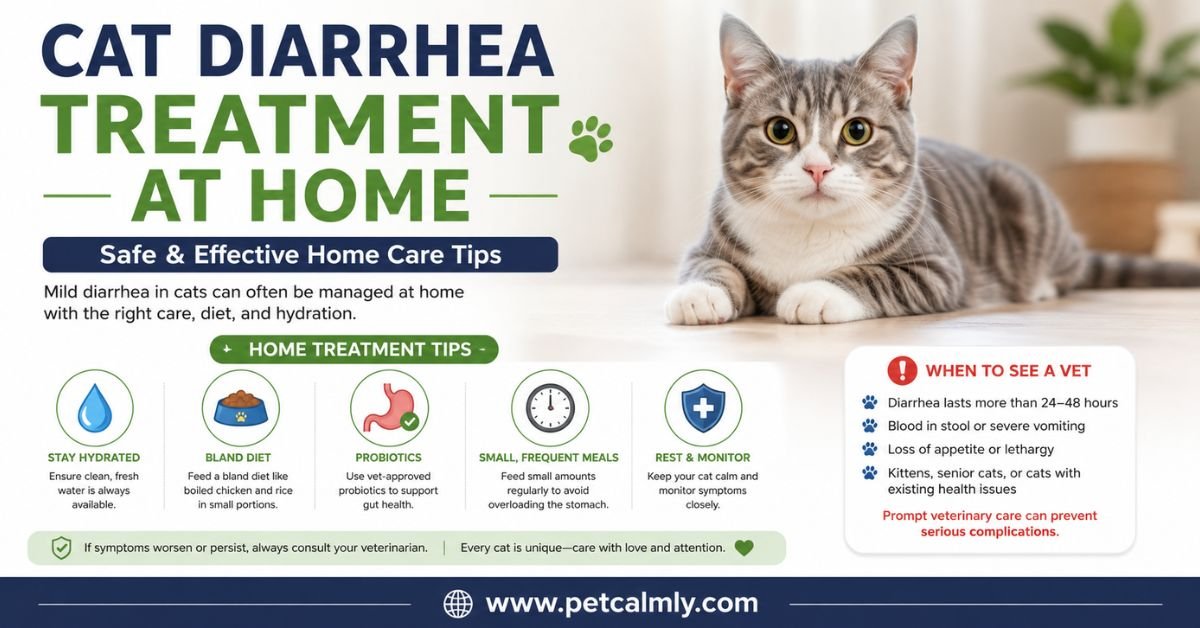
Cat diarrhea can often be managed at home if your cat is otherwise active, eating slightly, and not showing severe symptoms. The first step is to pause regular food for 8–12 hours (for adult cats only), provide clean fresh water, and switch to a bland diet like boiled chicken and rice or a vet-recommended gastrointestinal diet. Probiotics for cats can also help restore gut balance. However, if diarrhea lasts more than 24–48 hours or worsens, veterinary care is necessary.
Introduction
Seeing diarrhea in your cat while they still act normal can feel confusing. Many cat owners expect sickness to come with obvious signs like weakness or loss of appetite. But in reality, digestive upset often appears before behavior changes.
In many cases, mild diarrhea is caused by something simple diet changes, stress, or a sensitive stomach. Cats have a delicate digestive system, so even small disruptions can affect stool consistency.
The good news is that mild cases often respond well to safe cat diarrhea treatment at home, as long as you monitor your cat closely and act early.
Understanding Cat Diarrhea: What’s Actually Happening?
Diarrhea is not a disease it is a symptom. It happens when food moves too quickly through the intestines, preventing proper water absorption.
Common Types of Cat Diarrhea:
- Soft stool – mild digestive upset
- Watery diarrhea – more severe irritation
- Mucus in stool – intestinal inflammation
- Frequent small stools – colitis or stress-related issues
Understanding the type helps you decide whether home care is enough or if a vet visit is needed.
6 Common Causes of Cat Diarrhea at Home
Before starting any treatment, it’s important to understand what might have triggered it.
1. Sudden Food Changes
Switching cat food too quickly is one of the most common causes. Cats need gradual transitions over 7–10 days.
2. Dietary Indiscretion
Eating spoiled food, table scraps, or trash can upset the stomach.
3. Stress or Anxiety
Changes in environment, visitors, moving homes, or new pets can trigger stress diarrhea.
4. Parasites
Worms like giardia or roundworms often cause recurring diarrhea.
5. Food Intolerance or Allergies
Some cats react poorly to certain proteins like beef, dairy, or fish.
6. Medication Side Effects
Antibiotics and some treatments can temporarily disrupt gut bacteria.
Safe Cat Diarrhea Treatment at Home (Step-by-Step)
If your cat is still alert and drinking water, you can begin safe home care.
Step 1: Short Food Pause (Adult Cats Only)
Withhold food for 8–12 hours to allow the gut to rest.
- Do NOT fast kittens or senior cats without vet advice
- Always provide water
Step 2: Keep Hydration a Priority
Diarrhea leads to dehydration quickly in cats.
You can:
- Offer fresh water frequently
- Use a pet water fountain
- Add low-sodium broth (no onion/garlic)
Step 3: Introduce a Bland Diet
After fasting, start with small portions:
Safe bland foods:
- Boiled chicken (no seasoning)
- Plain white rice (small amounts)
- Pumpkin puree (1–2 teaspoons)
- Vet-prescribed gastrointestinal food
Feed small meals 3–4 times a day instead of large portions.
Step 4: Add Probiotics for Gut Health
Probiotics help restore healthy gut bacteria.
Look for:
- Cat-specific probiotic supplements
- Veterinary digestive powders
- Plain probiotic pastes
Step 5: Monitor Stool and Behavior
Track changes over 24–48 hours:
- Stool consistency improving?
- Energy normal?
- Appetite returning?
If yes, recovery is likely underway.
Foods That Help and Foods to Avoid
Safe Foods During Recovery:
- Boiled chicken breast
- Pumpkin (fiber helps firm stool)
- Boiled turkey
- Prescription GI diets
Foods to Avoid:
- Milk and dairy products
- Fatty or fried foods
- Fish with strong oils (during recovery)
- Treats and snacks
- Sudden diet changes
Mistakes Cat Owners Often Make
Even well-meaning owners can slow recovery.
Common mistakes include:
- Switching food too quickly after diarrhea starts
- Overfeeding during recovery
- Giving human anti-diarrhea medicine (dangerous)
- Ignoring hydration
- Waiting too long before seeing a vet
When Should You Worry About Cat Diarrhea?
Home treatment is not always enough. Watch for warning signs.
Contact a vet if you notice:
- Diarrhea lasting more than 48 hours
- Blood in stool
- Severe watery diarrhea
- Vomiting along with diarrhea
- Lethargy or weakness
- Refusal to drink water
- Weight loss
Kittens, senior cats, and sick cats should always be treated more cautiously.
What Should Pet Owners Do for Long-Term Prevention?
Once your cat recovers, prevention becomes important.
1. Maintain a Stable Diet
Avoid sudden food switches. Transition slowly.
2. Reduce Stress
Cats are sensitive. Keep routines consistent.
3. Regular Deworming
Follow vet schedules for parasite prevention.
4. Quality Nutrition
Choose high-quality, digestible cat food.
5. Avoid Table Scraps
Human food is a common trigger for digestive upset.
Real-Life Example: Mild Diarrhea That Resolved at Home
Many cat owners notice diarrhea after changing food brands or after a stressful event like moving furniture or travel. In most mild cases, once the diet is corrected and the cat is kept hydrated, stool returns to normal within 1–2 days.
The key difference between mild and serious cases is consistency of symptoms and overall behavior.
Conclusion
Most mild cases of cat diarrhea can be safely managed at home with simple steps like hydration support, a bland diet, and careful monitoring. The goal is not just stopping diarrhea but helping your cat’s digestive system recover gently.
If symptoms improve within a couple of days, it is usually not serious. But if anything worsens or feels unusual, veterinary advice should always come first. Your cat’s behavior, hydration, and stool changes together give the clearest picture of what’s really going on.
More Information About Pets, Please Visit Our Website: Why Do Cats Vomit Hairballs?
Frequently Asked Questions
1. Can I treat my cat’s diarrhea without a vet?
Yes, mild cases can often be treated at home with diet changes and hydration support, but monitor closely.
2. What is the fastest home remedy for cat diarrhea?
A short food pause followed by a bland diet (boiled chicken and pumpkin) usually works best.
3. How long does cat diarrhea last?
Mild cases last 24–48 hours. Longer duration may need veterinary care.
4. Can I give my cat medicine for diarrhea?
Never give human medicine. Only use vet-approved treatments.
5. Is pumpkin good for cat diarrhea?
Yes, plain pumpkin helps firm stool due to its fiber content.
6. Should I feed my cat during diarrhea?
Small, bland meals are recommended after a short fasting period for adult cats.