Short direct answer
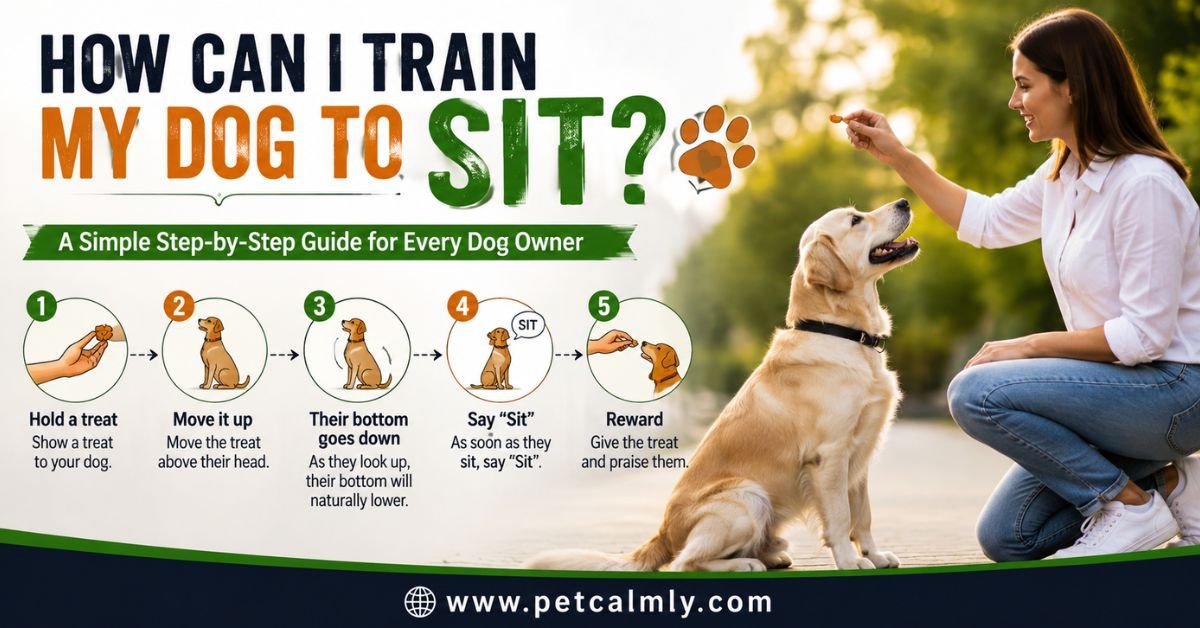
Teaching your dog to sit is the foundation of all dog training. Start with high-value treats, hold them close to your dog’s nose, and slowly move your hand up and back above their head. Most dogs naturally lower their rear end to follow the treat. The moment their bottom touches the ground, say “sit,” reward immediately, and repeat 5-10 times daily for 3-5 days. Most dogs grasp this command within a week of consistent, short training sessions.
Why Your Dog’s Ability to Sit Changes Everything
If you’re here, you probably already sense it: a dog that knows how to sit is easier to manage, safer around visitors, calmer during vet visits, and genuinely more confident. But here’s what many first-time dog owners don’t realize teaching sit isn’t just about obedience. It’s about communication.
When your dog learns to sit on command, they’re learning that they can control their own behavior in exchange for something they want. That’s not a trick. That’s trust. That’s the foundation of every other command, and it’s why sit is always taught first not because it’s simple (though it is), but because it’s transformative.
This guide walks you through everything: the mistakes I see owners make repeatedly, the exact technique that works with stubborn dogs, how to troubleshoot when your dog just won’t cooperate, and when it’s time to bring in a professional trainer. I’ve written this for absolute beginners, but even if you’ve tried before and it didn’t stick, you’ll find something here that changes your approach.
Why Your Dog Does What They Do
Before you start teaching sit, it helps to understand how your dog’s brain actually works.
Dogs don’t think in language. They think in consequences. When your dog sits and immediately gets a treat, they’re not thinking, “Oh, the human wants me to sit.” They’re thinking, “Sitting made a good thing happen.” Repeat that pattern enough times, and sitting becomes automatic a habit they choose because they’ve learned it pays off.
This is called positive reinforcement, and it’s the most reliable way to train any dog. Your dog isn’t being bribed they’re being rewarded for the behavior you want. That’s how learning actually happens in the canine brain.
There’s another piece worth understanding: timing. The reward has to come within about 2 seconds of the behavior, or your dog’s brain won’t connect the two events. That’s why clicker training works so well for some owners the click happens instantly, and then the treat follows. Your dog’s brain says: “That click means the behavior was right.”
And finally, your dog learns better in short bursts. A 5-minute training session where your dog is fresh, focused, and motivated teaches more than a 30-minute slog where they’re tired and bored. This matters when you’re planning your week.
Essential Supplies for Teaching Your Dog to Sit
You don’t need much. Honestly, you probably have everything already:
High-Value Treats – This is your actual secret weapon. Not dry kibble. Not a regular treat. Something your dog genuinely loves and doesn’t get otherwise: small pieces of chicken, cheese, hot dog, or a premium training treat. Keep them pea-sized you want to repeat this 10+ times in a session without overfeeding.
A Quiet Space – At least for the first few days. Your living room floor, a hallway, your backyard. Somewhere without kids, other pets, or neighborhood distractions. You can move to busier environments once your dog understands the command.
Patience – Not a physical item, but genuinely the most important thing on this list.
That’s it. You don’t need a clicker (though many trainers love them). You don’t need special equipment. You don’t need a fancy training harness. You need treats, a quiet space, and consistency.
The Core Method: How to Teach Your Dog to Sit in Three Phases
Phase 1: The Foundation (Days 1–5)
What you’re doing: Creating the connection between the behavior and the word.
Start in your quiet space during a time when your dog is calm and alert not right after they’ve been playing hard, and not when they’re starving (they might be too frantic). Mid-morning or late afternoon usually works well.
- Hold a treat close to your dog’s nose. Let them smell it. Get their attention fully.
- Slowly raise the treat above their head. Move it back slightly, toward the top of their head. Most dogs will naturally follow the treat with their nose, and as their head tilts back, their rear end naturally lowers to the ground. This isn’t a trick—it’s physics.
- The moment their bottom touches the ground, say “sit” clearly and calmly. Then immediately give them the treat.
- Repeat this 5–10 times. Not more. Once your dog seems tired or distracted, stop. You’re done for that session.
- Do this twice daily. Morning and evening, or two sessions with a few hours between them. Consistency matters more than duration.
By day 3 or 4, many dogs start anticipating the sit. They might sit before you even guide them. That’s the moment everything clicks.
What success looks like: Your dog consistently lowers their rear end when you guide the treat up and back over their head. They’re not perfectly still, and they might jump up immediately, but they’re sitting.
Phase 2: Building Duration and Distance (Days 5–10)
Now your dog knows what sit means. The next phase is teaching them to hold it, and to respond when you’re not right in front of them.
- Use the same hand motion, but pause for one second before giving the treat. Your dog should sit and stay sitting for just a moment.
- Gradually extend that pause. By day 8 or 9, aim for 3–5 seconds of sitting before the treat comes.
- Start stepping back slightly. Once your dog sits reliably when you’re close, take a small step back and ask for sit. If they sit, praise enthusiastically and give the treat.
- Introduce your hand signal. While you’re still using the treat lure, you can start using an open hand motion, palm up, that gradually replaces the treat motion. Over time, your dog will respond to the hand signal alone.
- Start fading the treat lure. By day 10, try showing your hand motion without the treat in it. Most dogs will sit anyway, because the hand signal has become meaningful to them.
What success looks like: Your dog sits when you ask, even if you’re a few feet away. They hold it for 5+ seconds. They’re starting to respond to both your voice and your hand signal.
Phase 3: Real-World Reliability (Days 10+)
This is where sit becomes truly useful. Your dog responds in different environments, around distractions, and without treats appearing right after.
- Practice in different rooms of your house, then outdoors, then in busier environments like a park or a friend’s house.
- Start randomizing the reward. Sit once, get a treat. Sit twice, get praise. Sit three times, get nothing but a calm “good.” Your dog learns that sit is worth doing even when they’re not guaranteed immediate food.
- Introduce distractions gradually. First, ask for sit while another family member is in the room. Then while someone’s moving around. Then with another dog nearby.
- Use sit as part of your daily life. Ask for sit before meals, before going outside, before greeting guests. Real-world practice embeds the command deeper than training sessions alone ever can.
What success looks like: Your dog sits reliably in most situations, even when there’s competition for their attention. They understand that sit is useful in daily life, not just something that happens at training time.
7 Common Mistakes That Slow Down Training
I’ve watched hundreds of dog owners train, and certain patterns emerge. Here are the mistakes that actually matter:
Pushing the treat up too fast. If you move your hand back and up too quickly, your dog might jump instead of sit. Slow, smooth motion is your friend. Let them naturally find the sitting position.
Waiting too long to say “sit” before rewarding. Say the word during or immediately after the behavior, not before. The word and the action need to happen close together in time for your dog’s brain to connect them.
Repeating the word. Don’t say “sit, sit, sit” while your dog figures it out. Say it once, guide them into the position, then reward. If you repeat the word, your dog might learn that “sit” means “bark at the person” or “run away”—they haven’t learned what the word means yet.
Training for too long. Five to ten repetitions is enough. Your dog’s attention spans better in short bursts, and training sessions that go too long often end with a frustrated owner and a confused dog.
Training at the wrong time. If your dog has just eaten a large meal, is exhausted from play, or is hyper-aroused (another dog just walked by), training is going to be harder. Wait for a calmer window.
Using low-value treats. This is non-negotiable. If your dog gets these treats any other time, they’re not special enough to motivate consistent training. Use something they genuinely work for.
Skipping the quiet environment. Yes, eventually your dog needs to sit in noisy, distracting situations. But the first week, keep it simple. Let them learn the basic pattern in calm settings, then expand.
How Long Does It Actually Take to Train a Dog to Sit?
This is the question most owners ask, and the honest answer is: most dogs get the basics within 3–7 days.
A basic sit means your dog will lower their rear end on command in a quiet, familiar environment. That’s achievable fast.
Reliable sit where your dog sits in various locations, with distractions present, and without constant reward—often takes 2–3 weeks of consistent practice.
Several variables affect speed:
Age. Puppies (under 6 months) can learn sit, but their attention spans are shorter. An 8-week-old puppy might need slightly more repetitions than a 1-year-old dog. Adult dogs typically learn fastest.
Prior training. A dog who’s never been trained takes slightly longer than a dog who already understands the concept of working for treats, even if they don’t know any commands yet.
Your consistency. If you train once a day, it takes longer than twice daily. If you train sporadically (three days on, two days off), it takes longer than daily practice.
Breed tendencies. Some breeds have historically been bred to work closely with humans (retrievers, spaniels, poodles) and often pick up sit faster. Independent-minded breeds (huskies, some hounds, terriers) can take longer, but can absolutely learn—they just need clear motivation.
Your dog’s personality. Some dogs are naturally treat-motivated go-getters. Others are more reserved or less food-motivated. Neither is better or worse, just different training paces.
If it’s been two weeks and your dog isn’t responding consistently, you haven’t failed. It usually means one of three things: the training environment needs to be quieter, the treats need to be higher-value, or the training sessions need to be shorter and more frequent.
Troubleshooting: What to Do When Your Dog Won’t Sit
Let’s address the real scenarios owners face.
“My dog jumps instead of sitting.”
You’re likely luring the treat up too quickly or too high above their head. Slow down. Keep the treat close to their nose, then move it back gradually. The idea is to guide their head back naturally, which makes sitting happen. Also try starting the lure at eye level rather than nose level—sometimes that tiny adjustment changes everything.
“My dog follows the treat but never sits.”
Two possibilities: the treat motion isn’t quite right, or your dog doesn’t understand what you’re asking yet. Try a different spot in your home—maybe there’s a subtle distraction. Also, make sure you’re not asking them to sit multiple times before they actually do it. Wait a few seconds, then try again.
“My dog sits for the treat but won’t sit without one.”
This is actually progress—they know what sit means. You’re ready for phase 2. Start fading the visible treat. Show your hand signal without the treat, and if they sit, immediately give them a treat from your pocket or elsewhere. They’re learning to respond to the signal, not just the treat motion.
“My dog knows sit at home but won’t do it outside.”
This is incredibly common and not a failure. Your dog isn’t being stubborn—they’re overwhelmed. The park is full of new smells, other dogs, and distractions. Take sit training outside, but go to quiet locations first (your driveway, a quiet park corner). Use higher-value treats outside than you do at home. Build up gradually to busier environments.
“My dog sits but pops back up immediately.”
You’re rewarding too quickly or not pausing between the sit and the reward. Try holding the sit for 2–3 seconds before treating. Also, after you give the treat, pause for a moment before you start the next repetition. This teaches your dog that the reward for sitting isn’t “then I get to jump up and do whatever” it’s “I stay calm and wait for the next thing.”
“My older dog won’t sit.”
Older dogs can absolutely learn sit. It might take slightly longer, and you might need to watch for physical discomfort. Arthritis, hip dysplasia, or other joint issues can make sitting painful. If your older dog seems reluctant and you suspect pain, have a vet check them out. They might need a softer surface to train on, or slightly modified positioning.
Building on Sit: What Comes Next
Once sit is solid and this usually takes 2–3 weeks you’ve created a foundation for nearly every other command.
Sit naturally leads to “stay” (sit, then don’t move). It leads to “down” (sit, then lower to lying down). It’s the calm reset button that many trainers use between teaching new commands.
Some owners combine sit with other behaviors: “sit and shake,” “sit and wait for the door to open,” “sit before you’re released to play.” These real-world applications embed the command even deeper.
The key is not rushing. Master sit first. Build the other commands on that solid foundation. A dog with a rock-solid sit and mediocre everything else is better off than a dog who knows five commands partially.
When Professional Help Makes Sense
Most dogs can learn sit from their owners using the method in this guide. But some situations warrant professional training:
Your dog has anxiety around training. If they seem genuinely fearful, hide during sessions, or shut down when you try to work with them, a positive reinforcement trainer can help build confidence in a less stressful way.
There’s aggression in the picture. If your dog is showing resource guarding, jumping on people aggressively, or has bitten, training at home becomes risky. A certified professional trainer or veterinary behaviorist is necessary.
You’ve been consistent for three weeks with no progress. This is rare, but if it happens, a professional can assess what’s going on and adjust the approach.
You’re not sure what you’re doing wrong. Sometimes a one-hour session with a trainer gives you the confidence and clarity you need. That’s a perfectly valid use of professional help.
Your dog has fear, trauma, or severe behavioral issues. A veterinary behaviorist (not just a trainer) can help, especially if medication might be beneficial alongside training.
Finding a good trainer: Look for someone who uses positive reinforcement, has verifiable experience and references, and is happy to explain their methods. Avoid anyone using shock collars, harsh corrections, or dominance-based methods.
The Bigger Picture: Why Sit Matters Beyond Obedience
Teaching your dog to sit is about so much more than having a trick. It’s about:
Safety. A dog that sits on command won’t bolt out the door, won’t charge another dog during a walk, and is less likely to jump on a guest who’s afraid of dogs.
Respect. When your dog chooses to sit on your request, they’re showing they trust you and understand you’re someone worth listening to.
Confidence. Dogs that understand what their owners want are calmer and more confident. They’re not constantly guessing what the human wants. They know what works.
Your relationship. Training creates positive interaction. It’s not punishment or conflict it’s you and your dog working together toward something small and achievable. Those moments matter.
This guide gives you everything you need to teach sit successfully. The method works because it’s based on how dogs actually learn: through clear communication, immediate reward, and consistent repetition. No tricks, no complicated equipment, no tricks.
Start small. Be patient. Train for short, focused sessions. Use treats your dog genuinely loves. And remember the goal isn’t a perfect sit. It’s a dog that understands what you want and responds because it’s worth their while.
Conclusion
The first command you teach your dog sets the tone for everything that follows. If you teach sit using patience, positive reinforcement, and clear communication, your dog learns not just a command they learn that training is safe, rewarding, and worth their attention.
That foundation changes how quickly they learn everything else. It changes your confidence as an owner. It changes your dog’s willingness to listen.
Start this week. Pick a quiet spot, grab some good treats, and do five or ten repetitions. You’ll probably be amazed at how quickly it works. Most dogs grasp the basics within days, and within a month, you’ll have a dog that sits reliably in most situations.
That’s not just a trick. That’s the beginning of a well-trained, confident dog and a calmer, happier life together.
More Information About Pets, Please Visit Our Website: Why do Dogs Stretch When They See You
How to Teach a Dog Recall
How to Train a Stubborn Dog
How to Train a Stubborn Dog to Walk on a Leash
When One Dog Dies Does the Other Grieve?
Why Does My Dog Bark at Strangers on Walks?
How Long Do Dogs Stay Stuck Together After Mating
How to Stop Your Puppy From Biting Your Hands Fast
Frequently Asked Questions
1: Can I train my puppy to sit at 8 weeks old?
A: Yes, puppies can begin learning sit as early as 6–8 weeks. Keep sessions very short (2–3 minutes), use high-value treats, and be patient with their short attention span. Young puppies learn the pattern quickly but need frequent practice to build reliability.
2: What if my dog knows sit but only does it for treats?
A: This is normal and part of learning. Once sit is solid (around 3–4 weeks), begin rewarding randomly—treat, praise, treat, nothing, praise—so your dog learns to sit regardless of whether food appears. This is called variable reinforcement and actually strengthens the behavior.
3: Is my dog too old to learn sit?
A: Dogs can learn sit at any age. Adult and senior dogs often pick it up quickly, sometimes within days. If an older dog seems reluctant, check with your vet to rule out joint pain or arthritis, which can make sitting uncomfortable.
4: How do I prevent my dog from jumping while learning to sit?
A: Keep your treat lure motion slow and close to your dog’s nose. Move it back gradually rather than high and fast. If your dog jumps, don’t reward just try again. Some dogs naturally jump more; they may need slightly more time to grasp the sitting motion.
5: Can I train sit without treats?
A: Treats work fastest for most dogs, but you can use anything your dog values: toys, play, access to the yard, or enthusiastic praise. However, treats are typically most effective because the reward is immediate and clear.
6: What do I do if my dog sits but breaks position immediately?
A: This is normal early in training. Try pausing 2–3 seconds after your dog sits before giving the treat. Gradually extend this hold as they improve. Also avoid saying “okay” or releasing them this teaches them when it’s acceptable to break the sit.