Short direct answer
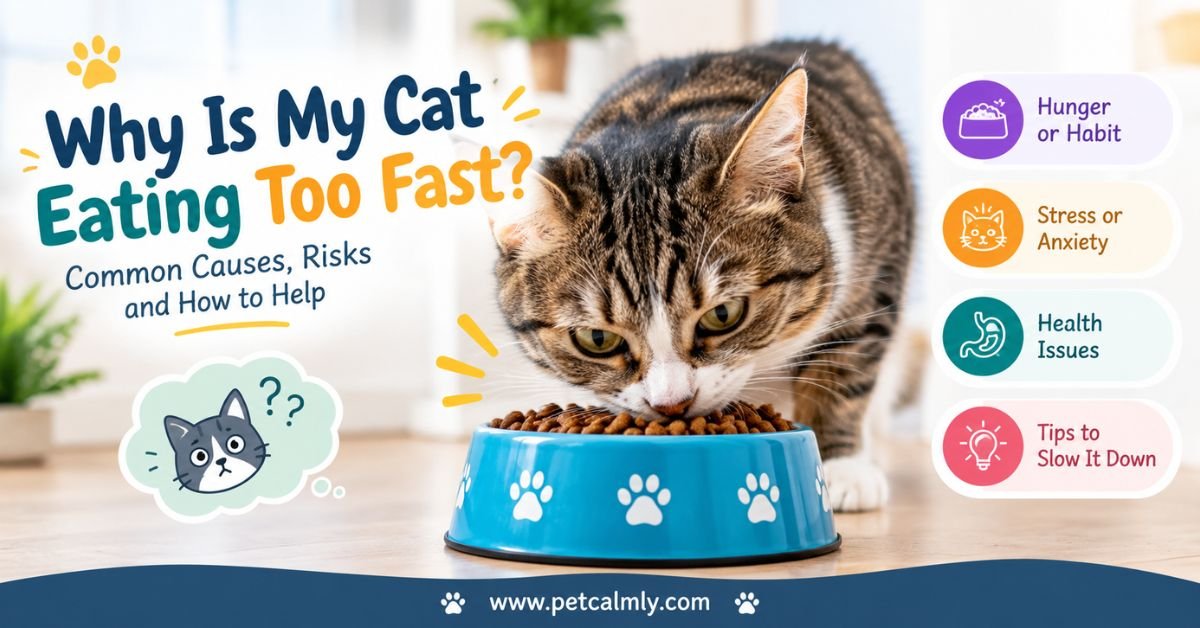
why your cat is eating too fast, the most common reasons are food competition, hunger from too few meals, boredom, stress, and instinct. Less often, a medical problem like parasites or hyperthyroidism is behind it. Most cats improve when you offer smaller, more frequent meals and use a slow feeder or puzzle toy. Sudden changes in appetite or weight deserve a vet visit.
Introduction
You fill the bowl and turn around to grab your coffee. By the time you look back, it’s empty. Then, a few minutes later, you hear the familiar sound of a cat about to bring it all back up.
If that sounds familiar, you’re not alone. Fast eating is one of the most common feeding complaints cat owners bring up, and it’s usually fixable.
Fast eating isn’t always a sign that something is wrong. Sometimes it’s a habit, sometimes it’s a reaction to the home environment, and sometimes it’s your cat’s body telling you something. The trick is knowing which one you’re dealing with.
This guide walks through why cats gulp their food, how to tell harmless habits from health problems, and what to change at home. It also covers the warning signs that mean a vet should take a look.
Is It Normal for a Cat to Eat Fast?
Some speed is normal. Cats are natural hunters, and eating quickly makes sense for an animal whose ancestors had to finish a meal before something bigger showed up and took it.
A cat who eats quickly but keeps the food down, stays at a healthy weight, and acts like herself afterward is usually fine. She’s just enthusiastic.
It becomes a concern when fast eating comes with other changes. Watch for vomiting, gagging, weight loss, a sudden jump in appetite, or a cat who acts frantic around food. That’s when it’s worth looking deeper.
Fast Eating vs. Gulping vs. Inhaling Food
Owners describe this behavior in different ways, but it helps to tell them apart:
- Eating quickly: Your cat finishes a meal in a minute or two but chews and swallows normally.
- Gulping: She swallows big pieces of kibble whole, often with little chewing.
- Inhaling food: She barely pauses between bites and seems almost desperate, sometimes growling or guarding the bowl.
The more intense the behavior, the more likely stress, competition, or a medical issue is involved.
Why Is My Cat Eating Too Fast? 9 Common Causes
There’s rarely just one reason. Often two or three overlap. Let’s go through them.
1. Competition With Other Pets
In a multi-cat or mixed-pet home, many cats eat fast because they feel they have to. Even if you never see a fight, a cat may rush to finish before another animal wanders over.
Cats are solitary hunters by nature. Eating beside another cat, especially one who stares or approaches the bowl, can feel tense. Quiet competition like this is easy to miss.
A common example is two cats fed side by side from matching bowls. One finishes first and drifts toward the other bowl. The slower cat learns to speed up, and soon both are gulping.
2. Too Few Meals Per Day
In the wild, cats typically hunt many small prey animals throughout the day. A domestic cat fed once or twice a day goes long stretches between meals. By the time food arrives, she’s genuinely hungry.
A hungry cat eats quickly. Her stomach then fills fast, and the food sometimes comes straight back up.
3. Instinct and Survival Wiring
Even a cat who has never missed a meal carries instincts from her ancestors. Food is a resource, and resources can disappear. For some cats, that wiring shows up as speed.
4. A History of Food Scarcity
Cats who were strays, lived in shelters, or were separated from their mothers early often eat fast for life. They remember, in their own way, that food can vanish.
Adopted cats may gulp for weeks or months, even in a safe and well-stocked home. With patience, many learn to relax.
5. Boredom
A cat with little to do may treat mealtime as the highlight of her day. Without hunting, climbing, or play, food becomes the main event.
Indoor cats are especially prone to this. Their environment offers fewer outlets for natural behaviors.
6. Stress or Anxiety
Changes at home can make a cat eat faster. A new pet, a move, a loud household, or a changed routine can all contribute.
A stressed cat may also eat in short, frantic bursts and then leave the bowl. Tension and feeding often go hand in hand.
7. The Food Itself
Some diets leave cats feeling unsatisfied. Foods low in protein or filled with fillers may not keep a cat feeling full. Very tasty kibble can also trigger gulping, and cats who like a food a lot may rush it.
The bowl matters too. A deep, narrow bowl can press on whiskers, which makes some cats uncomfortable and prompts them to grab food and move away.
8. Underlying Medical Conditions
Several health problems raise appetite or change how a cat eats. These include:
- Intestinal parasites: Worms can compete for nutrients, leaving a cat hungry even when she’s eating plenty.
- Hyperthyroidism: An overactive thyroid speeds up metabolism. It’s more common in middle-aged and older cats.
- Diabetes mellitus: Cats with diabetes can be constantly hungry yet lose weight.
- Digestive disease: Conditions like inflammatory bowel disease can interfere with how well a cat absorbs nutrients.
- Medication effects: Some drugs, including corticosteroids, can boost appetite.
Only a veterinarian can diagnose these. If your cat’s eating pattern changed suddenly, don’t assume it’s behavior.
9. Learned Habits
Sometimes it simply becomes a pattern. If a cat has eaten fast for years, speed is just how she eats. Habits like this are fixable, but they take consistent changes.
Quick Reference: Common Causes at a Glance
| Possible Cause | What You Might Notice | First Thing to Try |
|---|---|---|
| Competition | Rushes when other pets are near | Feed cats in separate rooms |
| Too few meals | Frantic at mealtime, vomits after | Split food into smaller portions |
| Past food scarcity | Guards bowl, eats fast since adoption | Predictable routine, patience |
| Boredom | Obsessed with food, little play | Puzzle feeders and daily play |
| Stress | Eats in bursts, hides afterward | Quiet feeding space |
| Medical issue | Weight loss, thirst, vomiting | Vet checkup |
What Happens When a Cat Eats Too Fast?
Speed on its own isn’t dangerous, but it can cause trouble. Here’s what owners most often notice.
Regurgitation and Vomiting
This is the most common result. A cat swallows food and air quickly, and the stomach pushes it back out. The food often comes up looking like a tube shape, mostly undigested.
Regurgitation and vomiting are slightly different:
- Regurgitation happens fast, with little warning. Food comes up undigested, often within minutes of eating.
- Vomiting usually involves visible nausea first, like drooling, licking lips, or heaving. The material is partly digested.
Mention which one you see when you talk to your vet. It helps them narrow down causes.
Gagging and Choking Risk
Large pieces of dry food can lodge in the throat. Most cats cough or gag it up, but a true choking episode is an emergency.
Poor Digestion and Gas
When a cat swallows large chunks, digestion is harder work. Some cats get gassy or uncomfortable.
Weight Gain
Fast eaters often eat more than they need because the “I’m full” signal takes time to reach the brain. Over months, extra calories add up.
How to Slow Down a Cat Who Eats Too Fast
You don’t need fancy gear. The simplest changes often work best, so start there and add tools only if needed.
Offer Smaller, More Frequent Meals
This is usually the most effective fix. Instead of one or two large meals, split the daily portion into three or four smaller ones. Many veterinary sources suggest this approach for cats who gulp or regurgitate.
If your schedule makes that hard, an automatic timed feeder can deliver meals while you’re out. Your total daily amount stays the same. Only the schedule changes.
Try a Slow Feeder Bowl
Slow feeders have ridges, bumps, or mazes that make a cat work around obstacles. That forces smaller bites.
Choose a shallow design. Cats don’t love deep bowls, and whisker pressure can add to stress. Pick one that’s easy to clean, since food gets stuck in grooves.
Use Puzzle Feeders and Food Toys
Puzzle feeders turn dinner into a hunt. Your cat has to paw, roll, or nudge to get kibble out.
This does two things. It slows eating, and it satisfies hunting instincts that indoor life often leaves unused. Start with an easy puzzle so she doesn’t give up.
Spread Food Out
No special equipment needed. Try one of these:
- Scatter kibble across a baking tray or large plate.
- Spread wet food thinly over a flat dish or lick mat.
- Hide small portions in different spots around the house.
Hiding food works well for confident cats who enjoy exploring. Anxious cats may prefer a simpler setup.
Change the Bowl Shape
A wide, shallow dish is often better than a tall bowl. Some cats also do better with a flat plate. Try different shapes if you suspect whisker discomfort.
Mix Wet and Dry Food
Adding wet food or a splash of warm water to dry food can slow eating, since it’s harder to inhale. Check with your vet before making major diet changes, especially if your cat has health conditions.
Make Mealtime Calmer
A quiet, low-traffic corner helps. Avoid feeding near a noisy washing machine, a busy hallway, or the dog’s bed. Cats like to eat somewhere they can see what’s coming.
Slow Feeding Tools Compared
| Tool | Best For | Things to Watch |
|---|---|---|
| Slow feeder bowl | Mild gulping | Pick a shallow design |
| Puzzle feeder | Bored or high-energy cats | Start simple |
| Lick mat | Wet food, anxious cats | Needs regular washing |
| Scatter feeding | Dry food, active cats | Messy on carpet |
| Timed feeder | Busy owners | Check it works reliably |
| Wide plate | Whisker-sensitive cats | May not slow speed alone |
How to Feed Multiple Cats Without Racing
If you have more than one cat, the fix often lies in the environment, not the food.
Separate Feeding Spaces
Feed each cat in a different room, or at least out of each other’s sight. Even a few feet and a visual barrier can help.
Use Individual Bowls Placed Apart
Don’t place bowls next to each other. If you can’t use separate rooms, spread the bowls across different areas.
Consider a Microchip Feeder
If one cat eats everyone’s food, a microchip or collar-activated feeder opens only for the right cat. They cost more but solve a stubborn problem, especially when cats are on different diets.
Supervise Until It’s Calm
Stay nearby for the first few weeks. Watch for staring, blocking, or stealing. Subtle tension matters even when no one fights.
A Simple 7-Day Plan to Slow Your Cat’s Eating
Changes work best when introduced gradually. Here’s a gentle approach you can adjust.
- Days 1–2: Split your cat’s daily food into three or four meals. Keep the total amount the same.
- Days 3–4: Switch to a wide, shallow dish or spread food on a flat plate.
- Days 5–6: Add a slow feeder or simple puzzle toy to one meal each day.
- Day 7: Review how things are going. Is your cat eating slower? Is vomiting reduced?
If nothing has improved after a few weeks, or things get worse, talk to your vet. Don’t push through with trial and error.
Track What You Notice
Keep a simple note on your phone for a week or two:
- Time of each meal
- How fast she ate
- Any vomiting or regurgitation
- Changes in thirst, energy, or litter box habits
Your vet will appreciate this. It turns “she eats weirdly” into useful information.
Mistakes Owners Often Make
Even well-meaning owners slip up. These are the most common ones.
Cutting back food to “fix” it. Reducing portions to slow a cat down usually backfires. A hungrier cat eats faster and may become more anxious.
Scolding or punishing. Cats don’t connect punishment with eating habits. It only raises stress, which can make gulping worse.
Ignoring vomiting. Occasional regurgitation from fast eating is common, but frequent vomiting needs attention.
Changing everything at once. New food, new bowl, new feeding spot, and a new routine can overwhelm a cat. Change one thing at a time.
Assuming it’s behavioral. If your cat has always eaten fast, it’s probably habit. If it’s new, think health first.
Using a tiny puzzle that frustrates her. If a toy is too difficult, she may give up or flip it over in annoyance. Start easy.
When Should You Worry About Your Cat Eating Fast?
Most fast eating is manageable at home. But some patterns point toward a medical issue. Contact your veterinarian if you notice:
- A sudden change in appetite, such as eating much more than usual
- Weight loss despite a good or increased appetite
- Increased thirst or urination
- Frequent vomiting, or vomiting more than once or twice a week
- Diarrhea or unusual stools
- Lethargy or hiding
- A dull or unkempt coat
- Visible discomfort after eating, such as hunching or restlessness
- A senior cat developing new eating habits
Age matters. A middle-aged or older cat who suddenly becomes ravenous deserves a checkup, since hormonal conditions become more common with age.
Emergency Signs: Don’t Wait
Go to an emergency vet right away if your cat:
- Is choking, pawing at her mouth, or struggling to breathe
- Retches repeatedly but nothing comes up
- Collapses or seems extremely weak
- Has a swollen or painful belly
- Vomits blood
If you can’t tell whether something is serious, call your vet. A quick phone call is better than guessing.
What Will the Vet Do?
Knowing what to expect can ease the anxiety. A typical visit might include:
- A physical exam, including weight and checking for thyroid enlargement
- Questions about diet, routine, and vomiting patterns
- A stool test for parasites
- Blood work to check thyroid, blood sugar, and organ function
- Further tests if needed, based on what they find
Bring your notes, a photo of your cat’s food label, and a short video of her eating if possible. It really helps.
Real-Life Examples Owners Might Recognize
These are general scenarios, not specific cases, but they show how causes differ.
The Rescue Cat Who Never Relaxes
A cat adopted from a shelter wolfs down every meal and guards the bowl. She has plenty of food, but she acts like it might disappear. This is common. Consistent mealtimes, a quiet spot, and patience help her learn that food is reliable.
The Two-Cat Household Race
Two cats eat side by side. One finishes quickly and moves toward the other’s bowl, so the second cat speeds up. Separate rooms fix the problem within days.
The Senior Cat With a New Appetite
A cat in her teens suddenly eats everything in sight yet looks thinner. This isn’t a feeding problem. It could be a medical one, and a vet visit is the right next step
What Should Pet Owners Do Next?
Here’s a practical path forward:
- Observe. Is the fast eating new or lifelong? Any other symptoms?
- Rule out health issues. If anything seems off, book a vet visit first.
- Adjust meal frequency. Smaller, more frequent meals are the easiest starting point.
- Change the feeding setup. Use a shallow dish, slow feeder, or puzzle toy.
- Reduce stress. Quiet space, separate feeding, steady routine.
- Be patient. Habits take weeks, not days.
- Recheck. If things don’t improve, talk to your vet.
Frequently Asked Questions
1: Why does my cat eat so fast and then throw up?
Fast eating often means a cat swallows food and air in large gulps. The stomach can’t handle it, and the food comes back up, often looking undigested. Smaller meals and slow feeders usually help. If vomiting happens often, or comes with weight loss or lethargy, see your vet.
2: Is it bad if my cat eats too fast?
Not always. Occasional fast eating is common and usually harmless. It can lead to regurgitation, gagging, or overeating. If it’s accompanied by sudden appetite changes or other symptoms, a medical cause is possible.
3: How can I slow down my cat’s eating?
Try dividing meals into smaller portions, using a shallow slow feeder, offering puzzle toys, or spreading food across a flat plate. If you have multiple cats, feed them separately. Combining a couple of these usually works best.
4: Why is my cat always hungry and eating fast?
Constant hunger can come from too few meals, a diet that doesn’t satisfy, boredom, or stress. It can also signal a medical issue such as parasites, diabetes, or hyperthyroidism. If the hunger is new or comes with weight loss, talk to your vet.
5: Are slow feeder bowls good for cats?
For many cats, yes. They slow eating and can reduce regurgitation. Choose a shallow design with gentle ridges and watch your cat the first few times. Some cats get frustrated by overly complex mazes.
6: Should I let my cat eat as much as she wants?
It depends on the cat. Some cats self-regulate, but fast eaters often overeat if food is always available. Your vet can help you decide on portions and a feeding schedule suited to her age, weight, and health.
More Information About Pets, Please Visit Our Website: Why Is My Cat Refusing Wet Food?
Why Is My Cat Refusing Wet Food?
Why Is My Cat Sleeping in the Sink?
How Often Should Cats Eat Wet Food?
How Long Can a Cat Go Without Food?
Why Is My Dog Throwing Up Undigested Food?
Conclusion
A cat who eats too fast is rarely doing it to annoy you. She’s reacting to instinct, hunger, competition, stress, or in some cases a health problem you can’t see.
The good news is that most cases improve with small, practical changes. More frequent meals, a better bowl, a calmer space, and a bit of play can transform mealtimes within a few weeks.
Pay attention to the bigger picture. A cat who gulps but otherwise thrives is likely fine. A cat whose eating suddenly changes, especially alongside weight loss, vomiting, or thirst, deserves a vet’s attention. Trust your instincts. You know your cat better than anyone.