Short direct answer
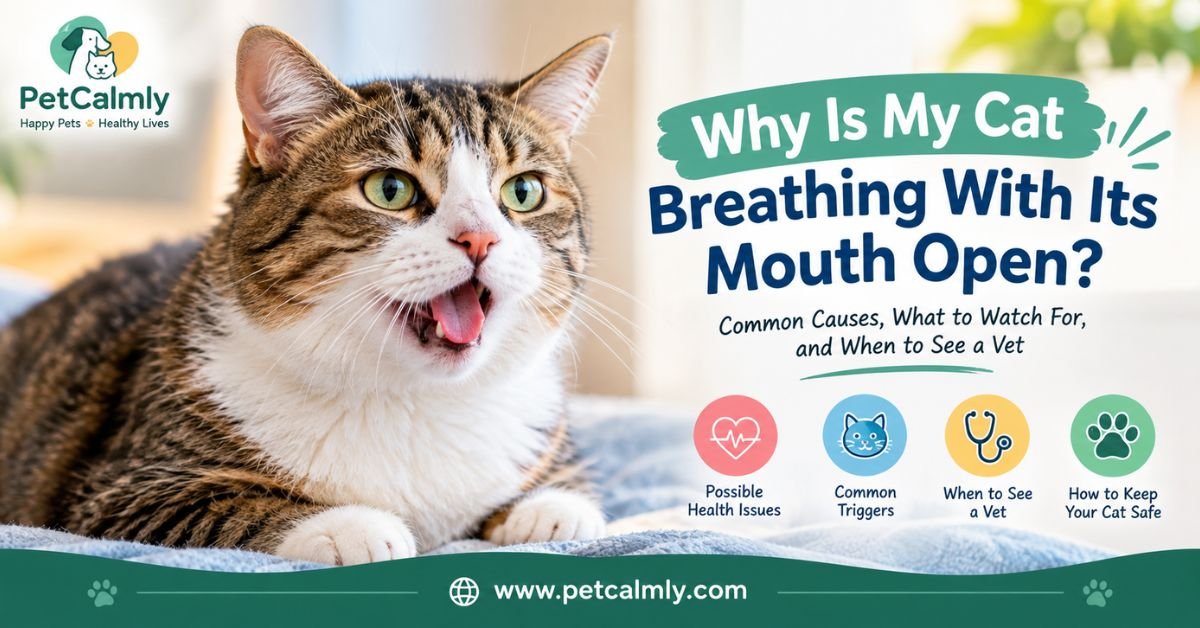
Why is my cat breathing with its mouth open? Unlike dogs, cats rarely pant, so open-mouth breathing usually means something is wrong. Common causes include asthma, heart disease, fluid around the lungs, respiratory infections, heatstroke, an airway blockage, or extreme stress. A cat may pant for a minute or two after intense play or a frightening event. If it continues at rest, or comes with effort, noise, or pale or blue gums, treat it as an emergency and call a vet immediately.
Why This Matters (and Why You Shouldn’t Wait It Out)
If you’re reading this with your cat in the next room, take a breath yourself. Check on her first. If she’s breathing with her mouth open right now, is hunched over, or seems to be struggling, stop reading and call your nearest emergency vet. You can come back to this article afterward.
If she has calmed down, or you’re trying to understand something you saw earlier, keep going.
Cats are good at hiding discomfort. In the wild, looking sick makes you a target, so many cats stay quiet and still until a problem is serious. That’s why open-mouth breathing deserves attention. By the time a cat is doing something this visible, she may already be working very hard to get enough air.
This guide explains what’s normal and what isn’t, the most likely causes, how to count your cat’s breathing rate, what to do in the first few minutes, and how to tell an emergency from a “call the vet today” situation. It’s general education, not a diagnosis. Only a veterinarian can examine your cat and tell you what’s going on.
Is It Normal for a Cat to Breathe With Its Mouth Open?
Rarely. This is the biggest difference between cats and dogs, and it trips up a lot of owners. Dogs pant to cool down, and it’s part of everyday life. Cats breathe through their noses at rest and almost never need to open their mouths.
Normal Cat Breathing vs. Open-Mouth Breathing
A healthy, relaxed cat breathes quietly through her nose. Her chest rises and falls gently, and you may barely notice it. Her belly moves a little too, but you shouldn’t see obvious effort.
Open-mouth breathing, sometimes called mouth breathing or labored breathing, looks different. The mouth hangs slightly or fully open, the tongue may show, and the chest or belly may heave. Veterinary sources describe difficulty breathing as an emergency sign in cats.
When Brief Panting Can Be Okay
There are a few situations where a healthy cat may pant briefly:
- After a burst of very intense play or a hard chase
- During a stressful car ride or vet visit
- When she’s very hot, such as in a warm car or a sunny room
- After a sudden fright
The key word is briefly. In a healthy cat, panting from stress or exertion should settle within a few minutes once she’s calm and cool. If it doesn’t, or if she was just lying still when it started, don’t assume it’s harmless.
7 Common Reasons Your Cat Is Breathing With Its Mouth Open
There isn’t one single cause. Some are mild and temporary, while others are life-threatening. Here are the main ones, roughly from least to most serious.
1: Stress, Fear, and Overexcitement
Stress is one of the more benign reasons for a cat breathing with her mouth open. Cats that are frightened, such as during a car trip or at a loud vet clinic, may pant. Some cats also pant during fights or after a close call with another animal.
If the panting stops quickly once she’s somewhere quiet and calm, stress was likely the trigger. If it doesn’t ease, something else may be going on, or the stress may have set off an underlying condition like asthma or heart disease.
2: Overheating and Heatstroke
Cats are less likely than dogs to overheat, but it happens. A cat shut in a parked car, a sunroom, a laundry room, or a room with no airflow can overheat quickly. Early signs include panting, drooling, restlessness, and a hot body. Heatstroke can progress to collapse and is an emergency.
Cats with flat faces, like Persians and Exotic Shorthairs, and overweight or senior cats are at higher risk.
3: Feline Asthma and Allergic Airway Disease
Feline asthma is a common cause of breathing trouble. The airways become inflamed and narrow in response to triggers such as dust, smoke, aerosol sprays, scented products, or pollen. A cat having an asthma attack may cough in a hunched position with her neck stretched out, wheeze, breathe quickly, and open her mouth to get more air.
Some cats have mild, occasional episodes, and some have severe attacks that need urgent treatment. If your cat has been diagnosed with asthma, follow your vet’s plan, and call if a flare-up isn’t responding to treatment.
4: Heart Disease and Congestive Heart Failure
Heart disease in cats, including hypertrophic cardiomyopathy (HCM), can cause fluid to build up in or around the lungs. That makes it hard to breathe, and a cat in this situation may open her mouth to breathe even while resting.
Cats can have significant heart disease without obvious symptoms. Sometimes the first visible sign is sudden breathing trouble. Some breeds, like Maine Coons and Ragdolls, are known to be predisposed to HCM, though any cat can be affected.
5: Pneumonia and Respiratory Infections
Upper respiratory infections (a cat “cold”) usually cause sneezing, runny eyes, and congestion. When the nose is badly blocked, a cat may breathe through her mouth because she can’t get air through her nose. Pneumonia, an infection deeper in the lungs, is more serious and can cause fast, labored breathing, a cough, fever, tiredness, and loss of appetite.
Kittens, senior cats, and cats with weak immune systems are at higher risk of complications.
6: Fluid Around the Lungs (Pleural Effusion) and Chest Trauma
Sometimes the problem isn’t inside the lungs but around them. Pleural effusion means fluid has collected in the space around the lungs, so they can’t expand properly. Causes include heart disease, infection, and cancer. A collapsed lung (pneumothorax) or injury to the chest, such as from a fall or car accident, can also make breathing hard.
Cats with this problem often breathe rapidly with a shallow, “tight” pattern and keep their mouths open. They typically avoid lying on their sides.
7: Something Stuck in the Airway or Throat
A foreign object, such as a piece of string, a bit of plant, or a hairball, can partly block the airway. This can bring on sudden open-mouth breathing, gagging, pawing at the mouth, or drooling. A fully blocked airway is an immediate emergency.
Other Possible Causes
Several other conditions can also lead to open-mouth breathing:
- Heartworm-associated respiratory disease (HARD): Even a small number of heartworms can cause breathing problems in cats, according to the American Heartworm Society.
- Lungworms and other parasites: These are less common but possible, especially in outdoor cats.
- Tumors or masses in the chest, airway, or lungs
- Severe anemia, when the blood can’t carry enough oxygen
- Severe pain
- Toxins or poisoning
- Fever or infection
You can’t tell these apart by looking, which is exactly why a vet visit matters.
Quick Reference: Causes, Clues, and Urgency
| Possible cause | Typical clues | How urgent? |
|---|---|---|
| Stress or fear | Brief panting, settles within minutes in a calm spot | Low if it stops quickly |
| Overheating | Hot environment, drooling, restlessness | High, cool slowly and call a vet |
| Asthma | Wheeze, cough in hunched position | Moderate to high |
| Heart disease/failure | Fast breathing at rest, tiredness, sudden onset | High, emergency |
| Pneumonia/infection | Cough, nasal discharge, fever, lethargy | Moderate to high |
| Pleural effusion/pneumothorax | Shallow, rapid breathing, won’t lie down | High, emergency |
| Airway blockage | Sudden gagging, pawing at mouth | High, emergency |
| Heartworm disease | Cough, vomiting, labored breathing | Needs vet evaluation |
Signs That Often Come With a Cat Breathing With Mouth Open
The mouth being open is only one clue. Other symptoms help you, and later your vet, understand how serious things are.
Body Position and Posture
Cats in respiratory distress often look unusual. Watch for:
- Crouching low with elbows pushed out
- Neck stretched forward and head low
- Refusing to lie down or curl up
- Sitting in a “loaf” position without moving, as if afraid to shift
These positions help her open her chest as much as possible.
Sounds You Might Hear
Listen for wheezing, whistling, rattling, or crackling sounds. A dry hacking cough can be mistaken for hairball trouble, but a cat that coughs repeatedly and doesn’t produce a hairball should be checked.
Gum Color and Other Physical Clues
If your cat will let you gently lift her lip, look at her gums. Healthy gums are pink. Pale, white, gray, or bluish gums can mean she isn’t getting enough oxygen, which is an emergency. Don’t try this if she’s frantic, since stressing her further can make breathing worse.
Behavior Changes
Pay attention to other changes too: hiding, refusing food, unusual tiredness, restlessness, or pacing. Cats in respiratory distress often seem anxious and can’t settle.
How to Check Your Cat’s Breathing Rate at Home
Counting breaths is one of the most useful things you can do. Many vets ask owners to track it, especially for cats with heart conditions. It gives you real numbers instead of “it looked fast.”
Step-by-Step: Counting Breaths Per Minute
- Wait until your cat is resting or sleeping calmly. Don’t wake her.
- Watch her chest or belly. One rise and fall equals one breath.
- Use your phone timer and count for 30 seconds.
- Multiply by two to get breaths per minute.
- Repeat once or twice over a few days to see her normal baseline.
What Numbers Are Normal?
Many veterinary sources say a resting cat typically breathes about 15 to 30 times per minute, and many vets use around 30 or under as a good sign for a sleeping cat. A resting rate that’s regularly above 30 is worth mentioning to your vet. A resting rate of 40 or more, especially with effort, is a red flag that needs prompt attention.
Don’t count a cat who just played, is stressed, or is hot, since those numbers will naturally be higher. Counting during relaxed sleep gives the most accurate picture.
What to Do Right Now If Your Cat Is Breathing With Mouth Open
If your cat is currently breathing with her mouth open and you aren’t sure why, stay calm and act in order. A calm owner helps a calm cat, and calm matters because stress makes breathing harder.
The First Five Minutes
- Don’t chase, restrain, or hold her tightly. Handling can make breathing worse.
- Keep her in a quiet, cool, dimly lit room. Turn off loud noises and keep other pets and children away.
- Check the environment. Is it hot? Is there smoke, a strong spray, or a scented candle nearby? Remove irritants if you safely can.
- Watch her for a couple of minutes from a distance. Note her breathing, posture, and gum color if you can see them without handling her.
- Call your vet or an emergency clinic. Describe what you see. If the open-mouth breathing continues beyond a few minutes at rest, go in.
Getting Her to the Vet Safely
If you need to transport her, keep it as low-stress as possible:
- Gently place her in a carrier. A top-loading carrier can be easier than coaxing her through a front door.
- Cover the carrier with a light towel so she feels sheltered, but make sure air can flow.
- Keep the car cool and drive calmly.
- Call ahead so the clinic can prepare.
If she’s overheated, you can lay a slightly damp, cool (not ice-cold) towel nearby and use gentle airflow, but don’t soak her or use ice. Over-cooling can cause other problems, and your vet can guide you by phone.
What Not to Do
- Don’t give human medications. Many common ones, like acetaminophen (Tylenol) and ibuprofen, are toxic to cats.
- Don’t force food, water, or pills into a cat who is struggling to breathe.
- Don’t wait overnight “to see if it passes” if she’s still breathing with her mouth open at rest.
- Don’t try to clear her throat with your fingers unless a vet instructs you to. You could push an object further in or get bitten.
When to Worry: Emergency Signs vs. “Call Your Vet Today”
Not every situation is equally urgent, but with breathing, it’s safer to lean toward calling early.
Go to an Emergency Vet Immediately If You See:
- Open-mouth breathing that continues while she is resting and calm
- Pale, white, gray, or blue gums or tongue
- Neck stretched out, elbows out, or refusal to lie down
- Visible effort in the belly with each breath
- Collapse, extreme weakness, or unresponsiveness
- Choking, severe gagging, or nonstop drooling
- Breathing trouble after a fall, a hit, or other trauma
- Possible heatstroke or poisoning
Call Your Vet the Same Day If You Notice:
- Rapid breathing at rest, above about 30 breaths per minute, with no open mouth yet
- A new cough that keeps coming back
- Wheezing that settles but returns
- Nasal discharge with reduced appetite or lethargy
- A history of heart disease or asthma and a change in her pattern
If you’re unsure which category fits, call. Veterinary staff would rather hear from you early than late.
What Happens at the Vet When a Cat Is Breathing With Mouth Open
Knowing what to expect can make the visit less frightening. Vets usually prioritize stabilizing breathing before running a full workup, so don’t be alarmed if your cat is whisked away quickly.
Stabilizing First
A cat in distress is usually given oxygen right away, often in an oxygen cage or with a mask, and kept as calm as possible. Vets may give medication to ease breathing, depending on the suspected cause. Handling is minimized because stress itself can worsen the situation.
Diagnostic Tests You Might Hear About
Once your cat is stable enough, the vet may suggest some or all of the following:
- A physical exam, including listening to the heart and lungs
- Chest X-rays (radiographs) to look at the lungs, heart, and chest cavity
- Ultrasound of the heart (echocardiogram) or chest
- Blood work and sometimes a blood pressure check
- Tests for heartworm, infections, or other diseases
- Draining fluid from the chest if there’s pleural effusion, which can bring quick relief and provide a sample for testing
How Treatment Is Decided
Treatment depends entirely on the cause. Asthma may be managed with anti-inflammatory medication and inhalers. Heart failure may be treated with diuretics and other heart medications. Infections may need antibiotics or other targeted medicine. An airway object may require removal. Your vet will explain the plan and what to expect, including follow-up care.
Illustrative Scenarios: How This Can Look in Real Homes
These are general, composite examples meant to help you recognize patterns. They aren’t real case reports.
The Cat Who Panted After the Car Ride
A young cat is carried to the vet in a carrier on a warm afternoon. She arrives with her mouth slightly open and quick, shallow breaths. Within a few minutes in a quiet exam room, with the carrier covered, her breathing slows and her mouth closes. This pattern, where panting settles quickly with calm and cooler air, often points to stress. The owner still mentions it to the vet, which is a good habit.
The Cat Who Seemed “Fine” Until She Wasn’t
An older indoor cat has been a little quieter lately, but eats normally. One evening, she’s crouched on the floor with her mouth open, breathing fast. Her owner sees she won’t lie down. This is a classic picture where heart or chest problems can be hiding behind seemingly normal behavior. It’s an emergency, and a quick trip to an emergency clinic matters more than waiting until morning.
The Cat With Wheezing and a Hunched Cough
A cat has had occasional coughing fits that the family assumed were hairballs. One day, after the owner uses a strongly scented spray, the cat crouches low, stretches her neck, wheezes, and opens her mouth to breathe. Repeated coughing without producing anything, plus a clear trigger, makes asthma a reasonable question to put to the vet.
5 Common Mistakes Cat Owners Make With Breathing Problems
Even loving, attentive owners can get caught out, mostly because cats hide their symptoms so well.
1: Assuming It’s Like Dog Panting
Many people grew up with dogs and think of panting as normal. In cats it usually isn’t. If your instinct says “that looks wrong,” listen to it.
2: Waiting to See If It Improves
Breathing problems can worsen quickly. A cat who looked slightly off at lunch can be in crisis by dinner. If open-mouth breathing doesn’t clear within minutes of calming down, don’t wait.
3: Mistaking Coughing for Hairballs
A cat that hacks repeatedly and doesn’t bring up a hairball may have asthma or another respiratory issue. If it happens more than occasionally, mention it to your vet.
4: Over-Handling a Struggling Cat
In the panic of the moment, it’s natural to scoop her up, cuddle, and try to “fix” it. But restraint and stress can make breathing worse. Gentle, minimal handling is better until you can get professional help.
5: Ignoring Early Signs
Slightly faster breathing at rest, new tiredness, or less interest in play can come before obvious distress. Tracking the breathing rate during sleep helps catch changes earlier.
How to Help Prevent Breathing Problems in Cats
You can’t prevent every cause, but you can lower the odds of some and catch others sooner.
Keep Her Environment Clean and Airway-Friendly
- Avoid smoking around cats, since smoke is a known respiratory irritant.
- Use low-dust, unscented litter if your cat is sensitive.
- Skip aerosol sprays, strong air fresheners, and scented candles near her.
- Keep her away from dusty storage areas or freshly sprayed rooms.
Protect Her From Heat
Never leave a cat in a parked car. Make sure indoor spaces have airflow and shade, and be extra careful with short-nosed breeds and heavier or older cats during hot weather.
Maintain a Healthy Weight
Extra weight makes breathing harder and can worsen heart and airway disease. Your vet can help you set a safe plan for weight loss if needed.
Stay Current on Vet Care
Regular checkups help catch heart murmurs, early respiratory issues, and infections. Ask your vet about heartworm prevention suitable for cats, even for indoor cats, since mosquitoes can get indoors. If your cat belongs to a breed predisposed to heart disease, ask whether screening makes sense.
Reduce Stress
Chronic stress can contribute to health problems. Give her safe hiding spots, a predictable routine, and quiet time. For travel, help her get used to the carrier ahead of time by leaving it out with a soft blanket, so vet visits are less frightening.
Extra Care for Kittens, Senior Cats, and Flat-Faced Breeds
Some cats need more vigilance.
Kittens
Kittens have small airways and developing immune systems. Respiratory infections can progress quickly. Any open-mouth breathing or labored breathing in a kitten should be treated seriously.
Senior Cats
Older cats are more prone to heart disease, kidney disease, and cancers, any of which can influence breathing. Sudden changes warrant a check even if she “seems to be slowing down.”
Brachycephalic (Flat-Faced) Cats
Persians, Himalayans, and Exotic Shorthairs have shortened airways. They can struggle more in heat or stress and may breathe noisily even when healthy. Know your cat’s normal sounds, and treat anything beyond that as worth checking.
Conclusion
When a cat is breathing with her mouth open, the safest assumption is that it’s worth taking seriously. Sometimes it turns out to be stress that resolves in minutes. Other times it’s the first visible sign of a condition where fast treatment makes all the difference.
You don’t need to diagnose it yourself. Your job is to notice, stay calm, keep her quiet and cool, and get professional help early when the signs don’t settle. Knowing her normal breathing rate, keeping her environment airway-friendly, and keeping up with checkups all make future emergencies less likely and easier to handle.
If you’ve just had a scare, give your cat some gentle reassurance, and give yourself some too. Noticing a problem and looking for answers is exactly what a good cat owner does.
More Information About Pets, Please Visit Our Website: Why Does My Cat Lick My Nose So Much?
How Long Do Cats Mourn the Loss of Another Cat?
Why Does My Cat Run Away From Me When I Walk By
Best Cat Food for Indoor Cats with Sensitive Stomachs
How to Stop Cat from Biting When Petting
How Long Do Cats Remember Their Siblings?
How to Clean Cat Eyes at Home
Frequently Asked Questions
1: Is it normal for a cat to pant like a dog?
No, not usually. Cats can pant briefly after intense play or stress, but it should stop quickly once they’re calm. Panting that continues at rest, or comes with effort or noisy breathing, isn’t normal and needs veterinary attention.
2: How long can a cat breathe with its mouth open before it’s an emergency?
If it continues for more than a few minutes after she’s calm and cool, or she’s breathing this way while resting, call a vet right away. Don’t wait. Pale or blue gums, a stretched neck, or visible belly effort mean go immediately.
3: Why is my cat breathing fast but not opening her mouth?
Fast breathing without an open mouth can still signal a problem. Count her breaths while she sleeps. If they’re consistently above about 30 per minute, contact your vet, since it can be an early sign of heart or lung disease.
4: Can a cat’s stress cause open-mouth breathing?
Yes. Fear, a car ride, or a vet visit can cause short-term panting. It should improve once she’s in a quiet place. If it doesn’t, or you see other symptoms, stress may not be the only cause.
5: What should I do if my cat is breathing with her mouth open at night?
Treat it the same as during the day. If she’s resting and breathing with her mouth open, call an emergency vet. Keep her calm, cool, and in a carrier if you need to travel, and don’t wait until morning.
6: Can I give my cat anything at home to help her breathe?
No. Don’t give human medications or home remedies. Many are toxic to cats, and delays can be dangerous. Keep her in a calm, cool place and contact a veterinarian for guidance.