Short Direct Answer
Long-term use of dog anxiety medication can help many dogs live calmer, safer, and happier lives, especially when anxiety is severe. However, some medications may cause side effects over time, including drowsiness, appetite changes, digestive upset, weight gain, reduced energy, or behavioral changes. In rare cases, certain drugs may affect the liver, heart, or nervous system. Most dogs tolerate anxiety medication well when monitored properly by a veterinarian. Regular checkups, dosage reviews, and combining medication with behavioral training can greatly reduce risks and improve results.
Understanding Long-Term Dog Anxiety Medication Use
Watching a dog struggle with anxiety can be emotionally exhausting. Some dogs shake during thunderstorms. Others panic when left alone, bark constantly, pace for hours, or become destructive from stress. In severe cases, anxiety affects sleep, appetite, and overall quality of life.
That is why veterinarians sometimes recommend long-term anxiety medication. These medications are not meant to “change” your dog’s personality. Instead, they aim to reduce overwhelming fear and help dogs respond better to training and daily life.
Still, many pet owners worry about side effects especially when medication may be needed for months or years. That concern is understandable.
The good news is that many anxious dogs do very well on carefully managed treatment plans. Problems are more likely when medications are used incorrectly, doses are too high, or underlying health conditions are ignored.
This guide explains:
- Common long-term side effects
- Which symptoms should concern you
- How different anxiety medications work
- Safe monitoring practices
- Ways to reduce medication dependence over time
- What pet owners can realistically expect
Why Dogs Are Prescribed Anxiety Medication
Not every nervous dog needs medication. Mild stress can often improve with training, routine changes, enrichment, and patience.
Veterinarians usually consider medication when anxiety:
- Interferes with normal life
- Causes aggression or self-harm
- Leads to panic behaviors
- Prevents learning during training
- Creates safety concerns
- Severely affects sleep or appetite
Common anxiety conditions in dogs include:
- Separation anxiety
- Noise phobia
- Fear-based aggression
- Generalized anxiety
- Travel anxiety
- Compulsive behaviors
- Trauma-related fear
Some dogs are naturally more anxious due to genetics, early socialization problems, or past experiences.
A rescue dog that spent months in a shelter, for example, may stay hyper-alert even inside a safe home. Medication can sometimes “lower the emotional volume” enough for training to finally work.
Common Types of Dog Anxiety Medication
Different medications work in different ways. Some are used daily, while others are only given during stressful situations.
SSRIs (Selective Serotonin Reuptake Inhibitors)
These are among the most common long-term anxiety medications for dogs.
Examples include:
- Fluoxetine
- Sertraline
- Paroxetine
They help regulate serotonin levels in the brain and are often prescribed for:
- Separation anxiety
- Chronic fear
- Compulsive behaviors
These medications usually take several weeks to fully work.
Tricyclic Antidepressants (TCAs)
Examples include:
- Clomipramine
- Amitriptyline
These may help with:
- Anxiety
- Obsessive behaviors
- Some fear disorders
TCAs can sometimes cause more noticeable side effects than SSRIs.
Situational Anxiety Medications
These are not always used long term but may still become part of ongoing management.
Examples:
- Trazodone
- Alprazolam
- Gabapentin
They are often used for:
- Fireworks
- Vet visits
- Travel
- Storms
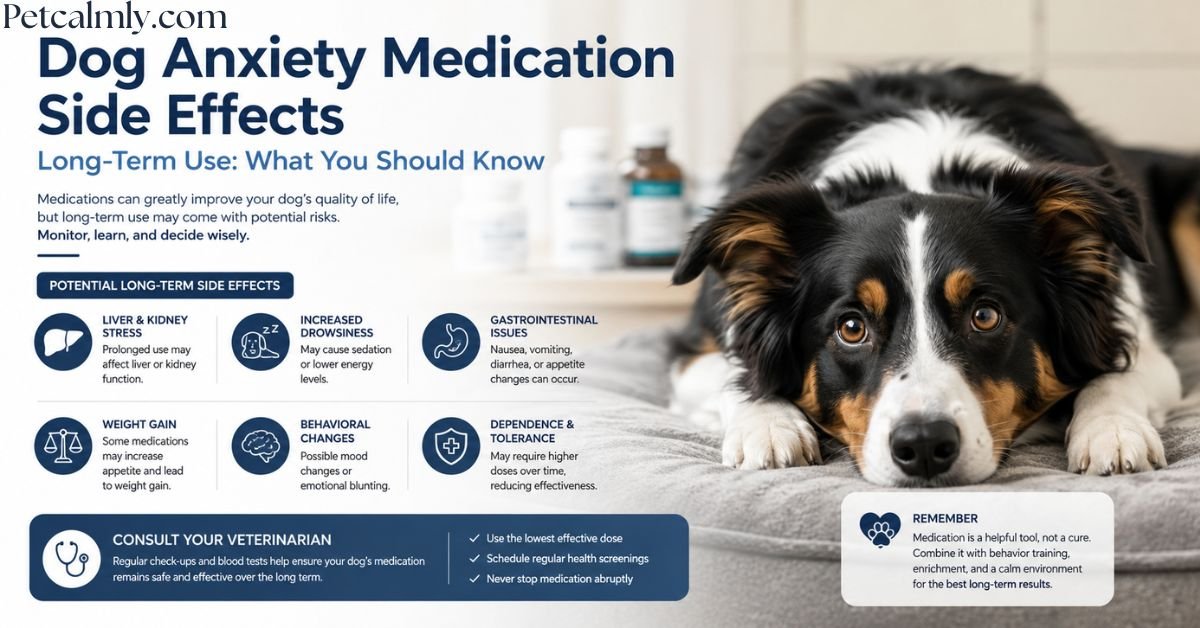
Common Long-Term Side Effects of Dog Anxiety Medication
Most side effects are mild and manageable, especially during the first few weeks. Still, long-term use deserves careful observation.
Sleepiness or Reduced Energy
This is one of the most commonly reported effects.
Some dogs:
- Nap more often
- Seem less playful
- Move more slowly
- Lose enthusiasm temporarily
A mild calming effect may actually be desired in highly anxious dogs. But excessive lethargy should not be ignored.
What to watch for
- Difficulty waking
- Weakness
- Refusing walks
- Loss of interest in favorite activities
Sometimes the dosage simply needs adjustment.
Appetite Changes
Certain medications increase appetite, while others reduce it.
Long-term appetite changes can lead to:
- Weight gain
- Weight loss
- Digestive discomfort
A dog that suddenly becomes food-obsessed after starting medication may gradually become overweight if calorie intake is not adjusted.
On the other hand, some anxious dogs eat better once stress decreases.
Digestive Problems
Dogs may experience:
- Vomiting
- Diarrhea
- Constipation
- Nausea
- Gas
These symptoms often improve after the body adjusts, but persistent digestive issues should be discussed with a veterinarian.
A practical observation many owners notice:
Some dogs seem fine at home but develop loose stool during stressful outings while on medication. Anxiety itself can still affect digestion even when medication helps overall.
Behavioral Changes
Medication should reduce anxiety without removing your dog’s personality.
However, some dogs may experience:
- Irritability
- Restlessness
- Emotional flattening
- Agitation
- Increased vocalization
Rarely, certain medications can worsen anxiety in sensitive dogs.
If your normally affectionate dog suddenly avoids interaction or seems unusually confused, the medication plan may need reevaluation.
Weight Gain
This is especially common with medications that increase appetite or reduce activity.
Long-term weight gain can increase risks for:
- Joint problems
- Diabetes
- Reduced mobility
- Heart strain
Helpful habits include:
- Monitoring treats carefully
- Using puzzle feeders
- Maintaining daily exercise
- Scheduling regular weigh-ins
Liver or Organ Stress
Some anxiety medications are processed through the liver.
Although serious complications are uncommon, long-term use may require:
- Blood tests
- Liver monitoring
- Kidney function checks
Senior dogs or dogs with preexisting medical conditions may need closer supervision.
Coordination or Balance Problems
Some medications can affect coordination, especially:
- Older dogs
- Small breeds
- Dogs on multiple medications
Signs may include:
- Wobbling
- Slipping
- Difficulty jumping
- Unsteady walking
These symptoms deserve prompt veterinary attention.
Side Effects That Need Immediate Veterinary Attention
Some symptoms should never be ignored.
Contact a veterinarian quickly if your dog has:
- Severe vomiting or diarrhea
- Collapse or fainting
- Tremors or seizures
- Extreme agitation
- Difficulty breathing
- Yellowing eyes or gums
- Sudden aggression
- Refusal to eat for more than 24 hours
- Disorientation or confusion
Rare medication reactions can become serious quickly.
Can Dogs Become Dependent on Anxiety Medication?
This depends on the medication type.
Some medications, especially certain sedatives or anti-anxiety drugs, can lead to physical dependence if stopped suddenly after long-term use.
That is why veterinarians usually recommend gradual tapering instead of abruptly stopping medication.
Stopping suddenly may cause:
- Rebound anxiety
- Panic
- Tremors
- Restlessness
- Sleep disruption
Never change dosages without veterinary guidance.
Are Long-Term Anxiety Medications Safe for Dogs?
For many dogs, yes — when properly monitored.
Veterinarians often weigh:
- Severity of anxiety
- Overall health
- Age
- Existing conditions
- Lifestyle impact
- Risk of untreated anxiety
Untreated severe anxiety can also harm health over time.
Chronically stressed dogs may experience:
- Digestive issues
- Sleep disruption
- Elevated stress hormones
- Self-injury
- Reduced immune function
- Chronic fear behaviors
A constantly panicked dog is not necessarily “better off” without medication.
Signs the Medication May Be Working Well
Good anxiety treatment usually creates gradual improvements.
Positive signs include:
- Better sleep
- Improved appetite
- Less pacing
- Reduced destructive behavior
- Faster recovery after stress
- Better focus during training
- Increased confidence
One realistic example:
A dog that once screamed whenever the owner picked up car keys may eventually stay relaxed on a dog bed instead. That type of emotional improvement often matters more than making the dog completely “calm.”
4 Common Mistakes Pet Owners Make
Expecting Instant Results
Some medications need:
- 4–8 weeks
- Consistent dosing
- Behavioral support
Owners sometimes stop too early because they expect dramatic overnight changes.
Using Medication Without Training
Medication alone rarely solves anxiety completely.
Dogs still need:
- Behavior modification
- Predictable routines
- Mental enrichment
- Safe exposure training
Medication often works best as a support tool, not a replacement for learning.
Missing Doses Frequently
Inconsistent dosing can:
- Reduce effectiveness
- Cause mood fluctuations
- Increase side effects
Daily medications work best when given consistently.
Ignoring Mild Side Effects
Small changes matter.
Keep notes about:
- Sleep patterns
- Appetite
- Bathroom habits
- Energy levels
- Behavior changes
A simple journal helps veterinarians make safer adjustments.
Long-Term Medication vs Untreated Anxiety
Quick Comparison Table
| Long-Term Medication | Untreated Severe Anxiety |
|---|---|
| May reduce panic | Chronic stress remains |
| Can improve quality of life | Fear behaviors may worsen |
| Requires monitoring | Anxiety may become deeply reinforced |
| Possible side effects | Risk of self-injury or aggression |
| Helps training progress | Learning often becomes difficult |
| Regular vet care needed | Emotional suffering may continue |
This comparison helps many owners understand that avoiding medication is not always the safer choice.
Ways to Reduce Side Effects Naturally
Medication plans often work better alongside healthy lifestyle support.
Helpful daily habits include:
- Consistent routines
- Daily walks
- Mental enrichment games
- Snuffle mats
- Puzzle feeders
- Calm resting spaces
- Predictable sleep schedules
Training Matters More Than Many Owners Realize
Dogs learn better when anxiety decreases slightly.
Behavioral strategies may include:
- Desensitization
- Counterconditioning
- Reward-based confidence building
- Independence exercises
- Calm exposure training
Punishment-based training can worsen anxiety significantly.
Should You Try Natural Supplements Instead?
Some owners prefer:
- Pheromone products
- Calming chews
- L-theanine
- Melatonin
- CBD products
- Herbal remedies
These may help mild anxiety in some dogs, but they are not always enough for severe panic disorders.
Also, “natural” does not automatically mean safe.
Certain supplements can:
- Interact with medications
- Cause sedation
- Affect the liver
- Create dosing problems
Always tell your veterinarian about supplements your dog takes.
Senior Dogs and Long-Term Anxiety Medication
Older dogs need extra caution.
Senior pets may develop:
- Cognitive decline
- Sensory loss
- Arthritis-related anxiety
- Nighttime confusion
Medication side effects may appear stronger because aging changes how the body processes drugs.
Older dogs often benefit from:
- Lower starting doses
- More frequent bloodwork
- Slower medication adjustments
What Should Pet Owners Monitor at Home?
Weekly Monitoring Checklist
Watch for changes in:
- Appetite
- Water intake
- Sleep habits
- Bathroom habits
- Energy levels
- Weight
- Mood
- Balance
- Breathing
- Social behavior
Keeping a simple phone note can be surprisingly helpful during veterinary visits.
When Should You Be Concerned?
Some changes deserve closer attention even if they seem mild at first.
You should contact your veterinarian if:
- Side effects worsen after several weeks
- Your dog becomes withdrawn
- Anxiety suddenly increases
- Weight changes become noticeable
- Coordination problems appear
- Digestive problems continue
- Aggression develops
- Your dog seems unusually sedated
Also seek help if the medication no longer seems effective. Dogs sometimes need dosage changes or different treatment plans over time.
What Should Pet Owners Do?
If your dog takes long-term anxiety medication, focus on balanced care rather than fear of medication itself.
Practical steps that help most dogs:
1. Follow the prescription carefully
Do not adjust doses independently.
2. Attend regular veterinary checkups
Bloodwork and monitoring matter during long-term use.
3. Combine medication with behavior training
This improves long-term success.
4. Track side effects early
Small patterns are easier to fix before they become major problems.
5. Keep routines predictable
Anxious dogs often thrive on structure.
6. Prioritize sleep and exercise
Physical health affects emotional stability.
7. Be patient
Progress is often gradual rather than dramatic.
Helpful Daily Routine for Anxious Dogs
Morning
- Calm walk
- Breakfast with puzzle feeder
- Short training session
Afternoon
- Quiet rest period
- Mental enrichment toy
- Predictable potty break
Evening
- Gentle exercise
- Relaxation time
- Reduced noise and stimulation
Consistency helps anxious dogs feel safer.
A Realistic Expectation Many Owners Need to Hear
Medication does not usually create a “perfect” dog.
Instead, successful treatment often means:
- Fewer panic episodes
- Faster recovery after stress
- Better sleep
- Improved family life
- More successful training
Small improvements can dramatically improve quality of life for both dogs and owners.
Conclusion
Long-term dog anxiety medication can be life-changing for dogs struggling with chronic fear, panic, or stress-related behaviors. While side effects are possible, many dogs tolerate these medications well when treatment is carefully supervised.
The most important thing is balance. Medication should support your dog’s emotional health while working alongside training, structure, exercise, and compassionate care.
Pay attention to behavioral changes, attend regular veterinary visits, and communicate openly about side effects. In many cases, thoughtful long-term management helps anxious dogs feel safer, more confident, and more comfortable in everyday life.
More Information About Pets, Please Visit Our Website: Dog Behavior Training for Anxiety
Frequently Asked Questions
1: Can dogs stay on anxiety medication for years?
Yes, some dogs safely remain on anxiety medication long term under veterinary supervision. Regular monitoring helps reduce risks and catch side effects early.
2: What is the most common side effect of dog anxiety medication?
Sleepiness or reduced energy is one of the most common side effects, especially during the first few weeks of treatment.
3: Can anxiety medication change my dog’s personality?
Medication should reduce excessive fear, not erase personality. If your dog seems emotionally flat or unusually withdrawn, consult your veterinarian.
4: Is it dangerous to stop dog anxiety medication suddenly?
It can be. Some medications should be tapered gradually to avoid rebound anxiety or withdrawal-related symptoms.
5: Do all dogs gain weight on anxiety medication?
No. Some dogs gain weight due to increased appetite or lower activity, while others experience little or no change.
6: Can training replace anxiety medication completely?
Sometimes mild anxiety improves with training alone. Severe anxiety often responds best to a combination of medication and behavioral therapy.