Short Direct Answer
Puppy separation anxiety improves when your dog learns that being alone is safe, temporary, and predictable. The most effective approach is gradual alone-time training combined with a calming routine, enough physical and mental exercise, and avoiding emotional goodbyes or punishments. Start with very short separations even 30 seconds can matter for sensitive puppies and slowly build confidence over time. Most importantly, stay patient. Puppies with separation anxiety are not being stubborn or “bad.” They’re feeling distressed and unsure how to cope alone.
Why Separation Anxiety in Puppies Feels So Overwhelming
Few things stress new puppy owners more than hearing frantic barking the moment they leave the room. Some puppies cry for a few minutes and settle down. Others panic completely scratching doors, pacing, drooling, or refusing to relax unless someone is nearby.
It can leave owners feeling guilty, exhausted, and honestly a little trapped.
A lot of people worry they’re doing something wrong. In reality, separation anxiety is extremely common in young dogs, especially during major life transitions like:
- Moving into a new home
- Leaving littermates
- Changes in routine
- Sleeping alone for the first time
- Owners returning to work
- Sudden schedule changes
Puppies are naturally social animals. Being alone does not automatically feel safe to them at first.
The good news is that most puppies improve significantly with consistent training, emotional reassurance, and realistic expectations. This article walks through exactly how to calm puppy separation anxiety without making the problem worse.
What Puppy Separation Anxiety Actually Looks Like
Quick Answer
Separation anxiety is intense emotional distress that happens when a puppy becomes overly dependent on a person and struggles to cope alone.
Some puppies show mild signs. Others panic quickly.
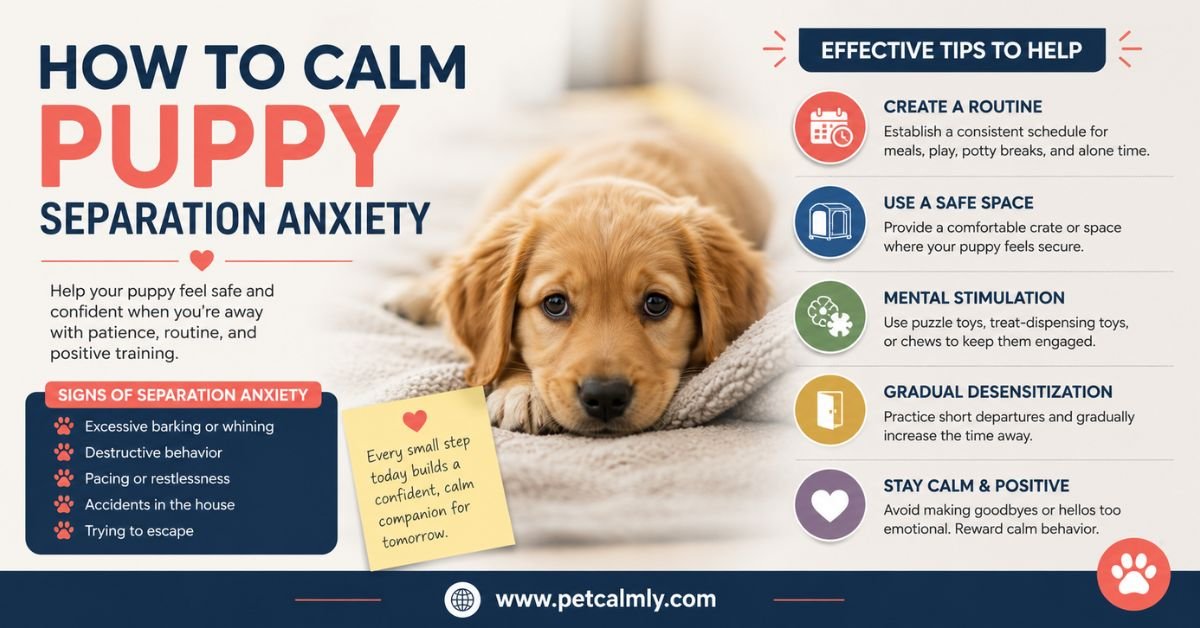
Common signs include:
- Crying or whining when left alone
- Barking continuously
- Scratching doors or crates
- Following owners everywhere
- Panting or drooling indoors
- Refusing food when alone
- Pacing
- Accidents in the house despite potty training
- Chewing furniture near exits
- Escaping crates repeatedly
A puppy that simply dislikes being alone for a few minutes is not always experiencing true separation anxiety. Young puppies naturally need adjustment time.
The difference is intensity.
A mildly upset puppy usually settles. An anxious puppy often escalates.
Why Puppies Develop Separation Anxiety
Understanding the “why” behind the behavior helps owners respond calmly instead of reacting emotionally.
1. Sudden Change From the Litter
This is one of the biggest reasons.
Imagine going from:
- Sleeping beside siblings every night
- Constant interaction
- Familiar smells and sounds
…to suddenly being alone in a quiet house.
That’s a huge adjustment for an 8–12 week old puppy.
Some breeds and personalities adapt quickly. Others struggle more deeply.
2. Accidental Over-Attachment
Many loving owners unintentionally create dependency.
For example:
- Carrying the puppy everywhere
- Never allowing independent play
- Constant touching and attention
- Responding instantly to every cry
- Rarely leaving the puppy alone
This comes from kindness, not neglect. But puppies also need opportunities to build emotional independence gradually.
3. Lack of Mental and Physical Exercise
A bored puppy often becomes a more anxious puppy.
Under-stimulated dogs may:
- Hyper-focus on owners
- Become restless
- Struggle to settle alone
- Release energy through barking or destruction
Working breeds especially need mental outlets.
Breeds that commonly struggle with separation-related behaviors include:
- Labrador Retrievers
- Border Collies
- Australian Shepherds
- German Shepherds
- Vizslas
- Cavalier King Charles Spaniels
That does not mean every puppy from these breeds develops anxiety. It simply means some are more people-oriented and emotionally sensitive.
4. Frightening Experiences
A puppy may associate being alone with fear if:
- They were left alone too long too early
- They experienced a loud noise while isolated
- Crate training was rushed
- They felt trapped during panic
One bad experience can sometimes create a strong emotional memory.
5. Inconsistent Routines
Puppies feel safer when life is predictable.
Constantly changing:
- Sleep times
- Feeding times
- Departure routines
- Exercise schedules
…can increase anxiety in sensitive dogs.
The Difference Between Normal Puppy Crying and Separation Anxiety
This confuses many first-time owners.
Here’s a simple comparison:
| Normal Adjustment | Separation Anxiety |
|---|---|
| Cries briefly then settles | Escalates into panic |
| Stops within minutes | Continues for long periods |
| Can relax with toys | Ignores food and toys |
| Mild whining | Intense distress |
| Sleeps eventually | Constant pacing or barking |
| Improves steadily | Gets worse over time |
A young puppy crying for a few nights after coming home is extremely common.
Persistent panic is different.
The Biggest Mistakes Owners Make
Comforting Panic Too Intensely
Many owners rush back the second a puppy cries.
That’s understandable emotionally, but repeated rescue responses can accidentally teach:
“Crying makes people return immediately.”
Instead, aim for calm reassurance without reinforcing frantic behavior.
Leaving Puppies Alone Too Long Too Soon
A common mistake is expecting a young puppy to suddenly handle:
- 6–8 hours alone
- Long crate sessions
- Immediate independence
That’s unrealistic for most puppies.
Young dogs need gradual exposure to alone time.
Punishing Anxiety Behaviors
Never punish:
- Barking
- Panic accidents
- Crate scratching
- Whining caused by fear
Punishment increases stress and can worsen separation anxiety dramatically.
Your puppy is distressed, not manipulative.
Making Departures Emotional
Some owners accidentally turn departures into dramatic events:
- Long speeches
- Excessive cuddling
- Emotional energy
- Nervous goodbyes
Dogs notice emotional tension.
Keeping arrivals and departures calm helps reduce anticipation anxiety.
How to Calm Puppy Separation Anxiety Step by Step
Step 1: Build Positive Alone-Time Associations
Start small. Very small.
In short:
- Walk away briefly
- Return before panic starts
- Repeat often
Example beginner exercise:
- Give your puppy a safe chew or stuffed toy
- Step away for 10–30 seconds
- Return calmly
- Repeat multiple times daily
The goal is teaching:
“People leave, but they always come back.”
Success comes from repetition, not intensity.
Step 2: Create a Predictable Routine
Puppies relax faster when daily life feels structured.
Helpful routine elements:
- Consistent wake-up times
- Regular potty breaks
- Daily walks or play sessions
- Scheduled naps
- Calm bedtime routines
- Predictable feeding times
Over time, routine lowers uncertainty.
And uncertainty fuels anxiety.
Step 3: Teach Independent Relaxation
This matters more than many owners realize.
Your puppy should learn to rest without constant interaction.
Try this:
- Sit nearby while your puppy relaxes independently
- Reward calm behavior
- Avoid constant engagement
- Encourage solo toy play
Not every moment needs attention.
Step 4: Use Mental Enrichment Before Alone Time
A mentally tired puppy usually settles more easily.
Good enrichment options include:
- Snuffle mats
- Food puzzles
- Frozen stuffed toys
- Safe chew items
- Basic obedience sessions
- Nose work games
Mental exercise is often more calming than endless physical exercise.
Step 5: Practice Very Short Departures
This is one of the most effective exercises.
Start with:
- Walking outside briefly
- Closing doors for seconds
- Picking up keys without leaving
- Putting on shoes randomly
Why?
Many anxious puppies react to “departure cues” long before owners actually leave.
Desensitizing these triggers helps reduce panic anticipation.
Crate Training and Separation Anxiety
Quick Answer
Crates can help anxious puppies feel secure but only when introduced positively and gradually.
A crate should never feel like punishment.
A crate can become:
- A safe sleeping den
- A calming retreat
- A predictable resting place
But forcing a terrified puppy into a crate can worsen fear.
Signs the Crate Is Helping
Your puppy:
- Enters willingly
- Naps calmly inside
- Eats treats in the crate
- Settles after short whining
Signs the Crate May Be Increasing Anxiety
Your puppy:
- Panics immediately
- Bites crate bars
- Tries to escape frantically
- Hyperventilates
- Injures themselves attempting escape
In those cases, slow down the training process.
Some puppies do better initially with:
- Exercise pens
- Puppy-safe rooms
- Open crate access
- Gradual confinement
A Simple Daily Routine That Helps Anxious Puppies
Here’s a beginner-friendly structure many owners find helpful.
| Time | Activity |
|---|---|
| Morning | Potty break + light exercise |
| Breakfast | Puzzle feeder or slow feeder |
| Mid-morning | Short alone-time practice |
| Afternoon | Training session + nap |
| Evening | Walk or play session |
| Night | Calm settling routine |
Predictability reduces stress hormones over time.
How Long Does Puppy Separation Anxiety Last?
This depends on:
- Age
- Personality
- Breed tendencies
- Training consistency
- Severity of anxiety
Mild cases
May improve within a few weeks.
Moderate cases
Often take several months of consistent work.
Severe cases
Can require professional behavioral support.
Progress is rarely perfectly linear.
Many owners notice:
- Good days
- Temporary setbacks
- Improvement in stages
That’s normal.
What to Do Before Leaving the House
A Calm Departure Checklist
Before leaving:
Make sure your puppy has:
- Gone potty
- Burned some energy
- Access to water
- Safe chew activities
- Comfortable temperature
- A quiet resting area
Then:
- Leave calmly
- Avoid dramatic exits
- Keep departures low-key
Some puppies benefit from soft background noise like:
- White noise
- Calm music
- TV sounds
What NOT to Do With an Anxious Puppy
Avoid These Common Mistakes
Do not:
- Punish fear behaviors
- Use shock collars
- Force isolation suddenly
- Crate for excessive hours
- Yell during barking episodes
- Create emotional goodbye rituals
- Expect instant independence
Anxiety improves through confidence-building, not force.
Can Certain Puppy Breeds Be More Prone to Separation Anxiety?
Yes. Some dogs are naturally more attachment-focused.
Breeds often reported as more sensitive include:
- Bichon Frise
- Labrador Retriever
- Italian Greyhound
- Australian Shepherd
- Border Collie
- Toy Poodle
- German Shepherd
- Cocker Spaniel
But environment and training matter just as much as breed.
Even independent breeds can develop separation anxiety under stressful conditions.
Toys and Products That May Help
Helpful Options
Some puppies calm more easily with:
- Frozen food-stuffed toys
- Snuffle mats
- Heartbeat-style comfort toys
- Calming beds
- White noise machines
- Puppy-safe chew toys
The main goal is emotional comfort and mental engagement.
Products Are Not Magic Fixes
This is important.
No toy or supplement alone cures separation anxiety.
Real improvement usually comes from:
- Gradual training
- Predictable routines
- Emotional security
- Patience
Products simply support the process.
Should You Ignore a Crying Puppy?
This advice gets oversimplified online.
The better answer:
It depends on the type of crying.
Mild settling whining
Often improves if owners avoid rushing in immediately.
Panicked distress
Should not be ignored for extended periods.
If your puppy escalates into:
- Heavy panting
- Destructive panic
- Intense screaming
- Self-injury attempts
…they are emotionally overwhelmed, not simply protesting.
The goal is teaching calm independence gradually — not forcing a puppy to “cry it out” through panic.
Nighttime Separation Anxiety in Puppies
Night can be especially hard for young puppies.
Everything feels quieter and less secure.
Helpful nighttime strategies:
- Keep the crate near your bed initially
- Use soft bedding
- Provide a safe comfort item
- Maintain a bedtime routine
- Take final potty breaks seriously
Many puppies improve faster when nighttime independence happens gradually.
When Should You Worry?
Seek Veterinary or Professional Help If:
Your puppy:
- Injures themselves during panic
- Stops eating regularly
- Has severe nonstop distress
- Cannot settle even briefly
- Shows worsening anxiety over time
- Experiences extreme drooling or shaking
- Has sudden behavior changes
A veterinarian can help rule out:
- Medical discomfort
- Digestive issues
- Pain
- Neurological concerns
For moderate to severe cases, a certified dog trainer or veterinary behaviorist may be extremely helpful.
What Should Pet Owners Do?
Focus on These Priorities First
1. Lower the puppy’s stress level
Avoid overwhelming alone-time situations whenever possible.
2. Build confidence slowly
Tiny successes matter more than long stressful sessions.
3. Create emotional predictability
Routine helps anxious puppies feel safer.
4. Encourage independence gently
Reward calm solo behavior.
5. Stay patient
Most puppies do not outgrow separation anxiety automatically without guidance.
Consistency matters more than perfection.
A Realistic Recovery Mindset
One of the hardest parts for owners is expecting fast results.
In reality:
- Some puppies improve quickly
- Others need months of confidence-building
- Regressions happen after schedule changes or stressful events
That does not mean training failed.
A puppy that once panicked for 30 minutes but now settles in 5 minutes is making real progress.
Celebrate small wins.
They add up.
Signs Your Puppy Is Improving
You may notice:
- Faster settling
- Less barking
- Willingness to nap alone
- More independent play
- Reduced shadowing behavior
- Interest in food during departures
- Relaxed body posture
These subtle changes often appear before major breakthroughs.
Helpful Internal Linking Opportunities for Pet Websites
For a site like PetCalmly.com, related content readers may naturally want includes:
- Crate training guides
- Calming exercises for dogs
- Puppy sleep schedules
- Best chew toys for anxious puppies
- Positive reinforcement training
- Dog anxiety symptoms
- Mental enrichment activities
- Safe puppy routines for working owners
These topics support the reader journey naturally.
Frequently Asked Questions
1: How do I stop my puppy from crying when I leave?
Start with very short separations and return before panic begins. Use calming routines, enrichment toys, and gradual independence training instead of sudden long absences.
2: Will my puppy grow out of separation anxiety?
Some mild cases improve naturally with maturity, but many puppies need active training and confidence-building. Ignoring the problem completely can allow anxiety patterns to worsen.
3: Should I crate my puppy with separation anxiety?
A crate can help if introduced positively and gradually. If your puppy panics intensely in the crate, slow down training and consider a puppy-safe room or exercise pen temporarily.
4: How long can a puppy be left alone?
Young puppies usually tolerate only short periods alone. Very young puppies often need potty breaks every few hours and gradual exposure to independent time.
5: Is it okay to let a puppy cry it out?
Brief settling whining may pass naturally, but intense panic should not be ignored for long periods. Fear-based distress requires gradual training and emotional support.
6: What helps calm an anxious puppy naturally?
Consistent routines, exercise, mental stimulation, positive reinforcement training, safe chew toys, and predictable alone-time practice are some of the most effective natural strategies.
More Information About Pets, Please Visit Our Website: Puppy Still Crying at Night After 3 Weeks?
12 Week Old Puppy Crying at Night?
Conclusion
Puppy separation anxiety can feel emotionally exhausting at first, especially when your dog seems unable to relax without you nearby. But in most cases, improvement is absolutely possible.
The biggest shift happens when owners stop viewing the behavior as stubbornness and start seeing it as emotional insecurity.
Your puppy is learning how to feel safe in a completely new world.
With:
- gradual alone-time training,
- calm routines,
- patience,
- emotional consistency,
- and realistic expectations,
…most puppies become far more confident over time.
Progress may come in small steps, but those steps matter. A calmer goodbye, a shorter barking session, or a peaceful nap alone are all signs your puppy is learning that being alone is not something to fear.