Short direct answer
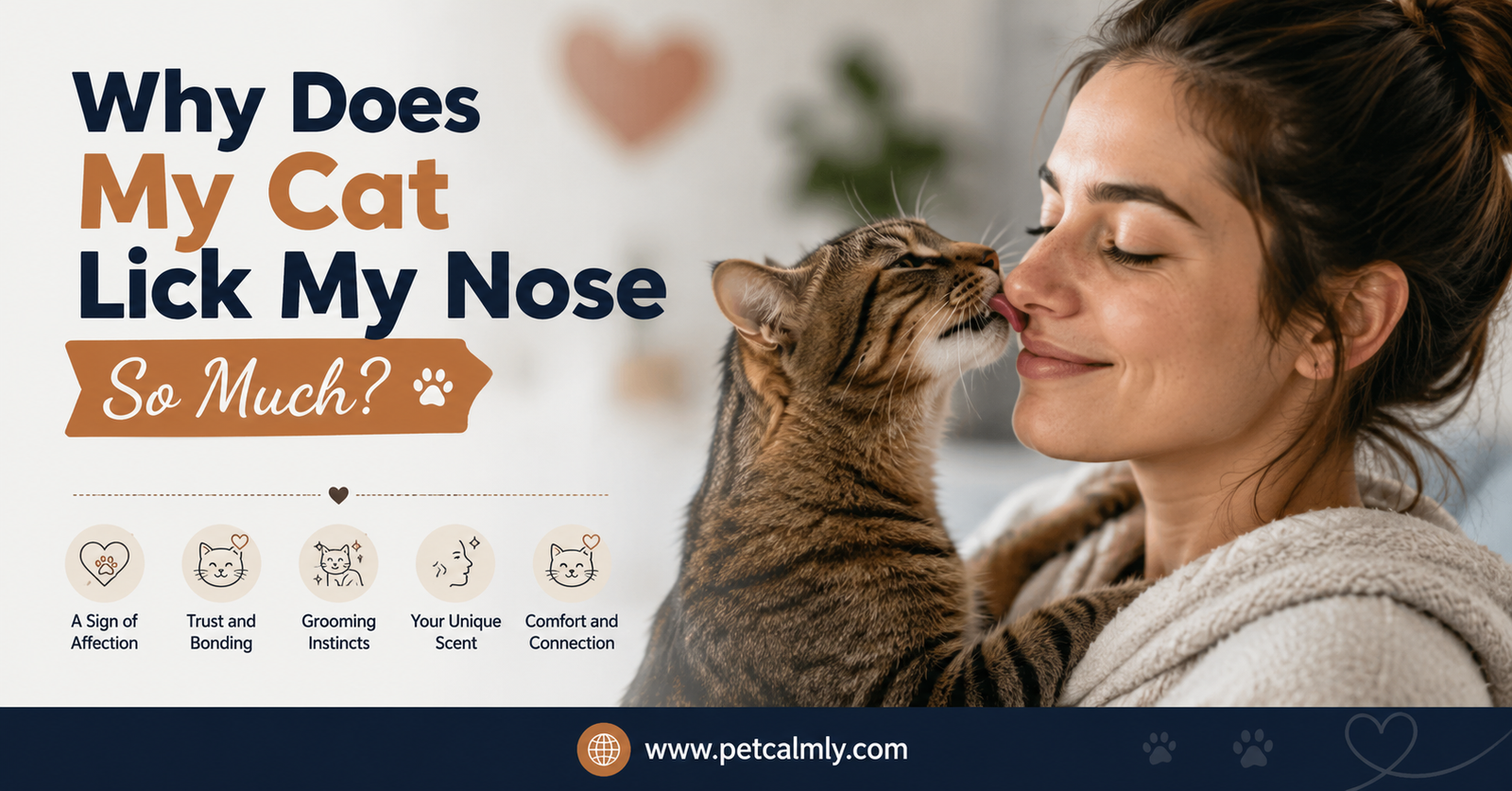
If your cat licks your nose, it’s usually a sign of affection, trust, and social bonding. In many cases, cats are simply treating you like part of their “family group” and are engaging in grooming behavior they normally reserve for other cats. Your skin’s natural saltiness can also attract them, making your nose an interesting target.
However, it’s not always just affection. A cat licking your nose can also reflect curiosity, comfort-seeking, anxiety relief, or learned attention-seeking behavior if they’ve discovered you react strongly to it.
Most importantly, in the majority of cases, this behavior is harmless and actually a positive social signal.
Introduction
Waking up to a tiny tongue brushing your nose can be surprising. Some pet owners find it adorable, others find it a bit strange, especially when it becomes a daily habit.
If you’ve been wondering, “Why does my cat lick my nose?” you’re really asking something deeper:
Is my cat affectionate, trying to communicate, or is something else going on?
Understanding this behavior matters because licking is one of the most important social tools in feline communication. It can reveal how your cat sees you, how secure they feel in your home, and even how they cope with emotions.
In this guide, we’ll break it down in simple, practical terms so you can clearly understand what your cat is trying to say and when, if ever, you should be concerned.
The Main Reasons Cats Lick Your Nose
1: Affection and Social Bonding (Most Common Reason)
In feline social groups, grooming is a powerful bonding activity. When a domestic cat licks you especially your face it’s often called “allogrooming,” which means grooming another individual as a social gesture.
When your cat licks your nose, they may be saying:
- “You belong to my group.”
- “I trust you.”
- “You are safe with me.”
This behavior is most commonly seen in cats that are deeply bonded with their owners.
In multi-cat households, you’ll often see cats grooming each other’s heads, ears, and faces. Your nose simply becomes a convenient “target” because it’s close and exposed.
2: You Taste Interesting (Salt, Skin Oils, and Residue)
Let’s be honest your nose is not just emotionally interesting to your cat, it’s chemically interesting too.
Human skin naturally carries:
- Salt from sweat
- Natural oils (sebum)
- Tiny traces of food or skincare products
- Environmental scents (dust, outdoor smells)
For a curious cat, your face is like a sensory map.
Some cats are particularly drawn to salty skin. This is similar to why they may lick your hands after you’ve eaten or exercised.
So yes, sometimes it’s not emotional it’s just flavor curiosity.
3: Kitten Behavior That Carries Into Adulthood
If your cat is still young or was separated early from its mother, licking behavior may be a leftover instinct from kittenhood.
Kittens are licked by their mother for:
- Cleaning
- Comfort
- Bonding
- Stimulation
When that behavior carries into adulthood, cats may redirect it toward their human caregiver.
Your nose, being central on your face, becomes a natural “grooming zone.”
4: Attention-Seeking Behavior (Cats Learn Fast)
Cats are observant. If licking your nose results in:
- You waking up
- You laughing or talking
- You petting them
- You feeding them
They quickly learn: this works.
Over time, nose licking can become a reliable way for your cat to get your attention.
This is especially common in cats that are:
- Very social
- Slightly bored
- Used to routine interactions at specific times (like mornings)
5: Stress Relief and Self-Soothing Behavior
Not all licking is social. Sometimes it’s emotional regulation.
Cats may lick their owner’s face when:
- They feel anxious
- There are changes in the home
- They are overstimulated
- They are seeking comfort
The rhythmic act of licking can help a cat calm down, similar to how some people fidget or seek physical reassurance.
If your cat seems clingy or more intense than usual while licking your nose, it may be worth looking at changes in their environment.
6: Scent Recognition and “Claiming You”
Cats rely heavily on scent to understand their world. When your cat licks your nose, they are mixing their scent with yours.
This creates a shared scent profile, which in cat logic means:
“This human is part of my safe territory.”
It’s subtle, but it’s one of the strongest forms of bonding behavior in the feline world.
Understanding the Behavior of a Cat in Context
Not all nose licking means the same thing. The meaning depends on context, timing, and your cat’s personality.
Here’s a simple breakdown:
When it usually means affection:
- Slow, gentle licking
- Relaxed body posture
- Soft blinking or purring
- Occurs during cuddling or rest time
When it may mean attention-seeking:
- Repeated licking until you respond
- Happens at specific times (like early morning)
- Stops when you engage
When it may indicate anxiety:
- Restless behavior
- Pacing or clinginess
- Excessive grooming of you or themselves
- Occurs during stressful events (visitors, noise, changes)
Common Misunderstandings About Nose Licking
Myth 1: “My cat is trying to dominate me”
This is not accurate. Cats do not use grooming as a dominance behavior toward humans. It’s primarily social or comfort-based.
Myth 2: “It means my cat is hungry”
Sometimes it overlaps with feeding time routines, but licking itself is not a hunger signal. If your cat is hungry, you’ll usually see other behaviors like vocalization or following you to the food area.
Myth 3: “It’s unhygienic and always bad”
While it’s true that cat saliva isn’t sterile, occasional licking from a healthy cat is not harmful for most people. The main concern is for individuals with weakened immune systems or open skin issues.
When Should You Be Concerned?
While nose licking is usually harmless, there are situations where it can signal something else.
Watch for these warning signs:
- Sudden increase in licking behavior
- Aggressive or forceful licking
- Skin irritation or wounds developing on your face
- Excessive licking combined with anxiety signs
- Changes in appetite or litter box behavior
- Constant restlessness or clinginess
If your cat’s behavior changes suddenly, it’s worth considering stress, illness, or environmental disruption.
What Your Cat Is Trying to Communicate
To make things simple, here’s what your cat might be “saying” when they lick your nose:
- “You’re part of my family”
- “I feel safe with you”
- “I want your attention”
- “I’m feeling a bit stressed”
- “You smell interesting”
- “This is my bonding ritual”
Cats don’t communicate with words they communicate through consistent, repeated behaviors. Nose licking is one of those quiet signals.
What Should You Do If Your Cat Licks Your Nose?
You don’t always need to stop it. But you should guide it based on context.
If it feels affectionate:
- Allow a few seconds
- Gently redirect to petting
- Offer calm interaction like chin rubs
If it’s too frequent:
- Redirect with toys or scratching post
- Avoid reacting strongly (cats repeat what gets attention)
If it happens at night:
- Provide playtime before bed
- Set a consistent feeding routine
- Ignore nighttime licking to reduce reinforcement
If it feels stress-related:
- Check for environmental changes
- Maintain predictable routines
- Increase play and mental stimulation
Practical Checklist for Pet Owners
Do:
- Observe body language while licking
- Reinforce calm behavior
- Keep your cat mentally stimulated
- Maintain routine feeding and play schedules
Don’t:
- Punish licking behavior
- Overreact (laughing or sudden movement can reinforce it)
- Ignore sudden behavioral changes
- Assume it always means the same thing
Real-Life Owner Scenarios (What It Often Looks Like)
Many cat owners notice nose licking in very specific moments:
- Early morning wake-ups with gentle face grooming
- Cats curling beside their owner and licking during purring sessions
- Young cats repeatedly licking during play or excitement
- Rescue cats gradually increasing facial licking as trust builds
These patterns often point to one thing: emotional bonding is growing stronger over time.
Related Internal Topics You May Want to Explore
If you’re trying to understand your cat more deeply, you might also want to read about:
- Why cats knead blankets and humans
- Why cats follow you everywhere
- Signs your cat trusts you completely
- How to reduce clingy cat behavior
- Understanding feline anxiety and stress signals
These behaviors often connect to the same emotional systems that drive nose licking.
When Does It Become “Too Much”?
A little licking is normal. But it may become excessive if:
- Your cat ignores play or food and focuses only on licking
- Licking becomes repetitive and obsessive
- Your cat seems unable to settle afterward
- It interferes with sleep or daily interaction
In such cases, the behavior may be linked to stress, boredom, or habit reinforcement.
Conclusion
When a cat licks your nose, it might feel like a tiny, random habit but in feline communication, it often carries emotional weight.
For most owners, it’s a sign of trust and connection. Your cat is not just reacting to taste or curiosity they’re engaging in a behavior rooted in bonding, familiarity, and comfort.
The key is not to overthink it, but to observe it in context. Your cat’s body language will always tell the fuller story.
More Information About Pets, Please Visit Our Website: Best Professional Cat Grooming Brush
Best Cat Litter for Odor Control in 2026
Why Does My Cat Lick My Nose Then Bite It?
Frequently Asked Questions
1. Why does my cat lick my nose every morning?
Most cats develop routines. Morning licking is often linked to attention-seeking or bonding after waking up. It can also be connected to feeding time habits.
2. Is it safe if my cat licks my nose?
For most healthy people, occasional licking is not harmful. However, avoid allowing it if you have open skin wounds or a weakened immune system.
3. Does nose licking mean my cat loves me?
Yes, in many cases it’s a sign of affection and trust. It’s similar to grooming behavior cats show within their social group.
4. Why does my cat lick my face but not others?
Cats choose individuals they feel safest with. If your cat targets you, it usually means stronger bonding or familiarity.
5. Should I stop my cat from licking my nose?
You don’t need to fully stop it unless it becomes excessive. Gentle redirection to petting or toys is usually enough.
6. Why does my cat lick and then bite my nose?
This can be overstimulation. Cats sometimes switch from gentle grooming to playful or reactive biting when excited or overstimulated.