Short Direct Answer
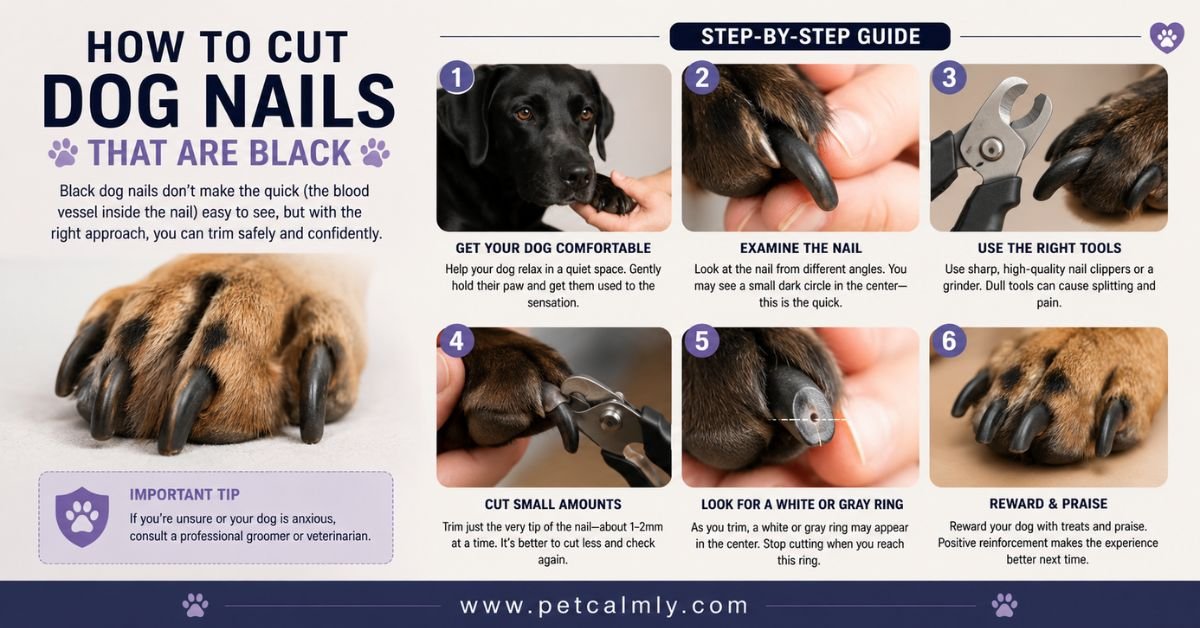
Cutting black dog nails is tricky because the quick the sensitive blood vessel inside the nail is hard to see. The safest method is to trim tiny amounts at a time and watch the center of the nail closely. When you begin seeing a lighter, chalky ring with a small dark dot in the middle, stop trimming. Using good lighting, sharp nail clippers or a grinder, and staying calm helps prevent bleeding and stress for both you and your dog.
How to Cut Dog Nails That Are Black Without Fear
Black nails make many dog owners nervous. You’re not alone if you’ve stared at your dog’s paw thinking, “I genuinely can’t tell where to cut.”
The fear is understandable. Cutting into the quick hurts, causes bleeding, and can make future nail trims much harder. Some dogs remember one bad experience for a long time.
The good news is that black nails are manageable once you know what to look for and how to go slowly. You do not need perfect visibility. You need patience, the right technique, and an understanding of how dog nails work.
This guide walks you through everything step by step from finding safe cutting points to handling squirmy dogs, nervous puppies, overgrown nails, and accidental bleeding.
By the end, most owners feel much more confident about trimming black dog nails at home safely.
Why Black Dog Nails Are Harder to Trim
With white or clear nails, you can usually see the pink quick inside the nail. Black nails hide it completely.
That’s what makes them intimidating.
The quick contains:
- Blood vessels
- Nerves
- Sensitive tissue
If you cut too far, your dog may:
- Yelp
- Pull away suddenly
- Bleed from the nail
- Become fearful of future grooming
The challenge isn’t that black nails are dangerous. It’s simply that the visual guide is hidden.
Most professional groomers avoid accidents by trimming gradually instead of trying to guess the exact safe length in one cut.
That’s the key difference.
Understanding the Structure of a Dog’s Nail
Before clipping, it helps to understand what you’re looking at.
The Outer Nail Shell
This is the hard black part you trim gradually.
The Quick
The quick sits inside the nail. It grows longer when nails stay overgrown for weeks or months.
That’s why dogs with long nails often need several gradual trims over time rather than one dramatic cut.
The Hooked Tip
Many black nails curve downward into a hook shape. Usually, the very tip is the safest place to begin trimming.
Signs Your Dog’s Nails Are Too Long
Some owners wait until nails look extreme, but dogs often become uncomfortable much earlier.
Common signs include:
- Clicking sounds on hard floors
- Nails touching the ground while standing
- Curved or hooked nails
- Paw licking after walks
- Reluctance to walk on slippery surfaces
- Toe spreading or awkward posture
- Snagging nails on carpets or blankets
Long nails can eventually affect paw alignment and walking posture.
What You Need Before Trimming Black Dog Nails
Having the right setup matters more than people realize.
Helpful Tools
Nail Clippers
Choose either:
- Scissor-style clippers
- Guillotine-style clippers
Scissor-style clippers are usually easier for beginners and larger dogs.
Dog Nail Grinder
Many owners prefer grinders for black nails because they remove tiny amounts slowly.
A grinder lowers the risk of cutting too deeply all at once.
Styptic Powder
This stops bleeding if you accidentally hit the quick.
Cornstarch or flour can help temporarily if you do not have styptic powder nearby.
Bright Lighting
Good lighting makes a major difference.
A flashlight or phone light aimed behind the nail can sometimes help reveal subtle nail structure.
Treats
Soft, high-value treats help create positive associations.
Tiny chicken pieces or training treats work well.
Step-by-Step: How to Cut Dog Nails That Are Black
Step 1: Start When Your Dog Is Calm
The best time is often:
- After exercise
- After a walk
- During quiet evening hours
- When your dog is sleepy
Avoid trimming during high-energy moments.
If your dog already fears nail trims, even touching the paws calmly for a few days beforehand can help.
Step 2: Hold the Paw Gently
Do not squeeze tightly.
Hold the toe firmly enough to stabilize it without creating panic.
For nervous dogs:
- Work on one paw at a time
- Take breaks often
- Reward constantly
Some dogs tolerate trims better while lying on their side.
Step 3: Trim Tiny Pieces
This is the safest method for black nails.
Instead of taking one large cut:
- Clip very small slivers
- Work slowly
- Recheck the nail after each cut
Think “gradual shaping,” not “big removal.”
Step 4: Watch the Center of the Nail
This part is extremely important.
As you trim closer to the quick, the center of the cut nail changes appearance.
What You’ll Notice
Early Cuts
- Dry
- Chalky
- White or gray interior
Closer to the Quick
You may see:
- A small dark circle in the middle
- A shiny black dot
- A moist-looking center
That means you’re approaching the quick.
Stop there.
Many groomers call this the “little black dot warning.”
Step 5: Smooth Rough Edges
After trimming:
- Use a grinder or nail file
- Smooth sharp edges gently
This helps prevent scratching and snagging.
Using a Nail Grinder on Black Nails
Many anxious owners feel safer with grinders.
Why Grinders Help
They:
- Remove tiny layers slowly
- Reduce sudden cutting mistakes
- Create smoother edges
- Work well for thick nails
They are especially useful for:
- Large breeds
- Thick black nails
- Dogs sensitive to clippers
Grinder Safety Tips
Avoid holding the grinder on one spot too long.
Friction creates heat and may feel uncomfortable.
Instead:
- Use short touches
- Grind briefly
- Pause frequently
Watch for stress signals like:
- Lip licking
- Paw pulling
- Panting
- Whining
How Far Should You Cut Black Dog Nails?
In short: trim until you approach the quick, not until the nail looks extremely short.
A healthy trimmed nail usually:
- Does not click loudly on floors
- Sits just above the ground while standing
- Maintains a natural curve
Trying to achieve ultra-short nails in one session often causes accidents.
4 Common Mistakes People Make With Black Dog Nails
1: Cutting Too Much at Once
This is the biggest mistake.
Owners often try removing the entire hooked portion immediately.
Small trims are much safer.
2: Trimming During Stressful Moments
Dogs notice human tension quickly.
If you’re rushed, frustrated, or anxious, your dog may resist more strongly.
3: Ignoring Paw Handling Between Trims
Dogs that only get paw handling during nail trims may become defensive.
Touch paws casually throughout the week:
- During cuddles
- While giving treats
- During calm moments
This helps normalize handling.
4: Forgetting the Dewclaws
Dewclaws do not touch the ground naturally, so they can overgrow faster.
Check them carefully.
Overgrown dewclaws sometimes curl painfully into the skin.
What Happens If You Cut the Quick?
Almost every dog owner does this eventually.
It feels awful in the moment, but it is usually manageable.
Signs You Hit the Quick
- Sudden bleeding
- Your dog yelps or jerks
- Redness at the nail tip
What To Do
Stay calm.
Then:
- Apply styptic powder
- Hold gentle pressure
- Keep your dog calm for several minutes
Most bleeding stops fairly quickly.
Your reaction matters a lot. If you panic, your dog may become more fearful next time.
How to Stop Bleeding From a Dog Nail
Best Option: Styptic Powder
Press a small amount directly onto the nail tip.
Hold gently for several seconds.
Emergency Home Alternatives
If you do not have styptic powder:
- Cornstarch
- Baking flour
- Plain bar soap
These may temporarily help clotting.
If bleeding continues longer than expected or the nail looks damaged, contact your veterinarian.
How Often Should You Trim Black Dog Nails?
Most dogs need trims every:
- 3 to 6 weeks
But activity level matters.
Dogs walking frequently on pavement may naturally wear nails down more.
Indoor dogs often need more frequent trims.
Overgrown Black Nails Need a Different Approach
If nails are severely overgrown, the quick is likely long too.
Trying to shorten them drastically in one session risks pain and bleeding.
The Better Method
Trim small amounts every 1–2 weeks.
Over time, the quick gradually recedes.
This allows safer shorter trims later.
Patience really matters here.
Nervous Dogs and Fearful Reactions
Some dogs panic before clippers even touch the nail.
Usually this comes from:
- Past painful experiences
- Noise sensitivity
- Paw sensitivity
- Restraint fear
What Helps Most
Desensitization
Break the process into tiny steps.
For example:
- Touch paw
- Reward
- Show clippers
- Reward
- Touch nail with clippers
- Reward
You may spend several days before making a single trim.
That’s completely okay.
Puppies and Black Nail Trimming
Puppies benefit from early positive experiences.
Even if nails barely need trimming:
- Handle paws gently
- Introduce clippers calmly
- Reward relaxed behavior
This builds lifelong tolerance.
Many adult dogs who hate nail trims never learned early paw handling.
Best Position for Cutting Black Dog Nails
Different dogs prefer different setups.
Common Positions
Standing Position
Good for:
- Calm dogs
- Medium or large breeds
Side-Lying Position
Helpful for:
- Relaxed dogs
- Nervous small breeds
Lap Position
Works well for:
- Tiny dogs
- Puppies
Avoid forceful restraint whenever possible.
A struggling dog increases the chance of mistakes.
Should You Use Clippers or a Grinder?
Here’s a quick comparison.
| Tool | Pros | Cons |
|---|---|---|
| Nail Clippers | Fast, simple, quiet | Easier to cut too far |
| Nail Grinder | More gradual, smoother finish | Noise may scare some dogs |
| Manual Nail File | Very gentle | Slow for thick nails |
Many owners actually combine both:
- Clippers for length
- Grinder for smoothing
Signs Your Dog Is Too Stressed During Nail Trims
Stop and take a break if your dog shows:
- Heavy panting
- Trembling
- Growling
- Trying to bite
- Extreme struggling
- Wide fearful eyes
- Hiding behavior afterward
Pushing through panic often worsens future grooming sessions.
Breed Differences That Can Affect Nail Trimming
Some breeds naturally have:
- Thicker nails
- Faster nail growth
- More paw sensitivity
Large breeds like:
- Labrador Retrievers
- German Shepherds
- Rottweilers
often have thick black nails requiring sturdy clippers.
Small breeds sometimes react more dramatically simply because restraint feels scary.
Senior Dogs and Black Nail Care
Older dogs may:
- Have arthritis
- Struggle standing still
- Develop thicker nails
Shorter, gentler sessions help senior dogs significantly.
Soft surfaces and supportive positioning can reduce discomfort.
What to Avoid When Trimming Black Dog Nails
Do Not Rush
Fast trimming causes mistakes.
Do Not Yank the Paw
This can injure toes or create fear.
Avoid Dull Clippers
Dull blades crush nails instead of cutting cleanly.
Don’t Punish Fear
If your dog resists, punishment makes grooming anxiety worse.
Helpful Routine for Easier Nail Trims
A simple routine can change everything.
Before the Trim
- Exercise your dog
- Gather supplies
- Use calm energy
During the Trim
- Trim 1–2 nails at a time if needed
- Reward constantly
- Pause often
After the Trim
- Offer praise
- Give a chew or treat
- End positively
Dogs remember endings surprisingly well.
Can Walking on Pavement Trim Nails Naturally?
Sometimes partially, yes.
Frequent walking on rough surfaces may reduce nail growth naturally.
But:
- Dewclaws still require trimming
- Rear nails may stay long
- Indoor dogs rarely wear nails enough
Regular nail checks are still important.
When Should You Let a Groomer or Vet Handle It?
Some situations are safer with professional help.
Consider Professional Assistance If:
- Your dog becomes aggressive
- Nails are severely overgrown
- Your dog has previous trauma
- You physically cannot restrain safely
- Nails are cracked or damaged
- Your dog has medical conditions affecting mobility
Professional groomers handle black nails daily and often work very efficiently.
Veterinary clinics can also help especially fearful dogs safely.
When Should You Worry?
Seek veterinary guidance if you notice:
- Persistent bleeding
- Split or torn nails
- Swelling around the nail
- Limping after trimming
- Signs of infection
- Extreme pain reactions
- Nails curling into paw pads
These situations may require medical care rather than home trimming.
What Should Pet Owners Do?
If you’re still nervous about black nails, start small.
Here’s the safest beginner plan:
- Trim only the sharp tip first
- Reward immediately
- Stop before stress escalates
- Practice regularly instead of rarely
- Focus on confidence, not perfection
Most importantly, remember this:
Dogs do not need perfectly short nails overnight.
Consistent small trims are far safer than one stressful marathon session.
Beginner-Friendly Nail Trim Checklist
Before You Start
- Sharp clippers or grinder
- Styptic powder nearby
- Bright lighting
- Treats ready
- Calm environment
During Trimming
- Cut tiny amounts
- Watch the nail center closely
- Stop at the dark center dot
- Reward calm behavior
Afterward
- Smooth edges if needed
- Check for cracks
- Praise your dog generously
Realistic Expectations: It Gets Easier With Practice
Most owners feel clumsy during the first few sessions.
That’s normal.
Dogs also improve with repetition when experiences stay calm and predictable.
A dog that once panicked may eventually tolerate trims quietly — especially when owners slow down and stop treating nail care like an emergency task.
Progress often looks gradual rather than dramatic.
Related Care Topics Worth Learning About
Many dogs that struggle with nail trims also benefit from:
- Cooperative care training
- Positive reinforcement handling exercises
- Anxiety reduction routines
- Paw desensitization work
Pet owners reading about black nail trimming often also explore articles about:
- Dog anxiety during grooming
- Calming exercises for dogs
- Positive reinforcement training
- Safe puppy handling routines
These topics naturally work together.
Conclusion
Learning how to cut dog nails that are black safely takes patience more than perfection.
The biggest mistake most owners make is trying to remove too much too quickly. Small trims, careful observation, and calm handling make the process far safer and less stressful.
Watch the center of the nail closely, stop before reaching the quick, and remember that gradual progress is completely normal.
Even experienced dog owners occasionally nick the quick. What matters most is creating a calm, manageable routine your dog can trust over time.
With practice, black nails stop feeling mysterious and nail trims become much less intimidating for both of you.
More Information About Pets, Please Visit Our Website: Smart Pet Care Tips for Apartment Living in 2026
How to Treat Dog Skin Infection at Home Naturally
Frequently Asked Questions
1: How do you know where to cut black dog nails?
Trim tiny amounts at a time and watch the center of the nail. When you see a chalky ring with a small dark dot in the middle, you’re close to the quick and should stop.
2: Is it better to grind or clip black dog nails?
Many owners prefer grinders because they remove small layers gradually. Clippers are faster, but grinders often feel safer for beginners trimming black nails.
3: What happens if I cut my dog’s black nail too short?
Your dog may bleed and react painfully because you hit the quick. Apply styptic powder or cornstarch and stay calm. Most cases stop bleeding quickly.
4: How often should black dog nails be trimmed?
Most dogs need nail trims every 3–6 weeks. Dogs with fast-growing nails, limited outdoor activity, or overgrown nails may need more frequent care.
5: Can overgrown black nails become painful?
Yes. Long nails can change paw posture, snag on surfaces, crack, or curl inward. Severely overgrown nails may also make walking uncomfortable.
6: Why is my dog terrified of nail trimming?
Fear often comes from previous painful experiences, restraint anxiety, or paw sensitivity. Slow desensitization, treats, and shorter sessions usually help rebuild trust over time.