Short direct answer
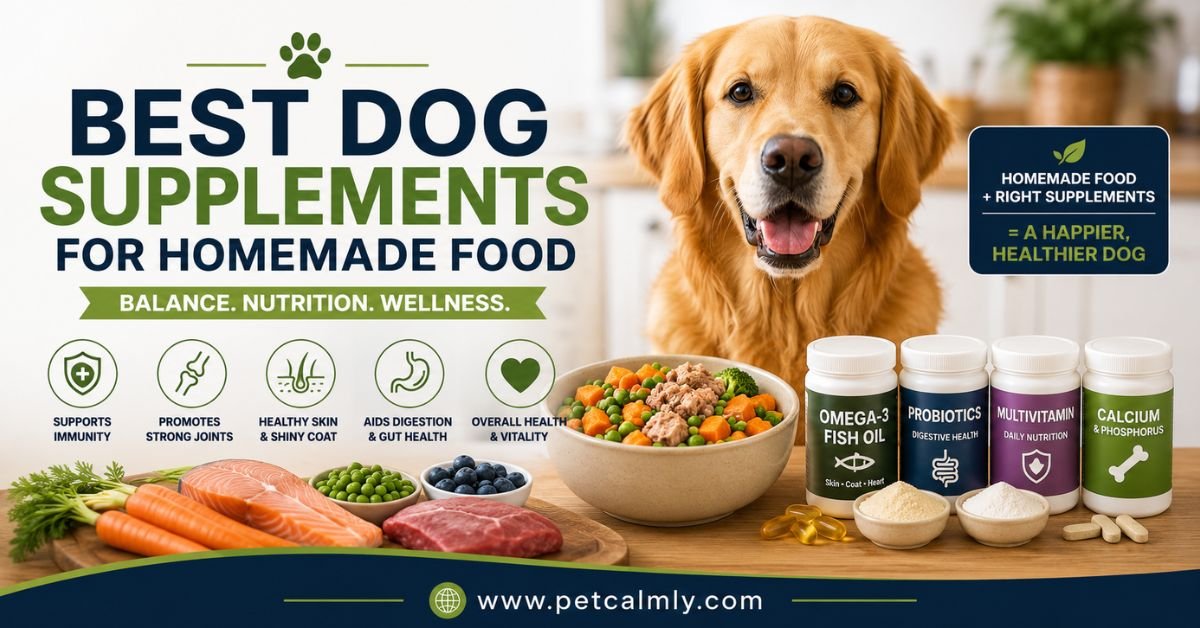
The best dog supplements for homemade food are those that fill common nutritional gaps in home-cooked diets, especially calcium, omega-3 fatty acids, vitamin D, vitamin E, zinc, and a balanced multivitamin designed for dogs. Homemade meals can be very healthy, but they are often incomplete unless carefully formulated. The right supplement depends on your dog’s age, breed, health status, and recipe composition. Most importantly, supplements should not replace balanced meals but support them to ensure long-term joint health, immunity, and overall wellbeing.
Introduction
Cooking for your dog feels rewarding. You know exactly what goes into their bowl, you avoid processed fillers, and it often feels healthier and more “natural.” Many dog owners start homemade feeding for dogs with allergies, sensitive stomachs, or simply to improve quality of life.
But there’s a hidden challenge most people don’t expect.
Even well-planned homemade dog food can slowly become nutritionally incomplete if it’s not properly balanced.
And dogs don’t show nutritional deficiencies overnight. The signs are subtle at first low energy, dull coat, occasional digestive issues then gradually more noticeable over time.
That’s where supplements come in.
Not as a shortcut. Not as a “fix-all.” But as a safety layer that helps ensure your dog is getting everything their body needs to thrive.
In this guide, you’ll learn exactly:
- Which supplements matter most
- What homemade diets usually miss
- How to choose safe, effective products
- Common mistakes dog owners make
- And how to build a balanced routine without overcomplicating things
If you’ve ever wondered whether your homemade meals are truly complete, you’re in the right place.
Why Homemade Dog Food Often Needs Supplements
Homemade diets are not automatically incomplete but they are often unbalanced unless carefully designed. This is the key issue.
Dogs require over 30 essential nutrients daily, including specific amino acid ratios, minerals, and fatty acids. Many homemade recipes unintentionally miss a few critical ones.
The most common nutrient gaps include:
- Calcium deficiency (very common)
- Imbalanced phosphorus-to-calcium ratio
- Low omega-3 fatty acids
- Insufficient vitamin D
- Low iodine or zinc levels
- Lack of trace minerals
Even high-quality ingredients like chicken, rice, beef, or vegetables don’t automatically provide complete nutrition in the right proportions.
For example:
- Meat is rich in phosphorus but low in calcium
- Vegetables provide fiber but limited bioavailable minerals
- Cooking reduces certain vitamins like B vitamins and vitamin C
This is why many veterinarians and canine nutritionists recommend either:
- A professionally formulated homemade recipe, or
- A carefully selected supplement system
6 Most Important Supplements for Homemade Dog Food
Let’s break down what actually matters without overwhelming you.
1. Calcium Supplement (Absolutely Essential)
If there is one supplement almost every homemade diet needs, it is calcium.
Dogs need calcium for:
- Bone strength
- Muscle contraction
- Nerve function
- Heart health
Why it’s often missing:
Most homemade meals contain meat, which is high in phosphorus but low in calcium. This imbalance can stress bones over time.
Common sources:
- Calcium carbonate
- Ground eggshell powder
- Bone meal (only from trusted sources)
Quick note: Calcium must be balanced with phosphorus. Too much supplementation can be just as harmful as too little.
2. Omega-3 Fatty Acids (Fish Oil or Algae Oil)
Omega-3s support:
- Skin and coat health
- Joint mobility
- Brain development
- Anti-inflammatory balance
Dogs often don’t get enough omega-3s from homemade diets unless fish is regularly included.
Signs your dog may need more omega-3:
- Dry, flaky skin
- Excessive shedding
- Dull coat
- Stiff movement in older dogs
Fish oil is the most common source, but algae-based supplements are great for sensitive dogs.
3. Multivitamin for Dogs (Balanced Formulas Only)
A good canine multivitamin helps fill small but important nutritional gaps.
Look for formulas that include:
- Vitamin A, B-complex, D, E
- Zinc and selenium
- Iodine in safe levels
- Biotin for skin and coat
Important: Avoid human multivitamins. They are not safe for dogs in dosage or formulation.
4. Vitamin D (Often Overlooked)
Unlike humans, dogs cannot efficiently produce vitamin D from sunlight.
It supports:
- Calcium absorption
- Immune health
- Bone development
Low vitamin D over time can contribute to weakness or skeletal issues.
5. Probiotics (Digestive Balance Support)
Homemade diets sometimes change gut bacteria balance, especially when ingredients vary.
Probiotics help:
- Improve digestion
- Reduce gas and bloating
- Strengthen immunity
- Stabilize stool quality
Dogs on sensitive stomach diets often benefit the most.
6. Zinc & Trace Minerals
Zinc supports:
- Skin healing
- Immune function
- Metabolism
Deficiency signs may include:
- Hair loss around eyes or paws
- Slow wound healing
- Crusty skin patches
Trace minerals like copper and manganese also play a subtle but important role in long-term health.
How to Choose the Best Supplements for Homemade Dog Food
Not all supplements are created equal. Some are incomplete, others are overdosed, and some simply don’t absorb well.
Look for these qualities:
- Clear ingredient transparency
- Veterinary-formulated balance
- No artificial fillers or sweeteners
- Species-specific dosing (not human-grade shortcuts)
- Good bioavailability (how well nutrients are absorbed)
Avoid:
- “Mega-dose” marketing claims
- Unknown or unregulated brands
- Supplements without dosage guidance
- Overlapping products (which can cause nutrient excess)
4 Common Mistakes Dog Owners Make with Supplements
Even well-intentioned pet parents can make mistakes when adding supplements.
1. Over-supplementing “just in case”
More is not better. Excess calcium or vitamins can harm organ function over time.
2. Mixing too many products
This can lead to nutrient overlap, especially with multivitamins + standalone vitamins.
3. Not adjusting for diet composition
A chicken-based diet differs from a beef- or fish-based one.
4. Ignoring professional guidance
Even a single veterinary nutrition consult can prevent long-term imbalance.
Real-Life Example: What Often Happens
A common situation:
A dog owner switches to homemade chicken, rice, and vegetables. The dog looks healthy for months.
Then gradually:
- Coat becomes dull
- Energy drops slightly
- Occasional limping appears
- Stool becomes inconsistent
The issue usually isn’t the food itself—it’s missing micronutrients like calcium, omega-3, and zinc.
This is exactly where supplementation prevents long-term problems.
Homemade Dog Food Supplement Safety Tips
Supplements are helpful—but only when used correctly.
Safe routine guidelines:
- Introduce one supplement at a time
- Start with lower doses
- Monitor stool, skin, and energy changes
- Store supplements properly (cool, dry place)
- Follow vet guidance for growing puppies or senior dogs
Comparison Table: Key Supplements and Their Role
| Supplement | Main Function | Common Deficiency Signs |
|---|---|---|
| Calcium | Bone and muscle health | Weak bones, joint issues |
| Omega-3 | Skin, coat, inflammation control | Dry skin, shedding |
| Multivitamin | Nutritional balance | Low energy, dull coat |
| Vitamin D | Calcium absorption | Weakness, bone issues |
| Probiotics | Digestion support | Gas, loose stool |
| Zinc | Skin & immune health | Hair loss, slow healing |
When Should You Worry About Nutritional Imbalance?
Some signs suggest your dog’s homemade diet may not be fully balanced:
- Persistent low energy
- Sudden coat dullness
- Digestive irregularities lasting more than 1–2 weeks
- Limping or stiffness without injury
- Slow growth in puppies
- Frequent skin issues
If you notice multiple symptoms, it’s worth reviewing the diet with a veterinarian rather than only adjusting supplements.
What Should Dog Owners Do? (Simple Action Plan)
If you’re feeding homemade food, here’s a practical, safe approach:
Step 1: Start with a base recipe
Ensure protein + carbohydrates + vegetables are balanced.
Step 2: Add core supplements
- Calcium source
- Omega-3
- Multivitamin (dog-specific)
Step 3: Observe your dog
Track:
- Energy levels
- Coat condition
- Stool quality
Step 4: Adjust gradually
Every dog responds differently.
Step 5: Get professional review if possible
A veterinary nutritionist can fine-tune everything.
Conclusion
Homemade dog food can be one of the healthiest ways to feed your pet—but only when it’s nutritionally complete.
The best dog supplements for homemade food are not about adding everything possible. They are about filling real nutritional gaps in a safe, measured way.
Think of supplements as a support system, not the foundation. The real foundation is balanced food, consistency, and awareness of your dog’s changing needs.
When done correctly, homemade feeding can support:
- Better digestion
- Healthier coat
- Stronger immunity
- Improved long-term vitality
And most importantly, a happier, more comfortable dog.
More Information About Pets, Please Visit Our Website: How to Stop a Cat from Jumping After Surgery
Bernese Mountain Dog Health Issues
Why Is My Dog Pacing at Night All of a Sudden?
Frequently Asked Questions
1. Do all dogs eating homemade food need supplements?
Not always, but most do. Many homemade diets miss key nutrients like calcium and omega-3s unless carefully balanced.
2. Can I just use a multivitamin instead of separate supplements?
A multivitamin helps, but it usually doesn’t provide enough calcium or omega-3 on its own.
3. What is the most important supplement for homemade dog food?
Calcium is usually the most critical because meat-based diets are naturally low in it.
4. Are fish oil supplements safe for dogs daily?
Yes, when properly dosed. Fish oil is commonly used daily for skin, coat, and joint health.
5. Can puppies eat homemade food with supplements?
Yes, but puppies need precise nutritional balance. Veterinary guidance is strongly recommended.
6. What happens if I don’t supplement homemade dog food?
Over time, nutrient deficiencies may develop, affecting bones, skin, energy levels, and overall health.