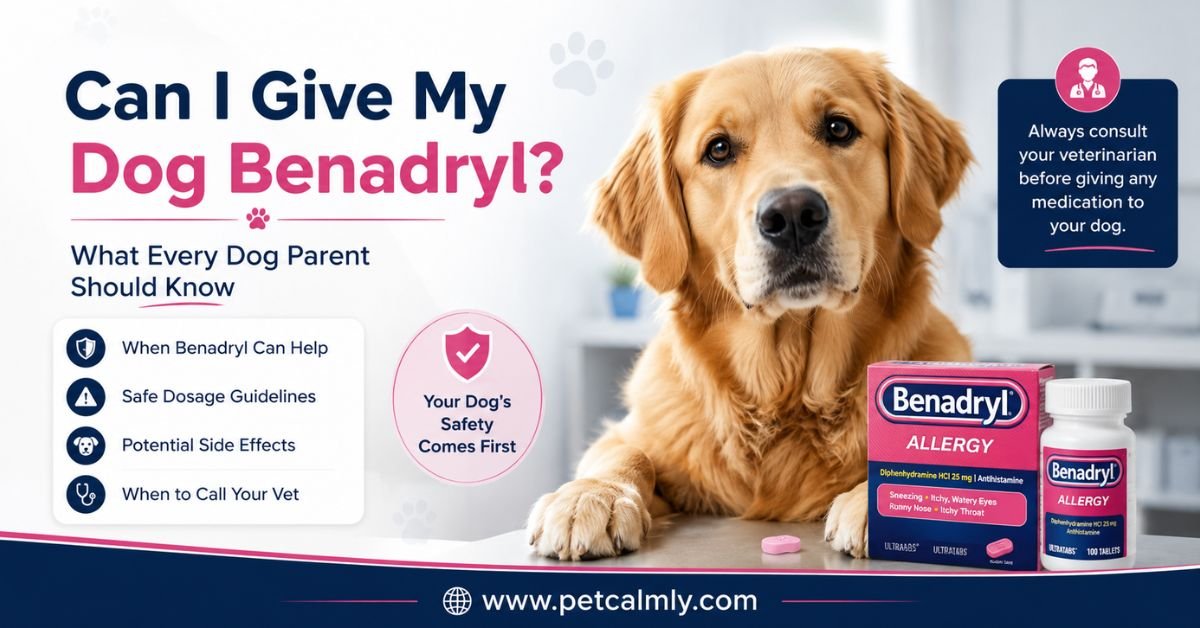
Yes, many dogs can take Benadryl (diphenhydramine), but it is not safe for every dog and should only be given at the correct dosage under veterinary guidance.
Benadryl is commonly used for allergies, insect bites, itching, mild anxiety, and some vaccine reactions in dogs. However, certain health conditions, medications, and Benadryl formulations can make it unsafe. The biggest mistake pet owners make is assuming the human dosage automatically applies to dogs.
If you’re wondering whether Benadryl is appropriate for your dog, this guide explains when it may help, when it can be dangerous, proper dosing considerations, side effects, and when you should contact your veterinarian immediately.
Why So Many Dog Owners Ask About Benadryl
A dog suddenly develops itchy skin.
Another gets stung by a bee during a walk.
Someone’s senior dog starts scratching all night.
In these moments, many owners look in their medicine cabinet and see Benadryl sitting there. Since it’s a common over-the-counter medication for people, it seems like an easy solution.
But dogs process medications differently than humans.
What helps one dog may cause problems in another.
That’s why understanding the facts before giving any medication matters.
The goal isn’t simply treating symptoms. It’s making sure you’re helping your dog safely.
What Is Benadryl?
Benadryl is the brand name for diphenhydramine, an antihistamine.
Antihistamines work by blocking histamine, a chemical released during allergic reactions.
In dogs, Benadryl is often used to help manage:
- Seasonal allergies
- Environmental allergies
- Mild itching
- Insect stings
- Bee bites
- Mild vaccine reactions
- Motion sickness
- Mild situational anxiety
- Hives
- Facial swelling caused by allergies
While Benadryl can reduce symptoms, it usually does not treat the underlying cause.
For example, if your dog has chronic allergies, Benadryl may temporarily ease itching but won’t solve the allergy itself.
When Can Benadryl Help Dogs?
Allergic Reactions
One of the most common reasons veterinarians recommend Benadryl is for mild allergic reactions.
Signs may include:
- Itchy skin
- Redness
- Hives
- Facial swelling
- Excessive licking
- Paw chewing
In many cases, Benadryl can reduce discomfort while you monitor your dog.
Quick Tip
Mild itching and small hives may respond to antihistamines.
Severe swelling, breathing difficulties, or collapse require emergency veterinary care.
Bee Stings and Insect Bites
Dogs are naturally curious.
They sniff flowers, chase insects, and occasionally get stung.
Benadryl may help reduce:
- Swelling
- Itching
- Mild inflammation
- Local discomfort
If the sting occurs near the mouth, throat, or face, veterinary attention is often necessary because swelling can affect breathing.
Vaccine Reactions
Some dogs develop mild reactions after vaccinations.
Symptoms may include:
- Mild facial swelling
- Itching
- Hives
- Temporary discomfort
Veterinarians sometimes recommend Benadryl before future vaccinations if a dog has experienced mild allergic reactions previously.
Never administer medications before vaccines without your veterinarian’s guidance.
Travel and Motion Sickness
Some dogs become nauseous or anxious during car rides.
Because Benadryl can cause drowsiness, it occasionally helps dogs remain calmer during travel.
However, newer medications designed specifically for canine motion sickness are often more effective.
Mild Situational Anxiety
Benadryl is not a true anti-anxiety medication.
However, its sedative effects may make some dogs appear calmer.
Examples include:
- Thunderstorms
- Fireworks
- Grooming visits
- Car rides
The calming effect usually comes from drowsiness rather than genuine anxiety relief.
When Benadryl Is NOT the Best Choice
Many owners are surprised to learn that Benadryl often has limited effectiveness for certain conditions.
Chronic Skin Allergies
Dogs with long-term allergies may need:
- Prescription allergy medications
- Allergy testing
- Dietary changes
- Flea prevention
- Veterinary dermatology care
Benadryl frequently provides only partial relief.
Severe Anxiety
Dogs suffering from serious anxiety disorders typically require:
- Behavioral training
- Environmental management
- Veterinary guidance
- Anxiety-specific medications
Benadryl generally does not address the root emotional issue.
Pain
Benadryl is not a pain medication.
It should not be used to treat:
- Arthritis pain
- Injuries
- Surgical pain
- Dental pain
Many owners mistakenly assume sedation equals pain relief.
It doesn’t.
How Much Benadryl Can Dogs Take?
General Veterinary Guideline
A commonly cited veterinary guideline is approximately:
1 milligram of diphenhydramine per pound of body weight
Given every 8 to 12 hours if recommended by your veterinarian.
However, this is only a general guideline.
Individual factors matter greatly:
- Age
- Weight
- Breed
- Existing diseases
- Other medications
- Pregnancy status
- Health history
Always verify dosage with your veterinarian before giving Benadryl.
Example Weight Chart
| Dog Weight | Approximate Dose |
|---|---|
| 10 lbs | 10 mg |
| 20 lbs | 20 mg |
| 30 lbs | 30 mg |
| 40 lbs | 40 mg |
| 50 lbs | 50 mg |
| 60 lbs | 60 mg |
These examples are educational only and are not a substitute for veterinary advice.
Which Benadryl Products Are Safe for Dogs?
This is where many accidents happen.
Not all Benadryl products contain only diphenhydramine.
Some formulations contain additional ingredients that may be dangerous for dogs.
Generally Preferred
Plain diphenhydramine products containing only:
- Diphenhydramine HCl
Products to Avoid
Avoid formulations containing ingredients such as:
- Decongestants
- Phenylephrine
- Pseudoephedrine
- Alcohol
- Xylitol
- Combination cold medicines
These ingredients can be harmful or toxic to dogs.
Always read the label carefully.
When uncertain, call your veterinarian before giving the medication.
Possible Side Effects of Benadryl in Dogs
Like any medication, Benadryl can cause side effects.
Most are mild, but some require attention.
Common Side Effects
- Sleepiness
- Drowsiness
- Dry mouth
- Temporary lethargy
- Mild urinary retention
Many owners notice their dog becomes sleepy within a few hours.
This is often expected.
Less Common Side Effects
Some dogs experience the opposite reaction.
Instead of becoming sleepy, they become:
- Hyperactive
- Restless
- Agitated
- Vocal
This paradoxical response is uncommon but possible.
Serious Side Effects
Contact your veterinarian if you notice:
- Severe lethargy
- Vomiting
- Difficulty urinating
- Rapid heart rate
- Tremors
- Collapse
These symptoms require immediate evaluation.
Dogs That May Need Extra Caution
Benadryl isn’t appropriate for every dog.
Certain medical conditions increase risk.
Speak to Your Veterinarian First If Your Dog Has:
- Heart disease
- Glaucoma
- High blood pressure
- Seizure disorders
- Liver disease
- Kidney disease
- Prostate enlargement
- Respiratory disorders
Senior dogs often require additional caution because they may metabolize medications differently.
Puppies and Benadryl
Many owners wonder whether puppies can take Benadryl.
The answer depends on:
- Age
- Weight
- Overall health
- Reason for treatment
Young puppies are more sensitive to medications.
Veterinary guidance is especially important before giving Benadryl to a puppy.
Never estimate a puppy’s dose.
Can Benadryl Interact With Other Medications?
Yes.
Drug interactions are one reason veterinarians ask about every medication and supplement your dog receives.
Potential interactions may occur with:
- Sedatives
- Anxiety medications
- Certain pain medications
- Antidepressants
- Some heart medications
Even over-the-counter supplements can affect medication safety.
Always mention:
- Prescription medications
- Supplements
- Herbal products
- Flea and tick medications
during veterinary consultations.
Signs Your Dog May Be Having an Allergic Emergency
Most Importantly
Benadryl should never replace emergency veterinary treatment.
Seek urgent veterinary care if your dog develops:
- Difficulty breathing
- Severe facial swelling
- Blue gums
- Collapse
- Weakness
- Persistent vomiting
- Loss of consciousness
These symptoms may indicate anaphylaxis, a potentially life-threatening reaction.
Time matters.
5 Common Mistakes Dog Owners Make
1. Guessing the Dose
Never estimate dosage based on another dog.
Even similarly sized dogs may require different recommendations.
2. Using Combination Medications
Many human allergy products contain multiple active ingredients.
These can be dangerous for dogs.
3. Treating Serious Reactions at Home
Benadryl may help mild reactions.
It is not adequate treatment for severe allergic emergencies.
4. Assuming Sleepiness Means Success
A sleepy dog isn’t necessarily a dog whose underlying problem has been resolved.
The cause of symptoms still needs attention.
5. Using Benadryl Long-Term Without Veterinary Guidance
Chronic itching, skin irritation, and allergies often require diagnosis.
Repeatedly masking symptoms may delay proper treatment.
What Should You Do Before Giving Your Dog Benadryl?
Follow this simple checklist.
Step 1: Identify the Problem
Ask yourself:
- Is this itching?
- Swelling?
- Anxiety?
- Motion sickness?
Understanding the symptom helps determine whether Benadryl is appropriate.
Step 2: Check the Product Label
Ensure the medication contains only diphenhydramine.
Avoid combination products.
Step 3: Review Medical Conditions
Consider:
- Heart problems
- Glaucoma
- Kidney disease
- Other medications
These factors may affect safety.
Step 4: Contact Your Veterinarian
Even a quick phone call can prevent mistakes.
Your veterinarian can confirm:
- Appropriate use
- Safe dosage
- Potential interactions
What Should Pet Owners Do If Their Dog Accidentally Gets Too Much Benadryl?
Accidental overdoses happen.
A dog may chew into a bottle or consume multiple tablets.
Possible overdose signs include:
- Extreme sedation
- Agitation
- Rapid heartbeat
- Dilated pupils
- Tremors
- Seizures
- Collapse
If you suspect an overdose:
- Remove access to the medication.
- Determine how much may have been consumed.
- Contact your veterinarian immediately.
- Contact an emergency animal hospital.
- Follow professional instructions promptly.
Do not wait for symptoms to worsen.
Benadryl vs Other Allergy Options
| Option | Common Use | Notes |
| Benadryl | Mild allergies | May cause drowsiness |
| Cetirizine | Environmental allergies | Often less sedating |
| Loratadine | Some allergy cases | Not suitable for every dog |
| Prescription allergy medications | Chronic allergies | Often more effective |
| Allergy immunotherapy | Long-term management | Addresses underlying allergy triggers |
The best option depends on the individual dog and the condition being treated.
When Should You Worry?
Certain symptoms should never be ignored.
Contact a veterinarian immediately if your dog:
- Cannot breathe normally
- Has severe swelling
- Becomes unresponsive
- Experiences seizures
- Collapses
- Develops persistent vomiting
- Shows signs of overdose
Even if Benadryl was recently given, emergency symptoms still require professional care.
A medication should never delay treatment when a dog’s life may be at risk.
What Should Pet Owners Do?
If you’re considering Benadryl for your dog:
Do
✔ Read the ingredient label
✔ Know your dog’s current weight
✔ Consult your veterinarian
✔ Monitor closely after administration
✔ Watch for side effects
✔ Seek help if symptoms worsen
Don’t
✘ Guess the dose
✘ Use combination cold medicines
✘ Ignore severe allergic reactions
✘ Use it as a long-term allergy solution without guidance
✘ Assume all dogs respond the same way
Related Topics Worth Learning About
Many owners who research Benadryl also benefit from learning about:
- Natural ways to reduce dog allergies
- Dog anxiety management strategies
- Best calming treats for dogs
- Seasonal allergy prevention
- Flea allergy dermatitis
- Safe medications for dogs
- Common household toxins for pets
- How to recognize emergency allergic reactions
These topics can help you make more informed decisions about your dog’s overall health.
Conclusion
So, can you give your dog Benadryl?
In many situations, yes—but only when it’s appropriate for your dog’s specific health needs and when the dosage and product are safe.
Benadryl can be helpful for mild allergic reactions, itching, insect stings, and certain short-term situations. However, it isn’t a cure-all, and it should never replace veterinary care when symptoms are severe.
The safest approach is simple: know why you’re using it, check the ingredients carefully, and speak with your veterinarian before giving any medication.
When in doubt, a quick call to your veterinary clinic can provide far more reassurance than guessing.
Your dog’s safety is always worth that extra step.
More Information About Pets, Please Visit Our Website: How to Stop a Cat from Jumping After Surgery
Frequently Asked Questions
1: Can I give my dog human Benadryl?
Sometimes, yes. Plain diphenhydramine products may be used in dogs, but many human formulations contain extra ingredients that can be harmful. Always check the label and consult your veterinarian.
2: How long does Benadryl take to work in dogs?
Most dogs begin showing effects within 30 minutes to an hour. The exact timing can vary based on body size, metabolism, and whether food was recently eaten.
3: Will Benadryl make my dog sleepy?
Many dogs become drowsy after taking Benadryl. However, some experience the opposite effect and may become restless or hyperactive.
4: Can I give Benadryl to my puppy?
Possibly, but puppies are more sensitive to medications. Veterinary guidance is strongly recommended before administering Benadryl to young dogs.
5: Is Benadryl safe for dogs with anxiety?
Benadryl may cause sedation, which can make some dogs appear calmer. It is not considered a primary treatment for anxiety disorders.
6: What should I do if Benadryl doesn’t help my dog’s itching?
Persistent itching often indicates an underlying issue such as allergies, parasites, infections, or skin disease. Schedule a veterinary examination for proper diagnosis and treatment.