Short direct answer
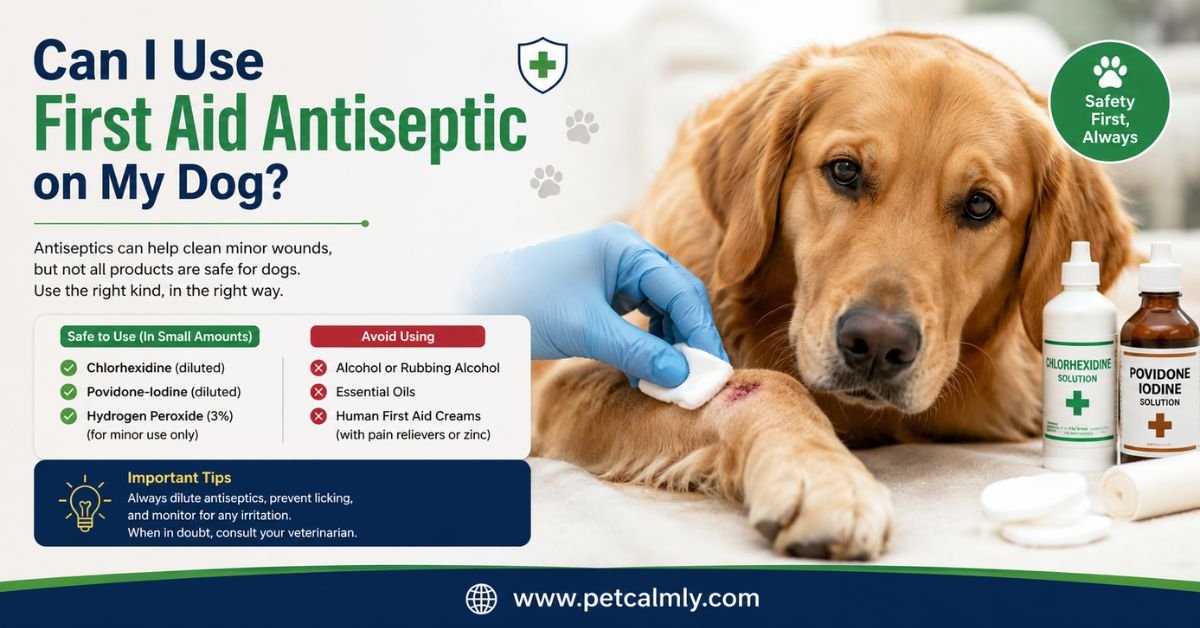
Yes, some first aid antiseptics can be used on a dog, but not all and using the wrong type can actually slow healing or cause irritation. Products like diluted povidone-iodine or chlorhexidine are commonly considered safe for minor surface wounds when used correctly. However, antiseptics such as hydrogen peroxide, rubbing alcohol, or strong human wound sprays can damage healthy tissue and delay recovery.
The safest approach is to clean the wound gently with a pet-safe solution and always check with a vet if the injury is deep, bleeding heavily, or looks infected. When in doubt, it’s better to be cautious than to experiment on your dog’s skin.
Introduction
If your dog gets a cut, scrape, or bite mark, the first instinct is usually to reach for whatever antiseptic is in your home medicine cabinet. It feels responsible like you’re acting fast and doing the right thing. But this is exactly where many pet owners unknowingly go wrong.
Dogs don’t respond to antiseptics the same way humans do. Their skin is more sensitive in certain areas, and they’re also likely to lick treated spots, which adds another layer of risk. A product that is “safe for humans” isn’t automatically safe for a dog.
This guide will help you understand:
- Which antiseptics are safe and which are risky
- How to clean a minor wound properly
- What signs mean you should stop home treatment
- Common mistakes pet owners make during first aid
- When a vet visit becomes necessary
By the end, you’ll feel much more confident about handling minor injuries without accidentally making things worse.
What Does “First Aid Antiseptic” Actually Mean?
The term first aid antiseptic is broad and often confusing. It doesn’t refer to one product—it refers to a group of chemicals designed to kill bacteria and reduce infection risk in minor wounds.
Here are the most common types you might find at home:
1. Hydrogen Peroxide
- Often used for cleaning cuts in humans years ago
- Creates bubbling action that removes debris
- Strongly discouraged for pets today
2. Rubbing Alcohol (Isopropyl Alcohol)
- Dries out skin quickly
- Very painful on open wounds
- Can damage healthy tissue cells
3. Povidone-Iodine (Betadine-type solutions)
- Broad-spectrum antiseptic
- Often used in diluted form in veterinary care
- Generally considered safe when properly diluted
4. Chlorhexidine
- Common in veterinary clinics
- Gentle yet effective against bacteria
- Often recommended for dog wounds and skin infections
5. Antibacterial sprays/creams for humans
- Mixed ingredients
- May contain fragrances or alcohol
- Not always pet-safe
Understanding what you’re actually holding in your hand is the first step in avoiding accidental harm.
Is First Aid Antiseptic Safe for Dogs?
The honest answer is: it depends entirely on the type and concentration.
Some antiseptics are safe when diluted correctly, while others should never be used on dogs at all.
Generally safer options:
- Diluted povidone-iodine (tea-colored solution)
- Chlorhexidine solution (low concentration)
- Vet-approved wound cleansers
Unsafe or risky options:
- Hydrogen peroxide (damages tissue regeneration)
- Rubbing alcohol (burns and delays healing)
- Strong human antiseptic gels with additives
- Essential oil-based “natural antiseptics” (often toxic to dogs)
Dogs also tend to lick wounds, so anything applied must be non-toxic if ingested in small amounts.
Why Some Antiseptics Can Harm Dogs
It’s easy to assume “it kills germs, so it must help,” but wound healing is more delicate than that.
Here’s what actually happens:
1. Tissue damage
Harsh antiseptics don’t just kill bacteria—they can also kill new, healing skin cells, slowing recovery.
2. Delayed wound closure
Over-cleaning or using strong chemicals can keep a wound “open” longer than necessary.
3. Pain and irritation
Dogs may feel burning or stinging, especially with alcohol-based products.
4. Licking and ingestion risk
Dogs instinctively lick wounds, which means they may ingest whatever you apply.
This combination is why vets are very specific about what they recommend.
When First Aid Antiseptic CAN Be Used on Dogs
There are situations where antiseptics are helpful and appropriate—especially for minor surface injuries.
Safe scenarios:
- Small surface cuts
- Minor scrapes from play or walking
- Superficial paw abrasions
- Tiny punctures without deep tissue damage
Best practice options:
- Chlorhexidine diluted to 0.05%
- Povidone-iodine diluted until light brown (tea color)
Why dilution matters:
Strong concentrations can irritate skin, while diluted solutions are effective enough to reduce bacteria without damaging tissue.
When You SHOULD NOT Use Antiseptic on Your Dog
Some situations require veterinary attention instead of home antiseptic use.
Avoid home treatment if:
- The wound is deep or gaping
- There is heavy bleeding
- You suspect a bite from another animal
- The wound is near the eyes, mouth, or genitals
- There is swelling, pus, or bad odor
- Your dog is in pain or limping
- The wound keeps reopening
In these cases, antiseptic alone is not enough and may delay proper care.
Step-by-Step: How to Clean a Minor Wound Safely
If the injury is small and superficial, here’s a safe approach you can follow.
Step 1: Calm your dog
- Speak gently
- Restrict movement if needed
- Have treats ready for reassurance
Step 2: Rinse first
Use clean lukewarm water or saline solution to remove dirt.
Step 3: Apply diluted antiseptic
- Chlorhexidine or diluted iodine
- Apply gently with gauze or cotton pad
- Do not scrub aggressively
Step 4: Let it air dry
Avoid immediately covering unless the vet advises it.
Step 5: Prevent licking
- Use an Elizabethan collar if needed
- Distract your dog after treatment
Step 6: Monitor for 24–72 hours
Watch for redness, swelling, or discharge.
5 Common Mistakes Dog Owners Make
Even well-meaning owners can accidentally slow healing.
Mistake 1: Using hydrogen peroxide
It “foams dirt away” but also damages healing tissue.
Mistake 2: Over-cleaning the wound
Too much cleaning disrupts natural healing.
Mistake 3: Using human antibiotic creams blindly
Some contain ingredients unsafe if licked.
Mistake 4: Ignoring licking behavior
Dogs can reopen wounds repeatedly.
Mistake 5: Delaying vet care
Assuming antiseptic alone will solve deeper injuries.
What Happens If You Use the Wrong Antiseptic?
Depending on the product, you might notice:
- Increased redness or irritation
- Slower healing time
- Skin dryness or cracking
- Behavioral signs like licking or whining
- Worsening of infection signs
If this happens, stop using the product immediately and rinse the area with saline or clean water.
When Should You Worry? (Important Warning Signs)
You should contact a vet if you notice:
- Swelling that increases over time
- Yellow or green discharge
- Foul smell from the wound
- Bleeding that doesn’t stop
- Limping or difficulty moving
- Lethargy or loss of appetite
- Heat around the wound area
These are signs that infection or deeper tissue damage may be developing.
What Should Pet Owners Do Instead? (Practical Approach)
A simple, safe routine for minor injuries:
Daily care checklist:
- Inspect wound twice daily
- Clean gently once per day if needed
- Keep area dry
- Prevent licking
- Monitor behavior changes
Keep a pet first aid kit:
- Saline solution
- Chlorhexidine (vet-approved)
- Sterile gauze
- Soft bandage wraps
- Elizabethan collar
This avoids scrambling for unsafe household products.
Safer Alternatives to Human First Aid Antiseptics
Instead of guessing what’s safe, consider pet-specific products:
- Veterinary chlorhexidine cleansers
- Pet wound sprays (alcohol-free)
- Saline wound flush solutions
- Vet-approved antiseptic wipes
These are designed specifically for dog skin pH and licking behavior, which makes them safer overall.
Prevention: Reducing the Risk of Wounds in Dogs
While accidents can’t be fully prevented, you can reduce risk:
- Keep nails trimmed to avoid self-scratching
- Inspect paws after walks
- Avoid rough play with sharp objects
- Use proper collars/harness fit
- Maintain flea control (scratching leads to wounds)
Small habits reduce a lot of emergency situations.
More Information About Pets, Please Visit Our Website: How to Read Pet Body Language Signals
Conclusion
So, can you use first aid antiseptic on your dog? Yes but only the right kind, and only in the right way. The safest choices are diluted povidone-iodine or chlorhexidine, and even then, only for minor surface wounds.
The most important thing to remember is this: antiseptic is not a cure-all. It is just a small part of proper wound care. When a wound looks serious, deep, or unusual, veterinary care is always the safest option.
Your dog doesn’t just need quick action—they need the right action.
Frequently Asked Questions
1. Can I use human antiseptic cream on my dog?
Some human creams may be safe, but many contain ingredients that are unsafe if licked. Always check with a vet before using them.
2. Is hydrogen peroxide safe for dog wounds?
No, it is not recommended anymore. It can damage healthy tissue and slow down healing significantly.
3. What is the safest antiseptic for dog cuts?
Diluted chlorhexidine or diluted povidone-iodine are commonly recommended for minor wounds.
4. Can I use Dettol or similar antiseptic on my dog?
Most household disinfectants like Dettol are too strong and can irritate or poison if licked.
5. How often should I clean my dog’s wound?
Usually once or twice daily is enough. Over-cleaning can slow healing.
6. What if my dog keeps licking the wound?
Use an Elizabethan collar and provide distractions. Continuous licking can reopen the injury and introduce bacteria.