Short direct answer
The earliest signs of cat pregnancy can appear as soon as 2–3 weeks after mating. Many owners first notice enlarged, pink nipples, changes in appetite, increased affection, or unusual sleeping habits. As pregnancy progresses week by week, a cat’s body and behavior gradually change, with weight gain, abdominal enlargement, and nesting behaviors becoming more noticeable. Because early signs can be subtle, a veterinary examination is the most reliable way to confirm pregnancy.
Early Signs of Cat Pregnancy Week by Week: A Complete Guide for Concerned Cat Owners
If you suspect your cat may be pregnant, you’re probably watching every little behavior and physical change with a mix of curiosity and concern.
Maybe she’s sleeping more than usual. Perhaps she’s suddenly extra affectionate—or surprisingly distant. You might have noticed her appetite changing or wondered if those pinker nipples mean something important.
The challenge is that many early pregnancy signs in cats can easily be mistaken for normal mood changes, weight fluctuations, or minor health issues. That’s why understanding what happens week by week can help you recognize what’s normal and know when it’s time to consult your veterinarian.
This guide walks through the earliest signs of cat pregnancy, what changes to expect during each stage, when to seek veterinary advice, and how to support your cat safely throughout her pregnancy.
Understanding Feline Pregnancy
Before looking at week-by-week signs, it helps to understand the basics.
A cat’s pregnancy, also called gestation, typically lasts:
63–67 days (about 9 weeks)
Some cats may deliver slightly earlier or later, but most pregnancies fall within this range.
During those nine weeks, hormones trigger significant physical and behavioral changes that become more obvious as the pregnancy progresses.
Can You Tell If a Cat Is Pregnant Right Away?
Quick Answer
No. Most cats show no obvious signs during the first one to two weeks after mating.
Even experienced cat owners often cannot identify pregnancy immediately because the earliest changes occur internally before visible symptoms appear.
This is why many owners don’t suspect pregnancy until week three or four.
Week 1 of Cat Pregnancy: What Happens?
Physical Changes
During the first week, fertilized eggs begin their journey through the reproductive tract.
At this stage:
- No visible belly enlargement
- No noticeable weight gain
- No nipple changes
- No obvious physical signs
Behavioral Changes
Most cats behave completely normally.
Some owners report:
- Slight increase in sleep
- Mild decrease in activity
- Subtle mood changes
However, these signs are inconsistent and not reliable indicators of pregnancy.
Most Important Thing to Know
During week one, there is usually no way to visually confirm pregnancy.
Week 2 of Cat Pregnancy: Early Hormonal Changes Begin
By the second week, hormonal shifts start influencing the body.
Possible Signs
Some cats may experience:
- Increased affection
- More frequent purring
- Seeking additional attention
- Slight appetite fluctuations
Others may show no changes at all.
Because every cat responds differently to pregnancy hormones, behavior alone should never be used to diagnose pregnancy.
Week 3 of Cat Pregnancy: The First Clear Sign Appears
Nipple “Pinking Up”
One of the most recognized early signs of cat pregnancy occurs around week three.
The nipples may:
- Become larger
- Turn darker pink
- Look more prominent
- Feel slightly raised
Veterinarians often call this change:
“Pinking up.”
For many owners, this is the first obvious clue that pregnancy may be developing.
What Does It Look Like?
Normally pale nipples become:
- Brighter pink
- More visible through the fur
- Slightly swollen
This change is especially noticeable in first-time mothers.
Week 3: Appetite Changes
Around the same time, some pregnant cats begin eating differently.
You may notice:
- Increased hunger
- More interest in food
- Asking for meals earlier
- Seeking treats more frequently
Not every cat experiences this change immediately.
Some actually eat less for a short period.
Week 4 of Cat Pregnancy: Early Weight Gain Begins
By week four, pregnancy becomes easier to detect.
Physical Changes
You may notice:
- Mild weight gain
- Slightly rounded abdomen
- Continued nipple enlargement
- Fuller appearance around the waist
The belly is often still subtle at this stage.
Many owners describe their cat as looking “a little chubby” rather than obviously pregnant.
Week 4 Behavioral Signs
Hormonal changes may affect temperament.
Common observations include:
- Increased cuddling
- Following owners around
- More frequent sleeping
- Seeking quiet resting places
Some cats become unusually affectionate.
Others prefer solitude.
Both responses can be completely normal.
Week 5 of Cat Pregnancy: Visible Pregnancy Starts Showing
Week five often marks the point when many owners become fairly confident their cat is pregnant.
Common Physical Signs
The abdomen becomes more noticeable.
You may observe:
- Clear belly enlargement
- Steady weight gain
- Larger mammary glands
- Fuller body shape
At this point, the pregnancy is often easier for a veterinarian to confirm.
Week 5 Appetite Increase
Growing kittens require additional nutrients.
Many pregnant cats:
- Eat more food
- Request frequent meals
- Show stronger interest in feeding times
This increased appetite helps support fetal development.
Week 6 of Cat Pregnancy: Significant Changes Become Obvious
By week six, most pregnant cats display visible body changes.
What Owners Commonly Notice
- Rounded abdomen
- Increased body weight
- Longer sleeping periods
- Reduced jumping
- More resting
Many cats begin conserving energy as pregnancy advances.
Week 6 Grooming Changes
Some pregnant cats become more meticulous groomers.
Others groom less due to discomfort.
Owners may notice:
- Frequent belly grooming
- Increased licking
- Attention to mammary areas
These behaviors are generally normal unless accompanied by skin irritation.
Week 7 of Cat Pregnancy: Nesting Behaviors Begin
One of the Biggest Behavioral Clues
As birth approaches, many cats begin searching for safe places to deliver their kittens.
This behavior is called:
Nesting.
Signs include:
- Hiding in closets
- Exploring boxes
- Seeking quiet rooms
- Spending time under beds
- Rearranging blankets
The instinct helps prepare a secure environment for newborn kittens.
Week 7 Physical Changes
Most cats now show:
- Obvious pregnancy belly
- Enlarged mammary glands
- Noticeable weight gain
- Slower movements
Pregnancy is usually unmistakable at this stage.
Week 8 of Cat Pregnancy: Preparing for Delivery
During week eight, kittens are growing rapidly.
Signs Owners Often See
- Frequent resting
- Reduced activity
- Larger abdomen
- Strong nesting behavior
- Increased affection
Some cats become unusually attached to their owners during this period.
Others withdraw and prefer privacy.
Week 9 of Cat Pregnancy: Labor Approaches
Week nine is the final stretch.
Common Signs Before Birth
You may notice:
- Restlessness
- Pacing
- Vocalization
- Refusing food
- Repeated nest visits
- Increased grooming
Labor may begin within days.
Some queens stay calm, while others become noticeably anxious.
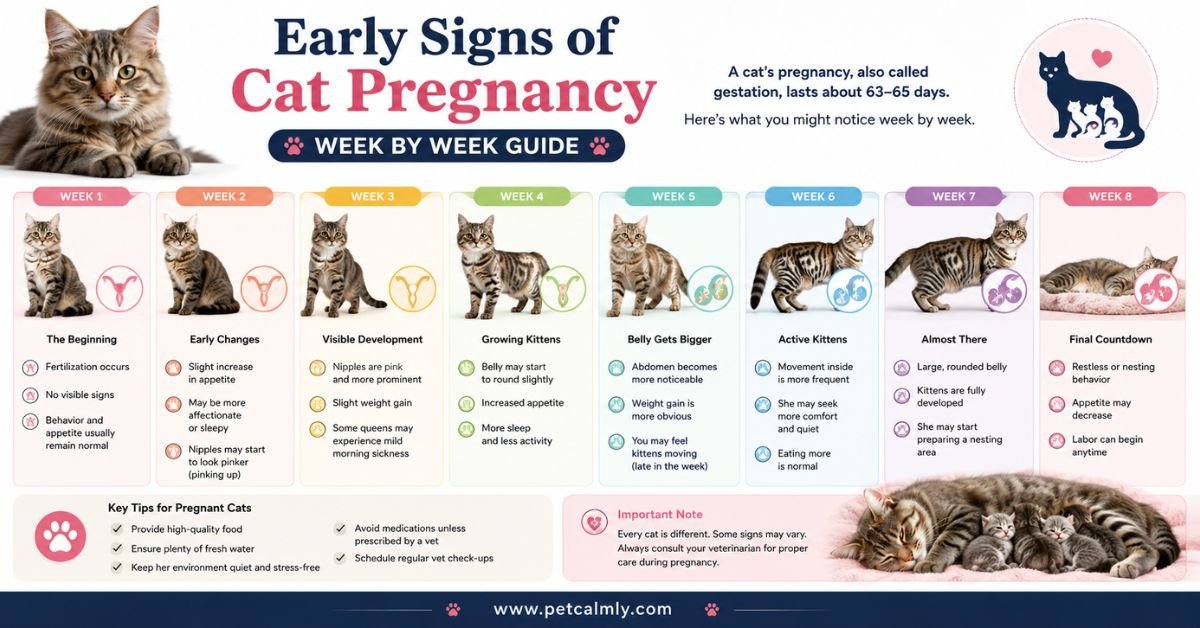
Week-by-Week Pregnancy Timeline at a Glance
| Week | Common Signs |
|---|---|
| Week 1 | Usually no visible signs |
| Week 2 | Mild behavioral changes |
| Week 3 | Pink nipples, appetite shifts |
| Week 4 | Slight weight gain, fuller abdomen |
| Week 5 | Noticeable belly enlargement |
| Week 6 | Obvious pregnancy appearance |
| Week 7 | Nesting behavior begins |
| Week 8 | Reduced activity, larger abdomen |
| Week 9 | Labor preparation signs |
Common Early Pregnancy Behaviors Owners Often Miss
Some signs are easy to overlook because they don’t seem pregnancy-related.
These include:
Sleeping More
Hormonal changes can increase fatigue.
Becoming Extra Affectionate
Many pregnant cats seek comfort and reassurance.
Avoiding Rough Play
As the body changes, physical activity may naturally decrease.
Choosing Quiet Areas
Pregnant cats often seek security.
Increased Sensitivity
Some become more responsive to handling and environmental changes.
Signs That Can Be Mistaken for Pregnancy
Not every symptom means your cat is expecting kittens.
Several conditions may look similar.
Weight Gain
Overeating can cause belly enlargement.
Hormonal Disorders
Certain hormonal conditions may affect appetite and behavior.
Intestinal Parasites
Worm infestations can create abdominal swelling.
False Pregnancy
Rarely, a cat may show pregnancy-like symptoms without carrying kittens.
This is one reason veterinary confirmation is important.
How Veterinarians Confirm Cat Pregnancy
If you suspect pregnancy, your veterinarian may use:
Physical Examination
Around 3–4 weeks, a veterinarian may detect pregnancy through palpation.
Ultrasound
Often possible after approximately 16–21 days.
X-Rays
Usually most useful later in pregnancy when fetal skeletons are visible.
Caring for a Pregnant Cat Week by Week
Nutrition Matters
Pregnant cats need additional calories and nutrients.
Veterinarians commonly recommend:
- High-quality kitten food
- Increased protein intake
- Fresh water at all times
- Multiple small meals
Avoid sudden dietary changes unless advised by your veterinarian.
Daily Pregnancy Care Checklist
✔ Provide fresh water
✔ Feed a balanced diet
✔ Keep stress low
✔ Maintain a quiet environment
✔ Monitor appetite
✔ Observe litter box habits
✔ Schedule veterinary visits
✔ Prepare a nesting area
Setting Up a Safe Nesting Space
Around week seven, prepare a dedicated area.
A good nesting space should be:
- Quiet
- Warm
- Dry
- Private
- Easy to access
Many owners use:
- Large cardboard boxes
- Soft blankets
- Low-traffic rooms
Avoid frequently moving the nesting area once your cat has accepted it.
What Not to Do During Cat Pregnancy
Owners sometimes make mistakes with the best intentions.
Avoid:
Excessive Handling
Do not frequently press or touch the abdomen.
Giving Medications Without Approval
Some medications can harm developing kittens.
Sudden Diet Changes
Abrupt changes may upset digestion.
Stressful Environmental Changes
Moving homes or introducing new pets can increase anxiety.
Ignoring Health Concerns
Any unusual symptoms deserve attention.
When Should You Worry?
Most feline pregnancies progress normally.
However, certain signs require prompt veterinary advice.
Contact Your Veterinarian If You Notice:
- Vaginal bleeding
- Green discharge before labor
- Severe lethargy
- Complete loss of appetite
- Persistent vomiting
- Breathing difficulties
- Signs of pain
- Sudden collapse
These symptoms are not considered normal pregnancy changes.
Emergency Situations
Seek urgent veterinary care if your pregnant cat:
- Cannot stand
- Experiences seizures
- Has heavy bleeding
- Shows severe distress
- Has prolonged labor without kitten delivery
Prompt treatment can protect both mother and kittens.
What Should Pet Owners Do If They Suspect Pregnancy?
If you believe your cat may be pregnant:
- Schedule a veterinary examination.
- Switch to an appropriate high-quality diet if recommended.
- Monitor body condition weekly.
- Reduce unnecessary stress.
- Create a safe nesting area.
- Learn labor signs before the due date.
- Prepare emergency veterinary contact information.
The earlier pregnancy is confirmed, the easier it becomes to provide proper care.
Common Myths About Cat Pregnancy
Myth: A Pregnant Cat Always Eats More Immediately
Not necessarily.
Some cats experience temporary appetite decreases early in pregnancy.
Myth: Belly Size Predicts Litter Size
A large belly does not always mean more kittens.
Body shape and kitten positioning also matter.
Myth: All Pregnant Cats Become Affectionate
Some become more social.
Others prefer solitude.
Both can be normal.
Myth: You Can Always Feel the Kittens
Attempting to feel kittens yourself is unreliable and may be unsafe.
Leave pregnancy assessment to veterinary professionals.
Can Different Cat Breeds Show Pregnancy Differently?
While pregnancy signs are generally similar across breeds, body shape can affect visibility.
For example:
- Slender breeds may show earlier.
- Long-haired cats can hide abdominal enlargement longer.
- Larger breeds may not appear pregnant until later stages.
Behavioral changes remain highly individual regardless of breed.
Frequently Asked Questions
1: How soon can you tell if a cat is pregnant?
The earliest noticeable sign is often nipple pinking around week three. Veterinary ultrasound may confirm pregnancy even earlier.
2: Do pregnant cats sleep more?
Yes. Increased sleep and reduced activity are common because the body is directing energy toward developing kittens.
3: Can a cat be pregnant if her belly isn’t growing?
Yes. Early pregnancy often shows no visible abdominal enlargement. Growth usually becomes noticeable after week four or five.
4: Do pregnant cats become more affectionate?
Many do, but not all. Some seek extra attention while others prefer quiet, private spaces.
5: What is the first physical sign of cat pregnancy?
For many cats, enlarged pink nipples around the third week are the first clear physical indicator.
6: Should I touch my cat’s pregnant belly?
Gentle handling is usually fine, but avoid pressing or palpating the abdomen. If pregnancy assessment is needed, consult a veterinarian.
More Information About Pets, Please Visit Our Website: Why does My Cat Walk Around Meowing at Night?
What Are the First Signs of Cat Pregnancy?
Conclusion
Recognizing the early signs of cat pregnancy week by week can help you provide better care and avoid unnecessary worry. While subtle behavioral changes may appear during the first few weeks, nipple pinking, appetite shifts, gradual weight gain, and nesting behavior are among the most reliable indicators as pregnancy progresses.
Every cat experiences pregnancy a little differently. Some show obvious changes early, while others remain surprisingly normal until later stages. When in doubt, a veterinary examination remains the safest and most accurate way to confirm pregnancy.
With proper nutrition, a calm environment, regular monitoring, and timely veterinary support, most pregnant cats go on to deliver healthy kittens successfully. The key is paying attention to changes, preparing ahead of time, and giving your cat the comfort and security she needs throughout this important stage of life.