Short direct answer
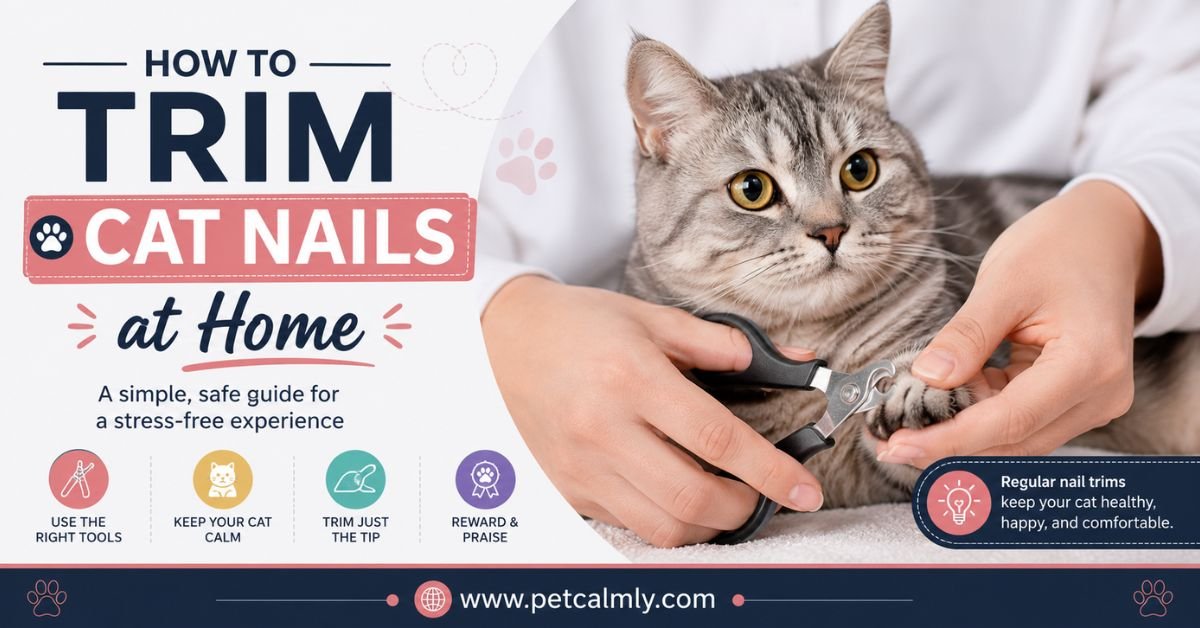
If you’re wondering how to trim cat nails at home, the safest approach is to use cat nail clippers, choose a quiet room, gently hold your cat, and trim only the sharp, transparent tip of each nail while avoiding the pink area called the quick. Start with one or two nails if your cat is nervous, reward them with treats, and finish the rest over several short sessions if needed. Regular nail trims every 2–4 weeks help prevent painful overgrown claws, reduce accidental scratches, and protect your furniture without causing your cat unnecessary stress.
How to Trim Cat Nails at Home Without Stressing Your Cat
Most cat owners feel nervous the first time they trim their cat’s nails. That’s completely understandable. Cats aren’t known for sitting still during grooming, and many owners worry about hurting their pet by cutting too much.
The good news is that nail trimming is a skill almost anyone can learn with a little patience. Once you understand where to cut and how to keep your cat calm, the process usually becomes much easier for both of you.
Whether you’ve recently adopted a playful kitten or you’re caring for an older indoor cat, learning how to trim nails at home can save money, reduce stress from frequent grooming appointments, and help keep your cat comfortable.
In this guide, you’ll learn everything you need to know before making the first trim, including how cat claws work, when they need trimming, which tools are safest, and how to prepare your cat for a positive experience.
Why Regular Nail Trimming Is Important for Cats
Many people assume cats naturally keep their nails short by scratching. While scratching is an essential behavior, it doesn’t always prevent nails from becoming overly long.
Regular nail trimming offers several benefits for both cats and their owners.
It Prevents Painful Overgrown Nails
When nails become too long, they may start curling toward the paw pad. In severe cases, the claw can grow into the skin, leading to pain, infection, and difficulty walking.
Older cats are especially at risk because they often scratch less than younger cats.
It Reduces Accidental Scratches
Even affectionate cats can accidentally scratch people during playtime, while jumping into laps, or when startled.
Keeping nails slightly shorter helps minimize injuries without affecting your cat’s normal behavior.
It Protects Furniture
Trimming won’t stop scratching that’s a natural instinct but shorter nails generally cause less damage to couches, carpets, curtains, and wooden furniture.
Pair regular trimming with sturdy scratching posts for the best results.
It Improves Comfort
Long claws can snag on blankets, carpets, clothing, and upholstery. Some cats become anxious when their nails repeatedly catch on fabric.
Routine trims help your cat move more comfortably around the house.
It Supports Healthy Paw Care
Checking your cat’s paws during nail trims also gives you an opportunity to notice:
- Broken nails
- Swelling
- Cuts
- Bleeding
- Foreign objects
- Signs of infection
- Thickened or brittle claws
Spotting these problems early can prevent more serious issues later.
Understanding Your Cat’s Claws Before You Trim
Before picking up the clippers, it’s helpful to understand what you’re actually cutting.
Unlike human nails, cat claws are living structures that contain blood vessels and nerves.
Each claw has two important parts.
The Sharp Outer Tip
This is the curved, pointed end that naturally becomes dull through scratching.
This is the only section you should trim.
For cats with light-colored nails, it’s usually easy to identify.
The Quick
Inside every claw is a pink area called the quick.
The quick contains:
- Blood vessels
- Nerve endings
- Living tissue
Cutting into the quick can cause:
- Bleeding
- Pain
- Fear of future nail trims
That’s why experienced groomers always trim only the transparent hook at the end of the nail.
What About Black Nails?
Cats with dark nails make the quick harder to see.
Instead of trying to remove a large amount at once, trim tiny pieces from the end of the nail. Taking off less is always safer than taking off too much.
How to Tell When Your Cat’s Nails Need Trimming
Not every cat needs nail trims on exactly the same schedule.
Instead of relying only on the calendar, watch for these signs.
You Can Hear Clicking on Hard Floors
If your cat’s nails make clicking sounds while walking across tile or hardwood floors, they’re probably getting too long.
The Claws Look Very Sharp
Cats naturally have pointed nails, but if they appear unusually long or curved, it’s time for a trim.
Nails Frequently Get Stuck
Does your cat snag blankets, towels, carpets, or furniture?
That’s often one of the earliest signs that the nails need shortening.
Your Cat Accidentally Scratches More Often
Many owners notice more accidental scratches during cuddles or play sessions when nails become extra sharp.
Older Cats Develop Curved Nails
Senior cats may not wear down their claws as efficiently.
Check their paws regularly to ensure the nails aren’t beginning to curl toward the paw pads.
Essential Tools for Trimming Cat Nails at Home
Having the right supplies makes nail trimming much safer and less stressful.
Here’s a quick comparison of the most common tools.
| Tool | Best For | Why It Helps |
|---|---|---|
| Cat nail clippers | Most owners | Small, precise, and easy to control |
| Scissor-style clippers | Beginners with larger hands | Comfortable grip and good visibility |
| Guillotine-style clippers | Experienced users | Clean cuts but require careful positioning |
| Styptic powder | Emergencies | Helps stop minor bleeding if the quick is nicked |
| Soft towel | Nervous cats | Provides gentle restraint without force |
| Treats | Every cat | Creates positive associations with grooming |
Should You Use Human Nail Clippers?
Some owners do, especially for kittens with very tiny nails.
However, cat-specific nail clippers are generally safer because they’re designed for the curved shape of feline claws and usually provide cleaner cuts with less pressure.
Preparing Your Cat Before Trimming Their Nails
Preparation often determines whether the nail trim goes smoothly or turns into a wrestling match.
Instead of immediately reaching for the clippers, spend a few days helping your cat become comfortable with paw handling.
Choose the Right Time
Avoid trimming when your cat is:
- Zooming around the house
- Hungry
- Excited after play
- Watching birds through the window
- Feeling anxious
The ideal time is when your cat is naturally sleepy, relaxed, or resting beside you.
Many owners find that trimming after a meal or following an active play session works well.
Get Your Cat Comfortable With Paw Touching
For several days before the first trim:
- Gently stroke your cat’s legs.
- Briefly touch each paw.
- Massage the toes.
- Press lightly to extend the claws.
- Reward calm behavior immediately.
These short sessions teach your cat that paw handling isn’t something to fear.
Let Your Cat Inspect the Clippers
Cats are naturally curious.
Allow your cat to sniff the nail clippers before using them. Pair this with treats or gentle praise so the tool becomes associated with positive experiences rather than stress.
Set Up a Quiet Environment
Choose a room with:
- Good lighting
- Minimal distractions
- No loud television
- No barking dogs
- No running children
A calm environment helps both you and your cat stay relaxed.
Safety Tips Before You Start Trimming
Taking a few simple precautions greatly reduces the chances of mistakes.
Never Rush
Cats quickly notice when their owners are tense.
Move slowly, pause when needed, and stop if either of you becomes frustrated.
Trim Only the Tip
Removing just the sharp hook is enough for most cats.
There’s rarely a reason to shorten the nail dramatically.
Keep Styptic Powder Nearby
Even experienced owners occasionally nick the quick.
Having styptic powder within reach allows you to quickly stop minor bleeding and keep the situation calm.
Use Good Lighting
Bright lighting makes it much easier to identify the transparent tip of each nail, especially on light-colored claws.
Natural daylight or a bright lamp often works best.
End on a Positive Note
If your cat allows only two nails today, that’s perfectly fine.
Reward them with a favorite treat, some gentle affection, or a short play session before ending. Building trust over several small sessions is often more successful than trying to finish all four paws at once.
Step-by-Step: How to Trim Cat Nails at Home Safely
Follow these simple steps to trim your cat’s nails with confidence.
Step 1: Choose a Calm Moment
The best time to trim your cat’s nails is when they’re naturally relaxed.
Good opportunities include:
- After a meal
- Following a play session
- During a nap
- While they’re cuddling beside you
Avoid trimming if your cat is excited, frightened, or trying to play.
Step 2: Position Your Cat Comfortably
Every cat has different preferences. Try a position that feels secure without making your cat feel trapped.
Some common options include:
- Sitting with your cat on your lap
- Wrapping a nervous cat loosely in a towel, leaving one paw exposed
- Having another family member gently comfort the cat
- Letting your cat sit on a stable table with a non-slip mat
Never force your cat onto its back if it clearly dislikes that position.
Step 3: Gently Extend the Claw
Hold the paw gently.
Using your thumb and index finger, apply light pressure to the top and bottom of one toe. The claw should slide forward naturally.
Avoid squeezing too hard, as this can make your cat pull away.
Step 4: Find the Safe Cutting Area
Before clipping, identify:
- The clear or white curved tip
- The pink quick inside the nail
Only trim the sharp end.
If your cat has dark nails and you can’t see the quick, remove only a tiny amount from the very tip.
When in doubt, cut less.
Step 5: Make One Smooth Cut
Position the clippers so they cut across the nail in one clean motion.
Avoid crushing or twisting the nail.
Only remove the hooked tip—usually just a few millimeters.
A clean cut is more comfortable than several hesitant snips.
Step 6: Reward Your Cat Immediately
After trimming one or several nails, reward your cat with something they enjoy.
Examples include:
- A favorite treat
- Gentle praise
- Petting if they enjoy it
- A short play session
Positive reinforcement helps your cat associate nail trimming with good experiences.
Step 7: Stop Before Your Cat Becomes Frustrated
You don’t have to trim every nail in one sitting.
If your cat starts:
- Flicking their tail
- Growling
- Swatting
- Pulling away repeatedly
- Becoming restless
Take a break.
You can always finish the remaining nails later or the next day.
For many cats, several short sessions are much less stressful than one long grooming session.
How to Trim the Dewclaw
Many owners forget about the dewclaw.
The dewclaw is located slightly higher on the inside of each front leg. Because it doesn’t touch the ground while walking, it doesn’t wear down naturally.
Check it carefully during every nail trim.
An overgrown dewclaw can curl into the skin, causing pain and infection if left unattended.
How Often Should You Trim Your Cat’s Nails?
There’s no single schedule that works for every cat.
Several factors influence nail growth, including:
- Age
- Activity level
- Indoor or outdoor lifestyle
- Health conditions
- Scratching habits
Here’s a general guideline:
| Type of Cat | Typical Nail Trim Schedule |
|---|---|
| Indoor adult cat | Every 2–4 weeks |
| Kitten | Every 2–3 weeks to build good habits |
| Senior cat | Every 2–3 weeks, or as needed |
| Outdoor cat | Usually less often, but check regularly |
| Less active or arthritic cat | More frequent monitoring may be needed |
Instead of relying only on the calendar, inspect your cat’s nails every couple of weeks.
What If Your Cat Won’t Let You Trim Their Nails?
Some cats seem to object the moment they see the clippers.
The good news is that cooperation can usually be improved with patience and gradual training.
Start Small
Don’t aim to trim all 18 claws.
Instead, trim:
- One nail today
- Two tomorrow
- Three during the next session
Progress is still progress.
Make Paw Handling Part of Everyday Life
Practice touching your cat’s paws even when you’re not planning a nail trim.
Spend just a minute each day:
- Holding a paw
- Gently pressing the toes
- Releasing immediately
- Offering a treat
Eventually, your cat learns that paw handling isn’t something to fear.
Use High-Value Rewards
Save your cat’s favorite treats for grooming sessions.
Some cats respond well to:
- Small pieces of cooked chicken
- Freeze-dried meat treats
- Tuna-flavored treats
- Lickable cat treats
Special rewards can make nail trimming much more rewarding.
Stay Calm Yourself
Cats notice body language remarkably well.
If you’re nervous, rushing, or frustrated, your cat is more likely to become anxious too.
Take your time.
Speak softly.
Pause whenever needed.
Don’t Force the Process
Trying to wrestle an unwilling cat usually creates long-term fear.
Instead:
- Stop
- Let your cat relax
- Try again later
Building trust is much more valuable than finishing quickly.
5 Common Mistakes to Avoid
Many first-time cat owners make similar mistakes.
Fortunately, they’re easy to avoid.
1: Cutting Too Close to the Quick
This is the most common concern.
Always leave a small distance between your cut and the pink quick.
There’s no prize for cutting the nail as short as possible.
2: Using Dull Clippers
Old or dull clippers can crush the nail instead of making a clean cut.
Replace clippers when they begin to lose their sharp edge.
3: Waiting Until Nails Become Overgrown
It’s much easier to maintain short, healthy nails than to shorten severely overgrown ones.
Small, regular trims are less stressful than occasional major ones.
4: Forgetting the Dewclaws
Because dewclaws don’t contact the ground, they often become overgrown first.
Include them in every trimming session.
5: Punishing Your Cat
Never scold or punish your cat for resisting.
Fear can make future nail trims significantly more difficult.
Instead, end the session calmly and try again another day.
What Happens If You Cut the Quick?
Even experienced groomers occasionally nick the quick.
If it happens, try not to panic.
Your cat may react because the area is sensitive.
Here’s what to do:
- Stay calm.
- Apply styptic powder according to the product instructions to help stop minor bleeding.
- Apply gentle pressure if needed.
- Comfort your cat with a calm voice.
- End the grooming session.
Most minor quick cuts stop bleeding within a few minutes.
If bleeding continues, is excessive, or the nail appears badly damaged, contact your veterinarian for advice.
Nail Care Tips for Kittens
Kittens usually learn grooming routines more easily than adult cats.
Start introducing nail trims when they’re young.
Keep sessions:
- Short
- Positive
- Gentle
- Reward-based
Even trimming one nail during each practice session helps build lifelong confidence.
Nail Care for Senior Cats
Older cats often require more frequent nail checks.
Arthritis, reduced mobility, and less scratching can allow nails to become unusually long.
Watch for:
- Thick claws
- Curved nails
- Difficulty walking
- Nails growing toward the paw pads
Trim carefully and allow extra breaks if your senior cat becomes uncomfortable.
Indoor Cats vs. Outdoor Cats
Many people assume outdoor cats never need nail trims.
While outdoor cats often wear their claws down naturally through climbing and scratching, that’s not always enough.
Indoor cats generally benefit from more frequent trims because they spend less time on rough surfaces.
Regardless of lifestyle, check your cat’s nails regularly rather than assuming they’re fine.
Declawing Is Not the Same as Nail Trimming
Some owners confuse routine nail trimming with declawing.
They’re completely different procedures.
Regular nail trimming:
- Removes only the sharp tip
- Is painless when done correctly
- Preserves normal claw function
- Supports healthy scratching behavior
Declawing is a surgical procedure that removes part of each toe and is widely discouraged except in rare medical circumstances.
For most cats, regular nail maintenance, scratching posts, and behavioral management provide a far more humane solution.
Aftercare: Helping Your Cat Feel Comfortable
Once you’ve finished trimming, give your cat a chance to relax.
You can:
- Offer fresh water
- Give a favorite treat
- Spend a few minutes playing
- Brush your cat if they enjoy grooming
- Let them rest somewhere quiet
Ending every session positively helps make the next nail trim easier.
Helpful Checklist Before You Put the Clippers Away
Before you finish, ask yourself:
✔ All nails checked for cracks or splits
✔ Dewclaws trimmed
✔ No bleeding or broken nails
✔ Clippers cleaned before storage
✔ Cat rewarded for cooperation
✔ Next nail check planned in 2–4 weeks
Following this simple routine can turn nail trimming into a normal part of your cat’s care rather than a stressful event.
When Should You Worry About Your Cat’s Nails?
Most routine nail trims are simple and safe. However, there are times when a nail problem needs more than home care. Knowing the difference can help you protect your cat from unnecessary pain and prevent minor issues from becoming serious.
Signs It’s Time to Contact Your Veterinarian
Schedule a veterinary visit if you notice any of the following:
- A nail that is torn or split close to the base
- Persistent bleeding that doesn’t stop after applying gentle pressure and styptic powder
- Swelling, redness, or warmth around the nail
- Pus or an unpleasant odor from the paw
- A claw growing into the paw pad
- Sudden limping or reluctance to bear weight on a paw
- Your cat cries out whenever a specific nail is touched
- Thick, brittle, or unusually shaped nails that continue to worsen
These symptoms may indicate an injury, infection, or another health condition that requires professional treatment.
Watch for Changes in Behavior
Cats often hide discomfort, so behavioral changes can be an early clue that something is wrong.
Pay attention if your cat suddenly:
- Stops using a scratching post
- Licks one paw excessively
- Avoids jumping onto furniture
- Hides more than usual
- Becomes irritable when their paws are touched
When these changes occur alongside nail problems, it’s best to have your cat examined by a veterinarian.
What Should Pet Owners Do for Healthy Cat Nails?
Healthy nails are about more than regular trimming. A complete nail care routine supports your cat’s comfort, mobility, and natural behaviors.
Provide Quality Scratching Posts
Scratching is an instinct—not bad behavior.
Offer sturdy scratching posts made from materials such as:
- Sisal rope
- Corrugated cardboard
- Natural wood
Place scratching posts near your cat’s favorite sleeping spots or social areas to encourage regular use.
Check Nails Every Two Weeks
Even if your cat doesn’t need a trim every time, a quick inspection helps you catch:
- Overgrown claws
- Cracks
- Broken nails
- Paw injuries
- Dirt or debris between the toes
Frequent checks make nail care less stressful because your cat becomes accustomed to having their paws handled.
Keep Clippers Clean
After each use:
- Remove nail debris.
- Wipe the blades with pet-safe disinfectant or rubbing alcohol.
- Dry them completely before storing.
Clean, sharp clippers make smoother cuts and reduce the risk of nail damage.
Reward Every Grooming Session
Positive reinforcement is one of the best training tools.
After each nail trim, reward your cat with something they enjoy, such as:
- A favorite treat
- Gentle affection
- Interactive play
- A quiet nap in a favorite spot
Over time, many cats begin to tolerate nail trims much more willingly.
Real-Life Examples Cat Owners Often Experience
Every cat has a different personality. Here are a few common situations and practical ways to handle them.
Scenario 1: The Curious Kitten
A young kitten wiggles constantly but isn’t afraid.
What helps:
- Keep sessions under two minutes.
- Trim only one or two nails.
- Offer treats after each successful nail.
Building positive experiences early often leads to easier grooming throughout adulthood.
Scenario 2: The Nervous Rescue Cat
A recently adopted cat hides whenever grooming tools appear.
What helps:
- Spend several days simply touching the paws.
- Let the cat investigate the clippers without using them.
- Reward calm behavior generously.
- Begin with one nail per session.
Patience is especially important for cats adjusting to a new home.
Scenario 3: The Senior Indoor Cat
An older cat has thick, curved nails that catch on blankets.
What helps:
- Check nails more frequently.
- Trim small amounts at a time.
- Allow extra breaks during grooming.
- Consult your veterinarian if nails become unusually thick or difficult to trim.
Myths About Trimming Cat Nails
There are plenty of misconceptions about nail care. Let’s separate fact from fiction.
| Myth | Fact |
|---|---|
| Indoor cats don’t need nail trims. | Most indoor cats benefit from regular nail checks and trims. |
| Scratching posts eliminate the need for trimming. | Scratching helps maintain claws but may not keep them short enough. |
| Nail trimming hurts every cat. | When only the tip is trimmed, the process is generally painless. |
| You must trim every nail in one session. | Many cats do better with several short sessions. |
| Human nail clippers are always fine. | Cat-specific clippers usually provide better control and cleaner cuts. |
Beginner-Friendly Nail Trimming Checklist
Before you begin:
- ✔ Cat is calm and relaxed.
- ✔ Room is quiet and well lit.
- ✔ Nail clippers are clean and sharp.
- ✔ Styptic powder is nearby.
- ✔ Treats are ready.
During trimming:
- ✔ Extend one claw gently.
- ✔ Identify the quick.
- ✔ Trim only the sharp tip.
- ✔ Stay calm and move slowly.
- ✔ Stop if your cat becomes overly stressed.
After trimming:
- ✔ Check for bleeding.
- ✔ Reward your cat.
- ✔ Clean the clippers.
- ✔ Schedule the next nail check in 2–4 weeks.
Keeping this checklist handy can make each session smoother and more predictable.
Conclusion
Learning how to trim cat nails at home may seem intimidating at first, but it becomes much easier with practice, patience, and the right approach.
The most important things to remember are to trim only the sharp tip of the nail, avoid the quick, use proper cat nail clippers, and work at your cat’s pace. Short, positive sessions are often more successful than trying to trim every nail at once.
Regular nail care does more than protect your furniture. It helps prevent painful overgrown claws, reduces accidental scratches, supports healthy movement, and gives you an opportunity to check your cat’s paws for early signs of injury or infection.
Every cat is different. Some will happily sit through a full nail trim, while others may need several brief sessions over a few days. Both approaches are perfectly normal. By staying calm and rewarding your cat after each session, you’ll build trust and make grooming easier over time.
With consistency, trimming your cat’s nails can become just another simple part of keeping them healthy and comfortable.
More Information About Pets, Please Visit Our Website: How to Help a Constipated Kitten Naturally
How Often Should I Brush My Cat Teeth?
Early Signs of Cat Pregnancy Week by Week
Frequently Asked Questions
1. How do I trim my cat’s nails if they won’t let me?
Start by getting your cat used to having their paws touched every day. Trim just one or two nails at a time, reward calm behavior with treats, and stop before your cat becomes stressed. Gradual training is usually more successful than forcing the process.
2. How often should I trim my indoor cat’s nails?
Most indoor cats need a nail trim every 2 to 4 weeks, although the exact schedule depends on their age, activity level, and how quickly their nails grow. Check the nails regularly instead of relying only on a calendar.
3. Can I use human nail clippers on my cat?
While some owners use human nail clippers for kittens or very small cats, cat-specific nail clippers are generally safer because they match the natural curve of feline claws and provide better control.
4. What happens if I accidentally cut the quick?
If you cut the quick, your cat may experience minor pain and the nail may bleed. Apply styptic powder according to the product instructions or gentle pressure to help stop the bleeding. If the bleeding is heavy, doesn’t stop, or the nail is badly damaged, contact your veterinarian.
5. Do outdoor cats need their nails trimmed?
Some outdoor cats naturally wear down their nails through climbing and scratching, but not all do. It’s still important to inspect their claws regularly and trim them if they become too long or start to curl.
6. Is trimming a cat’s nails better than declawing?
Yes. Routine nail trimming is a safe grooming practice that preserves your cat’s natural claws. Declawing is a surgical procedure that removes part of each toe and is generally discouraged except in rare medical situations.