Short direct answer
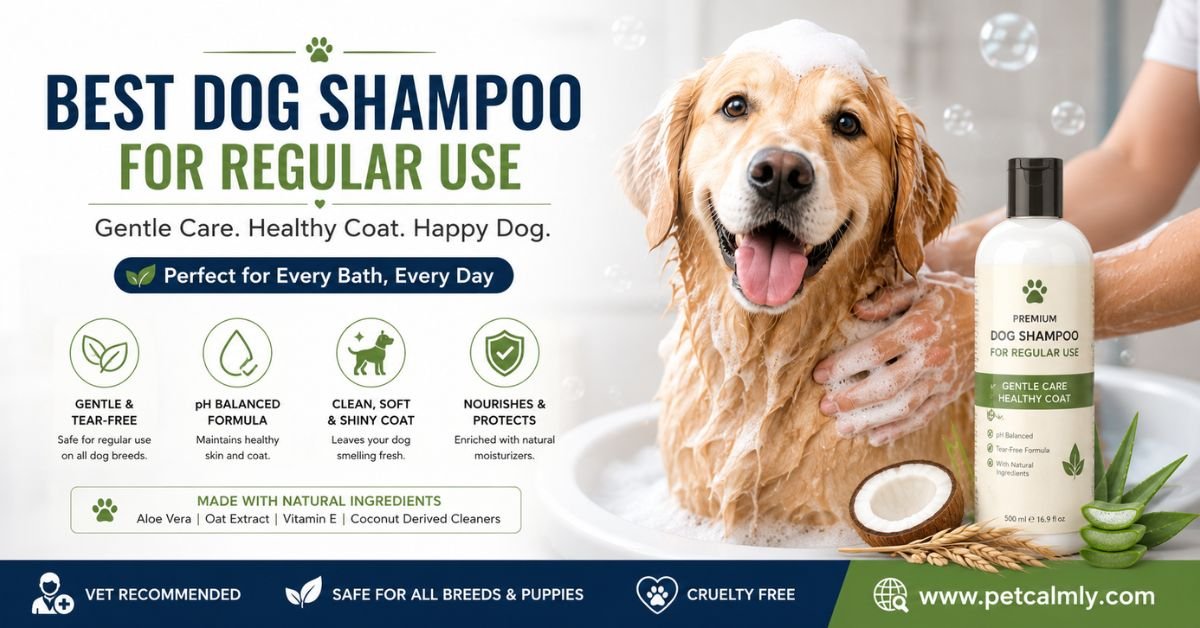
The best dog shampoo for regular use is a gentle, pH-balanced, soap-free formula designed specifically for dogs’ sensitive skin. Look for shampoos with natural moisturizing ingredients like aloe vera, oatmeal, coconut-based cleansers, or chamomile. These help clean your dog without stripping natural oils or causing dryness.
Most importantly, the right shampoo depends on your dog’s skin type. For most healthy dogs, a mild oatmeal-based or hypoallergenic shampoo used every 2–4 weeks is safe for routine grooming. Avoid human shampoos, strong medicated formulas (unless prescribed), and products with artificial fragrances or sulfates.
Introduction
Bath time is one of those moments every dog owner experiences differently. Some dogs happily jump into the tub, while others treat it like a full rescue mission. But beyond the mess and the struggle, there’s something more important happening your dog’s skin health.
Many pet parents don’t realize that a dog’s skin is very different from human skin. It is thinner, more sensitive, and has a different pH balance. That means the wrong shampoo even one that smells nice or works well for humans can slowly cause dryness, itching, or irritation.
If you’ve ever noticed your dog scratching more after a bath, or their coat looking dull a few days later, the shampoo might be the reason.
This guide will help you understand:
- What makes a shampoo safe for regular use
- How to choose based on your dog’s skin and coat
- Ingredients that help vs. ingredients to avoid
- A simple bathing routine that keeps skin healthy
- Common mistakes even experienced owners make
By the end, you’ll feel confident choosing a shampoo that keeps your dog clean, comfortable, and genuinely healthy not just temporarily fresh-smelling.
What “Regular Use” Actually Means for Dog Shampoo
Before choosing the best product, it’s important to understand what “regular use” really means in dog care.
For most dogs, regular use typically means:
- Bathing every 2 to 4 weeks
- More frequent bathing only if advised by a vet
- Occasional spot cleaning between baths
But here’s the key detail many owners miss:
Dogs don’t need frequent shampooing like humans do.
Their skin produces natural oils that protect the coat and maintain moisture. Over-bathing—even with a good shampoo—can remove those oils and lead to dryness or irritation.
So when we say “best dog shampoo for regular use,” we mean:
A formula gentle enough to maintain skin health even when used consistently over time without damage.
How Dog Skin Differs From Human Skin (Important for Shampoo Choice)
This is where many grooming problems begin.
Dog skin is:
- More alkaline (higher pH than humans)
- Thinner and more sensitive
- Covered in protective natural oils
- Prone to environmental irritation if stripped too often
Human shampoos are designed for acidic skin (lower pH). When used on dogs, they can disrupt the skin barrier.
This mismatch often leads to:
- Dry, flaky skin
- Excessive scratching
- Redness or irritation
- Dull or brittle coat
That’s why even “mild” human shampoos are not safe for regular dog bathing.
Key Qualities of the Best Dog Shampoo for Regular Use
When choosing a shampoo your dog will use repeatedly, look beyond marketing labels. Focus on these real, functional qualities:
1. pH-Balanced for Dogs
A proper dog shampoo should match canine skin pH. This keeps the skin barrier stable and prevents dryness.
2. Gentle Cleansing Agents
Look for coconut-derived cleansers or plant-based surfactants instead of harsh sulfates.
3. Moisturizing Ingredients
Good regular-use shampoos include:
- Oatmeal (soothes itching)
- Aloe vera (hydrates skin)
- Chamomile (calming effect)
- Vitamin E (skin repair support)
4. No Artificial Fragrance Overload
Strong perfumes can irritate sensitive noses and skin.
5. Tear-Free Formula (for face-safe washing)
Especially important for puppies or sensitive dogs.
6. Easy Rinsing
Residue left on the coat can cause itchiness or buildup.
Ingredients to Avoid in Regular Dog Shampoo
Some ingredients are fine in occasional medicated shampoos but not for regular use.
Avoid shampoos containing:
- Sulfates (SLS/SLES in high amounts)
- Parabens
- Artificial dyes
- Alcohol-heavy formulas
- Strong essential oils (tea tree oil in high concentration can be risky)
- Human shampoo bases
Even if a product smells great or creates lots of foam, that doesn’t mean it’s good for your dog’s skin health.
Best Types of Dog Shampoo for Regular Use (Based on Skin Needs)
Not every dog needs the same shampoo. Choosing based on skin condition makes a big difference.
1. Oatmeal Shampoo (Best Overall for Most Dogs)
Ideal for:
- Normal to slightly dry skin
- Dogs with mild itching
Why it works:
Oatmeal naturally soothes irritation and helps maintain moisture.
2. Hypoallergenic Shampoo (Best for Sensitive Dogs)
Ideal for:
- Allergy-prone dogs
- Puppies
- Dogs reacting to fragrances
These formulas are usually minimal ingredient and very gentle.
3. Moisturizing Shampoo (Best for Dry Coats)
Ideal for:
- Flaky skin
- Long-haired breeds
- Cold or dry climates
They help restore softness and shine.
4. Natural or Organic Shampoo (Best for Routine Wellness)
Ideal for:
- Owners who prefer minimal synthetic ingredients
- Regular maintenance bathing
5. Puppy Shampoo (Best for Young Dogs)
Gentler pH, tear-free, and extremely mild for developing skin.
Simple Comparison Table: Choosing the Right Shampoo
| Shampoo Type | Best For | Key Benefit | Frequency |
|---|---|---|---|
| Oatmeal Shampoo | Most dogs | Soothes + moisturizes | Regular use |
| Hypoallergenic | Sensitive skin | Reduces irritation risk | Regular use |
| Moisturizing | Dry coats | Restores hydration | Regular use |
| Puppy Shampoo | Puppies | Ultra-gentle cleansing | Regular use |
| Medicated Shampoo | Skin conditions | Treats infections/itching | Vet-guided only |
5 Common Mistakes Dog Owners Make When Choosing Shampoo
Even caring pet parents sometimes get this wrong.
Mistake 1: Choosing Based on Smell
A strong fragrance doesn’t mean better cleaning. It often means added chemicals.
Mistake 2: Using Human Shampoo “Just Once”
Even occasional use can disturb skin balance.
Mistake 3: Over-Bathing
More baths do not equal a cleaner or healthier dog.
Mistake 4: Not Rinsing Properly
Leftover shampoo causes itching and dandruff-like flakes.
Mistake 5: Ignoring Skin Type
One shampoo does not fit all dogs.
Step-by-Step Safe Bathing Routine (Beginner Friendly)
Here’s a simple routine that keeps bath time stress-free and skin-safe:
Step 1: Brush Before Bath
Removes loose fur and prevents tangles.
Step 2: Use Lukewarm Water
Hot water can dry out skin quickly.
Step 3: Dilute Shampoo (if recommended)
Some shampoos work better when slightly diluted.
Step 4: Massage Gently
Avoid scrubbing harshly think “massage,” not “wash aggressively.”
Step 5: Avoid Eyes and Ears
Use a damp cloth for the face area.
Step 6: Rinse Thoroughly
This is the most important step.
Step 7: Dry Properly
Towel dry first, then use a low-heat dryer if needed.
Real-Life Owner Scenario (Why Shampoo Choice Matters)
Many dog owners notice this pattern:
A dog is bathed with a new shampoo → looks clean and smells great → after 2–3 days, scratching starts.
This usually happens because:
- The shampoo was too strong
- Residue remained on the skin
- Natural oils were stripped
Switching to a gentler, oatmeal or hypoallergenic shampoo often resolves the issue within a few washes.
When Should You Worry About Your Dog’s Skin After Bathing?
Not all itching is normal.
Watch for:
- Constant scratching after baths
- Red patches or inflammation
- Hair thinning or bald spots
- Strong odor returning quickly
- Crusting or scabs
These may indicate:
- Allergic reaction
- Skin infection
- Product intolerance
If symptoms persist beyond a few days, it’s best to consult a veterinarian.
What Should Pet Owners Actually Do?
If you want a safe and simple routine, follow this approach:
- Choose a gentle, dog-specific shampoo
- Stick to 2–4 week bathing cycles
- Observe your dog’s skin after each bath
- Avoid switching shampoos frequently
- Always rinse thoroughly
- Adjust based on coat condition and weather
Consistency matters more than expensive products.
Prevention Tips for Long-Term Skin Health
Healthy skin isn’t just about shampoo.
Support your dog with:
- Regular brushing
- Balanced nutrition (omega fatty acids help coat health)
- Clean bedding
- Flea prevention
- Proper hydration
Bathing is just one part of the bigger picture.
Conclusion
Finding the best dog shampoo for regular use isn’t about picking the most popular brand or the strongest fragrance. It’s about understanding your dog’s skin and choosing something gentle enough for long-term use.
A well-chosen shampoo should:
- Clean without irritation
- Maintain natural oils
- Keep the coat soft and healthy
- Fit your dog’s specific skin needs
When you get this right, bath time becomes easier, and your dog’s skin stays noticeably calmer and healthier over time.
At PetCalmly.com, we always encourage pet owners to think beyond “clean” and aim for “comfortable and healthy.”
More Information About Pets, Please Visit Our Website: Best Calming Collar for Dogs
Luxury Pet Grooming Products Reviews
Best Dog Calming Treats for Anxiety
Frequently Asked Questions
1. Can I use dog shampoo every week?
Only if necessary. Most dogs do better with baths every 2–4 weeks unless they get very dirty or have skin conditions.
2. What is the safest shampoo for sensitive dogs?
Hypoallergenic or oatmeal-based shampoos are usually the safest because they reduce irritation risk.
3. Is human shampoo safe for dogs in emergencies?
Occasionally in an emergency, but it should not become a habit. It can disrupt skin balance quickly.
4. Why does my dog itch after bathing?
It could be due to harsh shampoo, leftover residue, or dry skin caused by over-bathing.
5. Should I use conditioner on my dog?
Yes, for long-haired or dry-coated dogs. A dog-safe conditioner can improve softness and reduce tangles.
6. How do I know if a shampoo is too strong for my dog?
If your dog shows redness, itching, or dryness after bathing, the formula may be too harsh for regular use.