Short direct answer
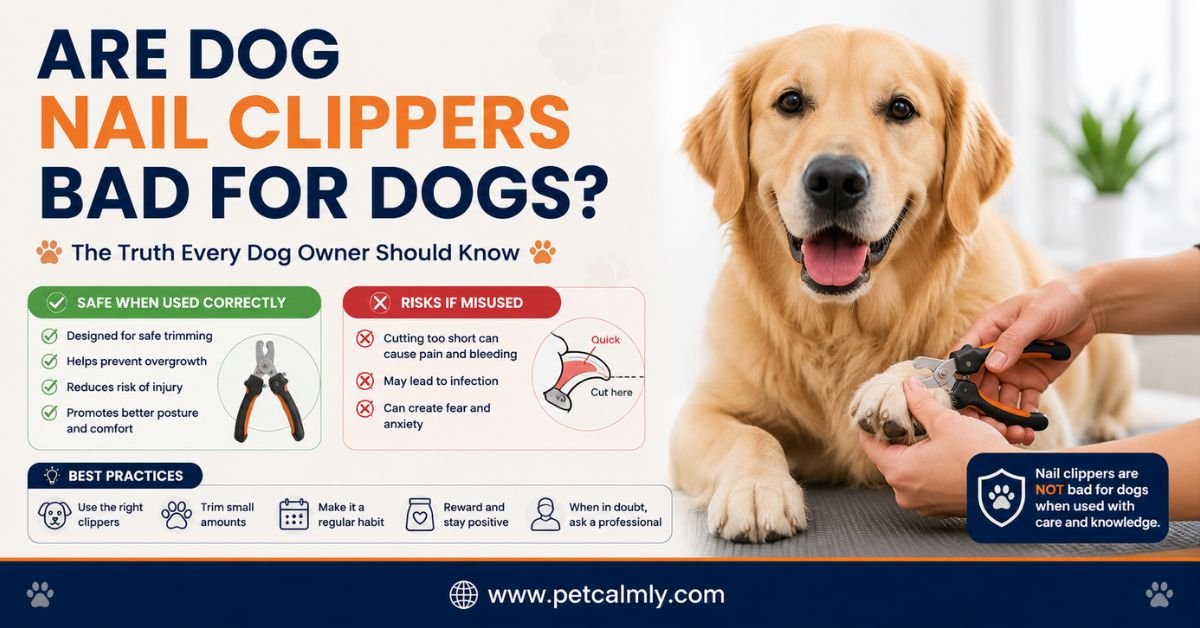
Dog nail clippers are not bad for dogs when used correctly. In fact, they are one of the safest and most effective tools for keeping your dog’s nails healthy at home. Problems only happen when clippers are used incorrectly such as cutting too far into the nail, using dull blades, or forcing a scared dog. With proper technique, calm handling, and the right type of clipper, nail trimming is a safe and necessary part of dog care that prevents pain, posture issues, and joint stress.
Introduction
If you’ve ever picked up a pair of dog nail clippers and felt unsure, you’re not alone.
Many dog owners quietly worry about the same things:
- “Am I hurting my dog?”
- “What if I cut too far?”
- “Are clippers even safe or should I avoid them?”
- “Why does my dog hate nail trimming so much?”
This hesitation is completely normal. Nail trimming is one of those care routines that looks simple but feels emotionally stressful when your dog pulls away, flinches, or refuses to cooperate.
The truth is, dog nail clippers themselves are not the problem. The real issue usually comes down to technique, timing, and your dog’s comfort level.
In this guide, we’ll break everything down in a calm, practical way so you can confidently understand:
- Whether clippers are safe or harmful
- Why dogs react badly to nail trimming
- Common mistakes owners make without realizing it
- How to trim nails safely without stress
- When clippers may not be the best option
By the end, you’ll feel more confident—and your dog will likely feel calmer too.
Are Dog Nail Clippers Bad for Dogs? The Real Truth
Dog nail clippers are a safe grooming tool when used correctly. They are designed to trim excess nail length, just like human nail clippers.
However, they can become problematic in these situations:
When clippers feel “bad” for dogs:
- The nail is cut too short (hitting the quick)
- Clippers are dull or low-quality
- The dog is restrained too tightly
- The dog is already fearful from past experiences
- The owner rushes the process
When clippers are perfectly safe:
- Nails are trimmed gradually
- The dog is calm or slowly desensitized
- Proper tools are used (sharp, clean clippers)
- The owner understands nail anatomy
The main takeaway:
Dog nail clippers are not harmful by nature incorrect use is what causes pain or fear.
Understanding Your Dog’s Nails (This Changes Everything)
To understand why clippers sometimes go wrong, you need to understand what’s inside a dog’s nail.
Each nail has:
- Hard outer shell – the visible part you trim
- Quick – a sensitive inner area with blood vessels and nerves
If you cut into the quick, your dog may:
- Feel sharp pain
- Bleed
- Become afraid of future nail trims
This is the #1 reason dogs develop fear around clippers—not the tool itself, but the experience.
Important insight:
Dogs don’t “hate clippers.” They hate painful or unpredictable trimming experiences.
Why Dogs React Badly to Nail Clippers
Many pet owners assume their dog is being dramatic or stubborn, but there’s usually a deeper explanation.
1. Past painful experience
One bad nail trim can create long-term fear. Dogs remember discomfort very clearly.
2. Sensitivity in paws
Paws are naturally sensitive. Some dogs are more reactive than others.
3. Lack of early training
Dogs who were never introduced to paw handling as puppies often resist grooming.
4. Pressure and restraint
Holding a dog too tightly can increase anxiety before the clipper even touches the nail.
5. Owner tension
Dogs easily pick up stress. If you’re nervous, your dog often becomes nervous too.
5 Common Mistakes Dog Owners Make With Nail Clippers
Even loving pet owners can unintentionally create problems.
Mistake 1: Cutting too much at once
Trying to shorten nails quickly increases the risk of hitting the quick.
Mistake 2: Using dull clippers
Dull blades crush the nail instead of cutting it cleanly.
Mistake 3: Only trimming when nails are very long
Overgrown nails make the quick extend further, making trimming harder and riskier.
Mistake 4: No training or preparation
Jumping straight into clipping without desensitization creates fear.
Mistake 5: Ignoring dog body language
Signs like pulling back, freezing, or licking lips are early stress signals.
Types of Dog Nail Clippers (And Which One Is Safer)
Not all clippers are the same, and choosing the right one makes a big difference.
Guillotine-style clippers
- Blade slices nail through a hole
- Works fast but requires precision
- Not ideal for nervous beginners
Scissor-style clippers
- Looks like small scissors
- Better control
- Most commonly recommended for home use
Grinder tools (alternative)
- Slowly files nail instead of cutting
- Less risk of cutting quick
- Some dogs dislike vibration noise
Quick comparison:
| Tool Type | Safety Level | Beginner Friendly | Speed |
|---|---|---|---|
| Scissor Clippers | High | Yes | Medium |
| Guillotine Clippers | Medium | Not ideal | Fast |
| Nail Grinder | High | Moderate | Slow |
When Dog Nail Clippers Can Become a Problem
Even safe tools can cause issues in certain situations.
Clippers may be “bad” only when:
- Nails are black (harder to see quick)
- Dog is extremely anxious or aggressive during grooming
- Owner lacks experience and confidence
- Nails are severely overgrown
- There is no gradual training process
In these cases, clippers aren’t dangerous—but they may not be the best starting point.
Signs Your Dog Had a Negative Nail Clipping Experience
Dogs don’t speak, but they communicate clearly through behavior.
Watch for:
- Pulling paws away suddenly
- Whining or yelping
- Trying to hide when clippers appear
- Excessive licking of paws afterward
- Aggression or snapping
- Trembling during grooming
If these signs appear consistently, your dog may associate clippers with stress or pain.
How to Use Dog Nail Clippers Safely (Step-by-Step Guide)
If you want nail trimming to be safe and stress-free, the process matters more than the tool.
Step 1: Create a calm environment
Choose a quiet space with no distractions.
Step 2: Touch paws regularly (outside clipping sessions)
This builds trust and reduces sensitivity.
Step 3: Introduce clippers slowly
Let your dog see and smell them before using.
Step 4: Trim tiny amounts
Cut small sections instead of trying to shorten nails all at once.
Step 5: Reward after each paw
Use treats, praise, or gentle play.
Step 6: Stop if your dog becomes stressed
Forcing it only increases fear long-term.
Quick Nail Care Checklist for Dog Owners
- Check nails every 2–3 weeks
- Listen for clicking sounds on floors
- Look at paw posture while standing
- Keep clippers clean and sharp
- Trim gradually instead of aggressively
- Reward calm behavior consistently
What Happens If You Don’t Trim Your Dog’s Nails?
Overgrown nails can cause more problems than most owners realize.
Possible issues:
- Pain while walking
- Joint stress and posture changes
- Reduced grip on surfaces
- Nail splitting or breaking
- Long-term skeletal discomfort
Dogs with long nails often adjust their walking style, which can strain their legs and spine over time.
Are Nail Clippers Better Than Other Methods?
Dog owners often wonder if clippers are even necessary.
Clippers vs grinders:
- Clippers: Faster, precise, but require confidence
- Grinders: Safer for beginners, slower, noise-sensitive
Professional groomer option:
If your dog is very anxious, groomers or veterinarians can handle trimming safely.
When Should You Worry? (Important Safety Section)
You should take extra caution or consult a vet if:
- Nails are bleeding frequently during trims
- Your dog shows extreme aggression or panic
- The quick is visible or injured
- Nails are curling into paw pads
- Your dog refuses paw touch completely
In these cases, professional help is often the safest choice.
What Should Pet Owners Do? (Practical Action Plan)
If you feel unsure about nail clippers, here’s a realistic approach:
For beginners:
Start slow:
- Touch paws daily
- Introduce clippers without cutting
- Trim only one nail per session
For nervous dogs:
- Use high-value treats
- Keep sessions under 5 minutes
- Stop before stress escalates
For experienced owners:
- Maintain a regular schedule
- Trim little but often
- Check nail length weekly
Consistency matters more than speed.
Emotional Side: Why This Feels So Stressful for Owners
Many pet owners feel nervous during nail trimming not because they lack skill, but because they care deeply.
That hesitation often comes from:
- Fear of hurting the dog
- Past accidental cuts
- A dog’s emotional reaction
- Pressure to “do it right”
But dogs don’t need perfect grooming they need calm, patient handling and consistency.
Conclusion
Dog nail clippers are not bad for dogs. They are a safe, effective grooming tool when used with care, patience, and proper technique.
Most problems come from:
- Cutting too deep
- Rushing the process
- Lack of training or desensitization
- Dog fear built from past experiences
When used correctly, clippers help prevent pain, improve mobility, and keep your dog comfortable in daily life.
If your dog is nervous, start slowly. If you’re unsure, ask a groomer or veterinarian for guidance. Over time, most dogs can learn to tolerate or even relax during nail care with the right approach.
More Information About Pets, Please Visit Our Website: Best Dog Shampoo for Regular Use
Best Calming Collar for Dogs
Luxury Pet Grooming Products Reviews
Best Dog Calming Treats for Anxiety
Dog calming spray for anxiety
Frequently Asked Questions
1. Are dog nail clippers painful for dogs?
No, clippers themselves are not painful. Pain only happens if the nail is cut too short and reaches the sensitive quick. Proper trimming avoids this completely.
2. Why does my dog hate nail clippers?
Most dogs dislike the experience, not the tool. Past pain, fear, or lack of training often causes anxiety around nail trimming.
3. How often should I use dog nail clippers?
Most dogs need nail trimming every 2–4 weeks, depending on activity level and natural wear on surfaces like concrete.
4. Can I use human nail clippers on my dog?
It’s not recommended. Dog nails are thicker and require stronger, curved tools designed specifically for pets.
5. What should I do if I cut the quick?
Stay calm. Apply styptic powder or cornstarch to stop bleeding. Comfort your dog and avoid rushing future trims.
6. Are nail grinders better than clippers?
Grinders are gentler and reduce the risk of cutting too short, but some dogs dislike the noise and vibration. The best choice depends on your dog’s temperament.