Short direct answer
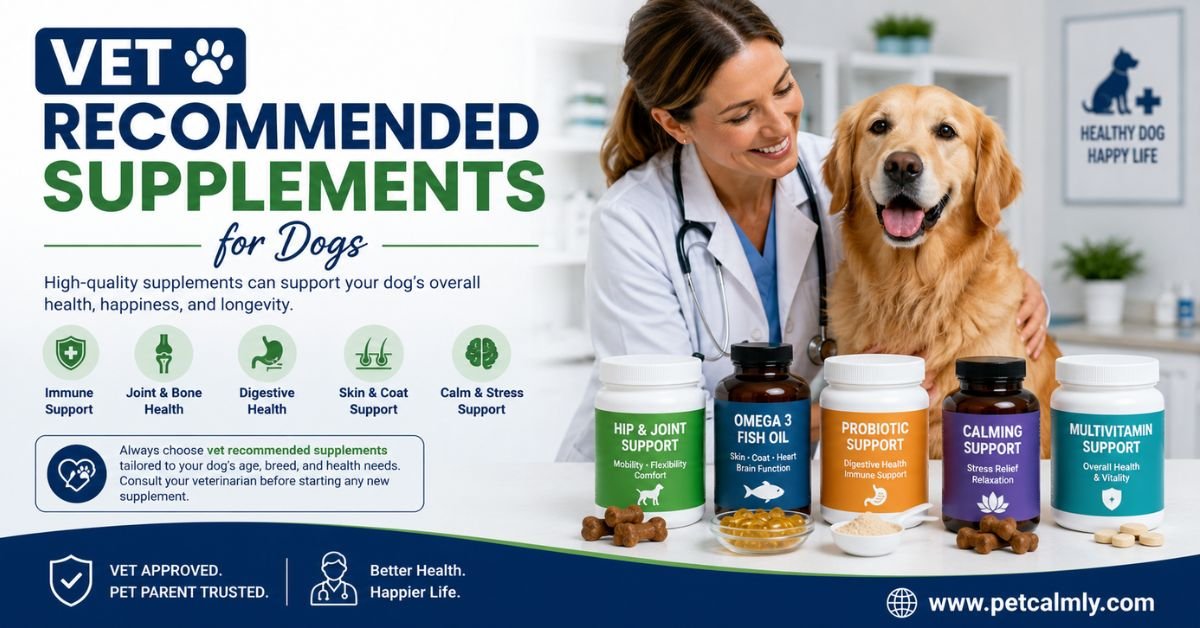
Vet recommended supplements for dogs are carefully chosen nutritional products that support areas like joint health, digestion, skin, immunity, and anxiety management. Veterinarians usually suggest supplements such as omega-3 fatty acids, glucosamine, chondroitin, probiotics, and certain calming or multivitamin blends based on a dog’s age, breed, lifestyle, and health condition. The main goal is not to “replace” food, but to fill nutritional gaps and support long-term wellness safely.
Most importantly, these supplements should always match your dog’s specific needs. What works for one dog may not be suitable for another, which is why veterinary guidance matters.
Introduction
If you’ve ever stood in a pet store aisle staring at rows of chews, powders, and oils labeled for “joint support,” “calm behavior,” or “shinier coat,” you’re not alone. Many dog owners today feel overwhelmed by choices and unsure what actually works.
Dogs today live longer than ever, which is great news. But longer life also means more age-related concerns like stiff joints, sensitive digestion, skin allergies, and anxiety issues. Even younger dogs can struggle with nutrient gaps due to diet, stress, or breed tendencies.
That’s where vet recommended supplements for dogs come in. When used correctly, they can:
- Support aging joints and mobility
- Improve digestion and nutrient absorption
- Strengthen skin and coat health
- Help manage stress or anxiety
- Fill small but important nutritional gaps in diet
But here’s the part many owners miss: supplements are not magic fixes. They work best as part of a balanced diet, good lifestyle, and proper veterinary care when needed.
In this guide, you’ll learn exactly what vets typically recommend, why they suggest it, how to choose safely, and what mistakes to avoid so you don’t waste money or risk your dog’s health.
What Are Vet Recommended Supplements for Dogs?
In simple terms, vet recommended supplements for dogs are nutritional support products that veterinarians suggest based on real health needs rather than marketing trends.
Unlike generic pet supplements you might see online, vet-approved options are usually:
- Backed by research or clinical use
- Made with safe, controlled ingredient levels
- Designed for specific conditions (not “one-size-fits-all”)
- Used alongside food—not instead of it
Vets typically recommend supplements when they notice:
- Early signs of arthritis or stiffness
- Chronic skin irritation or dull coat
- Digestive upset or inconsistent stool
- High anxiety or behavioral stress
- Recovery from illness or surgery
The goal is always support—not treatment replacement.
Why Dogs May Need Supplements in the First Place
A healthy dog eating a complete diet may not need supplements at all. But in real-life situations, things are not always perfect.
Here are the most common reasons vets suggest supplementation:
1. Age-related changes
Older dogs naturally lose cartilage, muscle strength, and digestive efficiency.
2. Breed tendencies
Some breeds are more prone to joint issues, allergies, or sensitive stomachs.
3. Processed or limited diets
Even high-quality commercial food may not meet every individual need.
4. Stress and environment
Relocation, separation anxiety, or loud environments can impact health.
5. Recovery periods
After surgery or illness, dogs often need extra nutritional support.
In short, supplements are often about “supporting weak points,” not fixing a broken system.
Most Common Vet Recommended Supplements for Dogs
Let’s break down what veterinarians most frequently suggest and why.
1. Omega-3 Fatty Acids (Fish Oil)
Omega-3s are one of the most widely recommended supplements in veterinary care.
Why vets recommend it:
- Reduces inflammation
- Supports skin and coat health
- Helps joint comfort
- May support brain function in puppies and seniors
Common signs your dog may benefit:
- Dry, flaky skin
- Excessive shedding
- Dull coat
- Mild joint stiffness
Natural sources:
- Fish oil (salmon, sardine, anchovy-based)
2. Glucosamine and Chondroitin (Joint Support)
These are especially common in aging dogs or large breeds.
Why vets recommend it:
- Supports cartilage health
- Helps maintain joint cushioning
- May slow progression of arthritis discomfort
Best for:
- Senior dogs
- Large breeds like Labradors, German Shepherds, Golden Retrievers
- Dogs showing stiffness after rest
Realistic expectation:
It doesn’t “cure” arthritis but can make movement easier over time.
3. Probiotics (Digestive Health Support)
A dog’s gut health affects everything from immunity to mood.
Why vets recommend it:
- Balances gut bacteria
- Helps with diarrhea or irregular stools
- Supports immune function
Helpful for dogs with:
- Sensitive stomachs
- Frequent digestive upset
- Antibiotic recovery
4. Multivitamins (General Nutritional Support)
Multivitamins are used when diet alone may not fully cover needs.
Why vets recommend it:
- Fills minor nutrient gaps
- Supports overall vitality
- Helps picky eaters
Important note:
Not all dogs need multivitamins. Over-supplementation can do more harm than good.
5. Calming Supplements (Anxiety Support)
These are becoming increasingly common due to modern lifestyle stress in pets.
Common ingredients:
- L-theanine
- Chamomile
- Valerian root (mild use only)
- Melatonin (in specific cases)
Used for:
- Separation anxiety
- Travel stress
- Fireworks or noise sensitivity
6. Skin and Coat Supplements
These often overlap with omega-3s but may include additional nutrients.
Why vets recommend it:
- Reduces itching
- Improves coat shine
- Supports skin barrier health
Signs Your Dog May Need Supplements
Not every dog needs supplements, but some signs suggest nutritional support could help.
Physical signs:
- Dull or brittle coat
- Excessive shedding
- Stiff movement or reluctance to climb stairs
- Recurring skin irritation
- Soft or inconsistent stool
Behavioral signs:
- Increased restlessness
- Sensitivity to stress
- Low energy compared to usual
Digestive signs:
- Gas or bloating
- Frequent diarrhea episodes
- Poor appetite consistency
If you notice multiple signs together, it’s worth discussing supplements with your vet.
How Veterinarians Choose Supplements
Vets don’t randomly pick supplements. Their recommendations are usually based on:
- Dog’s age and breed
- Weight and activity level
- Medical history
- Diet quality
- Specific symptoms
For example:
- A senior Labrador with stiffness → joint supplements
- A nervous rescue dog → calming support
- A puppy with loose stool → probiotics
This is why two dogs in the same home may need completely different supplements.
5 Common Mistakes Dog Owners Make with Supplements
Many pet owners try supplements with good intentions but make avoidable mistakes.
Mistake 1: Giving too many supplements at once
More is not better. It can stress the liver or digestive system.
Mistake 2: Expecting instant results
Most supplements take 2–6 weeks to show noticeable effects.
Mistake 3: Ignoring the root cause
For example, itching may be due to allergies—not just skin dryness.
Mistake 4: Choosing based on marketing
Bright packaging doesn’t mean clinical effectiveness.
Mistake 5: Not checking ingredient quality
Low-quality fish oil or fillers can reduce benefits.
Safe Supplementing: What Every Dog Owner Should Know
Before starting any supplement routine, keep these safety basics in mind:
Start slow
Introduce one supplement at a time so you can monitor reactions.
Follow dosage carefully
Dog weight matters. Overdosing can cause side effects.
Choose reputable brands
Look for veterinary-grade or third-party tested products.
Watch for changes
Improvement, allergies, or digestive changes should be monitored.
Always consider food first
A balanced diet is still the foundation of health.
Quick Comparison Table: Common Dog Supplements
| Supplement Type | Main Benefit | Best For | Time to See Results |
|---|---|---|---|
| Omega-3 | Skin, coat, joints | All ages | 3–6 weeks |
| Glucosamine | Joint support | Senior/large breeds | 4–8 weeks |
| Probiotics | Digestion | Sensitive stomachs | 1–3 weeks |
| Multivitamins | General health | Picky eaters | 2–4 weeks |
| Calming aids | Anxiety relief | Stress-prone dogs | 30 min–2 weeks |
When Should You Worry and See a Vet?
Supplements are supportive, not a replacement for medical care.
You should consult a vet if your dog shows:
- Sudden weight loss
- Persistent vomiting or diarrhea
- Severe itching or skin wounds
- Difficulty walking or sudden limping
- Extreme behavioral changes
If symptoms worsen instead of improving, stop supplements and seek professional advice.
What Should Pet Owners Do? (Simple Action Plan)
If you’re unsure where to start, here’s a safe approach:
- Observe your dog for symptoms over a few days
- Check diet quality and feeding routine
- Identify the main concern (joint, skin, digestion, anxiety)
- Talk to a vet before starting supplements
- Introduce one supplement at a time
- Track changes for at least 3–6 weeks
Consistency matters more than quantity.
Conclusion
Vet recommended supplements for dogs can make a real difference when used thoughtfully. They’re not about chasing trends—they’re about supporting your dog’s comfort, mobility, digestion, and emotional well-being in a balanced way.
The most important takeaway is simple: your dog doesn’t need “everything,” just what actually supports their unique needs.
When chosen carefully and guided by a vet, supplements become a quiet but powerful part of long-term health not a quick fix, but steady support for a better life.
More Information About Pets, Please Visit Our Website: Best Pet Food for Sensitive Stomach 2026
How to Improve Cat Dental Health
Frequently Asked Questions
1. Are vet recommended supplements for dogs safe for daily use?
Yes, most are safe when used correctly and at the proper dosage. However, they should match your dog’s needs and be approved by a vet.
2. How long do dog supplements take to work?
It depends on the type. Some calming supplements work within hours, while joint or skin supplements may take several weeks.
3. Can I give my dog human supplements?
No, it is not recommended. Dogs have different nutritional needs and dosages, which can make human supplements unsafe.
4. Do puppies need supplements?
Usually no, because high-quality puppy food already contains necessary nutrients. Only a vet should recommend additional supplements.
5. What is the most important supplement for dogs?
Omega-3 fatty acids are often considered one of the most beneficial because they support skin, joints, and overall health.
6. Can supplements replace dog food?
No. Supplements are meant to support nutrition, not replace balanced meals. Food remains the foundation of health.