Short direct answer
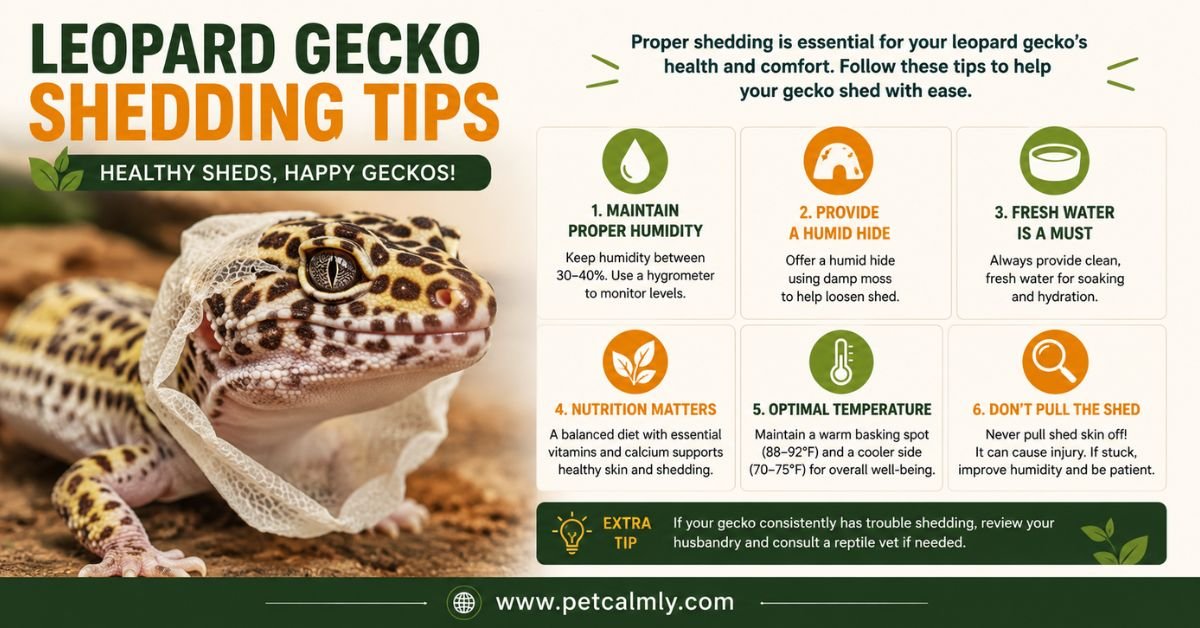
Leopard geckos usually shed their skin every few weeks as they grow and replace old skin. The best leopard gecko shedding tips are to maintain proper humidity, provide a humid hide, ensure good nutrition, avoid handling during shedding, and monitor for stuck shed around the toes, tail, eyes, and nose. Most healthy leopard geckos shed without assistance, but environmental issues can lead to shedding problems that require prompt attention.
Leopard Gecko Shedding Tips: What Every Owner Should Know
Watching your leopard gecko shed for the first time can be surprising. One day they look perfectly normal, and the next they appear pale, dusty, or almost ghost-like.
Many new owners immediately worry that their gecko is sick.
In reality, shedding is a completely normal and essential part of a leopard gecko’s life. Healthy shedding allows new skin to replace old skin, supports growth, and helps maintain skin health.
The challenge is that shedding doesn’t always go smoothly.
Improper humidity, dehydration, nutritional deficiencies, or enclosure mistakes can cause retained shed that may lead to discomfort, circulation problems, or even injury if left untreated.
This guide covers practical leopard gecko shedding tips, common mistakes, warning signs, and step-by-step care advice so you can help your gecko shed safely and comfortably.
Why Do Leopard Geckos Shed Their Skin?
In Short
Leopard geckos shed because their outer skin layer cannot grow with their body. As they develop, old skin must be replaced with new skin underneath.
Unlike humans, who continuously shed tiny skin cells, reptiles shed larger sections of skin periodically.
Shedding helps:
- Accommodate growth
- Remove damaged skin
- Maintain healthy scales
- Reduce parasites and debris
- Keep skin functioning properly
Young geckos shed more frequently because they grow rapidly, while adults shed less often.
How Often Do Leopard Geckos Shed?
Shedding frequency depends largely on age.
| Age | Typical Shedding Frequency |
|---|---|
| Hatchlings | Every 1–2 weeks |
| Juveniles | Every 2–4 weeks |
| Sub-adults | Every 4–6 weeks |
| Adults | Every 4–8 weeks |
Individual geckos vary.
Some adults may shed monthly, while others may go several weeks longer between sheds.
Factors affecting shedding frequency include:
- Growth rate
- Diet quality
- Hydration
- Temperature
- Overall health
- Seasonal changes
Signs Your Leopard Gecko Is About to Shed
Recognizing pre-shed behavior helps owners prepare.
Skin Becomes Dull or Whitish
This is usually the first sign.
The skin loses its vibrant color and develops a cloudy, faded appearance.
Many owners mistake this for illness, but it simply means a new skin layer is forming underneath.
Reduced Appetite
Some geckos eat less before shedding.
This temporary decrease in feeding is generally normal if the gecko resumes eating afterward.
Increased Hiding
A leopard gecko nearing a shed may spend more time in secure hiding spots.
This behavior likely helps reduce stress during a vulnerable period.
Irritability
Some geckos become less tolerant of handling before shedding.
This is another reason to minimize interaction during the process.
More Time in the Humid Hide
A gecko preparing to shed often seeks extra moisture.
You may notice them spending significantly more time inside their humid shelter.
The Most Important Leopard Gecko Shedding Tip: Provide a Humid Hide
If there’s one thing every leopard gecko owner should do, it’s provide a proper humid hide.
Why It Matters
Moisture softens old skin and helps it separate from the new layer underneath.
Without adequate humidity, shedding becomes much more difficult.
What Makes a Good Humid Hide?
A humid hide should:
- Be enclosed on most sides
- Retain moisture effectively
- Be easy to access
- Stay clean
- Be large enough for the gecko to turn around comfortably
Suitable materials include:
- Damp sphagnum moss
- Moist coconut fiber
- Moist paper towels
The substrate should be damp but not soaking wet.
How Humidity Affects Shedding Success
Leopard geckos are desert reptiles, but that doesn’t mean they should live in completely dry conditions.
This misconception causes many shedding problems.
Ideal Humidity Range
General enclosure humidity:
- Approximately 30–40%
Humid hide humidity:
- Approximately 70–80%
The humid hide creates a microclimate that supports proper shedding without making the entire enclosure excessively humid.
Step-by-Step: What Happens During a Normal Shed?
Understanding the process helps you know what is normal.
Step 1: Skin Turns Pale
The old skin loosens.
Colors appear dull or gray.
Step 2: Skin Separates
A layer of fluid develops between old and new skin.
This helps the old skin detach.
Step 3: Gecko Begins Peeling
The gecko rubs against surfaces to loosen skin around the head and body.
Step 4: Skin Comes Off in Sections
Most leopard geckos remove shed skin themselves.
The process often occurs overnight.
Step 5: Gecko Eats the Shed
Many owners panic when they never find shed skin.
That’s because leopard geckos frequently consume it.
This behavior is completely normal.
Should You Help Your Leopard Gecko Shed?
Quick Answer
Usually no.
Healthy geckos should shed independently.
Intervening unnecessarily can damage delicate new skin.
Instead:
- Observe closely
- Ensure humidity is adequate
- Provide fresh water
- Check for retained shed afterward
Only assist when skin remains stuck after the shedding process is complete.
Common Areas Where Shed Gets Stuck
Some body parts are especially vulnerable.
Toes
This is the most common problem area.
Retained shed can tighten around toes like a ring.
Over time, circulation may be reduced.
Tail Tip
The tail end can trap old skin if humidity is inadequate.
Eyes
Retained shed around the eyes may cause irritation.
Nose
Small skin fragments can become lodged around nostrils.
Legs and Feet
Thin skin around joints sometimes remains attached.
How to Safely Remove Stuck Shed
Most Importantly
Never pull dry skin.
Doing so can tear healthy tissue.
Safe Removal Method
- Prepare a shallow container.
- Add lukewarm water.
- Allow the gecko to soak for 10–15 minutes.
- Use a damp cotton swab.
- Gently loosen softened skin.
- Stop if resistance occurs.
Patience is important.
Some cases require several sessions.
Mistakes That Cause Shedding Problems
Many shedding issues are preventable.
1: Forgetting the Humid Hide
This is arguably the most common mistake among beginners.
Without a humid retreat, sheds often become incomplete.
2: Letting the Gecko Become Dehydrated
Hydration supports healthy skin function.
Always provide:
- Clean water
- Accessible water dishes
- Appropriate enclosure conditions
3: Poor Temperature Management
Low temperatures can affect metabolism and overall health.
Maintain proper thermal gradients within the enclosure.
4: Excessive Handling
Handling can stress a gecko during shedding.
Allow them privacy whenever possible.
5: Ignoring Stuck Shed
A small ring of skin around a toe may seem harmless initially.
However, prolonged constriction can become serious.
Nutrition and Shedding: The Connection Many Owners Miss
Healthy skin starts with proper nutrition.
A gecko that receives balanced nutrition often experiences fewer shedding complications.
Important Nutrients
Vitamin A
Supports skin and epithelial health.
Deficiencies may contribute to shedding difficulties.
Calcium
Essential for overall health and bodily functions.
Vitamin D3
Helps calcium utilization.
Protein
Supports tissue growth and maintenance.
Feeding Tips That Support Healthy Shedding
Offer a varied diet when possible.
Common feeder insects include:
- Crickets
- Dubia roaches
- Mealworms
- Black soldier fly larvae
- Silkworms
In addition:
- Gut-load feeder insects
- Use appropriate supplements
- Follow recommended calcium schedules
- Ensure access to fresh water
What to Avoid During Shedding
Don’t Peel Skin Off
Even if it looks ready to come off.
The skin may still be attached underneath.
Don’t Increase Humidity Excessively
Overly humid enclosures may encourage mold, bacterial growth, and respiratory issues.
Don’t Force Feeding
A temporary appetite decrease is often normal.
Don’t Handle Excessively
Many geckos prefer to be left alone during shedding.
Don’t Ignore Persistent Problems
Repeated shedding difficulties may signal an underlying issue.
A Simple Shedding Care Checklist
Use this quick checklist before and during every shed.
Daily
✔ Check water availability
✔ Observe skin appearance
✔ Verify enclosure temperatures
✔ Inspect humid hide moisture
During Shedding
✔ Minimize handling
✔ Monitor progress
✔ Keep humid hide available
✔ Watch for retained skin
After Shedding
✔ Check toes carefully
✔ Inspect tail tip
✔ Examine eyes
✔ Confirm normal activity
✔ Resume routine feeding
Shedding Problems in Baby Leopard Geckos
Young geckos shed much more frequently.
Because growth is rapid, owners have more opportunities to notice problems.
Pay special attention to:
- Humid hide access
- Proper feeding
- Calcium supplementation
- Hydration
A baby gecko that repeatedly struggles with shedding should be evaluated for husbandry issues.
Shedding Problems in Older Leopard Geckos
Senior geckos sometimes experience more shedding difficulties.
Possible contributing factors include:
- Reduced mobility
- Chronic dehydration
- Nutritional imbalances
- Underlying health conditions
Older geckos may require closer monitoring after each shed cycle.
Can Stress Affect Shedding?
Yes.
Stress can contribute to poor shedding quality.
Common stressors include:
- Frequent enclosure changes
- Excessive handling
- Aggressive tank mates
- Improper temperatures
- Loud environments
- Inadequate hiding spaces
A secure gecko generally sheds more successfully.
Myth vs Reality
| Myth | Reality |
|---|---|
| Leopard geckos need very high enclosure humidity. | They need a humid hide, not a constantly humid enclosure. |
| Owners should peel off all shed skin. | Most geckos shed naturally without assistance. |
| White skin means illness. | It often means shedding is about to occur. |
| Eating shed skin is abnormal. | This behavior is common and natural. |
| Stuck shed is harmless. | Persistent retained shed can become serious. |
When Should You Worry?
Most sheds occur without complications.
However, some situations deserve attention.
Contact a Reptile Veterinarian If:
- Shed remains stuck for several days
- Toes appear swollen
- Skin forms tight constriction rings
- Eyes remain covered by retained shed
- Repeated shedding problems occur
- Appetite declines significantly
- Weight loss develops
- Skin appears infected
- Bleeding occurs
These signs may indicate husbandry problems or underlying health concerns.
What Should Pet Owners Do?
If your leopard gecko is shedding, focus on the basics.
Provide
- A proper humid hide
- Fresh drinking water
- Stable temperatures
- Good nutrition
- Minimal stress
Monitor
- Toes
- Tail tip
- Eyes
- Nose
- Appetite
- Activity level
Act Promptly
Address stuck shed early before complications develop.
Small problems are much easier to resolve than severe retained shed.
Practical Example: A Common Owner Situation
A leopard gecko begins looking pale and spends most of its time inside the humid hide.
The owner notices reduced feeding and becomes concerned.
In many cases, this is simply a normal pre-shed phase.
Within a day or two, the gecko sheds, eats much of the skin, and returns to normal behavior.
The key is understanding what healthy shedding looks like so normal changes don’t become unnecessary worries.
Frequently Asked Questions
1: How long does a leopard gecko take to shed?
Most leopard geckos complete the actual shedding process within a few hours. The pre-shed phase, where the skin turns pale, may last several days beforehand.
2: Why is my leopard gecko turning white?
A whitish or dull appearance is usually a sign that shedding is approaching. New skin develops beneath the old layer, causing colors to appear faded temporarily.
3: Is it normal for a leopard gecko to eat its shed skin?
Yes. Many leopard geckos consume shed skin after removal. This is a natural behavior and generally isn’t a cause for concern.
4: How can I tell if my gecko has stuck shed?
Check the toes, tail tip, eyes, and nose after shedding. Retained shed often appears as thin, dry skin that remains attached after the rest of the shed is complete.
5: Should I mist my leopard gecko directly during shedding?
Generally, providing a humid hide is safer and more effective than directly spraying the gecko. Excessive misting can cause unnecessary stress.
6: Why does my leopard gecko have shedding problems every time?
Repeated shedding difficulties often point to husbandry issues such as inadequate humidity, dehydration, poor nutrition, or environmental stress. A reptile veterinarian can help if problems persist.
More Information About Pets, Please Visit Our Website: Corn Snake Shedding Problems
Corn Snake Diet Feeding Schedule
Conclusion
Healthy shedding is one of the clearest signs that a leopard gecko’s body is functioning normally. While the process can look unusual especially for new reptile owners it rarely requires intervention when proper care is in place.
The most valuable leopard gecko shedding tips are surprisingly simple: maintain a reliable humid hide, keep your gecko hydrated, provide balanced nutrition, and inspect for retained shed after every shedding cycle.
Most importantly, don’t panic when your gecko turns pale, hides more often, or skips a meal before shedding. These are usually normal parts of the process. By understanding what to expect and recognizing the warning signs of trouble, you’ll be able to support your leopard gecko through every shed with confidence and keep them healthy for years to come.