Short direct answer
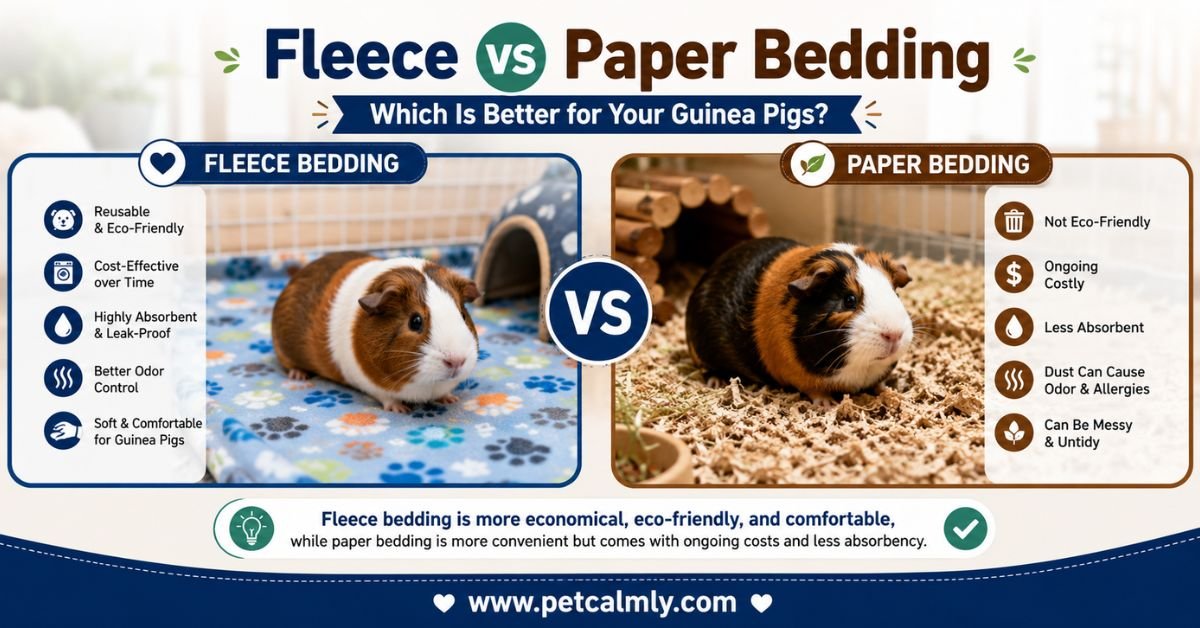
Choosing between fleece and paper bedding for guinea pigs depends on your priorities comfort, cost, cleaning routine, and your pet’s health needs. Fleece bedding is reusable, soft, and eco-friendly, but requires daily spot cleaning and proper absorbency layers underneath. Paper bedding is disposable, highly absorbent, and easier for beginners, but can be more expensive long-term and less sustainable.
If you want low-maintenance cleaning, paper bedding wins. If you want long-term savings and comfort, fleece is often better when set up correctly.
Introduction
A guinea pig’s bedding is not just a “floor covering.” It directly affects their comfort, hygiene, respiratory health, and behavior. Many new owners underestimate how sensitive guinea pigs are to dust, ammonia buildup, and damp environments.
Guinea pigs spend most of their life on bedding eating hay, sleeping, and moving around in it. So choosing between fleece and paper bedding is really about creating a safe living environment that supports their natural instincts.
In this guide, we’ll break down both options in real-world terms so you can confidently decide what works best for your guinea pigs and your lifestyle.
What Is Fleece Bedding for Guinea Pigs?
Fleece bedding is a reusable setup made from soft fleece fabric layered over absorbent materials like:
- Towels
- U-Haul pads
- Mattress protectors
- Washable absorbent liners
The fleece allows moisture to pass through while keeping the top surface dry when properly prepared.
Why guinea pig owners choose fleece bedding
Many experienced owners prefer fleece because it:
- Feels soft and comfortable under sensitive feet
- Reduces long-term costs
- Produces less waste
- Looks cleaner in cages when maintained properly
But fleece only works well if it is correctly “wicked” (pre-washed and paired with absorbent layers). Without that, urine can pool and cause odor or skin issues.
What Is Paper Bedding for Guinea Pigs?
Paper bedding is a disposable bedding made from recycled paper products. It is designed to absorb moisture and control odor.
Common types include:
- Shredded paper bedding
- Paper fluff bedding
- Pellet-style paper bedding
Why beginners often prefer paper bedding
Paper bedding is popular because it:
- Requires no setup or layering
- Absorbs urine quickly
- Controls odor fairly well
- Is easy to replace completely
For first-time guinea pig owners, it feels simpler and more predictable.
Fleece vs Paper Bedding for Guinea Pigs: Key Differences Explained
Understanding the differences helps you choose based on real daily care not just appearance.
1. Absorbency and moisture control
- Fleece bedding:
Needs absorbent layers underneath to manage moisture properly. Without them, urine sits on the surface or leaks through. - Paper bedding:
Naturally absorbs urine, trapping moisture quickly and reducing wet spots.
Winner for absorption: Paper bedding
2. Odor control
- Fleece:
Controls odor well only if cleaned daily and properly layered. - Paper bedding:
Absorbs ammonia faster, but must be changed frequently to avoid smell buildup.
👉 Slight edge: Paper bedding for beginners, fleece for experienced owners
3. Comfort and guinea pig behavior
Guinea pigs love soft, dry surfaces. Their feet are delicate, and poor bedding can cause discomfort.
- Fleece: Soft, fabric-like comfort that mimics natural soft ground
- Paper bedding: Soft initially, but can flatten or become damp
Winner for comfort: Fleece bedding
4. Cleaning routine
- Fleece bedding requires:
- Daily spot cleaning (poops removed)
- Washing every 2–4 days
- Laundry setup and drying time
- Paper bedding requires:
- Full replacement every 2–5 days (depending on cage size and pigs)
Winner for convenience: Paper bedding
5. Cost over time
- Fleece: Higher initial cost (pads, fleece layers), but reusable for years
- Paper bedding: Ongoing monthly cost
Winner long-term: Fleece bedding
6. Environmental impact
- Fleece: Reusable, reduces waste significantly
- Paper bedding: Generates continuous waste
Winner: Fleece bedding
Pros and Cons of Fleece Bedding
Advantages of fleece bedding
- Soft and cozy for guinea pigs
- Reusable and cost-effective long term
- Less waste in landfills
- Easier to monitor poop and urine output (important for health tracking)
- Visually clean when maintained
Disadvantages of fleece bedding
- Requires proper layering setup
- Needs frequent washing
- Initial cost is higher
- Can smell quickly if not maintained properly
- Not beginner-friendly without guidance
Pros and Cons of Paper Bedding
Advantages of paper bedding
- Very easy to use
- Excellent absorbency
- Good odor control (short term)
- Low setup effort
- Ideal for temporary cages or travel setups
Disadvantages of paper bedding
- Ongoing expense
- Needs frequent full replacement
- Can get dusty in lower-quality brands
- Less eco-friendly
- May stick to long-haired guinea pigs
Which Bedding Is Better for Guinea Pig Health?
Both bedding types can be safe if used correctly, but health risks appear when setup or maintenance is poor.
Fleece bedding health considerations
Fleece is safe when:
- It stays dry on top
- Absorbent layers prevent moisture buildup
- Cage is cleaned daily
Poor fleece setup can lead to:
- Urine scald (skin irritation)
- Smell buildup
- Bacterial growth
Paper bedding health considerations
Paper bedding is safe when:
- Changed regularly
- Kept dry and fluffy
- Dust-free brand is used
Poor maintenance can cause:
- Respiratory irritation from ammonia
- Damp bedding leading to fungal issues
- Foot irritation in long exposure
Behavior Differences: What Guinea Pigs Prefer
Guinea pigs don’t “decide” between fleece or paper in a conscious way, but their behavior can show preferences.
Signs they may prefer fleece
- Lying flat comfortably for long periods
- Less digging and burrowing anxiety
- Spending more time outside hides
Signs they may prefer paper bedding
- Burrowing and nesting behavior
- Hiding in deep bedding piles
- Active digging
Some guinea pigs enjoy both depending on mood and environment.
4 Common Mistakes Guinea Pig Owners Make
Many bedding problems come from setup errors, not the material itself.
Mistake 1: Using fleece without absorbent layers
This leads to:
- Wet fleece surface
- Strong ammonia smell
- Skin irritation
Mistake 2: Not changing paper bedding often enough
This leads to:
- Odor buildup
- Wet cage bottoms
- Health risks
Mistake 3: Using dusty bedding
Cheap bedding options can cause:
- Sneezing
- Eye irritation
- Respiratory issues
Mistake 4: Ignoring cage size
Small cages make both bedding types fail faster due to:
- Faster waste buildup
- Limited dry zones
Fleece vs Paper Bedding: Side-by-Side Comparison Table
| Feature | Fleece Bedding | Paper Bedding |
|---|---|---|
| Comfort | Excellent | Good |
| Absorbency | Needs layering | High |
| Maintenance | Daily spot cleaning | Full change every few days |
| Cost | Long-term savings | Ongoing cost |
| Odor control | Good if maintained | Good short-term |
| Eco-friendly | Yes | No |
| Beginner-friendly | Moderate | High |
Which Bedding Should YOU Choose?
Choose fleece bedding if:
- You want long-term savings
- You are okay with daily maintenance
- You want a cleaner-looking cage
- You care about sustainability
Choose paper bedding if:
- You want low-effort cleaning
- You are a beginner
- You prefer quick setup
- You don’t mind ongoing costs
Hybrid Setup (Best of Both Worlds)
Many experienced owners actually combine both systems:
- Fleece in main living areas
- Paper bedding in toilet corners or litter trays
This setup:
- Reduces odor
- Makes cleaning easier
- Gives guinea pigs texture variety
When Should You Be Concerned About Bedding Issues?
Watch for these warning signs:
- Constant sneezing or watery eyes
- Strong ammonia smell in cage
- Wet fur on belly or feet
- Reluctance to move or explore
- Red or irritated skin
If you notice these symptoms, it may be time to:
- Change bedding type
- Improve cage ventilation
- Increase cleaning frequency
- Consult a vet if symptoms persist
What Should Guinea Pig Owners Actually Do?
A practical approach:
- Start with paper bedding if you are new
- Observe your cleaning routine and guinea pig behavior
- Switch to fleece if you want long-term savings
- Experiment with hybrid setups if needed
- Always prioritize dryness and hygiene over aesthetics
The “best bedding” is not universal it’s the one you can maintain consistently.
Conclusion
There is no single winner in the fleece vs paper bedding debate. Both can provide a safe and comfortable environment for guinea pigs when used correctly.
- Fleece bedding is ideal for experienced owners who want comfort, sustainability, and long-term savings.
- Paper bedding is perfect for beginners who want simplicity and fast cleanup.
The real key is not the material it’s the cleanliness, dryness, and consistency of care you provide.
A well-maintained cage matters far more than the bedding type itself.
More Information About Pets, Please Visit Our Website: Guinea Pig Vitamin C Vegetables
Frequently Asked Questions
1. Is fleece or paper bedding better for guinea pigs?
Fleece is better for long-term comfort and savings, while paper bedding is easier for beginners and requires less setup.
2. Do guinea pigs prefer fleece bedding?
Many guinea pigs enjoy fleece because it is soft and warm, but some prefer the digging texture of paper bedding.
3. How often should I clean fleece bedding?
Spot clean daily and wash every 2–4 days depending on cage size and number of guinea pigs.
4. Is paper bedding safe for guinea pigs?
Yes, as long as it is dust-free and changed regularly to prevent ammonia buildup.
5. Can I mix fleece and paper bedding?
Yes, a hybrid setup is often ideal fleece for main areas and paper bedding for litter zones.
6. What is the most cost-effective bedding option?
Fleece bedding is more cost-effective over time because it is reusable, despite higher initial setup costs.