Short direct answer
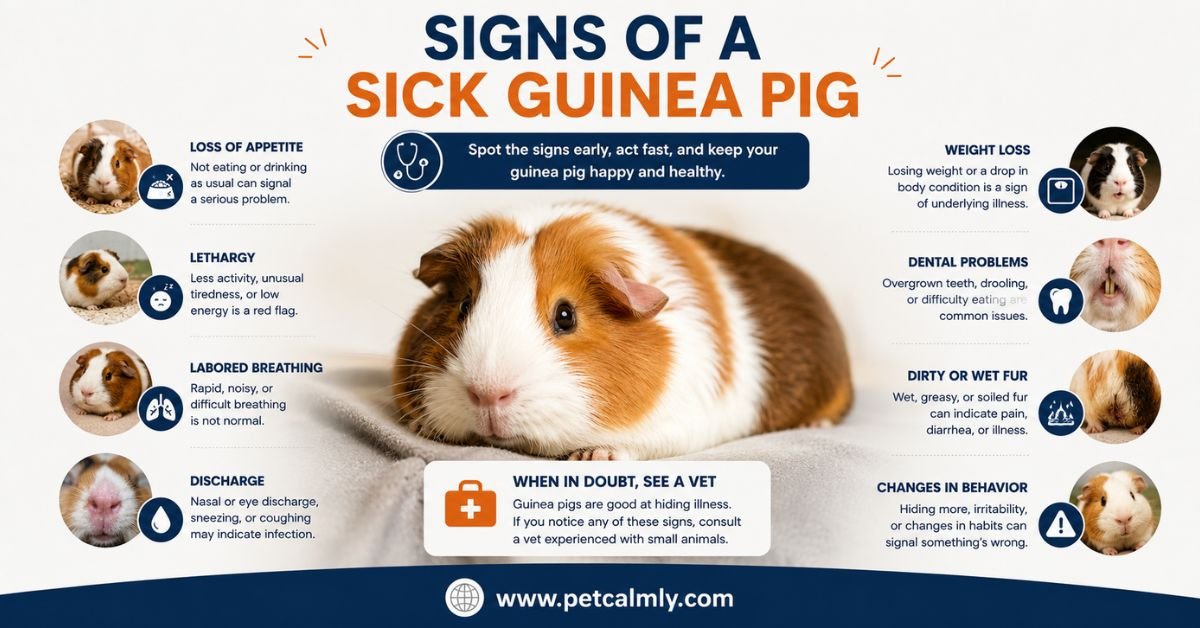
The most common signs of a sick guinea pig include loss of appetite, weight loss, lethargy, difficulty breathing, unusual droppings, hiding more than usual, discharge from the eyes or nose, and changes in drinking habits. Because guinea pigs naturally hide illness as a survival instinct, even subtle behavioral changes can indicate a serious health problem. If your guinea pig stops eating for several hours or appears weak, contact an exotic pet veterinarian as soon as possible.
Introduction
Guinea pigs are experts at hiding discomfort.
In the wild, showing weakness makes an animal an easy target for predators. Even though your guinea pig lives safely indoors, that instinct remains deeply rooted. Unfortunately, this means many owners don’t realize their pet is sick until symptoms become obvious.
Learning the signs of a sick guinea pig can help you spot problems early, seek veterinary care sooner, and potentially save your pet’s life.
Whether you’re a first-time guinea pig owner or have cared for cavies for years, understanding what is normal and what isn’t is one of the most important parts of responsible pet ownership.
In this guide, you’ll learn the most common warning signs, possible causes, when to worry, and what actions to take if your guinea pig appears unwell.
Why Guinea Pigs Often Hide Illness
One of the biggest challenges in guinea pig care is that symptoms may appear subtle at first.
A guinea pig can be seriously ill while still eating small amounts, moving around the cage, and interacting with its owner.
This natural behavior means owners should pay attention to small daily changes, including:
- Appetite
- Activity level
- Weight
- Breathing
- Water consumption
- Grooming habits
- Droppings
- Social behavior
Daily observation is often the earliest way to detect illness.
15 Common Signs of a Sick Guinea Pig
1. Loss of Appetite
A healthy guinea pig is usually enthusiastic about food.
If your guinea pig suddenly ignores hay, vegetables, pellets, or favorite treats, something may be wrong.
Possible causes include:
- Dental disease
- Gastrointestinal issues
- Respiratory infections
- Pain
- Stress
- Organ disease
A guinea pig that stops eating can become critically ill very quickly.
2. Rapid Weight Loss
Weight loss is often one of the earliest signs of illness.
Because guinea pigs have thick fur, body condition changes may not be obvious by sight alone.
Use a kitchen scale and weigh your guinea pig weekly.
Warning signs include:
- Noticeable weight decline
- Prominent spine or hips
- Reduced muscle mass
Unexpected weight loss always deserves attention.
3. Lethargy and Low Energy
Healthy guinea pigs are curious and alert.
A sick guinea pig may:
- Sleep more
- Remain in one spot
- Avoid exploring
- Show less interest in interaction
- Move slowly
Lethargy is a common symptom associated with many illnesses.
4. Hiding More Than Usual
Most guinea pigs enjoy hideouts, but excessive hiding can signal discomfort.
You may notice your pet:
- Avoids interaction
- Stays inside shelters all day
- Refuses favorite treats
- Appears withdrawn
Behavioral changes often occur before physical symptoms become obvious.
5. Difficulty Breathing
Breathing problems should never be ignored.
Symptoms may include:
- Wheezing
- Clicking sounds
- Labored breathing
- Open-mouth breathing
- Rapid breathing
- Head stretching during respiration
Respiratory infections can worsen quickly and require prompt veterinary care.
6. Eye Discharge or Crusty Eyes
Healthy guinea pig eyes should be bright and clear.
Signs of concern include:
- Excessive tearing
- White discharge
- Yellow discharge
- Redness
- Swelling
Eye issues may result from infection, injury, hay irritation, or dental problems.
7. Nasal Discharge
A runny nose is not normal in guinea pigs.
Watch for:
- Wet nostrils
- Mucus
- Sneezing
- Congestion
These symptoms commonly occur with upper respiratory infections.
8. Changes in Poop Appearance
Your guinea pig’s droppings reveal a lot about digestive health.
Healthy droppings should be:
- Firm
- Oval-shaped
- Consistent in size
Warning signs include:
- Small droppings
- Diarrhea
- Misshapen feces
- Reduced stool production
Digestive issues can become emergencies in guinea pigs.
9. Drinking More or Less Water
Changes in water consumption can indicate illness.
Excessive drinking may suggest:
- Kidney disease
- Diabetes
- Other metabolic disorders
Reduced drinking may contribute to dehydration.
Monitor changes carefully.
10. Rough or Unkempt Coat
A healthy guinea pig generally maintains a clean coat.
Illness may cause:
- Greasy fur
- Matted fur
- Dull appearance
- Poor grooming
This often occurs because the guinea pig lacks energy or feels discomfort.
11. Drooling or Wet Chin
Excessive saliva around the mouth is a major warning sign.
Possible causes include:
- Overgrown teeth
- Dental abscesses
- Oral pain
- Mouth injuries
Dental disease is one of the most common health problems in guinea pigs.
12. Swollen Abdomen
Bloating can be extremely dangerous.
Symptoms may include:
- Tight stomach
- Distended abdomen
- Reduced appetite
- Pain
- Difficulty moving
Immediate veterinary attention is recommended.
13. Limping or Difficulty Walking
Mobility changes can result from:
- Injury
- Arthritis
- Vitamin C deficiency
- Foot infections
Watch for stiffness, favoring one leg, or reluctance to move.
14. Excessive Scratching or Hair Loss
Skin problems often cause:
- Bald patches
- Flaky skin
- Itching
- Scabs
Common causes include:
- Mites
- Fungal infections
- Allergies
Early treatment helps prevent worsening symptoms.
15. Unusual Vocalizations
Many guinea pigs communicate frequently.
However, sudden changes in vocal behavior may indicate discomfort.
Examples include:
- Constant whining
- Painful squealing
- Distress sounds
- Reduced vocalization
Pay attention to changes from your pet’s normal behavior.
Signs of a Sick Guinea Pig: Quick Symptom Checklist
| Symptom | Possible Concern | Vet Visit Needed? |
|---|---|---|
| Not eating | Dental disease, GI stasis | Yes |
| Weight loss | Multiple illnesses | Yes |
| Breathing difficulty | Respiratory infection | Urgent |
| Eye discharge | Infection or injury | Yes |
| Diarrhea | Digestive illness | Yes |
| Bloating | GI emergency | Immediate |
| Drooling | Dental problems | Yes |
| Lethargy | Various illnesses | Yes |
| Limping | Injury or deficiency | Yes |
| Excessive scratching | Parasites or fungus | Usually |
What Causes Illness in Guinea Pigs?
Several health issues commonly affect guinea pigs.
Respiratory Infections
These are among the most frequent medical conditions.
Risk factors include:
- Poor ventilation
- Damp bedding
- Stress
- Exposure to sick animals
Dental Disease
Guinea pig teeth grow continuously.
Without adequate hay consumption, overgrowth can occur.
Vitamin C Deficiency
Unlike many animals, guinea pigs cannot produce their own vitamin C.
Deficiency can cause:
- Weakness
- Joint pain
- Poor healing
- Appetite loss
Digestive Problems
The guinea pig digestive system relies on constant movement of food.
Reduced eating can quickly create serious complications.
Parasites and Skin Conditions
Mites and fungal infections can lead to discomfort, itching, and hair loss.
When Should You Worry About a Sick Guinea Pig?
Some symptoms require immediate veterinary attention.
Seek urgent help if your guinea pig:
- Stops eating
- Has difficulty breathing
- Experiences severe diarrhea
- Shows signs of bloating
- Becomes unresponsive
- Cannot stand properly
- Has seizures
- Shows significant weight loss
Guinea pigs can deteriorate rapidly, so waiting to “see if it improves” is often risky.
What Should Pet Owners Do If Their Guinea Pig Is Sick?
Step 1: Observe Carefully
Note:
- Symptoms
- Appetite changes
- Water intake
- Behavior changes
- Stool production
Specific observations help veterinarians make faster diagnoses.
Step 2: Check Body Weight
Use a digital kitchen scale.
Record:
- Current weight
- Previous weight
- Weight trends
Even small losses may be important.
Step 3: Encourage Eating
Offer:
- Fresh hay
- Favorite leafy greens
- Fresh water
Never force-feed without veterinary guidance.
Step 4: Keep the Environment Comfortable
Provide:
- Clean bedding
- Quiet surroundings
- Stable temperature
- Easy access to food and water
Reduce unnecessary stress.
Step 5: Contact an Exotic Pet Veterinarian
Guinea pigs have unique medical needs.
A veterinarian experienced with small mammals can provide the most appropriate care.
How to Prevent Health Problems in Guinea Pigs
While not every illness can be prevented, good care significantly lowers risk.
Provide Unlimited Hay
Hay supports:
- Dental health
- Digestion
- Mental enrichment
Feed a Balanced Diet
Include:
- High-quality pellets
- Fresh vegetables
- Vitamin C-rich foods
Weigh Weekly
Regular weighing helps detect illness before visible symptoms appear.
Maintain a Clean Cage
Clean bedding reduces exposure to bacteria and moisture.
Schedule Veterinary Checkups
Routine wellness exams can identify problems early.
5 Common Mistakes Owners Make When a Guinea Pig Gets Sick
1: Assuming the Problem Will Resolve on Its Own
Many guinea pig illnesses worsen quickly.
2: Waiting Until Symptoms Become Severe
Early intervention often improves outcomes.
3: Ignoring Small Weight Changes
Weight loss is one of the most valuable early warning signs.
4: Switching Foods Suddenly
Diet changes may worsen digestive issues.
5: Using Medications Without Veterinary Advice
Some medications that are safe for other pets can be dangerous for guinea pigs.
Real-Life Example: A Small Change That Matters
Many guinea pig owners first notice illness through subtle behavior changes.
For example, a normally social guinea pig may suddenly stay inside a hideout, ignore favorite vegetables, and become quieter than usual.
Although these changes can seem minor, they often appear before obvious symptoms such as weight loss or respiratory distress.
This is why daily observation is one of the best tools a guinea pig owner has.
Frequently Asked Questions
1: How do I know if my guinea pig is sick?
Common signs include loss of appetite, lethargy, weight loss, breathing problems, unusual droppings, and changes in behavior.
2: What is the first sign of illness in guinea pigs?
Many guinea pigs show reduced appetite, lower activity levels, or subtle weight loss before other symptoms appear.
3: Is a guinea pig not eating an emergency?
Yes. Guinea pigs should eat regularly throughout the day. A sudden loss of appetite can become serious very quickly.
4: Why is my guinea pig hiding all day?
Excessive hiding may indicate stress, pain, fear, or illness, especially if it is a change from normal behavior.
5: Can guinea pigs recover from respiratory infections?
Many guinea pigs recover when respiratory infections are diagnosed and treated promptly by a veterinarian.
6: How often should I weigh my guinea pig?
Weekly weight checks are recommended because they can reveal illness before visible symptoms develop.
More Information About Pets, Please Visit Our Website: How to Trim Guinea Pig Nails When They Are Scared
Conclusion
Recognizing the signs of a sick guinea pig can make a tremendous difference in your pet’s health and well-being. Because guinea pigs naturally hide illness, owners must pay close attention to appetite, weight, behavior, breathing, and daily habits. Small changes often signal bigger problems developing beneath the surface.
If your guinea pig stops eating, loses weight, struggles to breathe, or behaves unusually, don’t delay seeking veterinary advice. Early action is often the key to successful treatment. By combining daily observation, proper nutrition, a clean environment, and routine health checks, you can help your guinea pig live a healthier, happier life for years to come.