Short direct answer
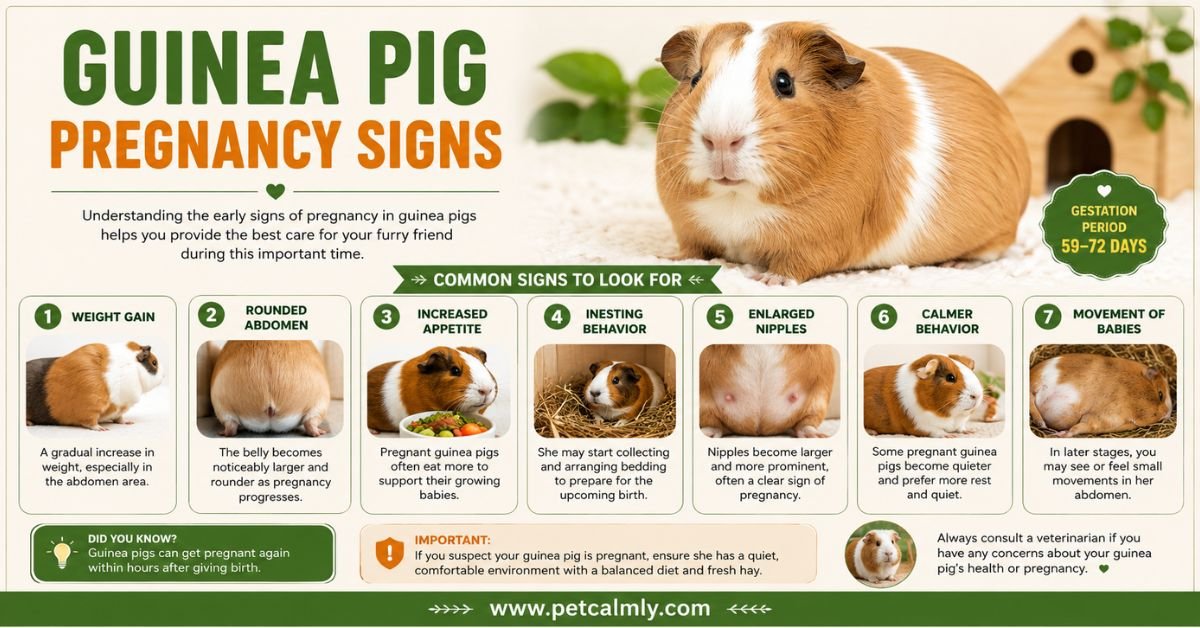
The most common guinea pig pregnancy signs include gradual weight gain, a larger abdomen, increased appetite, reduced activity, and noticeable changes in body shape. As pregnancy progresses, you may also feel baby movements and notice widening of the pelvic bones. Because early pregnancy signs can look similar to normal weight gain or health issues, the safest way to confirm pregnancy is through a veterinary examination.
Guinea Pig Pregnancy Signs: A Complete Guide for Pet Owners
Discovering that your guinea pig might be pregnant can be both exciting and stressful. Many owners notice changes in their pet’s body or behavior and immediately start wondering whether babies are on the way.
Unlike some animals, guinea pigs do not always show obvious pregnancy signs in the early weeks. A pregnant sow may appear completely normal until the pregnancy is well underway. This uncertainty often leaves owners asking:
- How can I tell if my guinea pig is pregnant?
- What does a pregnant guinea pig look like?
- How long is guinea pig pregnancy?
- What should I do if I think my guinea pig is expecting babies?
This guide explains the most reliable guinea pig pregnancy signs, what changes are normal, when veterinary care is needed, and how to keep both mother and babies safe.
What Are the First Guinea Pig Pregnancy Signs?
The earliest guinea pig pregnancy signs are usually subtle and easy to miss.
During the first few weeks, most guinea pigs behave normally. Owners often do not realize their pet is pregnant until noticeable physical changes begin to appear.
Early signs may include:
- Slight weight gain
- Increased appetite
- Drinking more water
- Mild behavioral changes
- Less interest in intense activity
- Gradual widening of the abdomen
Because these signs can also occur for reasons unrelated to pregnancy, early diagnosis is often difficult without veterinary assistance.
How Long Is a Guinea Pig Pregnancy?
A guinea pig pregnancy typically lasts between 59 and 72 days, with an average gestation period of about 68 days.
Factors that influence pregnancy length include:
| Factor | Possible Effect |
|---|---|
| Number of babies | Larger litters may arrive slightly earlier |
| Mother’s age | Can affect pregnancy progression |
| Individual genetics | Small differences in gestation length |
| Overall health | May influence development |
Most owners start noticing obvious physical pregnancy signs around weeks 4 to 6.
Physical Guinea Pig Pregnancy Signs to Watch For
Physical changes are usually the most reliable indicators of pregnancy.
Rapid Weight Gain
One of the clearest signs is steady weight gain.
Pregnant guinea pigs often gain weight week after week as babies develop. Many experienced owners weigh their guinea pigs weekly because sudden changes become easier to track.
A healthy pregnancy often results in:
- Consistent weight increases
- A rounded midsection
- More noticeable body changes during the final month
Keeping a weight log can help distinguish pregnancy from illness.
Enlarged Abdomen
As pregnancy progresses, the abdomen becomes noticeably larger.
Unlike simple obesity, pregnancy often creates a wider shape around both sides of the body.
Owners may notice:
- A pear-shaped appearance
- A wider rear section
- Increased abdominal fullness
The enlargement becomes especially obvious during the final few weeks.
Visible Baby Movement
One of the most exciting guinea pig pregnancy signs is fetal movement.
Late in pregnancy, owners may observe:
- Small movements along the sides
- Gentle kicks
- Visible shifting beneath the skin
These movements are typically easiest to notice when the guinea pig is resting quietly.
Widening Pelvic Bones
Experienced veterinarians sometimes assess the pelvic symphysis, the area between the pelvic bones.
Near delivery:
- The pelvic bones gradually separate
- The gap becomes more noticeable
- Labor may be approaching
This assessment should be performed carefully to avoid stressing the guinea pig.
Behavioral Changes During Guinea Pig Pregnancy
Not all pregnancy signs are physical. Many guinea pigs also experience behavioral changes.
Increased Appetite
Growing babies require additional nutrients.
Pregnant guinea pigs often:
- Eat hay more frequently
- Request vegetables more often
- Finish meals faster
An increase in appetite is normal unless accompanied by illness symptoms.
More Resting and Sleeping
Pregnancy places significant demands on the body.
Many pregnant guinea pigs:
- Nap more frequently
- Spend longer periods resting
- Become less interested in energetic activities
This gradual slowdown is usually normal.
Becoming More Protective
Some guinea pigs become more cautious during pregnancy.
You may notice:
- Less tolerance for handling
- Preference for hiding spots
- Increased sensitivity to disturbances
Providing a calm environment can reduce stress.
Changes in Social Behavior
Pregnancy can temporarily affect interactions with cage mates.
Some sows become:
- More independent
- Less playful
- Slightly territorial around favorite resting areas
Monitoring social dynamics helps prevent unnecessary stress.
Week-by-Week Guinea Pig Pregnancy Signs
Understanding what happens during each stage helps owners recognize normal changes.
Weeks 1–3
During the first three weeks:
- Few visible signs appear
- Weight changes are minimal
- Behavior usually remains normal
Most owners cannot identify pregnancy during this period.
Weeks 4–5
Changes become more noticeable.
You may observe:
- Increased appetite
- Mild weight gain
- Slight abdominal enlargement
This is often when owners first suspect pregnancy.
Weeks 6–7
The pregnancy becomes easier to identify.
Common signs include:
- Significant weight gain
- Obvious abdominal widening
- Reduced activity
- Increased resting
Weeks 8–10
Final pregnancy stages often include:
- Visible baby movement
- Enlarged abdomen
- Pelvic separation
- Nesting-like behavior
- Frequent resting
Labor may occur soon after these signs appear.
How to Confirm Guinea Pig Pregnancy
While observing signs can be helpful, confirmation is important.
Veterinary Examination
A veterinarian can evaluate:
- Body condition
- Pregnancy progression
- Potential complications
Professional assessment is often the safest option.
Ultrasound
Ultrasound can provide confirmation and monitor fetal development.
Benefits include:
- Early detection
- Monitoring baby growth
- Assessing viability
Weight Tracking
Weekly weighing is one of the most useful at-home methods.
Keep records of:
- Starting weight
- Weekly increases
- Sudden changes
Consistent gains often support pregnancy suspicions.
Conditions That Can Be Mistaken for Pregnancy
Not every enlarged guinea pig is pregnant.
Several health issues can resemble pregnancy signs.
Obesity
Overweight guinea pigs often develop:
- Rounded bodies
- Reduced activity
- Increased body mass
Unlike pregnancy, weight gain is generally more uniform.
Ovarian Cysts
Female guinea pigs can develop ovarian cysts that cause:
- Abdominal swelling
- Hormonal changes
- Behavioral changes
Veterinary diagnosis is necessary.
Digestive Problems
Bloating and gastrointestinal issues may cause:
- Abdominal enlargement
- Discomfort
- Reduced appetite
These conditions require prompt attention.
Tumors or Fluid Accumulation
Some medical conditions create visible swelling that may be mistaken for pregnancy.
Any unusual enlargement should be evaluated by a veterinarian.
Caring for a Pregnant Guinea Pig
Proper care can support a healthier pregnancy.
Provide Unlimited Hay
High-quality grass hay should always be available.
Hay supports:
- Digestion
- Dental health
- Nutritional needs
Timothy hay is commonly recommended for adult guinea pigs.
Increase Vitamin C Intake
Guinea pigs cannot produce their own vitamin C.
Safe sources include:
- Bell peppers
- Small amounts of leafy greens
- Veterinary-approved supplements when needed
Ensure Constant Fresh Water
Hydration becomes especially important during pregnancy.
Check water bottles daily and ensure easy access.
Reduce Stress
Stress can negatively affect pregnant guinea pigs.
Helpful strategies include:
- Keeping routines consistent
- Avoiding loud noises
- Limiting unnecessary handling
- Providing secure hiding spaces
Maintain a Clean Environment
A clean habitat helps reduce health risks.
Regularly:
- Replace bedding
- Remove waste
- Clean food areas
- Monitor cage hygiene
What Should You Feed a Pregnant Guinea Pig?
Nutrition plays a major role in healthy fetal development.
A balanced diet should include:
Essential Foods
- Unlimited grass hay
- High-quality guinea pig pellets
- Vitamin C-rich vegetables
- Fresh water
Healthy Vegetables
Good choices include:
- Bell peppers
- Romaine lettuce
- Cilantro
- Parsley in moderation
- Cucumber
Foods to Avoid
Avoid feeding:
- Chocolate
- Onions
- Garlic
- Avocado
- Sugary treats
- Processed human foods
A balanced diet supports both mother and babies.
Signs Labor May Be Approaching
As delivery gets closer, owners may notice several changes.
Common Pre-Labor Signs
- Reduced appetite shortly before birth
- Restlessness
- Frequent position changes
- Pelvic widening
- Increased nesting behavior
Many guinea pigs remain surprisingly calm right up until labor begins.
Warning Signs That Require Veterinary Attention
While many guinea pig pregnancies progress normally, some situations require immediate professional help.
Contact a veterinarian if you notice:
- Refusal to eat
- Severe lethargy
- Difficulty breathing
- Vaginal bleeding
- Signs of pain
- Sudden collapse
- Straining without producing babies
- Abnormal discharge
Prompt treatment can save both the mother and her babies.
4 Common Mistakes Owners Make During Guinea Pig Pregnancy
Avoiding these mistakes can improve outcomes.
Assuming Weight Gain Means Pregnancy
Not all weight gain indicates pregnancy.
Always consider other health conditions.
Handling Too Frequently
Excessive handling can increase stress and accidental injury risk.
Ignoring Dietary Needs
Pregnant guinea pigs require excellent nutrition throughout gestation.
Waiting Too Long to Seek Veterinary Help
If something seems unusual, professional advice is always worthwhile.
What Should Pet Owners Do If They Think Their Guinea Pig Is Pregnant?
If you suspect pregnancy:
- Separate any intact males immediately.
- Begin weekly weight tracking.
- Provide unlimited hay and fresh water.
- Increase vitamin C-rich vegetables.
- Minimize stress.
- Schedule a veterinary examination.
- Prepare a safe, clean enclosure for delivery.
Taking action early helps prevent complications later.
Preparing for Guinea Pig Babies
Newborn guinea pigs are surprisingly developed at birth.
Most babies are born:
- Fully furred
- With open eyes
- Able to walk quickly
- Interested in solid food within days
Preparation should include:
- Extra hay
- Additional food supplies
- A larger enclosure if needed
- Veterinary contact information
Being prepared reduces stress when babies arrive.
Frequently Asked Questions
1: How can I tell if my guinea pig is pregnant or just fat?
Pregnant guinea pigs usually gain weight steadily while developing a wider, pear-shaped abdomen. Obesity tends to create more evenly distributed body fat. A veterinarian can provide confirmation.
2: When can you feel baby guinea pigs moving?
Many owners notice movement during the final two to three weeks of pregnancy when babies become larger and more active.
3: How long after mating does a guinea pig show pregnancy signs?
Visible signs often begin around weeks four to six, though timing varies among individuals.
4: Can a pregnant guinea pig live with other females?
In many cases, yes. However, monitor interactions closely and ensure the pregnant sow has adequate space and access to food.
5: What should I feed a pregnant guinea pig?
Provide unlimited hay, quality pellets, fresh water, and vitamin C-rich vegetables such as bell peppers and leafy greens.
6: Do all pregnant guinea pigs show obvious signs?
No. Some guinea pigs show only mild signs until late pregnancy, which is why regular weighing and veterinary evaluation are helpful.
More Information About Pets, Please Visit Our Website: How to Bond Guinea Pigs
Conclusion
Recognizing guinea pig pregnancy signs early can help you provide the care and support your pet needs during this important time. The most reliable indicators include steady weight gain, abdominal enlargement, increased appetite, reduced activity, and eventually visible baby movement.
Because pregnancy can sometimes resemble obesity or other health conditions, a veterinary examination remains the best way to confirm what is happening. With proper nutrition, a low-stress environment, and close monitoring, most pregnant guinea pigs can safely progress through pregnancy and welcome healthy babies into the world.