Short direct answer
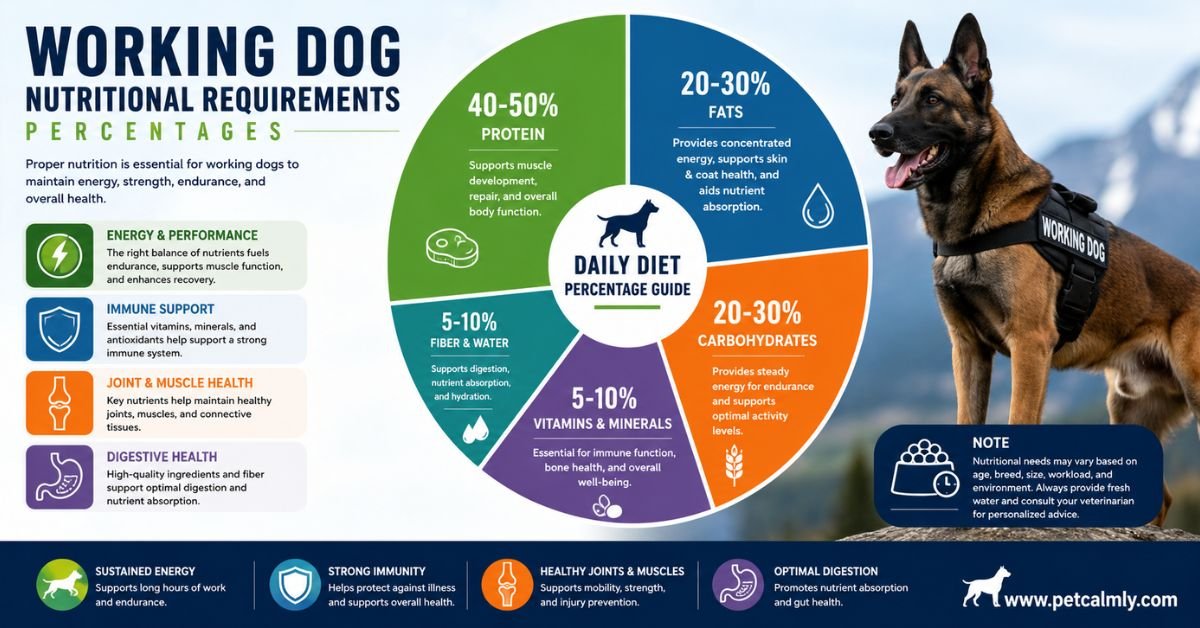
Working dogs need a balanced diet that provides enough energy to support their workload, maintain muscle, and recover after activity. While exact nutritional needs vary depending on the dog’s job, most healthy working dogs thrive on diets containing approximately 25–32% protein, 15–25% fat, and appropriate digestible carbohydrates to meet energy demands. Vitamins, minerals, water, and essential fatty acids are equally important. The ideal percentages depend on your dog’s breed, age, activity level, climate, and overall health, so adjustments should be made as workloads change.
Introduction
A working dog is much more than a pet. Whether helping farmers herd livestock, assisting police officers, searching for missing people, pulling sleds, hunting, or competing in canine sports, these dogs rely on proper nutrition every single day.
Unlike the average family dog that spends much of the day resting, working dogs burn significantly more calories. Their muscles work harder, their joints absorb greater impact, and their metabolism often runs at a much faster pace. Feeding them the same food as a sedentary dog can lead to weight loss, fatigue, slower recovery, poor coat condition, and reduced performance.
Many owners search for working dog nutritional requirements percentages because they want clear guidance rather than confusing marketing claims found on pet food labels. While percentages are important, they only tell part of the story. The quality of ingredients, digestibility, calorie density, hydration, and feeding schedule all play equally important roles.
In this guide, you’ll learn exactly how protein, fat, carbohydrates, vitamins, minerals, and water work together to support a hardworking dog. You’ll also discover how nutritional needs change depending on the type of work your dog performs and how to choose a diet that supports long-term health rather than simply boosting calories.
Understanding Working Dog Nutritional Requirements Percentages
Many people assume that feeding a working dog simply means giving larger portions. In reality, nutrition is far more complex.
A balanced working dog diet should supply enough energy without placing unnecessary stress on digestion. The percentages listed on dog food labels represent the proportion of nutrients in the food, but they don’t automatically indicate whether a food is suitable for intense activity.
Generally, experienced canine nutritionists and veterinary professionals recommend the following ranges for healthy adult working dogs:
| Nutrient | Recommended Percentage |
|---|---|
| Protein | 25–32% |
| Fat | 15–25% |
| Fiber | 2–5% |
| Moisture (dry food) | 8–12% |
| Ash | Usually under 8% |
| Carbohydrates | Remaining calories after protein and fat |
These ranges serve as practical guidelines rather than fixed rules. A search-and-rescue dog training daily has different nutritional demands than a livestock guardian that patrols fields at a slower pace.
Instead of focusing only on one number, consider the complete nutritional profile and your dog’s individual workload.
Why Working Dogs Need Different Nutrition Than Household Pets
The difference between a working dog and a companion dog goes beyond exercise.
Working dogs often experience:
- Higher daily calorie expenditure
- Increased muscle breakdown during activity
- Greater need for tissue repair
- More oxidative stress
- Higher fluid loss through panting
- Longer recovery periods after strenuous work
These physical demands increase the need for high-quality nutrients.
Imagine two Labrador Retrievers.
The first spends most of the day relaxing indoors and enjoys a 30-minute evening walk.
The second spends six hours retrieving waterfowl during hunting season.
Although both dogs share the same breed, their nutritional needs differ dramatically.
Feeding both dogs identical diets could cause one to gain weight while the other gradually loses muscle condition.
What Determines a Working Dog’s Nutritional Needs?
No single nutritional percentage works for every dog.
Several important factors influence dietary requirements.
Type of Work
Different jobs place different demands on the body.
Examples include:
- Herding livestock
- Police work
- Military service
- Search and rescue
- Hunting
- Sled pulling
- Detection work
- Agility competitions
- Farm work
- Service work
Short bursts of explosive activity require different fuel than endurance exercise lasting several hours.
Daily Activity Level
Some dogs work:
- Occasionally
- Every weekend
- Several hours daily
- Multiple shifts
The more calories burned, the more energy the diet must provide.
Breed
Breed influences metabolism, muscle mass, body size, and energy efficiency.
For example:
Border Collies often require diets that support sustained mental and physical activity.
German Shepherds performing police work need excellent muscle maintenance.
Siberian Huskies performing endurance work efficiently utilize dietary fat as a major energy source.
Large guardian breeds may require slower, sustained energy rather than rapid bursts.
Age
Puppies training for future work require nutrients that support healthy growth without promoting excessively rapid development.
Adult working dogs need maintenance and recovery.
Senior working dogs often benefit from carefully managed calories while preserving lean muscle.
Weather Conditions
Environmental conditions dramatically influence energy needs.
Cold weather increases calorie requirements because dogs burn additional energy to maintain body temperature.
Hot weather may reduce appetite while increasing hydration needs.
Humidity also affects cooling efficiency through panting.
Body Condition
Rather than focusing only on weight, evaluate body condition.
A healthy working dog should have:
- Visible waist when viewed from above
- Easily felt ribs with light pressure
- Strong muscle definition
- Healthy coat
- Consistent stamina
- Stable body weight
Regular body condition assessments help owners adjust feeding before problems develop.
Protein Requirements for Working Dogs
Protein is often the first nutrient owners look at when choosing dog food and for good reason.
Protein supplies amino acids needed for:
- Muscle repair
- Muscle growth
- Hormone production
- Immune function
- Skin health
- Coat quality
- Enzyme production
During heavy workloads, muscle fibers experience tiny amounts of damage. Recovery depends on having adequate amino acids available.
Most healthy working dogs perform well with diets containing approximately 25–32% protein on a dry matter basis, although individual needs vary depending on workload and overall health.
Higher protein does not automatically mean better performance.
Protein quality matters just as much as quantity.
Look for foods that list quality animal protein sources near the beginning of the ingredient list, such as:
- Chicken
- Turkey
- Beef
- Lamb
- Fish
- Duck
- Eggs
These ingredients generally provide complete amino acid profiles that are highly digestible for dogs.
Why Digestibility Matters
Two foods may both advertise 30% protein.
However, if one uses highly digestible animal proteins while another relies heavily on lower-quality ingredients, your dog may absorb significantly different amounts of usable nutrition.
Highly digestible proteins help:
- Improve muscle recovery
- Reduce waste
- Support immune health
- Maintain lean body condition
Quality should always come before chasing the highest percentage on the label.
Fat Requirements for Working Dogs
Fat is the primary energy source for many working dogs.
While some owners worry about feeding fat, active dogs often depend on it to sustain long periods of exercise.
Healthy dietary fat provides:
- Concentrated calories
- Long-lasting energy
- Essential fatty acids
- Healthy skin
- Glossy coat
- Brain function
- Hormone production
Many active working dogs perform well on diets containing approximately 15–25% fat, though the ideal amount depends on activity intensity and individual tolerance.
Dogs performing endurance work often utilize fat exceptionally well because it delivers more than twice the calories per gram compared with protein or carbohydrates.
Healthy Fat Sources
Quality fat ingredients include:
- Chicken fat
- Fish oil
- Salmon oil
- Beef fat
- Flaxseed (supports omega fatty acid intake)
- Marine oils rich in omega-3 fatty acids
These fats not only provide energy but also help reduce inflammation associated with strenuous exercise.
Do Working Dogs Need Carbohydrates?
Carbohydrates are one of the most debated topics in canine nutrition.
Unlike humans, dogs do not have a strict dietary requirement for carbohydrates. However, digestible carbohydrates can still play an important role, especially for active dogs.
Proper carbohydrate sources may provide:
- Readily available energy
- Glycogen replenishment after exercise
- Dietary fiber
- Digestive support
- Improved stool quality
Good carbohydrate ingredients include:
- Brown rice
- Oats
- Sweet potatoes
- Pumpkin
- Barley
- Peas (in balanced amounts)
The goal isn’t to maximize carbohydrates but to include appropriate, digestible sources that complement protein and fat rather than replace them.
Balancing Energy Sources
Think of nutrients as a team rather than competitors.
Protein repairs.
Fat fuels endurance.
Carbohydrates provide accessible energy for many dogs, particularly during moderate to intense activity.
Finding the right balance is more valuable than focusing on a single nutrient percentage.
Vitamins and Minerals That Support Working Dogs
Macronutrients receive most of the attention, but micronutrients quietly support nearly every system in the body.
Essential vitamins and minerals contribute to:
- Bone strength
- Nerve function
- Oxygen transport
- Muscle contraction
- Immune defense
- Antioxidant protection
- Wound healing
- Energy metabolism
Important nutrients include:
Calcium and Phosphorus
Support strong bones and teeth while helping muscles function normally.
Iron
Essential for healthy red blood cells that carry oxygen throughout the body.
Zinc
Supports skin repair, immune health, and wound healing.
Selenium
Acts as an antioxidant that helps protect cells from exercise-related stress.
Vitamin E
Works alongside selenium to support muscle recovery and cellular protection.
B Vitamins
Help convert nutrients into usable energy, making them especially valuable for active dogs.
Commercial diets labeled as complete and balanced are formulated to provide these nutrients in appropriate amounts when fed according to directions.
How to Tell if Your Working Dog’s Diet Is Meeting Their Needs
Even if you’re feeding a premium dog food with the right nutritional percentages, your dog’s body will ultimately tell you whether the diet is working. Regular observation is one of the best ways to ensure your working companion stays healthy and performs at their best.
Look beyond the feeding bowl and monitor your dog’s overall condition.
Signs Your Dog Is Getting Proper Nutrition
A well-fed working dog typically shows:
- Lean, well-developed muscles
- Consistent energy throughout the workday
- Healthy body weight
- Bright, alert attitude
- Glossy coat with minimal shedding
- Healthy skin without excessive dryness
- Firm, well-formed stools
- Good appetite
- Fast recovery after exercise
- Strong endurance during work
Remember that no dog performs at peak levels every day. Factors like weather, workload, and age can influence energy and appetite.
Signs Your Dog May Need a Dietary Adjustment
Small changes often appear before major health problems develop. Contact your veterinarian if you notice persistent concerns such as:
- Unexplained weight loss
- Weight gain despite normal activity
- Muscle loss
- Low stamina
- Poor recovery after exercise
- Dull or brittle coat
- Dry, flaky skin
- Frequent digestive upset
- Reduced appetite
- Declining enthusiasm for work
These signs don’t always point to poor nutrition. Illness, parasites, hormonal disorders, injuries, or stress can produce similar symptoms, making a veterinary evaluation important.
When Should You Worry?
Working dogs naturally become tired after a demanding day, but certain signs should never be ignored.
Seek veterinary care promptly if your dog experiences:
- Collapse or extreme weakness
- Difficulty breathing
- Persistent vomiting or diarrhea
- Refusal to eat for more than a day
- Signs of dehydration that don’t improve
- Sudden weight loss
- Severe lameness
- Heatstroke symptoms
- Confusion or unusual behavior after exercise
Early treatment often leads to better outcomes and helps working dogs return to activity safely.
What Should Pet Owners Do?
Providing excellent nutrition isn’t about chasing the highest protein percentage or buying the most expensive food. It’s about consistently meeting your dog’s individual needs.
Here’s a practical plan you can follow.
1. Choose a Complete and Balanced Diet
Select a high-quality food formulated for your dog’s life stage and activity level. Look for named animal protein sources and appropriate calorie density.
2. Feed According to Workload
A dog working five days a week usually needs more energy than one working only occasionally.
Increase or decrease food gradually as activity changes.
3. Monitor Body Condition Every Month
Instead of relying only on body weight:
- Feel the ribs.
- Check the waistline.
- Observe muscle definition.
- Watch overall movement.
Small adjustments made early are easier than correcting major weight changes later.
4. Keep Fresh Water Available
Hydration is essential before, during, and after work.
Always provide access to clean water, especially during hot weather or extended activity.
5. Schedule Regular Veterinary Checkups
Routine wellness exams help identify nutritional deficiencies, weight changes, orthopedic concerns, and underlying medical conditions before they affect performance.
6. Adjust Nutrition with Age
A young adult working dog won’t have the same nutritional needs as a senior nearing retirement.
Review your dog’s diet periodically with your veterinarian, particularly after changes in workload or health.
Working Dog Nutrition Checklist
Use this quick checklist to evaluate your dog’s current feeding routine.
| Checklist | Yes | No |
|---|---|---|
| Eating a complete and balanced diet | ☐ | ☐ |
| Protein suited to workload | ☐ | ☐ |
| Appropriate dietary fat | ☐ | ☐ |
| Healthy body condition | ☐ | ☐ |
| Lean muscle maintained | ☐ | ☐ |
| Fresh water always available | ☐ | ☐ |
| Gradual diet changes only | ☐ | ☐ |
| Regular veterinary checkups | ☐ | ☐ |
| Good recovery after exercise | ☐ | ☐ |
| Consistent energy levels | ☐ | ☐ |
If you answer “No” to several items, it may be time to review your dog’s feeding plan.
Quick Reference Table: Working Dog Nutritional Requirements Percentages
The table below summarizes common nutritional ranges for healthy adult working dogs. These are general guidelines and should be adjusted based on your dog’s individual needs and your veterinarian’s advice.
| Nutrient | Typical Range | Why It Matters |
|---|---|---|
| Protein | 25–32% | Supports muscle repair, maintenance, and recovery |
| Fat | 15–25% | Provides concentrated energy for sustained activity |
| Fiber | 2–5% | Helps support healthy digestion |
| Moisture (dry food) | 8–12% | Contributes to food stability; hydration still comes primarily from drinking water |
| Carbohydrates | Balance of calories | Supply readily available energy and dietary fiber |
| Omega-3 & Omega-6 Fatty Acids | Balanced amounts | Support skin, coat, joints, and inflammation management |
| Vitamins & Minerals | Complete and balanced levels | Essential for immunity, metabolism, and overall health |
Frequently Asked Questions
1. What percentage of protein does a working dog need?
Most healthy adult working dogs perform well on diets containing approximately 25–32% protein, although ideal levels depend on workload, age, overall health, and the quality of the protein source.
2. Is high-fat dog food good for working dogs?
Many working dogs benefit from moderate to higher fat levels because fat provides concentrated energy. However, the ideal amount depends on the dog’s activity level, body condition, and individual tolerance. Dogs with certain medical conditions may require different dietary fat levels under veterinary guidance.
3. Do working dogs need more calories than regular pets?
Yes. Working dogs generally burn far more energy than sedentary companion dogs, so they often require additional calories to maintain healthy weight, muscle, and endurance.
4. Should I feed my working dog before or after exercise?
Most veterinarians recommend avoiding large meals immediately before strenuous activity. Feeding several hours before work and providing a recovery meal afterward is often a practical approach.
5. Can I feed homemade food to a working dog?
Homemade diets can work, but they should be formulated with guidance from a veterinarian or a board-certified veterinary nutritionist to ensure they provide complete and balanced nutrition. Simply combining meat and vegetables is unlikely to meet all nutrient requirements.
6. How often should I adjust my working dog’s food?
Review your dog’s body condition regularly and adjust food intake whenever workload, season, age, or health changes significantly. Gradual adjustments are generally better than sudden increases or decreases.
More Information About Pets, Please Visit Our Website: Easy Dog Food Recipes at Home
Best Food for Senior Dogs to Gain Weight
Conclusion
Understanding working dog nutritional requirements percentages is about more than choosing a food with the highest protein or fat content. A successful feeding program balances high-quality protein, healthy fats, digestible carbohydrates, essential vitamins and minerals, and consistent hydration to support the unique demands placed on active dogs.
Every working dog is different. A search and rescue dog, livestock guardian, hunting retriever, or police K-9 may all require different calorie intakes and nutrient balances based on the intensity and duration of their work. Regularly monitoring body condition, energy levels, muscle tone, and recovery is just as important as reading the guaranteed analysis on a dog food label.
By pairing thoughtful nutrition with appropriate exercise, preventive veterinary care, and adequate rest, you can help your working dog stay healthy, perform confidently, and enjoy a long, active life.