Short direct answer
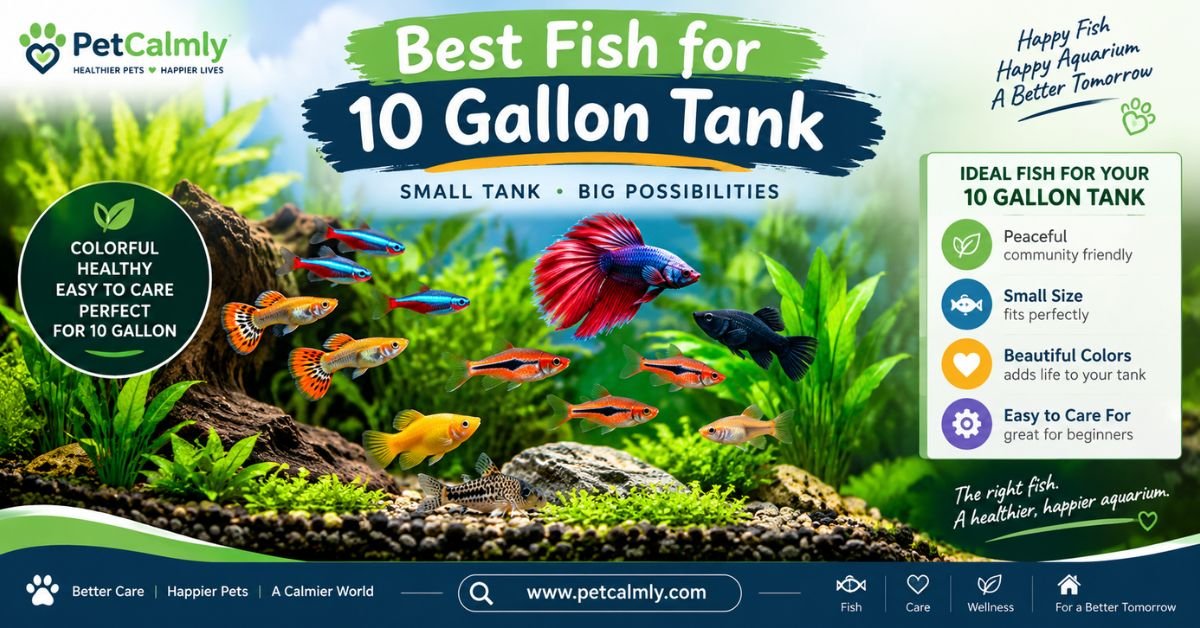
The best fish for a 10 gallon tank are small, low-bioload species that stay under 2–3 inches, such as betta fish, neon tetras, ember tetras, guppies, sparkling gouramis, celestial pearl danios, and small bottom dwellers like pygmy corydoras or nerite snails. A 10 gallon tank works best as either a single-fish habitat (like one betta) or a carefully stocked micro-community of 5–8 small, peaceful fish not a tank for goldfish, cichlids, or anything that grows past 3 inches.
If you’ve been scrolling through pet store tanks trying to figure out what will actually thrive in your 10 gallon setup without dying in three weeks or turning your living room into a science experiment, you’re in the right place.
Why 10 Gallon Tanks Are Trickier Than They Look
Here’s something a lot of first-time fish owners don’t hear until after they’ve already bought the tank: 10 gallons sounds spacious, but in aquarium terms, it’s actually one of the more unforgiving sizes to stock. Small volumes of water swing in temperature, pH, and ammonia levels much faster than larger tanks. A mistake that a 55-gallon tank would shrug off a missed water change, a slightly overfed morning can stress out or kill fish in a 10 gallon setup within days.
That’s not meant to scare you off. Plenty of people keep gorgeous, thriving 10 gallon tanks for years. It just means the fish you choose, and how many of them you add, matters more than it would in a bigger setup. This guide walks through exactly which fish handle that environment well, which ones to avoid no matter how tempting they look at the store, and how to set the tank up so your fish actually settle in instead of just surviving.
What Makes a Fish “10 Gallon Tank Compatible”
Before jumping into specific species, it helps to understand what you’re actually screening for. A fish is generally a good match for a 10 gallon tank if it meets most of these criteria:
- Adult size under 2–3 inches — bigger fish need more swimming room and produce more waste than a small tank can process
- Low to moderate bioload — some small fish still produce a surprising amount of waste relative to their size
- Peaceful or semi-peaceful temperament — aggression is amplified in small spaces because there’s nowhere for a stressed fish to retreat to
- Tolerant of stable, moderate water parameters — not a fish that needs a highly specialized setup to survive
- Doesn’t require large group sizes that would overcrowd the tank — some schooling fish need 6+ individuals, which eats up your bioload budget fast
Keep this checklist in mind, because it’s the same filter you should run any future “oh, that one’s pretty” impulse buy through before it goes in the cart.
Best Fish for a 10 Gallon Tank (By Type)
1: Best Single-Fish Option: Betta Fish
If you want one striking, low-maintenance centerpiece fish rather than a group, a betta is usually the answer. Bettas are territorial and don’t need company to thrive in fact, many do better alone or with a few carefully chosen bottom-dwelling tank mates rather than other fin-nippy or brightly colored fish, which they may see as rivals.
A 10 gallon tank is actually a nice step up from the minimum 5 gallons often recommended for bettas, giving them more room to explore, rest on broad-leafed plants, and settle into a calmer routine. Just avoid pairing them with other bettas, guppies, or anything with flowing fins that might trigger their instinct to flare and chase.
2: Best Schooling Fish: Neon Tetras and Ember Tetras
Tetras are a classic choice for a reason. Neon tetras are peaceful, colorful, and genuinely calming to watch once they settle into a shoal and start moving as a group. They do best in schools of six or more, which a 10 gallon tank can comfortably support as long as you’re not layering in a lot of other fish alongside them.
Ember tetras are an underrated alternative smaller, hardier, and just as social, with a warm orange glow that looks especially good against dark substrate. Both species prefer to be kept in numbers rather than pairs or trios, since a lone or under-schooled tetra tends to hide and show signs of stress like clamped fins or reduced appetite.
3: Best for Color and Personality: Sparkling Gourami
Sparkling gouramis are one of the most overlooked fish for small tanks. They stay tiny (around 1.5 inches), have a labyrinth organ that lets them gulp air from the surface, and display subtle iridescent color that catches the light beautifully. They’re generally peaceful, curious, and don’t need the large schools that tetras do, which makes them a good option if you want more flexibility in how you stock the rest of the tank.
4: Best for a Nano Community Look: Celestial Pearl Danios (Galaxy Rasboras)
These are small, deeply patterned fish that look almost hand-painted dark bodies covered in tiny gold spots with red-orange fins. They’re shy at first but become more confident once established, and they do well in small groups of 6 or more in a planted 10 gallon tank. They’re not the best choice for a beginner who hasn’t cycled a tank before, since they’re a bit more sensitive to water quality swings, but for an intermediate owner they’re a rewarding pick.
5: Best Livebearer: Guppies (In Moderation)
Guppies are popular for good reason they’re colorful, active, and easy to care for. The catch in a 10 gallon tank is that guppies breed quickly, and an unmanaged population will outgrow the tank’s capacity within months. If you go this route, consider keeping only males, or plan ahead for what you’ll do with fry, since “the tank is suddenly overstocked with baby guppies” is one of the most common surprises new owners run into.
6: Best Bottom Dwellers: Pygmy Corydoras and Nerite Snails
Bottom-dwelling fish add a lot of visual interest and help with cleanup, but not every bottom feeder belongs in a 10 gallon tank. Standard corydoras species need more swimming space and larger groups than a 10 gallon setup can comfortably offer. Pygmy corydoras, however, stay under an inch and do well in small schools of 6+, making them a much better fit.
Nerite snails are another excellent addition they don’t reproduce in freshwater, they graze on algae, and they add almost no bioload. They’re one of the lowest-risk additions you can make to a small tank.
How Many Fish Can Actually Live in a 10 Gallon Tank
There’s no perfect formula here, because bioload depends on species, filtration, and how consistent your maintenance is not just fish size. But as a realistic starting point for a well-filtered, cycled 10 gallon tank, most stable stocking combinations fall into one of these patterns:
| Stocking Style | Example Combination | Approx. Fish Count |
|---|---|---|
| Single centerpiece | 1 betta + optional nerite snails | 1 fish + snails |
| Small schooling tank | 6–8 ember or neon tetras | 6–8 fish |
| Mixed nano community | 5 celestial pearl danios + 6 pygmy corydoras | 10–12 fish |
| Livebearer tank (males only) | 5–6 male guppies | 5–6 fish |
A common mistake is stocking based on the “one inch of fish per gallon” rule some pet stores still repeat. It’s outdated advice — it doesn’t account for waste production, swimming behavior, or the fact that a fish’s bioload isn’t linear with its length. Filtration capacity and species behavior matter far more than a size-to-gallon ratio.
Fish to Avoid in a 10 Gallon Tank
It’s worth being direct about this, because a lot of stocking mistakes come from well-meaning advice at the pet store counter rather than bad intentions. These fish are commonly sold as “starter fish” but genuinely don’t belong in a 10 gallon tank long-term:
- Goldfish — even “fancy” varieties produce enormous amounts of waste and can grow much larger than most owners expect
- Common plecos — sold small, but can reach over a foot long
- Tiger barbs — fin-nippers that need larger groups and more space to manage aggression
- Angelfish — need significantly more vertical swimming room as adults
- Bettas paired with other bettas or fin-nippers a recipe for constant stress and injury
- Any fish advertised as “grows to fit its tank” this is a myth; stunted growth from an undersized tank usually means organ and health problems, not a naturally smaller fish
If a fish you’re considering isn’t on the “good fit” list above, it’s worth a quick search on its adult size and typical temperament before adding it five minutes of research can save months of stress for both you and the fish.
Setting Up a 10 Gallon Tank So Your Fish Actually Thrive
Choosing the right fish is half the equation. The other half is making sure the tank itself supports them.
Cycle the tank before adding fish. This is the step most new owners skip, and it’s the single biggest cause of early fish loss. Cycling means growing the beneficial bacteria that convert toxic ammonia (from fish waste) into safer compounds. It typically takes 4–6 weeks using a fishless cycling method, though products designed to speed up bacterial colonization can shorten this in some cases.
Match your filter to the tank, not just the fish count. A filter rated for 10–20 gallons gives you a buffer, since filtration handles waste breakdown, not just water movement.
Keep a consistent maintenance routine. Weekly partial water changes (around 10–20%) keep nitrate levels in check far more reliably than waiting until the water “looks dirty.”
Add live or silk plants if you’re keeping shy or nano species. Celestial pearl danios, sparkling gouramis, and pygmy corydoras all show more natural behavior and less stress-driven hiding when there’s cover to retreat into.
Test your water instead of guessing. A basic liquid test kit for ammonia, nitrite, nitrate, and pH tells you far more than watching fish behavior alone, especially early on when problems aren’t visible yet.
When Should You Worry About Your Fish?
Most day-to-day fish behavior is normal and doesn’t need intervention resting on the substrate, hiding after a water change, or a brief loss of appetite for a day are common and usually resolve on their own. What’s worth paying closer attention to is a pattern, not a single moment.
Signs that suggest something needs attention include:
- Gasping at the surface consistently, not just during normal labyrinth-organ breathing (in species like bettas and gouramis)
- Clamped fins held tightly to the body for more than a day or two
- Visible white spots, cotton-like growths, or unusual discoloration
- Sudden loss of color or lethargy across multiple fish at once, which often points to a water quality issue rather than an individual illness
- Erratic swimming, scraping against decor (“flashing”), or persistent hiding from a normally active fish
A single stressed fish after a tank change is usually not an emergency. Multiple fish showing symptoms at the same time almost always points to a water parameter problem and should prompt an immediate ammonia and nitrite test.
What Should Pet Owners Do If Something Seems Off?
If you notice any of the warning signs above, the first move isn’t medication it’s testing your water. A large percentage of “mystery illnesses” in small tanks trace back to ammonia or nitrite spikes rather than disease. Testing takes minutes and rules out (or confirms) the most common cause immediately.
If water parameters come back normal and a fish is still showing clear signs of illness or distress, that’s the point to consult an aquatic veterinarian or a knowledgeable local fish store rather than guessing with over-the-counter treatments, which can sometimes do more harm than good if misapplied. According to the Merck Veterinary Manual, water quality remains one of the most consistent underlying factors in freshwater fish health issues, which is part of why routine testing is emphasized so heavily by veterinary and aquatic health resources.
Conclusion
A 10 gallon tank can absolutely be a thriving, low-stress home for fish the key is matching the tank to species that were built for small-volume living, not squeezing in fish that were never meant to fit. Whether you go with a single expressive betta, a shoal of ember tetras, or a small mixed community of nano species and bottom dwellers, the fish on this list were chosen because they hold up well in real 10 gallon setups, not just in theory.
Take the time to cycle your tank, stock gradually, and keep an eye on water parameters rather than just appearances, and you’ll find that a 10 gallon tank is more than capable of being a genuinely calming, well-balanced little ecosystem.
More Information About Pets, Please Visit Our Website: Freshwater Aquarium Maintenance
Why Is My Fish Tank Water Cloudy?
How to Cycle a Fish Tank With Plants
Freshwater Aquarium Algae Control
Freshwater Fish Diseases
Ich Treatment for Freshwater Fish
Frequently Asked Questions
1: How many fish can I put in a 10 gallon tank?
It depends on species rather than a fixed number, but most stable setups hold either one centerpiece fish (like a betta) or 6–12 small schooling and bottom-dwelling fish, depending on their adult size and bioload.
2: Can I keep a betta and tetras together in a 10 gallon tank?
Sometimes, but it’s a gamble. Bettas can be territorial toward small, brightly colored, or fast-moving fish. If you try it, ember tetras tend to have better success than neon tetras, and it’s worth having a backup plan in case the betta becomes aggressive.
3: What is the easiest fish to keep in a 10 gallon tank for beginners?
A single male betta fish is usually the most forgiving option for first-time owners, since it doesn’t require schooling numbers and tolerates a range of conditions once the tank is properly cycled.
4: Do I need a filter and heater for a 10 gallon fish tank?
Yes, for almost every freshwater fish species discussed here. A filter is essential for waste breakdown, and most tropical fish, including bettas, tetras, and gouramis, need stable warm water in the mid-to-high 70s°F, which a heater maintains far more reliably than room temperature alone.
5: Can goldfish live in a 10 gallon tank?
Not long-term. Goldfish grow much larger than most owners expect and produce a high bioload, which a 10 gallon tank can’t sustainably support even with strong filtration.
6: How long does it take to cycle a 10 gallon tank before adding fish?
Typically 4 to 6 weeks using a fishless cycling method, though this can vary based on your water source, temperature, and whether you’re seeding the tank with beneficial bacteria from an established source.