Short direct answer
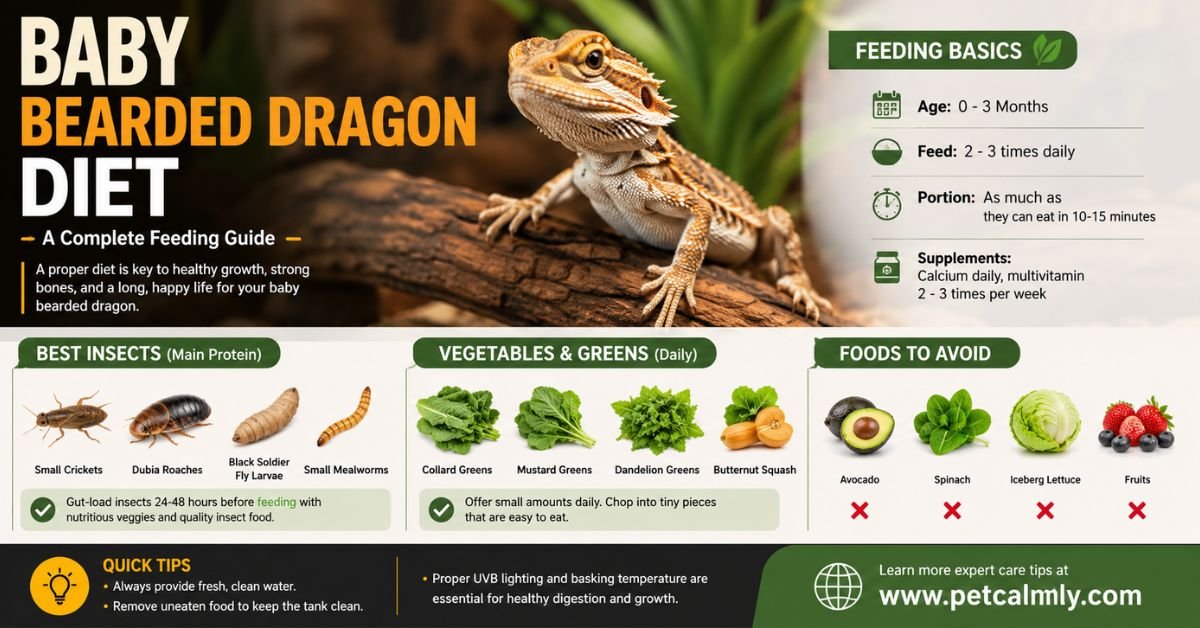
A baby bearded dragon diet should be roughly 80% live insects and 20% leafy greens and vegetables, fed two to three times a day, with calcium powder dusted on insects at nearly every feeding. Getting this ratio backwards is one of the most common mistakes new owners make, and it’s also one of the easiest to fix once you understand why baby dragons need so much protein in the first place.
If you just brought home a baby bearded dragon, you’re probably staring at a feeding chart online and wondering if you’re already doing something wrong. You’re not alone. Almost every new owner has stood in front of a tank at 9 p.m., cricket container in hand, second-guessing whether their dragon has eaten enough or too much.
This guide walks through exactly what to feed, how much, how often, and what to do when something feels off. It’s written the way an experienced keeper would actually explain it to a friend, not the way a spec sheet would.
Why Baby Bearded Dragons Eat So Differently From Adults
Baby bearded dragons are growing at an incredible rate. In their first few months of life, they’re building bone density, muscle mass, and organ systems almost simultaneously, which is why their nutritional needs look nothing like an adult dragon’s.
An adult bearded dragon can thrive on a diet that’s mostly vegetables with insects as a smaller supplement. A baby, on the other hand, needs the opposite balance. Protein from insects fuels rapid growth, while calcium supports the skeletal development happening in real time. Skimp on either one, and you’ll see the consequences show up in weeks, not months.
This is also why baby dragons seem to eat constantly. It’s not overeating it’s biology. A hatchling bearded dragon may eat far more frequently than an adult simply because its body is working overtime to grow.
What Do Baby Bearded Dragons Eat? (Core Food List)
1: Live Insects (The Protein Foundation)
Insects should make up the bulk of a baby bearded dragon’s diet. The safest and most commonly recommended feeders include:
- Small crickets (appropriately sized for the dragon’s mouth)
- Dubia roaches
- Small mealworms (in moderation, since the exoskeleton is harder to digest)
- Phoenix worms (black soldier fly larvae), which are naturally calcium-rich
- Small waxworms (occasional treat only, due to high fat content)
A simple sizing rule experienced keepers rely on: never feed an insect longer than the width of the space between your dragon’s eyes. Anything bigger increases the risk of impaction or regurgitation.
2: Leafy Greens and Vegetables
Even at a young age, baby dragons should be offered fresh greens daily, even if they only nibble at first. This builds a lifelong habit that makes the transition to an adult, vegetable-heavy diet much smoother later on.
Good staple greens include:
- Collard greens
- Mustard greens
- Turnip greens
- Endive
- Butternut squash (finely grated)
- Bell peppers (finely chopped)
Avoid iceberg lettuce and spinach as regular staples iceberg offers almost no nutritional value, and spinach contains oxalates that can interfere with calcium absorption over time.
3: What Baby Bearded Dragons Should Never Eat
Some foods are genuinely dangerous, not just “not ideal.” Keep these off the menu entirely:
- Avocado (toxic to reptiles)
- Fireflies (fatal if ingested)
- Wild-caught insects (pesticide risk)
- Rhubarb
- Onions and garlic
- Any insect larger than the dragon can comfortably swallow
Baby Bearded Dragon Feeding Schedule by Age
One of the most searched questions from new owners is simply: how often should I feed my baby bearded dragon? The honest answer depends on age, but here’s a realistic breakdown based on common keeper and veterinary guidance.
| Age | Feedings Per Day | Insect-to-Veggie Ratio | Notes |
|---|---|---|---|
| 0–3 months | 3–5 small feedings | ~80% insects / 20% greens | Offer as many appropriately sized insects as they’ll eat in 10–15 minutes |
| 3–6 months | 2–3 feedings | ~75% insects / 25% greens | Start increasing vegetable variety |
| 6–12 months | 2 feedings | 50/50 | Transitioning toward adult proportions |
| 12+ months (adult) | 1 feeding | 20% insects / 80% greens | Adult maintenance diet |
This table is a starting framework, not a rigid rule. Appetite naturally fluctuates, especially around shedding, brumation-like slowdowns, or growth spurts, so don’t panic if your dragon skips a feeding here and there.
How Much Should a Baby Bearded Dragon Eat at Each Feeding?
A good general approach is to offer insects for about 10–15 minutes at each feeding and remove anything uneaten afterward. Left-in insects, especially crickets, can actually bite a sleeping dragon, which is a detail a lot of first-time owners aren’t warned about.
For greens, a small dish of finely chopped vegetables should be left in the enclosure throughout the day so your dragon can graze whenever it wants, even if it isn’t fully weaned onto them yet.
Calcium and Vitamin Supplementation (Don’t Skip This)
This is the part of a baby bearded dragon’s diet that gets overlooked most often and it’s arguably the most important.
Calcium powder should be dusted on insects at almost every feeding for babies, since their skeletal growth is happening so quickly. Without adequate calcium, young dragons are at real risk of Metabolic Bone Disease (MBD), a condition that affects bone strength and can cause visible limb deformities, tremors, or difficulty moving if left unaddressed.
Vitamin D3 works alongside calcium and UVB lighting to help the body actually absorb and use that calcium. Most keepers use a calcium-with-D3 supplement a few times a week alongside plain calcium on other feeding days, but always check the specific product’s dosing instructions, since formulations vary.
A multivitamin supplement is typically used less frequently, often once a week, to round out micronutrients that diet alone may not fully cover.
If this sounds like a lot to track, a simple sticky note on the enclosure with a basic weekly rotation (calcium daily, D3 three times a week, multivitamin once a week) removes the guesswork almost entirely.
5 Common Feeding Mistakes New Owners Make
Feeding insects that are too large. An oversized cricket or superworm isn’t just a choking risk it can also cause impaction, since baby dragons have small, developing digestive systems.
Skipping gut-loading. Feeder insects should be fed nutritious food themselves (this is called gut-loading) for at least 24 hours before being offered to your dragon. An unfed cricket passes very little nutritional value along.
Forgetting water entirely because dragons “don’t drink.” Baby bearded dragons do get most of their hydration from food, but light misting of greens or offering a shallow water dish still matters, especially in drier climates.
Free-feeding too many insects at once. Leaving a large number of crickets loose in the tank overnight often leads to overfeeding, insect bites, and stress for the dragon.
Assuming a picky eater is a sick eater. Appetite naturally dips during shedding or rapid growth phases. It’s only a concern when it’s paired with other symptoms.
When Should You Worry About Your Baby Bearded Dragon’s Eating?
Most appetite changes in baby dragons are completely normal, but some patterns are worth paying closer attention to. Consider reaching out to a reptile-experienced veterinarian if you notice:
- Refusal to eat for more than 2–3 consecutive days
- Lethargy combined with reduced appetite
- Visible weight loss or a noticeably thinning tail
- Black bearding, gaping, or stress-marking that doesn’t resolve
- Limb tremors, difficulty walking, or a soft/rubbery jaw (possible signs of Metabolic Bone Disease)
- Diarrhea, undigested insects in stool, or straining without producing waste
None of this is meant to cause alarm most feeding hiccups resolve on their own. But persistent appetite loss combined with any of the symptoms above is exactly the kind of situation general online advice can’t safely diagnose, and it’s worth a call to an exotics or reptile vet rather than guessing.
What Should Pet Owners Do to Set Their Dragon Up for Success?
- Establish a consistent feeding routine at similar times each day
- Keep a simple log of what and how much your dragon eats for the first few months
- Introduce vegetable variety early, even if it’s mostly ignored at first
- Gut-load and dust insects consistently rather than occasionally
- Monitor tail thickness and body condition weekly as a general health check
- Adjust portions gradually as your dragon grows rather than making sudden changes
Small, consistent habits in these early months tend to matter far more than any single “perfect” feeding.
Conclusion
Feeding a baby bearded dragon well isn’t about following a rigid formula it’s about understanding what their rapidly growing body actually needs and adjusting as they grow. Prioritize protein-rich insects early on, layer in calcium and vitamin support consistently, introduce greens from day one, and pay attention to how your individual dragon responds. Every dragon has its own appetite and rhythm, and learning yours is part of the process.
If you’re ever unsure whether something you’re seeing is normal or a reason for concern, a reptile-savvy veterinarian is always the safest resource this guide is meant to prepare and support you, not replace professional care when it’s genuinely needed.
More Information About Pets, Please Visit Our Website: Bearded Dragon Calcium Powder
Bearded Dragon Brumation or Dead?
Can Bearded Dragons Eat Strawberries?
Bearded Dragon Lifespan in Captivity
Frequently Asked Questions
1: How often should I feed my baby bearded dragon?
Most baby bearded dragons under three months old do best with three to five small feedings a day, gradually decreasing in frequency as they mature toward an adult feeding schedule.
2: Can baby bearded dragons eat mealworms?
Yes, but only in moderation and in small sizes, since mealworms have a harder exoskeleton that can be more difficult for young dragons to digest compared to crickets or dubia roaches.
3: Do baby bearded dragons need calcium powder every day?
Generally yes most keepers dust insects with plain calcium powder at nearly every feeding during the rapid growth phase, alternating with a calcium-D3 supplement a few times a week.
4: Why is my baby bearded dragon not eating?
Short-term appetite dips are often linked to shedding, recent handling stress, or temperature issues in the enclosure. If refusal to eat lasts more than two to three days or comes with lethargy, it’s worth checking in with a vet.
5: Can baby bearded dragons eat fruit?
Fruit can be offered occasionally as a small treat, but it shouldn’t be a regular part of a baby dragon’s diet since it’s higher in sugar and lower in the nutrients they need most at this stage.
6: How do I know if my baby bearded dragon is getting enough food?
A healthy baby dragon typically shows steady growth, a full and rounded tail base, consistent activity levels, and regular waste production. A thinning tail or persistent lethargy can signal that intake needs attention.