Short direct answer
Eye crust in dogs that crusty, sticky, or waxy buildup around the eyes usually happens when tears, dust, and dead skin cells accumulate. You can safely clean it at home using a damp washcloth and warm water, gently wiping away debris from the outer eye area in short downward strokes. Most cases respond well to basic daily care, but if you notice redness, swelling, discharge, or if your dog squints or rubs obsessively, contact your vet to rule out infection or underlying eye conditions.
Why This Matters to Dog Owners Right Now
Your dog’s eyes water and then dry. Days pass. Suddenly there’s crusty buildup in the corners, and you’re wondering: Is this normal? Should I worry? Can I safely clean it myself, or do I need to rush to the vet?
If this sounds familiar, you’re not alone. Eye crust is one of the most common questions dog owners ask—and one that creates unnecessary anxiety because the information available online ranges from “it’s completely harmless” to “it could be a serious infection.” The reality is somewhere in between, and that’s exactly what we’re covering today.
The good news: most eye crust is totally manageable at home with basic care. The key is knowing what you’re looking at, how to handle it safely, and when to escalate to professional care. This guide walks you through everything the “why,” the “how,” and the “when not to DIY.”
What Causes Dog Eye Crust and Why It Happens
Understanding Normal Tear Production and Eye Drainage
Dogs produce tears constantly, just like humans do. Tears aren’t just an emotional response—they’re protective. They keep the eye moist, wash away debris, and provide immune defense.
Under normal conditions, tears drain through the tear ducts (tiny channels in the corners of your dog’s eyes near the nose). When this drainage works properly, tears flow away unnoticed. But when tears combine with dust, pollen, dead skin cells, and normal eye secretions, that mixture can accumulate and dry into a crusty film.
This process is completely normal. It happens to most dogs, especially in the morning when eyes have been closed for hours.
Common Reasons Eye Crust Builds Up
Overnight accumulation: Your dog’s eye tears aren’t draining as efficiently while they sleep. By morning, you might see dried tears forming around the inner corner of the eye.
Dust and environmental debris: Dogs spend time outdoors. Pollen, dirt, sand, and other airborne particles can stick to the eye’s surface and get trapped in tear film.
Breed predisposition: Flat-faced breeds like Bulldogs, Pugs, and Shih Tzus have shallow eye sockets and may produce excessive tears naturally (called “epiphora”). Breeds with long hair around the eyes, like Old English Sheepdogs and Maltese dogs, tend to accumulate more visible crusty buildup.
Dietary factors: Some dogs may have mild food sensitivities that trigger slightly more tear production than normal.
Tear duct sensitivity: A dog’s tear duct can become slightly irritated from allergies, low humidity, or temporary inflammation, causing more tears to form.
Stress and emotional responses: Just like people, stressed or anxious dogs may produce more tears, which can dry and crust over.
The Difference Between Normal Crust and Concerning Discharge
This is important: Normal eye crust is typically clear, brown, or slightly yellow when dried. It’s waxy, sticky, and forms mainly in the corners of the eye. Your dog doesn’t seem bothered, isn’t rubbing excessively, and the eye whites look clear.
Concerning discharge looks different:
- Thick, green, or yellow discharge (suggests infection)
- Oozing or wet discharge that constantly reappears (indicates excessive tearing or blocked tear ducts)
- Pus-like material (sign of bacterial infection)
- Blood-tinged discharge (requires immediate vet attention)
The discharge that concerns vets is usually accompanied by behavioral changes: your dog squinting, pawing at the eye, keeping it partially closed, or showing redness around the eyelids.
Safe Steps to Clean Your Dog’s Eye Crust at Home
What You’ll Need
Before you start, gather these supplies:
- Clean washcloth or soft cotton pads (disposable is best for hygiene)
- Warm water (filtered or distilled is gentler than tap water)
- Optional: saline solution (veterinary-grade or homemade—see instructions below)
- Soft towel for drying
- Treats (to keep your dog still and positive about the process)
Step-by-Step Cleaning Process
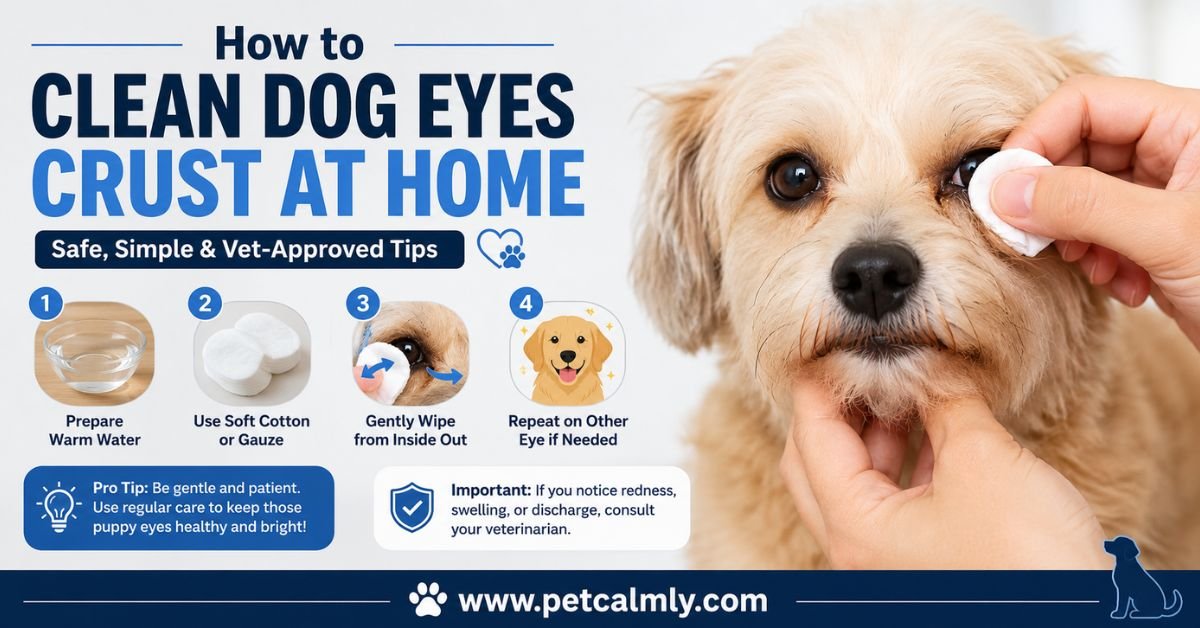
Step 1: Prepare Your Dog Find a calm, well-lit space. Let your dog get comfortable—sitting or lying down. If your dog is anxious about eye contact, spend a minute or two just being near their face, maybe offering treats, so they don’t tense up when you approach.
Step 2: Soak the Washcloth Run a clean washcloth under warm (not hot) water. Wring out excess water—you want it damp, not dripping. If using saline solution, soak the cloth in that instead.
Step 3: Approach Gently Approach from the side or below, not directly above the eye (many dogs feel safer this way). Cup your hand gently around the side of the face to steady your dog’s head.
Step 4: Wipe Away the Crust Using gentle, downward strokes, wipe from the inner corner of the eye (near the nose) outward. This mimics the natural drainage direction and feels more comfortable to your dog. Use light pressure—you’re removing dried debris, not scrubbing.
If crust is stubborn, let the warm cloth sit against it for 10–15 seconds to soften it first. Then gently wipe. Repeat with fresh cloth sections if needed.
Step 5: Dry the Area Use a soft, dry cloth or tissue to gently pat the eye area dry. Moisture left behind can cause irritation or promote bacterial growth.
Step 6: Reward and Release Offer praise and a treat. Keeping this experience positive ensures your dog won’t resist next time.
Making Homemade Saline Solution
If you prefer using saline instead of plain water, it’s simple to make:
- 1 cup of distilled water
- ½ teaspoon of salt
- Mix thoroughly until salt dissolves
- Store in a clean container for up to 7 days in the refrigerator
Saline is slightly gentler than tap water and closer to the salt concentration of natural tears. Use it the same way you’d use warm water.
How Often Should You Clean?
Daily maintenance: If your dog naturally produces more tears or you notice crust forming regularly, a quick daily cleaning in the morning takes 30 seconds and prevents buildup.
As-needed basis: If your dog rarely gets crusty eyes, cleaning a few times a week or when you notice buildup is sufficient.
After outdoor time: If your dog has been in dusty or windy environments, a quick rinse helps prevent debris from settling.
The key is consistency without obsessive over-cleaning. You’re removing what’s already there, not preventing all tear production (which would be harmful).
Why Some Dogs Get More Eye Crust Than Others
Breed Characteristics
Certain breeds are prone to excessive tearing or tear duct issues:
Brachycephalic (flat-faced) breeds — Bulldogs, Pugs, Shih Tzus, Maltese, and Boston Terriers have shallow tear drainage systems. Their eye sockets don’t angle the same way as longer-faced breeds, so tears pool and dry more visibly.
Small-breed dogs — Toy breeds sometimes have slightly smaller tear ducts that don’t drain as efficiently.
Long-haired breeds — Hair around the eyes can trap tear moisture and prevent proper evaporation, leading to more visible crusty buildup.
Age-Related Factors
Older dogs may experience changes in tear production or drainage. Senior dogs sometimes develop slightly reduced tear flow, which sounds counterintuitive but happens because tear production naturally decreases with age. However, some older dogs develop the opposite—excessive tearing.
Health and Lifestyle Factors
Allergies: Dogs with environmental or food allergies often have higher tear production. If your dog’s eye crust is accompanied by itching, skin redness, or seasonal patterns, allergies might be the underlying cause.
Dry indoor environments: Central heating, air conditioning, or arid climates can dry out tear films, causing excessive evaporation and crusty buildup.
Diet and nutrition: Omega-3 and omega-6 fatty acids support healthy tear production. Dogs eating low-quality diets might have slightly less optimal eye health.
Stress: Anxious or stressed dogs produce more tears. If your dog’s eye crust correlates with stressful events (boarding, travel, household changes), stress might be the culprit.
7 Common Mistakes Dog Owners Make When Cleaning Eyes
1: Using the Wrong Water Temperature
Hot water can irritate the sensitive eye area and increase discomfort. Cold water might feel shocking. Lukewarm water is ideal—slightly warmer than body temperature but cool enough to hold comfortably on your wrist.
2: Rubbing or Scrubbing Instead of Gentle Wiping
Your dog’s eyes are delicate. Hard scrubbing can cause irritation, redness, and make your dog defensive about future cleanings. Gentle wiping is all that’s needed.
3: Using Tap Water with High Chlorine Content
In areas with heavily chlorinated water, distilled or filtered water is preferable. Chlorine can irritate sensitive eyes, though this is usually a minor issue for most dogs.
4: Sharing Washcloths or Reusing Contaminated Cloth Sections
Always use clean cloth or fresh sections. If one eye has debris, use the same clean cloth for the other eye, but change sections to avoid transferring bacteria between eyes.
5: Pulling the Eyelid Down or Open
Never pull your dog’s eyelid open to “get a better look” or to clean inside the eyelid. The eyelid protects the eye, and forcing it open can cause injury or trauma. Stick to cleaning the outer eye area and corners.
6: Ignoring Signs of Infection While Attempting Home Care
If you notice discharge that looks infected, excessive redness, or behavioral signs like squinting or pawing, stop home cleaning and schedule a vet visit. Home care is for maintenance, not treatment of infections.
7: Using Human Eye Drops or Over-the-Counter Products Without Vet Approval
Products designed for humans have different pH and formulations. Some contain ingredients that irritate dogs’ eyes. Never use anything except veterinary-approved solutions unless directed by your vet.
When to Stop Cleaning at Home and See a Veterinarian
Red Flags That Require Professional Attention
Thick, colored discharge — Yellow, green, or pus-like discharge indicates bacterial infection and requires antibiotic treatment.
Persistent redness or swelling — If the white of the eye looks bloodshot, or the eyelid area is puffy, something is irritating or infecting the eye.
Your dog squinting or keeping the eye partially closed — This is a sign of eye pain or discomfort and needs veterinary evaluation.
Excessive pawing or rubbing — If your dog is constantly scratching at or rubbing the eye, they’re signaling that something is wrong.
Cloudiness or haziness in the eye — A cloudy appearance suggests corneal issues, cataracts, or uveitis.
Eye discharge that doesn’t improve with daily cleaning — If you’ve been cleaning for a week and the crust keeps returning immediately, or is getting worse, it’s time for professional help.
Changes in your dog’s vision or behavior Bumping into objects, reluctance to go outside, or unusual light sensitivity all warrant a vet visit.
Signs of pain: Tearing excessively, avoiding touch, or being unusually irritable about the head area.
Conditions That Look Like Crust But Require Vet Treatment
Conjunctivitis (pink eye): Inflammation of the membrane covering the white of the eye, often with red, swollen eyelids and discharge.
Corneal abrasion: A scratch on the eye surface. Usually causes significant pain, excessive tearing, and sensitivity to light.
Dry eye syndrome: Insufficient tear production, causing discomfort and crusty buildup. Requires medicated eye drops, not just cleaning.
Blocked tear ducts: When the tear drainage system is obstructed, tears back up and overflow, creating excessive drainage and crust.
Entropion or ectropion: Eyelid malposition (rolling inward or outward) that can trap debris or allow bacteria into the eye. Some cases need surgical correction.
Allergic reaction: Severe puffiness, hives, or rapid swelling require immediate attention and may indicate anaphylaxis.
What to Expect at the Vet Appointment
Your vet will likely:
- Examine the eye with specialized lighting or an ophthalmoscope
- Perform a fluorescein stain test to check for corneal scratches
- Test tear production (Schirmer tear test) if dry eye is suspected
- Check tear drainage and eye pressure if appropriate
- Ask about the discharge’s appearance, duration, and any behavioral changes
Bring information about when the issue started, what the discharge looks like, and whether you’ve noticed any patterns (seasonal, after specific activities, etc.).
Prevention: Keeping Your Dog’s Eyes Healthy
Daily Habits That Reduce Eye Crust
Morning routine: A quick wipe with a damp cloth each morning takes seconds and prevents crust from building throughout the day.
Keep hair trimmed: If your dog has hair over their eyes, regular trimming (or grooming) prevents hair from irritating the eye and trapping moisture.
Avoid smoke and strong fumes: Secondhand smoke and chemical fumes irritate eyes and increase tear production.
Maintain humidity: In dry climates or during heating season, using a humidifier in living spaces can help maintain eye health.
Nutrition matters: Feed high-quality dog food with omega fatty acids. Brands focusing on whole proteins and healthy fats tend to support better overall eye health.
Environmental Considerations
Protect during wind and dust: On windy days or in dusty environments, consider protective dog eyewear if your dog tolerates it, or limit outdoor exposure during peak dust conditions.
Clean water regularly: Ensure your dog’s water bowl is clean. Contaminated water can lead to eye infections.
Regular grooming: Bathing and grooming reduce dust and debris on your dog’s face and coat, which decreases what gets into their eyes.
Health Monitoring
Regular vet checkups: Annual veterinary visits include eye exams. Catching problems early prevents complications.
Watch for patterns: Keep mental notes about when eye crust is worst. Is it seasonal? Related to specific activities? This information helps your vet identify causes.
Notice behavioral changes: Any new pawing, squinting, or reluctance to open the eye warrants attention.
Frequently Asked Questions
1: Is brown eye crust in dogs normal?
A: Yes, brown or tan crusty buildup around the eyes is very normal in most dogs. It’s dried tear film, mucus, and environmental debris. As long as your dog shows no other symptoms no redness, no excessive discharge, no squinting—this is just routine maintenance. Some breeds, especially Poodles, Maltese, and other light-colored breeds, show brown crust more obviously because it’s visibly against white fur. This is purely cosmetic most of the time, though some owners clean it daily for appearance.
2: Can I use baby wipes or regular wipes to clean dog eye crust?
A: Not ideal. Baby wipes or multipurpose wipes often contain fragrances and preservatives that can irritate sensitive eye tissue. Plain, damp cloth with warm water or saline solution is safest. If you must use a product, use only veterinary-approved pet wipes designed specifically for the face and eye area. Even then, make sure they’re fragrance-free and preservative-free.
3: My dog has white crust, not brown. Is that different?
A: White or clear crusty buildup usually indicates either very fresh discharge or discharge from a breed with dry eye tendencies. It’s still normal in most cases, but white crust can sometimes indicate slightly different tear composition. If it’s accompanied by other symptoms, mention it to your vet. Otherwise, it’s usually just normal variation.
4: How do I know if my dog’s eye crust is from allergies?
A: Allergic eye crust often appears seasonally or correlates with specific triggers (certain plants, foods, or environments). You might also notice your dog rubbing or scratching more than usual. Allergic discharge tends to be watery or slightly thicker than typical crust. Other allergy signs itchy skin, paw chewing, or ear scratching often accompany eye issues. If you suspect allergies, your vet can perform allergy testing and recommend appropriate management.
5: Should I use bottled eye drops to prevent crust buildup?
A: No, not without veterinary recommendation. Over-the-counter eye drops can actually make things worse if used unnecessarily, and some formulations irritate dogs’ eyes. Basic water and cloth cleaning is sufficient for maintenance. Medicated or specialty eye drops are for treating specific conditions, not preventing normal crust. Stick with vet-approved products if eye drops are actually needed.
6: Can eye crust spread from one eye to the other?
A: If the crust is simply dried tears and debris, it’s not “contagious” in the infection sense. However, if it’s from an infection, sharing washcloths or spreading discharge from one eye to the other without proper hygiene could transfer bacteria. That’s why using a clean cloth and fresh cloth sections for each eye is important during cleaning.
More Information About Pets, Please Visit Our Website: How to Treat Dog Skin Infection at Home Naturally
Why Is My Dog Losing Hair?
Why Is My Dog Drinking Too Much Water?
How to Help Dog Anxiety in Car
Why Is My Dog Not Eating But Acting Normal?
Best Leash for Small Dogs That Pull
What Real Dog Owners Need to Know
The anxiety around eye crust is understandable. Your dog’s eyes are precious, and you want to protect them. But here’s what years of hearing from dog owners have revealed: most eye crust is maintenance, not emergency.
Your instinct to clean and care for your dog’s eyes is exactly right. The balance is knowing when you’re providing helpful routine care and when something genuinely needs professional evaluation.
Here’s a practical rule many experienced dog owners follow: If the crust is the only symptom—no redness, no discharge, no behavioral changes it’s probably fine to manage at home with daily cleaning. If anything else accompanies it, or if the crust isn’t responding to a week of consistent cleaning, call your vet.
Dogs with flat faces (Bulldogs, Pugs) and small breeds will likely always need more regular eye attention than longer-faced breeds. Once you establish a routine, it becomes second nature 30 seconds each morning, and you’re done. Many owners find it’s actually a nice bonding moment.
One more thing: don’t feel guilty for not catching every bit of crust. Dogs are resilient, and their eyes have protective mechanisms built in. You’re supporting their health by staying aware and providing basic care, not by achieving perfection.
Conclusion
Cleaning dog eye crust at home is safe and straightforward when you follow basic steps: use warm water or saline with a clean cloth, wipe gently from the inner corner outward, and maintain daily habits that prevent excessive buildup. Most crusty eyes don’t indicate infection or serious problems, especially if your dog shows no other symptoms.
The decision to seek veterinary care should be based on what accompanies the crust—discharge appearance, redness, behavioral changes, or lack of improvement despite consistent care. Your dog’s comfort and safety are the priority, and your vet is always the right resource if you’re unsure.
With a simple daily routine and awareness of warning signs, you’ll keep your dog’s eyes healthy and comfortable for years to come.