Short direct answer
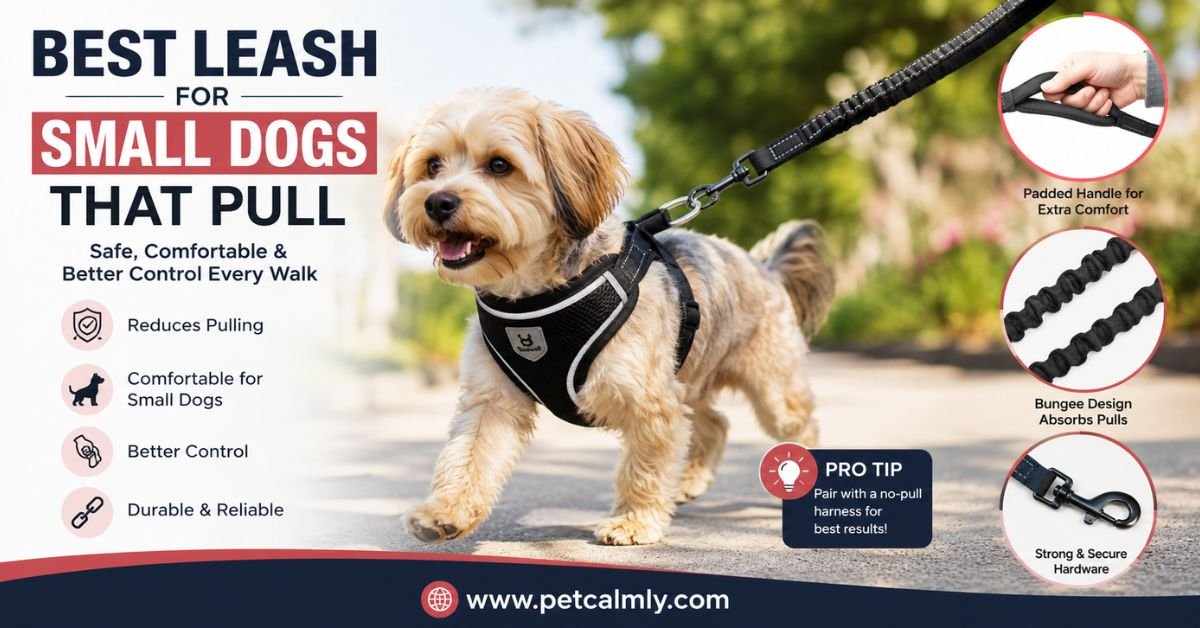
If your small dog pulls constantly on walks, a front-clip harness is typically the most effective solution because it redirects pulling energy toward your body rather than allowing forward momentum. If your dog resists harnesses, a standard 4-6 foot fixed leash paired with consistent training works well for dogs that pull moderately. For maximum control, a retractable leash with a locking feature offers flexibility, though it requires disciplined handling to prevent reinforcing pulling behavior. The best leash ultimately depends on your dog’s size, strength, and temperament but the leash alone won’t solve pulling without proper training and consistency.
Why Your Small Dog Pulls: Understanding the Behavior First
Before you buy anything, it helps to understand why your dog is pulling in the first place. Small dogs pull for different reasons than large dogs, and recognizing the source makes choosing a leash far more effective.
Most small dogs pull because they’re excited about what’s ahead a smell, another dog, a person, or simply the stimulation of being outside. Their small size means they don’t feel the same physical consequence of pulling that a larger dog might experience with their owner’s resistance. A 10-pound Chihuahua can yank forward without feeling much tension, while a 50-pound Labrador quickly learns that pulling doesn’t work.
Anxiety also drives pulling in small breeds. Some pull to stay close to their owner, pulling toward you rather than away. Others pull to escape perceived threats they feel vulnerable on the ground and want to get moving faster. Toy breeds especially can feel exposed in unfamiliar environments, which intensifies their urge to move quickly.
Some small dogs pull simply because nobody taught them not to. If pulling has been rewarded (even accidentally) by getting them closer to something they want, they’ve learned it works. This is especially common in small breeds because owners sometimes don’t take pulling seriously it’s easy to dismiss a chihuahua’s tugging as “cute” when it would be exhausting with a German Shepherd.
Understanding your dog’s specific motivation helps you choose a leash that addresses the real problem. A dog pulling from excitement needs different equipment than one pulling from anxiety. A dog who’s never been trained to walk on a loose leash needs a different strategy than one who knows the rules but simply gets overstimulated.
Types of Leashes for Small Dogs That Pull: Which Actually Works
Not all leashes are created equal, and small dogs present unique challenges that general leash recommendations often miss.
Front-Clip Harnesses: The Most Effective Option
A front-clip harness has a D-ring attachment point on the dog’s chest rather than the back. When your dog pulls, the harness naturally turns their body sideways toward you, making forward progress impossible without your cooperation. This isn’t a correction—it’s mechanical: physics prevents the dog from successfully pulling.
Front-clip harnesses work exceptionally well for small dogs because:
- They don’t require much strength from the handler (important if you’re smaller or older)
- They reduce lunging without choking or restricting breathing
- They’re humane and don’t cause discomfort when fitted properly
- They work on dogs of any size, but smaller dogs respond quickly to the redirect
The trade-off is that some dogs initially resist wearing a harness, and poorly fitted ones can rub under the armpit. For small breeds especially, sizing matters enormously a harness that’s too loose won’t work, and one that’s too tight restricts movement.
Best for: Dogs that pull forward consistently, dogs smaller than 15 pounds where handler control is important, dogs that already know basic leash manners but get overexcited.
Back-Clip Harnesses: Not Ideal for Pullers
A back-clip harness (also called standard or no-pull style) has the D-ring on the dog’s back, just like a standard harness. This does not discourage pulling and may actually encourage it by distributing your dog’s weight more evenly and creating better leverage for pulling.
Don’t use back-clip harnesses if pulling is your main problem. They’re useful for dogs with tracheal issues (because they don’t put pressure on the neck) or for small dogs on short trips, but they won’t solve a pulling problem.
Standard Fixed-Length Leashes
A standard 4-6 foot fixed leash is the most versatile tool for small dogs once they understand basic leash manners. Many trainers actually prefer this for training because it gives consistent feedback and doesn’t reward pulling with extra distance.
The key is choosing the right weight:
- For dogs under 10 pounds: 4-foot light-weight leash (paracord, nylon, or thin leather)
- For dogs 10-20 pounds: 4-6 foot medium-weight leash
- For dogs 20-30 pounds: 6-foot standard leash (heavier material)
A light leash gives you better control without requiring strength, and it’s less tiring on small dogs’ necks. Many small dog owners make the mistake of using leashes too heavy for their dog’s frame, which actually encourages pulling as the dog tries to counter-balance.
Best for: Small dogs learning to walk politely, dogs that have already had some training, routine neighborhood walks in low-distraction environments.
Retractable Leashes: Use With Extreme Caution
Retractable leashes are controversial, and for good reason. They give your dog constant freedom to extend the line, which inadvertently trains pulling: every time your dog pulls, they get rewarded with extra distance.
If you use a retractable leash for a dog that pulls:
- Keep the line locked most of the time (only extend it in open, quiet areas)
- Never allow your dog to reach the full length while pulling
- Consider them for small dogs only (they’re genuinely dangerous for large dogs)
- Accept that they won’t reduce pulling—they’ll likely worsen it if your dog is motivated to move forward
Some small dog owners do use retractable leashes successfully for neighborhood walks where the dog isn’t pulling aggressively, and they appreciate the flexibility. But if your dog is the type that pulls constantly, this won’t help and will probably make training harder.
Best for: Very small dogs (under 10 pounds) on short, casual walks in familiar territory where pulling isn’t the main issue.
No-Pull Collars and Gentle Leaders: Limited Use for Small Dogs
A no-pull collar (front-clip collar without a harness) works by redirecting the dog’s head when they pull, similar to a front-clip harness but just on the collar. Gentle Leaders and similar products wrap around the dog’s muzzle, giving the handler complete control of the dog’s head.
For small dogs, these can work but often feel more restrictive than a front-clip harness, and small dogs are more likely to resist them. If your dog tolerates a Gentle Leader, it’s effective, but many small breeds strongly dislike the sensation of something around their muzzle.
Use these only if:
- Your small dog won’t accept a harness
- You need maximum control in high-distraction environments
- Your dog has respiratory issues that require collar-based control
Best for: Small dogs that resist harnesses, specific high-risk situations (traffic, off-leash dogs), dogs with tracheal collapse that can’t use standard collars.
How to Choose the Right Leash for Your Small Dog
Decision-making flow:
Step 1: Assess your dog’s pulling behavior
- Does your dog pull constantly on every walk, or only in specific situations?
- Is the pulling from excitement, anxiety, or untrained behavior?
- How long is your dog? Longer dogs in small breeds (like some Dachshunds) may need different equipment than compact breeds (like Chihuahuas).
Step 2: Consider your dog’s personality
Small dogs that are highly social, anxious, or have high prey drive will need something reliable. Dogs that are calm and responsive to training might do fine with a standard leash plus training work.
Step 3: Think about your own strength and ability
If you’re petite, older, or have hand/wrist issues, a front-clip harness is worth prioritizing because it distributes force differently than a standard leash. If you have a small dog that pulls hard, a harness-plus-leash combination will be less taxing on your body.
Step 4: Factor in your dog’s tolerance
Some small dogs accept harnesses immediately. Others resist them for weeks. If your dog is sensitive or already anxious, forcing a harness they hate will create additional stress. Start with gentle introduction and consider a standard leash with training as a temporary bridge.
Step 5: Test before buying full-price
Retailers like Chewy, Amazon, and pet stores with good return policies let you test equipment. A harness that looks perfect online might be impossible to get on your dog or uncomfortable once they’re wearing it.
Essential Leash Features for Small Dogs That Pull
When comparing options, look for these specific qualities:
Secure attachment points: D-rings should be welded or riveted, not glued. For small dogs, a poorly attached D-ring can detach under tension.
Appropriate weight: A heavy leash is harder on a small dog’s neck and shoulders. Choose leash material that’s strong but lightweight paracord, nylon, or thin leather work better than thick rope or heavy leather.
Proper sizing for your dog’s frame: Many harnesses come in S/M/L, but small breed sizes are often overlooked. Measure your dog’s girth and length before ordering. A harness that’s even an inch too loose won’t work.
Comfortable padding: For a dog that pulls, look for padding on the chest piece of a harness, not just a thin strap. Small dogs have delicate chests.
Breathable material: Nylon and mesh are better than solid neoprene for warm climates, as small dogs can overheat more easily.
Easy on/off mechanism: Especially for small dogs, a harness that requires wrestling to get on will create negative associations. Look for quick clips or step-through designs.
Training Your Small Dog to Stop Pulling: The Leash Is Only Half the Solution
The most expensive, well-designed leash won’t stop pulling without training. The good news is that small dogs are often easier to train than large breeds—they’re more portable for practice, and they can’t hurt themselves (or you) as severely if they panic.
The Foundation: Loose Leash Walking
Loose leash walking means your dog walks beside or slightly ahead of you with the leash slack, not extended tight. Teaching this takes consistency but works for nearly all small dogs.
How to train loose leash walking:
- Set realistic expectations: Start in your home or a quiet driveway, not a busy park. Your dog needs to succeed before facing distractions.
- Use high-value rewards: Small dogs are motivated by small treats. Carry soft, pea-sized treats that won’t take long to chew. Cheese, small bits of chicken, or training-specific treats work well.
- Change direction, not tension: When your dog pulls, don’t pull back (this creates tension and teaches pulling). Instead, stop walking or change direction. This teaches that pulling doesn’t work because it doesn’t achieve anything.
- Reward the behavior you want: The moment your dog’s leash goes slack and they’re walking beside you, reward immediately. Be generous with praise and treats at the start.
- Practice in low-distraction settings first: Your backyard or quiet street is better than the dog park. Once your dog understands, slowly increase difficulty.
- Stay consistent: Every person walking your dog needs to enforce the same rules. If you don’t let your dog pull but your partner does, your dog learns that pulling works sometimes.
This takes 2-6 weeks for most small dogs to solidify, depending on how long they’ve been pulling. Consistency matters more than the specific leash you choose.
Why Small Dogs Pull Differently Than Large Dogs
Small dogs pull because they can. An 8-pound Pomeranian pulling at a standard collar won’t choke or gasp for air the way a large dog might, so the feedback from a standard collar is gentler. This means they’re less likely to naturally discourage themselves through discomfort.
Additionally, many small dog owners inadvertently reward pulling by giving their dog what they want (closer to another dog, or permission to explore) shortly after pulling. The dog doesn’t understand why they got what they wanted—they just know it worked.
Training a small dog requires the same principles as a large dog but sometimes more patience because the physical consequences are less obvious.
5 Common Training Mistakes to Avoid
Jerking the leash: Yanking back on the leash teaches your dog to pull harder against pressure, not less. It’s also painful and can damage a small dog’s trachea.
Waiting for perfection before rewarding: In the early stages, reward your dog any time they’re not actively pulling, even if they’re not perfectly walking beside you. Perfection comes later.
Punishing without teaching: Your dog doesn’t inherently know where to walk. You have to teach the correct behavior before you can reasonably expect them not to pull.
Inconsistency: If your dog pulls to get to the dog park and sometimes succeeds, pulling remains rewarding. Your dog will keep trying.
Giving up too soon: Small dog owners often switch between leashes and training methods constantly, never giving any approach time to work. Stick with a method for at least 3 weeks before concluding it’s not working.
Real Scenarios: What Works for Different Small Dog Types
The anxious small dog (Chihuahua, Italian Greyhound, Toy Poodle prone to nervousness):
These dogs often pull toward their owner, not away. They’re pulling from fear, not excitement. A front-clip harness still works, but pair it with counter-conditioning exercises (gradual desensitization to triggers). Shorter walks in controlled environments and more frequent trips help build confidence. Sometimes a small backpack or weighted vest (if your vet approves) helps anxious small dogs feel more secure.
The social butterfly (friendly, excitable Cavalier King Charles, Maltese, or Pomeranian):
These dogs pull toward every person and dog they see. A front-clip harness is highly effective because it lets you control their forward momentum without requiring strength. Pair it with training that rewards looking at you instead of pulling toward distractions. These dogs often respond well to “watch me” games because they’re naturally people-focused.
The stubborn small dog (Jack Russell Terrier, Dachshund, Chihuahua with attitude):
These independent breeds sometimes resist harnesses and training. Start with a standard collar and light leash, using high-value rewards (not commands or pressure). Stubborn small dogs often respond better to incentives than corrections. Make loose leash walking their idea by rewarding heavily and frequently.
The older small dog (transitioning to pulling later in life):
If your small dog suddenly started pulling after years of polite walking, talk to your vet first pain, cognitive changes, or vision loss can cause this. If it’s behavioral, go back to basics with gentler training and consider if physical discomfort is contributing.
Mistakes Small Dog Owners Make When Buying Leashes
Choosing a leash color before function: A adorable designer leash that’s too heavy for your dog or has a weak attachment point is worse than a practical nylon leash. Aesthetics come second to safety and effectiveness.
Buying a harness without measuring: Harnesses are not one-size-fits-all. A harness sized for a 12-pound dog won’t work on a 6-pound dog, even if both are “small.” Measure your dog’s chest girth and length before ordering.
Assuming retractable leashes are good for training: They aren’t. If you use one, understand that it’s for casual walking, not for teaching loose leash walking.
Ignoring leash quality for small breeds: Yes, your Pomeranian is smaller than other dogs, but that doesn’t mean leash quality doesn’t matter. A cheap harness will break, get uncomfortable, or fail when you need it most.
Switching tools every two weeks: Frustration makes people try new leashes constantly. Commit to one tool and train for at least 3-4 weeks. Change tools only if there’s a genuine fit or safety problem.
Using a leash that’s too heavy: Small dogs are surprisingly sensitive to weight. A 6-ounce leash matters on a 10-pound dog. Choose lightweight materials whenever possible.
When to Seek Professional Help
Most pulling problems can be solved at home with the right leash and consistent training. But some situations warrant a professional trainer or veterinary behaviorist.
Talk to a trainer if:
- Your dog pulls so hard they’re choking or gagging despite equipment changes
- Pulling is worsening despite 4-6 weeks of consistent training
- Your dog is reacting aggressively (lunging, snapping) during walks, not just pulling
- You’re injured or exhausted by the pulling (some trainers offer in-home sessions that teach handlers proper technique)
Talk to your vet if:
- Your dog suddenly started pulling after behaving calmly for years
- Your dog is coughing, gagging, or seems to have difficulty breathing
- Your small dog has a history of tracheal collapse certain collars and leashes are contraindicated
- The pulling seems anxiety-based and you’re wondering whether medication might help
A good trainer can often solve pulling in 3-6 weeks with hands-on guidance. If your dog has an underlying anxiety or medical issue, a trainer can help, but your vet should be part of the conversation.
Equipment Setup for Maximum Safety and Control
Once you’ve chosen your leash and harness, proper setup matters.
Getting a harness on your small dog:
- Step-through harnesses: Have your dog stand, slip their front legs through, and buckle at the back. Usually easier for resistant dogs.
- Overhead harnesses: Slip over your dog’s head like a T-shirt. Faster if your dog cooperates but harder if they pull back.
- Practice without leaving the house first. Reward heavily. Some dogs take a week to accept a harness.
Leash length:
- 4 feet: Maximum control for small dogs in busy areas, training sessions
- 6 feet: Good for neighborhood walks once your dog has training
- Avoid longer unless you’re in an open area specifically for off-leash practice
Double-leash backup (for high-risk situations):
- In unfamiliar areas with traffic, attach both a standard collar (with ID tags) and harness. If one fails or detaches, your dog is still secure.
- For small dogs near traffic or around water, some owners use a double-connection setup. It’s overcautious for everyday walks but justified in genuinely risky situations.
More Information About Pets, Please Visit Our Website: Fireworks Anxiety in Dogs
How to Make a Dog Anxiety Wrap
Dog Shaking Head Constantly Meaning
Healthy Homemade Dog Treat Recipes
How to Help an Overweight Dog Lose Weight
How to Choose the Best Dog Food for My Dog
How to Tell If Your Dog Has a Fever
How Often Should Dogs Eat Raw Meat?
How Long Can a Dog Hold its Pee
Best Dog Food for Small Breeds with Sensitive Stomachs
Do Dogs Need More Food in Winter?
How Often Should I Bathe My Dog?
Frequently Asked Questions
1: How much pulling is normal for a small dog?
Answer: Some pulling is normal, especially on new routes or when your dog is excited. What’s not normal is constant pulling where your dog is always lunging forward and the leash is always tight. If your dog pulls for 80% of every walk, training (or equipment) adjustment is worthwhile. If your dog pulls occasionally but mostly walks politely, your current setup is probably fine.
2: Can a small dog pull hard enough to hurt themselves?
Answer: Yes, absolutely. Small dogs are prone to tracheal collapse, which is a progressive condition where the windpipe weakens. Repeated pulling, especially with a standard collar, can accelerate this problem. Even without a predisposition, a small dog pulling hard enough to choke is experiencing unnecessary discomfort. A harness distributes pressure across the chest instead of the throat, significantly reducing injury risk.
3: How long does it take to train a small dog to stop pulling?
Answer: Most small dogs show improvement within 2-3 weeks of consistent training. Significant improvement (90% loose leash walking) typically takes 4-8 weeks, depending on how long they’ve been pulling and how consistent your training is. A dog that’s been pulling for 3 years might take longer to retrain than a young dog with a few months of bad habits. Consistency matters far more than the specific leash you choose.
4: Is a front-clip harness uncomfortable for my dog?
Answer: No, when fitted properly. A well-fitted front-clip harness should sit comfortably on your dog’s chest with room to fit two fingers underneath at any point. Your dog might initially resist a harness because it’s new, not because it’s uncomfortable. Give them 3-4 days to adjust, rewarding heavily for wearing it. If your dog still seems distressed after a week, the fit might be off measure your dog and check the sizing guidelines.
5: Will a no-pull leash fix pulling without training?
Answer: Equipment will manage pulling and prevent your dog from succeeding at it, but it won’t fix the underlying behavior without training. Your dog needs to learn that pulling doesn’t work and that walking politely gets rewards. A front-clip harness helps by making pulling ineffective, but you still need to reinforce loose leash walking with treats and praise. Think of the leash as a helpful tool, not a permanent solution.
6: What’s the best leash for a small dog that pulls in the car?
Answer: For car safety, leashes don’t help your dog needs to be in a crash-tested carrier, harness designed for car safety, or behind a barrier. Standard leashes shouldn’t be used to restrain dogs in cars because they create injury risk if you brake suddenly. If your dog is pulling/lunging in the car before you even leave, that’s a separate training issue. Talk to your vet or trainer about car desensitization and whether a calming aid (prescribed by your vet) might help during the training phase.
Conclusion
Here’s what matters most: The best leash for your small dog that pulls is one that works for your dog’s specific situation, fits your lifestyle, and pairs with training consistency.
If you’re currently exhausted by walking your dog, a front-clip harness can immediately make walks easier and safer. You’ll feel relief, which means you’re more likely to walk consistently. Consistent walks with training create faster improvement than occasional frustrated trips out the door with equipment that doesn’t feel right to you.
Don’t get paralyzed by choice. Most small dogs respond well to a front-clip harness and 4-6 weeks of loose leash walking training. If that doesn’t work, you have options. But betting that a different leash will magically fix pulling without training is a bet you’ll lose.
The emotional part of this the frustration, the sore shoulders, the embarrassment when your small dog yanks you forward in public matters. A good leash and some training can genuinely change how you feel about walks. That’s worth the investment.