Short direct answer
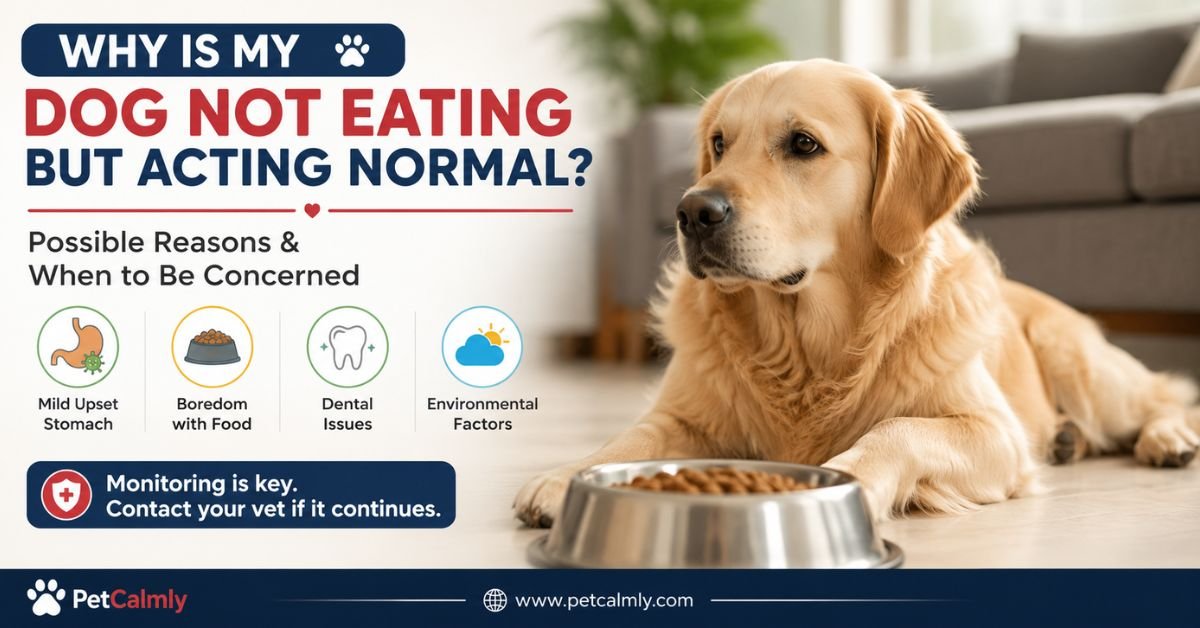
If your dog is not eating but acting normal, the most likely explanations are mild stomach upset, recent overfeeding or treats, hot weather, a change in routine, or simple pickiness not necessarily a medical emergency. Dogs, unlike humans, can skip one or even two meals and still play, wag, and act completely themselves. The key is timing: a single skipped meal with normal energy is usually fine to watch. A skipped meal paired with vomiting, lethargy, or more than 24–48 hours of no food is when a vet visit becomes necessary.
Why This Is So Confusing (And Why You’re Not Overreacting)
You filled the bowl. Your dog walked past it. Twice.
But then they greeted you at the door like always, chased the tennis ball, and curled up on the couch looking completely content. No limping, no whining, no obvious distress just an untouched bowl of food sitting there, slowly going stale.
This is one of the more unsettling situations in dog ownership, precisely because nothing else seems wrong. If your dog were lethargic or clearly in pain, you’d know what to do. But a dog who refuses food while acting perfectly normal puts you in a strange holding pattern: worried, but with no clear next step.
The good news is that this scenario is common, and in most cases, it’s not an emergency. Dogs’ appetites fluctuate for reasons that have nothing to do with serious illness. But there are also situations where normal-seeming behavior can mask an early problem, which is why understanding the “why” matters more than just waiting it out.
8 Common Reasons a Dog Skips Food But Seems Otherwise Fine
1. Recent Treats, Table Scraps, or a Big Previous Meal
Dogs have smaller stomachs relative to their size than we tend to assume. A generous handful of training treats, a shared piece of cheese, or an extra-large dinner the night before can genuinely fill them up enough to skip the next scheduled meal. This is especially common in households where treats are given throughout the day without being subtracted from the dog’s overall food intake.
2. Hot Weather or Low Activity Days
Just like people eat less on sluggish, humid afternoons, dogs’ appetites often dip during hot weather or after a low-activity day. If your dog didn’t get their usual walk or spent the day napping instead of playing, their calorie needs — and therefore hunger — genuinely drop.
3. A Change in Routine or Environment
Dogs are creatures of habit. A new feeding schedule, a recent move, houseguests, construction noise next door, or even rearranged furniture can be enough to throw off appetite temporarily, even when the dog doesn’t outwardly seem stressed. Some dogs hide anxiety well and only show it through subtle changes like eating less.
4. Mild, Self-Resolving Stomach Upset
Dogs get occasional stomach upset from eating something slightly off, grass, or a new treat — much like humans get a mild upset stomach without it being serious. In these cases, appetite dips for a meal or two while the rest of the dog’s behavior stays normal because the discomfort is minor and short-lived.
5. Boredom With the Same Food
Some dogs genuinely get tired of eating the identical kibble meal after meal, especially if it’s been the same formula for a long time. This isn’t “pickiness” in a negative sense it’s a legitimate response to monotony, particularly in food-motivated but sensitive-palated breeds.
6. Teething, Loose Teeth, or Mild Mouth Discomfort
In puppies, teething can make chewing kibble briefly uncomfortable. In senior dogs, a loose tooth, mild gum irritation, or early dental disease can make eating slightly painful without causing any other visible symptoms. Dogs are also skilled at masking mouth pain during play, since it doesn’t necessarily affect movement or energy.
7. Vaccinations or Recent Vet Visits
A same-day or next-day drop in appetite after a vaccine, microchip, or minor vet procedure is common and usually resolves within 24 hours. The immune response can cause mild, short-term fatigue in the digestive system even while the dog seems energetic elsewhere.
8. Hormonal Cycles (Unspayed Females, Intact Males)
Female dogs in heat and intact males who sense a female in heat nearby can experience temporary appetite loss driven by hormones and distraction rather than illness.
What “Acting Normal” Actually Tells You
This is the detail most articles skip over, and it’s the most useful one.
When a dog is seriously ill, appetite loss is rarely the only sign. Illness tends to show up in multiple, overlapping ways: lower energy, reluctance to move, hiding, changes in posture, or a “flat” expression that owners often describe as “just not being themselves.”
So when your dog is skipping food but still:
- Greeting you with normal energy
- Playing or seeking attention
- Drinking water normally
- Having normal bathroom habits
- Sleeping in their usual spots and positions
- Responding to their name and environment as usual
…it’s a genuinely reassuring sign. It suggests the appetite dip is isolated, rather than part of a broader pattern the body is dealing with.
This doesn’t mean you should ignore it it means you have a bit of breathing room to monitor rather than panic.
A Simple Way to Think About Timing
Veterinary guidance generally treats appetite loss in otherwise healthy adult dogs as low-urgency for the first 24 hours, and worth a vet call if it stretches beyond 48 hours, according to general guidance from sources like the VCA Animal Hospitals and the Merck Veterinary Manual. Puppies, senior dogs, and dogs with existing health conditions have much less buffer, since their bodies handle missed nutrition and blood sugar swings less efficiently.
| Situation | General Guidance |
|---|---|
| Healthy adult dog, 1 skipped meal, normal behavior | Monitor at home |
| Healthy adult dog, 24–48 hours no food, normal behavior | Call your vet for advice |
| Puppy or senior dog, any refusal beyond 12–24 hours | Contact your vet sooner |
| Any dog with vomiting, diarrhea, or lethargy alongside appetite loss | Same-day vet contact |
| Known toxin exposure, even with normal behavior | Emergency vet immediately |
This table is a general guide, not a diagnosis — every dog’s baseline health and history matters, so when in doubt, a quick call to your vet’s office costs nothing and can rule out serious concerns.
Practical Steps to Take Right Now
Step 1: Rule Out the Obvious First
Before assuming anything medical, walk back through the last 24 hours:
- Did they get extra treats, a chew, or table scraps?
- Was there a walk, park visit, or playdate that might have filled them up or worn them out?
- Has the weather been unusually hot?
- Has anything changed at home — guests, noise, a new pet, travel?
Often, this quick mental checklist explains the missed meal on its own.
Step 2: Check the Food Itself
Smell and inspect the food. Kibble left out too long can go stale or attract humidity, especially in warm climates. Wet food left out for more than 30–60 minutes can spoil faster than expected. If the food itself seems off, even a small amount, that alone can explain refusal.
Step 3: Try a Low-Pressure Re-Offer
Instead of leaving food out all day (which can cause dogs to graze-and-refuse out of habit), pick it up after 15–20 minutes if untouched, and offer it again at the next scheduled time. This keeps mealtimes predictable rather than turning the bowl into background furniture.
Step 4: Observe, Don’t Hover
Watching your dog stare at an untouched bowl while you stand over them can actually make some dogs more hesitant to eat, especially anxious or sensitive breeds. Give them normal space and check back rather than watching every bite.
Step 5: Log What You Notice
Keep a simple mental (or written) note of:
- When they last ate normally
- What, if anything, changed
- Water intake
- Bathroom habits
- Energy level
This log becomes genuinely useful information if you do need to call your vet, since it helps rule things in or out faster.
When You Should Start to Worry
Appetite loss becomes a more serious concern when it’s paired with any of the following, even if your dog still seems “fine” on the surface:
- No food for more than 24–48 hours (less for puppies and seniors)
- Vomiting or diarrhea, even mild
- Noticeably reduced water intake
- Drooling more than usual or pawing at the mouth
- Weight loss you can feel along the ribs or spine
- Reluctance to jump, climb stairs, or move normally
- Hiding more than usual, even briefly
- A bloated or tense-looking abdomen
- Known access to something toxic, spoiled, or a foreign object (socks, toys, bones)
Bloat, in particular, deserves a direct mention: a swollen, tight abdomen combined with unproductive retching or restlessness is a genuine emergency, especially in deep-chested breeds like Great Danes, German Shepherds, and Standard Poodles, and it should never be watched-and-waited on, according to guidance from the American Veterinary Medical Association. If you notice these signs, skip the wait-and-see approach entirely and contact an emergency vet.
What Pet Owners Should Actually Do
- Give it one skipped meal’s worth of grace if your dog is otherwise acting normal this is genuinely common and usually resolves on its own.
- Avoid switching foods immediately. A sudden food change adds a second variable and can create new stomach upset, making it harder to tell what caused what.
- Don’t force-feed or syringe food without vet guidance this can cause stress, aversion, or aspiration risk in some cases.
- Keep water accessible and encourage hydration, since appetite loss combined with dehydration is more concerning than appetite loss alone.
- Call your vet if it crosses 24–48 hours, or sooner for puppies, seniors, or dogs with existing conditions like diabetes or kidney disease.
- Trust your instincts. You know your dog’s normal patterns better than any article can. If something feels off beyond the missed meal, that instinct is worth listening to.
A Realistic Example
Picture a five-year-old Labrador who skips breakfast on a Tuesday. She still trots to the door for the mail carrier, plays tug with her rope toy, and naps in her usual sunny spot by the window. Her owner notices she got an extra-long walk the evening before and a few too many training treats during a session. By dinnertime, she eats normally again.
This is the textbook version of “not eating but acting normal” and it resolves itself without intervention. Compare that to a dog who skips breakfast, seems fine in the morning, but by afternoon is lying quietly instead of following their owner around the house. That shift, even a subtle one, is the kind of change worth calling the vet about.
How to Prevent Future Appetite Dips
- Stick to a consistent feeding schedule so your dog’s hunger cues stay predictable.
- Track treat intake, especially during training-heavy days, so treats don’t unintentionally replace meals.
- Avoid free-feeding (leaving food out all day) if your dog tends to graze, since this can mask genuine appetite changes.
- Rotate protein sources occasionally (with your vet’s input) if boredom-related pickiness is a recurring pattern.
- Store food properly in airtight containers to prevent staleness or humidity affecting smell and taste.
- Schedule routine dental checks, since mouth discomfort is a commonly missed cause of gradual appetite changes.
Frequently Asked Questions
1: Is it normal for a dog to skip one meal but still act happy?
Yes. Many healthy dogs occasionally skip a single meal due to treats, heat, or a lighter activity day, while still showing normal energy, play, and affection. One skipped meal alone is rarely a sign of a serious issue.
2: How long can a dog go without eating before I should worry?
Generally, 24–48 hours without food in an otherwise healthy adult dog is the point to contact your vet. Puppies, seniors, and dogs with existing health conditions should be checked sooner, often within 12–24 hours.
3: Why is my dog not eating but drinking water normally?
This pattern often points toward mild stomach upset, pickiness, or a full stomach from treats rather than a systemic illness, since normal thirst usually suggests hydration and overall function are stable. It’s still worth monitoring if it continues past a day.
4: Can stress or anxiety cause a dog to stop eating without other symptoms?
Yes. Dogs can internalize stress from routine changes, new environments, or household disruptions in ways that show up almost exclusively as appetite loss, without obvious behavioral changes elsewhere.
5: Should I change my dog’s food if they suddenly stop eating it?
Not immediately. Switching food right away adds a new variable and can mask or worsen the original issue. It’s better to rule out simpler causes first and only consider a food change if refusal continues consistently across multiple days.
6: When does skipped eating become an emergency rather than something to monitor?
It becomes an emergency if paired with vomiting, a swollen or tense abdomen, extreme lethargy, known toxin exposure, or no food intake for more than 48 hours. In those cases, contact an emergency vet rather than waiting it out.
More Information About Pets, Please Visit Our Website: Best Leash for Small Dogs That Pull
Does My Dog Know I Love Him?
How to Stop Dog Separation Anxiety Barking
How Can I Train My Dog to Sit
How to Train a Stubborn Dog to Walk on a Leash
Do Dogs Understand Cat Body Language?
Fireworks Anxiety in Dogs
Dog Shaking Head Constantly Meaning
Conclusion
A dog who skips a meal but otherwise acts like themselves is, in most cases, giving you a small, temporary signal rather than a warning sign. Bodies canine or human don’t always run on a perfectly consistent appetite, and one missed meal rarely means something is fundamentally wrong.
That said, “acting normal” is a moving target you get to define, because you’re the one who knows what normal actually looks like for your dog. Trust the pattern you observe over the next meal or two, lean on the simple checklist above, and don’t hesitate to call your vet if anything shifts beyond the appetite itself. That balance calm observation paired with a willingness to act is really all responsible pet ownership asks of you here.