Short direct answer
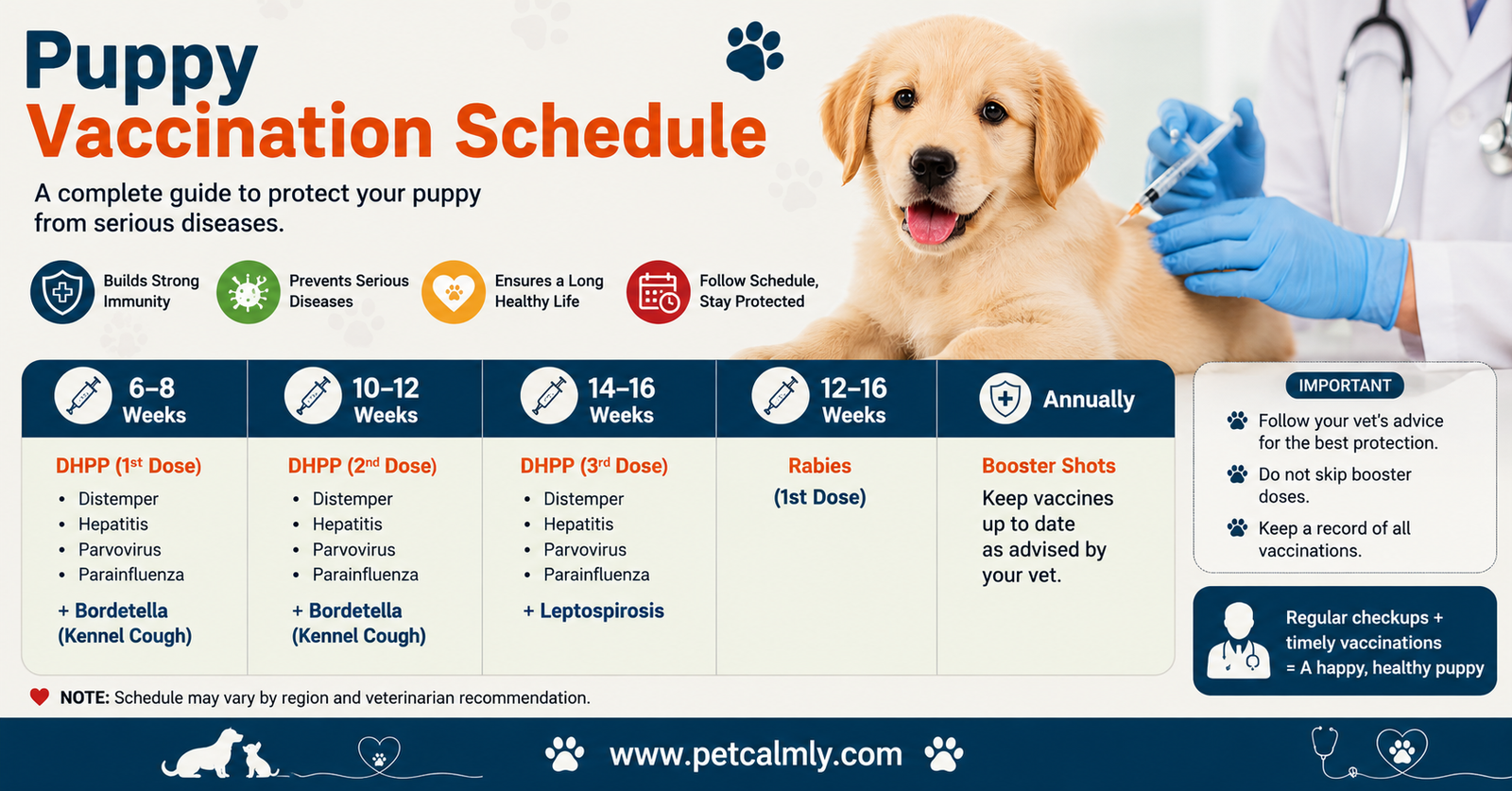
puppy Vaccination Schedule begin series at 6–8 weeks of age, receiving boosters every 3–4 weeks until 16 weeks old. The core vaccines rabies, DHPP (distemper, hepatitis, parvovirus, parainfluenza) protect against life-threatening diseases. A typical schedule looks like: first shots at 6–8 weeks, second round at 10–12 weeks, third at 14–16 weeks, and rabies vaccination (often at 12–16 weeks depending on state law). After this initial series, your puppy needs annual booster shots during the first year, then every 1–3 years based on your veterinarian’s recommendations and local regulations. The exact timing can vary based on your puppy’s health status, local disease prevalence, and your vet’s professional judgment.
Why the Puppy Vaccination Schedule Matters
Bringing a new puppy home is exciting. It’s also overwhelming. If you’re staring at the vaccination paperwork from your breeder or rescue, wondering what all those abbreviations mean and when your puppy actually needs their next appointment, you’re not alone.
The puppy vaccination schedule isn’t just a bureaucratic checklist it’s your puppy’s protection against diseases that were once common killers of young dogs. Understanding why this schedule exists, what your puppy actually needs, and when they need it helps you make confident decisions for your dog’s health.
This guide walks you through the entire process in plain language, without the medical jargon or unnecessary fear-mongering. By the end, you’ll understand exactly what your puppy needs, when they need it, and how to prepare for each veterinary visit.
What Is a Puppy Vaccination Schedule and Why Does Your Puppy Need One?
Puppies are born with some protection from their mother’s antibodies. This maternal immunity is genuinely helpful—but it’s temporary. It peaks in the first few weeks of life and gradually fades over 12–16 weeks.
Here’s the practical problem: when maternal antibodies are present, they can actually interfere with vaccines, making them less effective. Your puppy’s own immune system needs time to develop and recognize threats. This is why puppies need a series of vaccines, not just one shot.
The puppy vaccination schedule staggers vaccines over several months to work around maternal antibodies and give your puppy’s immune system multiple opportunities to build lasting protection. By the time the series is complete, your puppy’s own immunity has taken over.
This schedule isn’t arbitrary. It’s based on decades of veterinary research and epidemiological data. The American Animal Hospital Association (AAHA) and American Veterinary Medical Association (AVMA) update these guidelines regularly to reflect current disease risks and vaccine effectiveness.
Why this matters to you: Following an appropriate vaccination schedule significantly reduces your puppy’s risk of contracting potentially fatal diseases like parvovirus and distemper. It’s one of the most important health decisions you’ll make during your puppy’s first year.
The Standard Puppy Vaccination Timeline: Week by Week
Let’s talk specifics. Here’s what a typical vaccination schedule looks like:
Age 6–8 Weeks: The First Appointment
This is usually the puppy’s first veterinary visit. Your vet will:
- Perform a full physical examination
- Administer the first DHPP vaccine (sometimes called 5-in-1 or combination vaccine)
- Often give the first dose of leptospirosis vaccine
- Discuss parasite prevention (fleas, ticks, heartworms, internal parasites)
- Answer your questions and establish a baseline for your puppy’s health
Many puppies don’t have their first shot until this age because they still have significant maternal antibodies. Starting earlier is less effective.
Age 10–12 Weeks: Second Round
Your puppy receives:
- Second DHPP booster
- Second leptospirosis vaccine (if applicable)
- Sometimes the first rabies vaccine (though this is often delayed until 12–16 weeks depending on local law and individual vet protocols)
- Parasite prevention continued or adjusted
This appointment is also when many vets discuss breed-specific considerations and start talking about lifestyle vaccines.
Age 14–16 Weeks: Third Round
This is the critical appointment. Your puppy gets:
- Third DHPP booster (this is often the final one in the initial series for many puppies)
- Rabies vaccine (if not given earlier)
- Final leptospirosis vaccine (if applicable)
- Discussion about future booster schedules
By this point, most puppies have good immunity from their own immune system, even if maternal antibodies linger.
Age 12–16 Weeks: Rabies Vaccination Timing
Important: Rabies vaccination timing varies significantly based on:
- Your state or local laws (rabies is legally required in most places)
- Your puppy’s age and health status
- Your veterinarian’s specific protocol
- Whether you’re using a 1-year or 3-year rabies vaccine
Some vets give rabies at the first appointment; others wait until 12–16 weeks. Both approaches are considered appropriate by major veterinary organizations. Ask your vet about their specific recommendation.
After 16 Weeks: Booster Schedule
Once the initial series is complete, puppies still aren’t done. Here’s what happens next:
- At 6 months: Some vets recommend a booster, especially for puppies in high-risk environments (shelters, boarding facilities, dog parks with heavy traffic)
- At 1 year: Your puppy receives booster shots to ensure immunity
- Every 1–3 years thereafter: Depends on the vaccine and your vet’s recommendations
The booster schedule depends heavily on:
- Which vaccines your puppy received
- Your local disease prevalence
- Your dog’s lifestyle
- Your vet’s professional assessment
Puppy Vaccination Schedule Table: Quick Reference
| Age | DHPP | Rabies | Leptospirosis | Other Considerations |
|---|---|---|---|---|
| 6–8 weeks | 1st dose | — | 1st dose | First vet visit, parasite screening |
| 10–12 weeks | 2nd dose | Optional* | 2nd dose | Physical exam, behavior discussion |
| 14–16 weeks | 3rd dose | 1st or 2nd dose* | Final dose | Complete initial series, planning ahead |
| 1 year | Booster | 1-year booster | Booster | Annual exam, lifestyle assessment |
| 1–3 years | Booster | 3-year booster | Booster (varies) | Individualized plan with vet |
*Rabies timing varies by location and veterinarian. Always confirm with your vet.
Understanding the Vaccines: What Each Protects Against
When your vet mentions “DHPP” and other vaccine names, it can sound confusing. Let’s break down what your puppy is actually being protected from.
Core Vaccines: Every Puppy Needs These
DHPP (Often Called a “5-in-1” or Combination Vaccine)
This single injection protects against four different diseases:
- D (Distemper): A viral disease that affects the respiratory, gastrointestinal, and nervous systems. It’s serious, highly contagious, and often fatal in unvaccinated puppies. Survivors frequently have lasting neurological damage.
- H (Hepatitis): Caused by canine adenovirus type 1, this affects the liver and can cause severe illness or death. It spreads through bodily fluids.
- P (Parvovirus): One of the scariest diseases for new puppy owners. Parvovirus causes severe vomiting, diarrhea (often bloody), dehydration, and organ failure. Puppies under 12 weeks are at highest risk of death. Even with treatment, it can be fatal.
- Pi (Parainfluenza): A respiratory virus that contributes to “kennel cough.” Usually mild in vaccinated dogs, but part of why we vaccinate.
Rabies Vaccine
Rabies is legally required in most U.S. states. It’s also absolutely essential because:
- Rabies is nearly 100% fatal once clinical signs appear
- It transmits to humans
- It’s present in wildlife (raccoons, bats, foxes)
- Even an indoor dog could encounter a bat or injured animal
Most states require revaccination at 1 year, then every 1–3 years.
Non-Core Vaccines: Depends on Lifestyle
Your vet might recommend these based on your puppy’s situation:
Leptospirosis
A bacterial disease transmitted through contaminated water and wildlife urine. Risk is higher if your puppy will:
- Spend time outdoors
- Visit water sources (lakes, rivers, puddles)
- Live in areas with wildlife or known leptospirosis cases
- Attend dog parks or boarding facilities
Leptospirosis is zoonotic meaning dogs can pass it to humans. It’s taken seriously.
Bordetella (Kennel Cough)
Recommended if your puppy will:
- Attend boarding facilities
- Go to dog training classes
- Visit dog parks regularly
- Spend time in shelters or other high-traffic dog environments
Often given as an intranasal vaccine (sprayed in the nose) or injectable form.
Coronavirus
Less commonly recommended now, but your vet might suggest it depending on your location and your puppy’s exposure risk.
Lyme Disease
Only recommended in areas where Lyme disease is prevalent and your puppy will spend significant time in tick-prone environments.
How Breed and Lifestyle Affect Vaccination Needs
Not every puppy needs the exact same vaccines. Here’s where your individual dog comes in.
Breed Considerations
Certain breeds have specific health predispositions:
- Small breeds (Chihuahuas, Toy Poodles, Yorkies): These pups sometimes have stronger reactions to vaccines. Your vet might adjust the schedule slightly or space vaccines differently.
- Giant breeds (Great Danes, Saint Bernards, Mastiffs): Growing quickly can stress their immune systems. Some vets recommend more conservative vaccination timelines.
- Brachycephalic breeds (Bulldogs, Pugs, Boston Terriers): Heat sensitivity and respiratory challenges sometimes mean your vet will be extra careful about post-vaccine monitoring.
None of these differences mean your puppy doesn’t need vaccines just that your vet might tailor the approach.
Lifestyle Impact
Your daily life with your puppy matters:
Urban dog park regular: Needs leptospirosis and Bordetella, likely on a more frequent booster schedule.
Suburban backyard puppy: Core vaccines essential; leptospirosis recommended; Bordetella only if boarding/training planned.
Rural/farm puppy: Core vaccines critical; leptospirosis highly recommended (wildlife exposure); possibly Lyme disease depending on location.
Only-indoors puppy: Still needs all core vaccines (especially rabies, which is required); lifestyle vaccines less necessary unless plans change.
Discuss your specific situation with your vet. They know your area’s disease prevalence and can make personalized recommendations.
6 Common Puppy Vaccination Mistakes
After years of pet ownership, certain patterns emerge. Here are mistakes that well-meaning owners often make:
Mistake 1: Skipping the Complete Series
I understand the temptation. After the first shot, your puppy seems fine. Do we really need two more rounds?
Yes. Absolutely yes.
Maternal antibodies fade unpredictably. Some puppies lose them by 8 weeks; others hold them until 14 weeks. A single vaccine might not stick if maternal antibodies are still present. The series ensures your puppy’s immune system recognizes these diseases and builds lasting protection.
Stopping early leaves a window of vulnerability exactly when your puppy might encounter a sick dog at the park or training class.
Mistake 2: Starting Vaccines Too Early
Some owners want to vaccinate as early as possible (4–5 weeks old). Unfortunately, this doesn’t work.
At that age, maternal antibodies almost always interfere with the vaccine. You’re essentially wasting the vaccine and not giving your puppy real protection. The standard 6–8 week start is based on research about when vaccines actually become effective.
Exception: Puppies without maternal antibodies (rare, but sometimes happens with bottle-fed or orphaned puppies) might benefit from earlier vaccination. Your vet will assess this.
Many new owners think once puppies finish their series, they’re done. Then they’re shocked when their vet reminds them about an appointment two years later.
Mistake 3: Mixing Up Booster Schedules
Puppies need boosters. The exact schedule varies (some vaccines last 1 year, others 3 years), but immunity does fade without reinforcement. Mark these on your calendar or ask your vet about automatic reminders.
Mistake 4: Assuming All Vets Use the Same Schedule
They don’t. Some variation is normal and acceptable. One vet might give rabies at 12 weeks; another at 16 weeks. One might do four DHPP vaccines; another does three.
These differences exist because vaccination is based on guidelines, but individual veterinarians make professional judgments. As long as your puppy isn’t severely delayed and receives all necessary vaccines, you’re fine.
That said, if a vet’s schedule seems dramatically different from standard recommendations (like vaccinating at 4 weeks or not recommending rabies), get a second opinion.
Mistake 5: Not Discussing Lifestyle Vaccines
Some owners assume their puppy doesn’t need anything beyond the core vaccines. Others assume their puppy needs everything.
The truth: lifestyle vaccines are genuinely optional, but they’re valuable if your puppy’s life matches the risk. Talk to your vet about your plans. If you’re unsure whether boarding or dog parks are in your future, ask about protection anyway—it might be worth having.
Mistake 6: Delaying Vaccines to “Space Them Out”
There’s an internet belief that vaccines are “too much at once” and puppies need longer spacing.
Current research doesn’t support this. Most puppies handle the standard schedule beautifully. Your vet might recommend spacing vaccines in rare cases (certain health conditions, severe previous reactions), but this isn’t routine.
Unnecessarily delaying vaccines extends the period when your puppy is vulnerable to serious diseases. That’s actually riskier.
Vaccine Side Effects: What’s Normal, What Isn’t
Puppies can react to vaccines. Understanding the difference between normal and concerning reactions helps you know when to call your vet.
Normal Reactions (These Are Fine)
- Mild soreness at injection site: Puppy might favor a leg for a day or two. This is normal inflammation.
- Slight lethargy: Some puppies are sleepy for 24 hours after vaccination. This is their immune system working.
- Appetite changes: Not uncommon for a puppy to eat less the day of or after vaccination.
- Mild fever: Temporary, low-grade fever is part of the immune response.
These reactions usually resolve within 24–48 hours. Supportive care (rest, water, food) is sufficient.
Concerning Reactions (Contact Your Vet)
- Facial swelling or hives: Could indicate an allergic reaction developing.
- Vomiting or diarrhea lasting more than 12 hours: Persistent GI upset warrants attention.
- Lethargy lasting beyond 48 hours: Something else might be going on.
- Difficulty breathing: This is an emergency. Seek immediate care.
- Collapse or unresponsiveness: Also emergent.
- Persistent lameness or inability to walk: Especially if the swelling increases.
Severe Allergic Reactions (Rare but Real)
Severe allergic reactions to vaccines are uncommon but possible. Signs include:
- Facial swelling
- Hives across the body
- Difficulty breathing
- Collapse
If you notice these, call your vet immediately. Many offices can administer medication quickly if you’re nearby. If it happens after hours, seek emergency care.
Important: Severe reactions during one vaccine dose don’t mean your puppy can never be vaccinated again. Your vet might:
- Administer the vaccine differently
- Give medications before future vaccines
- Adjust the vaccine type
- Space vaccines differently
But skipping necessary vaccines entirely isn’t recommended. Work with your vet to find a safe approach.
Budgeting for Puppy Vaccinations: What to Expect
Cost is real. Let’s talk about it without shame.
Typical Vaccination Costs
- First appointment (6–8 weeks): $150–$300 (includes exam, vaccines, parasite screening)
- Second appointment (10–12 weeks): $100–$200 (vaccines, exam)
- Third appointment (14–16 weeks): $100–$200 (vaccines, exam, rabies)
- One-year appointment: $150–$250 (boosters, exam)
- Annual boosters after year one: $100–$200
Total first-year vaccination cost: $500–$1,150 (varies widely by region and clinic)
Factors That Affect Cost
- Geographic location: Urban areas typically cost more than rural areas
- Clinic type: Nonprofit/shelter clinics are cheaper; specialty vets charge more
- Vaccine choices: Additional non-core vaccines increase cost
- Parasite prevention: Often bundled with vaccines
- Exam fees: Always included, but some vets charge separately
How to Budget Wisely
- Ask your vet for a complete vaccination cost estimate at the first visit
- Ask if they offer vaccine packages or discounts for completing the series
- Some areas have low-cost vaccination clinics; these can reduce costs significantly but may not include full exams
- Budget for annual boosters and plan accordingly
- Don’t skip vaccines to save money the cost of treating parvovirus or distemper is exponentially higher
The Puppy Vaccination Checklist: Everything You Need to Know
Before each appointment, use this checklist:
Before You Go:
- Make an appointment 2–3 weeks before your puppy will be due
- Prepare a list of lifestyle questions (boarding plans? Dog parks? Travel?)
- Bring any previous vaccination records if starting with a new vet
- Note any concerns or behavioral questions for discussion
- Arrange transportation and a quiet space for your puppy afterward
During the Appointment:
- Get a clear explanation of what vaccines your puppy is receiving and why
- Ask about the booster schedule and when to return
- Discuss parasite prevention (fleas, ticks, heartworms, intestinal parasites)
- Ask about breed-specific health concerns
- Request written vaccination records (you’ll need these for boarding, training, or travel)
- Confirm your vet’s after-hours contact information
After You Get Home:
- Monitor your puppy for any reactions (most vets recommend 24-48 hour observation)
- Keep your puppy calm and allow rest; avoid strenuous play or swimming
- Provide fresh water and food (even if your puppy isn’t interested)
- Mark the next appointment on your calendar
- File vaccination records in a safe place
For Your Records:
- Keep vaccination certificates for your puppy’s entire life
- Take photos of vaccination records for backup
- Note any reactions (even mild) for your vet’s records
- Track booster dates to stay on schedule
When Should You Worry? Signs Your Puppy Might Need Veterinary Attention
Most puppies breeze through vaccinations. But some situations warrant closer attention or earlier vet visits.
Contact Your Vet Before the Scheduled Vaccine Appointment
- Your puppy is currently sick: Delaying vaccines until recovery is safer for your puppy’s immune system.
- Your puppy had a severe reaction to a previous vaccine: Your vet needs to know before the next dose.
- Your puppy has a known health condition: Some conditions require special vaccination considerations.
- Your puppy isn’t eating or acting normally: A full exam should happen before vaccination.
- You’re unsure about your puppy’s medical history: If adopted or from unclear circumstances, your vet should assess overall health first.
Emergency: When to Seek Immediate Care
- Difficulty breathing or wheezing
- Severe facial swelling
- Collapse or loss of consciousness
- Severe allergic reactions (hives covering the body, difficulty breathing)
- Seizures
- Severe vomiting or diarrhea
These are rare, but if they occur, don’t wait. Call your vet’s emergency line or seek emergency veterinary care.
Normal Concerns vs. Red Flags
Normal: Mild swelling at injection site, slight lethargy, reduced appetite for 24 hours
Red flag: Swelling that increases or spreads, lethargy beyond 48 hours, inability to eat for more than 24 hours
Normal: Puppy returns to regular play and eating the next day
Red flag: Puppy still acting unwell after 48 hours
When in doubt, call your vet. They can assess over the phone and advise whether an appointment is necessary.
What Puppy Owners Should Do: Taking Action on Vaccination
Knowledge is useful. Action is what protects your puppy.
Step 1: Schedule the First Appointment (If You Haven’t Already)
If you just brought your puppy home and don’t have vaccination records:
- Call a veterinary clinic and schedule an appointment for 6–8 weeks of age (or as soon as possible if your puppy is already older)
- Ask what vaccines they recommend for your area
- Mention any breeder or rescue recommendations for vaccination protocols
Step 2: Prepare for Each Appointment
- Ask your vet for a complete vaccination plan at the first visit
- Understand which vaccines are mandatory (rabies in most areas) and which are optional based on lifestyle
- Know the dates of future appointments
- Set calendar reminders or ask your vet for appointment reminders
Step 3: Keep Detailed Records
Vaccination records matter for:
- Boarding facilities
- Training classes
- Traveling across state lines
- Veterinary care at new clinics
- Legal proof (rabies vaccination is legally required in most places)
Keep physical copies and take photos of them for backup.
Step 4: Understand Your Puppy’s Specific Needs
Every puppy’s situation is different. Work with your vet to determine:
- Which non-core vaccines (if any) make sense for your lifestyle
- The appropriate booster schedule for your dog
- Any special considerations for your puppy’s breed or health status
Step 5: Plan for Adult Boosters
Vaccination doesn’t end after puppyhood. Annual or triennial boosters are necessary to maintain immunity.
- Ask your vet about their booster recommendation
- Set calendar reminders or ask about automatic appointment scheduling
- Budget for ongoing vaccination costs as part of responsible dog ownership
Frequently Asked Questions
1: How often does my puppy need vaccines, exactly?
Most puppies receive their initial series at 6–8 weeks, 10–12 weeks, and 14–16 weeks. Rabies is often given at 12–16 weeks. After this, boosters are typically given at one year, then every 1–3 years depending on the vaccine and your vet’s recommendations.
2: Can I give my puppy vaccines at home?
No. While some vaccines exist as “at-home” options, vaccination should happen at a veterinary clinic for several reasons:
- Your puppy needs a full health examination first
- Your vet must verify your puppy’s health status before vaccination
- Allergic reactions require professional monitoring
- Proper vaccine storage and handling are critical
- Your vet needs to document the vaccines officially
3: Are puppy vaccines actually necessary?
Yes. Diseases like parvovirus and distemper are serious killers. Vaccination dramatically reduces these risks. Rabies vaccination is also legally required in most places.
Even if your puppy will be indoors primarily, core vaccines (DHPP and rabies) are essential because accidental exposures happen.
4: What if I adopt an older puppy and don’t know their vaccination history?
Your vet can:
- Perform a titer test (blood test checking for immunity) in some cases
- Restart the vaccination series to be safe
- Begin where you know the history ends
Restarting the series is most common and safe. It ensures complete protection.
5: My puppy had a bad reaction to a vaccine. What should I do for future vaccines?
Tell your vet immediately. Don’t avoid your vet or skip future vaccines work with them to find a solution. Options might include:
- Spacing vaccines differently
- Giving medication before vaccines
- Using different vaccine brands or types
- Adjusting the protocol based on your puppy’s specific reaction
6: Is it safe to board or take my puppy to training classes before vaccinations are complete?
It’s risky. Boarding facilities and dog training classes expose puppies to many other dogs, increasing disease transmission risk. Most reputable facilities won’t accept puppies without at least two vaccine doses and often require all puppy shots before boarding.
Puppy training classes are common, but choose ones that:
- Require proof of vaccination from all puppies
- Have been held indoors to reduce disease exposure
- Have you complete all series before attending
Wait until vaccination series is complete before typical dog parks and off-leash play with unfamiliar dogs.
More Information About Pets, Please Visit Our Website: How to Stop Dog Barking at Strangers
Easiest Dog Breeds to Potty Train
How to Prevent Dog Ear Infections After Swimming
How to Cut an Uncooperative Dogs Nails
How to Remove Matted Dog Hair Without Cutting
Best Protein Food for Dogs
Can Dogs Eat Rice Every Day?
Conclusion
Bringing a new puppy home is one of the most joyful experiences as a dog owner. It’s also a time of real responsibility. Getting the vaccination schedule right is one of the most important decisions you’ll make.
The puppy vaccination schedule isn’t perfect for every single dog in every single situation and that’s okay. That’s exactly why you work with your veterinarian. They know your puppy, your area’s disease prevalence, and your specific lifestyle.
What we know from decades of veterinary science is clear: vaccinated puppies thrive. They’re protected against diseases that once took the lives of beloved dogs. They grow into healthy adults who can enjoy their lives without the shadow of preventable illness.
Yes, it requires multiple trips to the vet. Yes, it costs money. But it’s an investment that pays dividends throughout your dog’s entire life.
Your puppy depends on you to make informed decisions. You’ve read this guide. You understand the schedule, the vaccines, the normal reactions, and when to worry. You know what to ask your vet and how to prepare for appointments.
Now take action. Schedule that first appointment if you haven’t already. Ask questions. Keep records. Follow through with boosters. Your puppy’s health is worth it.