Short direct answer
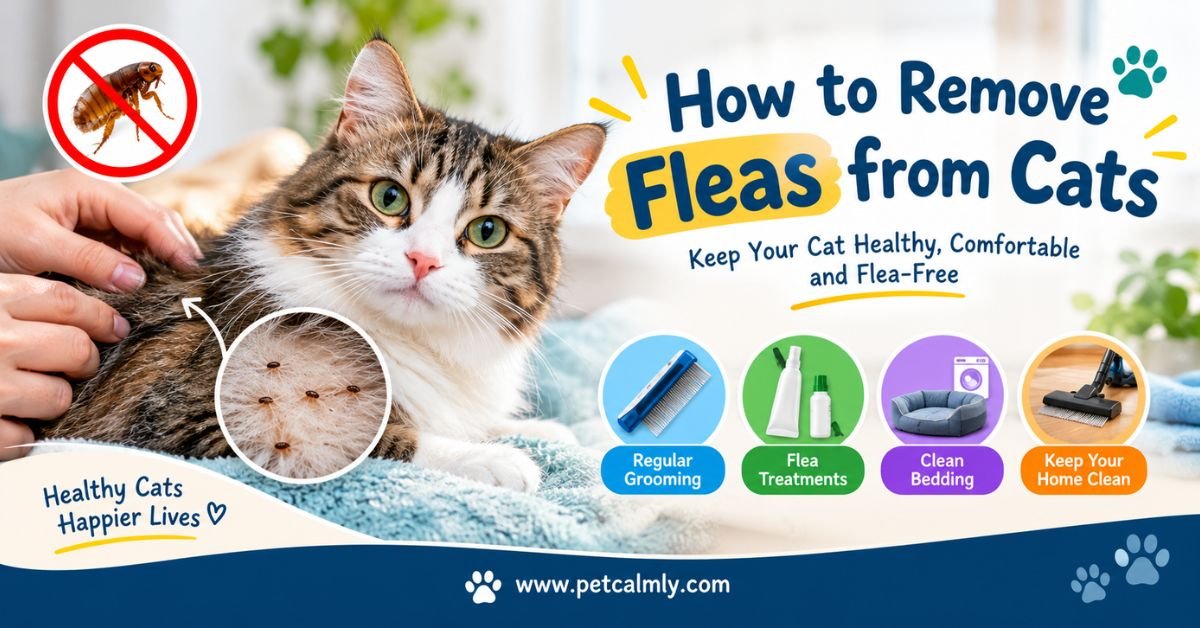
To remove fleas from cats, use a prescription flea treatment like Revolution, Advantage II, or Comfortis (approved by your vet), apply it as directed, and treat your home simultaneously. Most prescription treatments kill adult fleas within 12-24 hours and prevent new infestations for 4-12 weeks. Since fleas spend most of their lifecycle off your cat’s body, treating your furniture, bedding, and floors is just as critical as treating your pet.
Why Your Cat Has Fleas (And Why You’re Noticing Now)
Finding fleas on your cat can feel like it came out of nowhere but the truth is, your cat likely picked them up weeks ago. Here’s what’s actually happening.
Fleas are parasites that have thrived for millions of years because they’re incredibly efficient at reproducing. A single flea can lay up to 50 eggs per day, and those eggs hatch within 1-6 days depending on temperature and humidity. That’s why an infestation goes from “I thought I saw something” to “my cat is scratching constantly” in what feels like days.
Cats pick up fleas through:
- Contact with other animals (other cats, raccoons, opossums, wildlife)
- Walking through infested grass or bushes
- Hitchhiking on clothing, shoes, or bedding you bring into your home
- Exposure if they’re indoor-outdoor cats or live with other pets
Indoor-only cats can still get fleas. A single flea brought in on your pant leg or a visiting pet is enough to start an infestation. This is why vets recommend flea prevention year-round, even for strictly indoor cats.
How to Spot Fleas on Your Cat (Before It Gets Worse)
The earlier you catch fleas, the easier they are to eliminate. But many cat owners miss the signs at first because cats are skilled at hiding their discomfort.
What to look for:
- Excessive scratching, biting, or grooming – Your cat may focus on their back, hips, or tail base, where fleas congregate
- “Flea dirt” in the fur – This looks like tiny black specks (actually flea droppings). Part the fur near the skin and look carefully
- Red, irritated skin or scabs – Especially on the neck, back, and tail
- Hair loss in patches – From excessive licking and scratching
- Pale gums or lethargy – In severe cases, flea anemia can occur (more common in kittens and older cats)
- Actual flea sightings – You might see tiny reddish-brown insects moving quickly through the fur
How to do a flea check at home:
Use a fine-toothed flea comb. Run it through your cat’s fur, particularly around the neck, underarms, belly, and base of the tail. Wipe the comb on a wet paper towel. If you see black specks dissolve into red/brown on the paper, that’s flea dirt a sign fleas are present.
Some cats are hypersensitive to flea saliva and will show severe itching even with just one or two fleas. Others tolerate small numbers without obvious symptoms. Neither means you can wait fleas always multiply.
The Most Effective Flea Treatments for Cats
The treatment you choose matters because different medications work differently, and some are safer than others depending on your cat’s age, weight, and health status.
Prescription Topical Treatments (Most Effective)
These are applied directly to the skin on the back of your cat’s neck, where they can’t lick them off. They’re the gold standard for flea removal because they work quickly and continue preventing new infestations for weeks.
Common prescription options:
- Revolution Plus (selamectin + sarolaner) – Kills fleas on contact, prevents reinfection for 4 weeks, also treats ear mites, lice, and certain intestinal worms. Works on kittens as young as 8 weeks.
- Advantage II (imidacloprid + pyrethrins) – Fast-acting topical that kills fleas and flea larvae. Provides monthly protection. One of the most widely recommended options.
- Bravecto Plus – Long-acting oral tablet that lasts 12 weeks. Kills fleas within 2 hours and continues preventing them. Good option for cats you can pill easily.
- Capstar (nitenpyram) – Oral tablet that kills adult fleas within 30 minutes. Short-acting (lasts 24-48 hours) but useful for quick relief or in combination with other treatments. Available over-the-counter but still very effective.
Why prescription treatments work better:
They use active ingredients at doses proven safe and effective. Over-the-counter flea treatments often contain lower concentrations and may not kill fleas as reliably, especially with resistant populations. Your vet can recommend the best option based on your cat’s specific situation.
Oral Prescription Medications
If your cat won’t tolerate topicals:
- Comfortis (spinosad) – Oral tablet given as a single dose; kills adult fleas within 30 minutes and lasts 30 days. Safe for cats 14 weeks and older.
- Credelio (lotilaner) – Long-acting oral that lasts 3 months. Kills fleas within 4 hours.
Over-the-Counter Options
OTC treatments are weaker and less reliable, but some do help:
- Capstar – Available without a prescription and works quickly on adult fleas, though it doesn’t prevent new infestations
- Flea shampoos – Kill fleas on contact but don’t prevent reinfestations and can stress your cat
- Flea collars (modern versions) – Newer ones like Seresto release active ingredients gradually and provide 8-month protection, though results vary
The truth about OTC treatments: They often don’t work as well as prescription options, and they don’t address the lifecycle issue (flea eggs and larvae in your home). Vets generally recommend prescription treatments because the investment pays off in fewer repeat visits and faster relief for your cat.
Natural and Alternative Treatments (Use With Caution)
Many cat owners want to try “natural” flea treatments. Some have merit; others are ineffective or risky for cats.
What has limited evidence:
- Diatomaceous earth – Food-grade DE can kill fleas mechanically by drying them out, but it’s messy, requires frequent reapplication, and doesn’t prevent new infestations. If used, it should only be applied to your home, never directly on your cat (inhaling silica is harmful).
- Essential oils – Tea tree, lavender, and peppermint oils are toxic to cats. Never apply them directly or use diffusers around cats. Some diluted formulations exist, but cats lack liver enzymes to metabolize many essential oils safely.
- Vinegar sprays – No solid evidence that vinegar repels or kills fleas effectively
- Garlic or brewer’s yeast – These don’t prevent fleas and can be harmful in large quantities
What doesn’t work:
- Salt baths
- Lemon juice
- Coconut oil
- Most “flea-repelling” herbs
Bottom line on natural treatments: If you want to try them as environmental treatments (like DE on carpets), combine them with a proven prescription treatment for your cat. Never replace prescription flea medication with unproven remedies—your cat will remain infested and miserable.
Treating Your Home: The Step Most People Miss
Here’s the critical part: 80-90% of the flea lifecycle happens off your cat’s body. Flea eggs, larvae, and pupae live in carpets, bedding, furniture crevices, and under floorboards. If you only treat your cat and ignore your home, you’ll have a new flea infestation within days.
Step 1: Wash Everything That’s Washable
- All bedding your cat uses or comes near (including your bed if your cat sleeps with you)
- Blankets, throw rugs, and cushion covers
- Cat beds, mats, and carriers
- Your clothing and towels
Use hot water (130°F+) and run a full drying cycle. Heat kills all flea life stages.
Step 2: Vacuum Thoroughly and Repeatedly
Vacuum your entire home, paying special attention to:
- Carpets and rugs
- Under furniture
- Baseboards and corners
- Hardwood floor crevices
- Stairs
- Upholstered furniture
Vacuum at least 3-4 times during the first two weeks, then 1-2 times weekly for 3-4 weeks. Each vacuuming removes eggs and larvae before they mature into adults.
Important: Empty or replace the vacuum bag immediately after each use. Seal used bags in a plastic garbage bag before discarding. Fleas can survive in the vacuum and continue developing.
Step 3: Use Environmental Flea Treatments
For severe infestations or if you’re not seeing improvement:
- Premise Spray – Indoor flea spray that kills eggs and larvae. Safe for use in homes with cats when applied according to directions. Requires a vet prescription but extremely effective.
- Knockout Area Treatment – Aerosol treatment for carpets and furniture. Contains growth regulators that prevent flea development.
- Diatomaceous earth – If using food-grade DE, apply lightly to carpets and furniture, let sit 12-24 hours, then vacuum thoroughly. Repeat weekly.
Alternatively, many vets recommend flea bombs or hiring a professional exterminator for severe infestations. Professional treatment often includes targeted application of growth regulators that prevent flea larvae from developing into adults.
Step 4: Clean Other Pet Bedding and Living Spaces
If you have other pets:
- Wash all dog bedding, beds, and blankets
- Treat other cats and dogs with appropriate flea prevention immediately
- Clean any outdoor shelters, cat houses, or dog houses
- Treat the yard if fleas are severe (focus on shaded, moist areas where fleas survive better)
How Long Does Home Treatment Take?
The flea lifecycle typically takes 2-3 weeks from egg to adult flea. Consistent vacuuming and washing disrupts this cycle. Most infestations are under control within 2-4 weeks of simultaneous cat and home treatment. Severe infestations may take 6-8 weeks.
Your Flea Treatment Timeline: What to Expect
Understanding what happens after you start treatment helps you stay confident and catch any issues early.
First 24 hours: The prescription treatment (if applied topically) starts killing adult fleas on your cat immediately. Your cat may still scratch as fleas die and irritated skin heals. You might see dead fleas in the fur.
3-5 days: Itching should noticeably improve. Scratching will likely continue for a few more days even after fleas are dead (because the skin is irritated). This is normal.
1-2 weeks: Significant improvement. New fleas shouldn’t be appearing if you’ve treated your home effectively. Your cat’s behavior should return to normal.
2-4 weeks: Complete resolution in most cases. No new fleas are appearing, itching has stopped, and hair is beginning to regrow in affected areas.
Beyond 4 weeks: Start your monthly or quarterly prevention schedule to keep fleas away permanently.
If you’re not seeing improvement by week 2, or if new fleas keep appearing, something’s wrong. Common issues include:
- Not treating the home simultaneously
- Reinfection from untreated pets or outdoor exposure
- An ineffective OTC treatment (consider switching to prescription)
- Environmental factors (temperature and humidity allowing faster flea development)
Contact your vet if progress stalls. They can recommend additional treatment or identify underlying issues.
7 Common Mistakes That Keep Fleas Around
Even well-meaning cat owners make mistakes that prolong infestations. Avoiding these saves time and money.
Stopping treatment too early. Many people stop treatment after the first dose, thinking the problem is solved. Prescription flea treatments typically last 4 weeks (or longer for some formulations). After that, new fleas can infect your cat. Continue preventative treatment year-round.
Treating only the cat, not the home. This is the number one reason infestations persist. You must address both simultaneously.
Using expired or incorrectly stored treatments. Flea medications degrade over time, especially if exposed to heat or light. Check expiration dates and store in a cool, dark place.
Sharing treatments between cats. Each cat needs its own dose based on their weight. An overdose or underdose reduces effectiveness and increases risk.
Bathing your cat after topical treatment. Most topical treatments should dry for at least 24-48 hours before bathing. Washing removes the protective oils that distribute the medication.
Not addressing your cat’s environment. Does your cat spend time on a specific couch? In one cat bed? Those are ground zero for flea reproduction. Wash them obsessively during treatment.
Assuming indoor cats don’t need prevention. Indoor cats can absolutely get fleas from visitors, other pets, or exposure on your clothing. Year-round prevention is smart even for strictly indoor cats.
Forgetting to treat other pets. Fleas don’t care which pet they infest. If you have a dog, outdoor cat, or rabbit that goes untreated, they become a flea source that reinfects your indoor cat.
When Fleas Become a Serious Health Problem
Most flea infestations are uncomfortable but not dangerous. But in some situations, fleas pose real health risks that require immediate veterinary attention.
Flea Allergy Dermatitis
Some cats develop an allergic reaction to flea saliva. Even a single flea bite can trigger intense itching, scabs, and hair loss. If your cat is excessively scratching despite flea treatment, or if you see widespread scabs and raw patches, mention this to your vet. They can prescribe anti-inflammatories or antibiotics if secondary skin infections develop.
Anemia from Flea Infestation
Heavy flea infestations cause blood loss, which can lead to anemia. This is most dangerous in:
- Kittens (under 6 months)
- Elderly cats
- Cats with existing health conditions
- Small or underweight cats
Signs include pale gums, lethargy, weakness, or rapid breathing. This is an emergency. Get your cat to a vet immediately.
Tapeworms from Fleas
Cats can get tapeworms from ingesting infected fleas while grooming. You may notice tapeworm segments (tiny rice-like pieces) in stool or around the anus. Treatment is straightforward—your vet can prescribe a tapeworm dewormer. But it shows why treating fleas quickly matters: they don’t just cause itching; they create other problems.
Signs You Need Immediate Veterinary Care
- Your cat stops eating
- Extreme lethargy or weakness
- Difficulty breathing
- Pale or white gums
- Severe scratching causing bleeding or open sores
- Signs of infection (swelling, pus, heat)
- Your kitten or elderly cat has fleas and is showing unusual behavior
Contact your vet same-day if you notice any of these.
Preventing Future Flea Infestations
The easiest flea problem is the one you prevent from happening. Once you’ve eliminated the current infestation, consistent prevention stops fleas before they start.
Year-Round Prevention: Why It Matters
Fleas aren’t just a summer problem anymore. Warmer homes and mild winters mean fleas can survive indoors year-round. Most vets recommend flea prevention 12 months a year, even for indoor cats.
Choose a prevention method based on:
- Ease of use – Can you apply a topical reliably each month? Or do you prefer an oral tablet?
- Duration – Monthly treatments, quarterly treatments, or 8-month collars
- Your cat’s health – Some medications aren’t suitable for cats with certain conditions
- Cost – Prescription treatments are more expensive upfront but often prevent repeat infestations that require emergency vet visits
- Your cat’s lifestyle – Does your cat go outdoors? Do they interact with other pets? High-risk cats need consistent prevention.
Safe Prevention Options
For most indoor cats:
- Advantage II, Revolution Plus, or similar monthly topicals
- Capstar for quick relief combined with long-term prevention
- Oral options like Bravecto if your cat takes pills easily
For cats going outdoors:
- Same as above, but year-round with no breaks
- Consider heartworm prevention as well (some products combine flea and heartworm protection)
For kittens:
- Check the minimum age requirement (usually 8+ weeks)
- Use kitten-safe formulations
- Consult your vet before treating very young kittens
Environmental Prevention
Maintaining a flea-unfriendly home stops problems before they start:
- Vacuum and wash cat bedding regularly (weekly or bi-weekly)
- Keep yard trimmed and remove debris where wildlife might shelter
- Don’t leave cat food outside (it attracts wildlife that may carry fleas)
- If you bring home new pets or have visiting animals, quarantine or check them for fleas first
- Wash your hands and clothes if you’ve been around other animals
- Consider a screen door to prevent casual flea entry from outdoor cats or wildlife
When to Talk to Your Vet About Prevention
Schedule a conversation with your vet about flea prevention if:
- Your cat has had fleas multiple times
- You live in a high-flea area
- Your cat has outdoor exposure
- You have multiple pets
- Your cat has skin sensitivities or flea allergy dermatitis
- You want to know the best option for your cat’s specific situation
Your vet can prescribe prescription prevention and help you create a plan that fits your cat’s needs and your lifestyle.
Summary: Your Action Plan for a Flea-Free Cat
Here’s what to do starting today:
Immediately:
- Contact your vet and schedule an appointment to discuss flea treatment
- Do a flea check on your cat using a fine-toothed comb
- If fleas are present, start a prescription flea treatment (don’t wait)
- Wash all bedding and cat-related fabrics in hot water
Within 24-48 hours:
- Apply prescribed topical treatment if you have it
- Vacuum your entire home thoroughly
- Wash your own bedding and frequently-used items
- Begin daily vacuuming for the next 2 weeks
Within 1 week:
- Apply environmental treatment if needed (Premise spray or similar)
- Treat any other pets in your home
- Continue vacuuming at least 3 times weekly
- Monitor your cat for improvement
Ongoing:
- Repeat the prescription treatment as directed (usually monthly)
- Continue preventative treatment year-round
- Maintain regular vacuuming and bedding washing
- Schedule annual vet checkups to discuss flea prevention strategy
Patience matters: Flea elimination takes 2-4 weeks for most infestations. Stay consistent with both cat and home treatment, and you’ll see improvement quickly.
Frequently Asked Questions
1: How quickly do flea treatments work on cats?
A: Prescription topical treatments like Advantage II and Revolution Plus kill adult fleas within 12-24 hours. Oral options like Capstar work within 30 minutes to 2 hours. Your cat may continue scratching for a few days even after fleas are dead because the skin is irritated. If scratching continues beyond a week, contact your vet.
2: Is it safe to use flea treatment on kittens?
A: Many flea treatments are safe for kittens, but age and weight matter significantly. Advantage II is safe for kittens 8 weeks and older. Capstar is safe for kittens 2 pounds and up. Revolution Plus is approved for kittens 8 weeks and older. Never use a treatment designed for adult cats on kittens without vet guidance the dosing is critical.
3: Can I give my cat a flea bath instead of using medication?
A: Flea shampoos kill fleas on contact but don’t prevent new infestations or address flea eggs and larvae in your home. They’re also stressful for cats. A prescription or OTC topical/oral treatment is more effective and less traumatic for your cat. If your cat has severe itching causing bleeding, a medicated bath prescribed by your vet may help, but it should be combined with ongoing prevention.
4: What if my cat won’t sit still for a topical treatment?
A: Oral options are available. Capstar is a tablet that works quickly, and Comfortis or Credelio provide longer-lasting protection. Some cats are easier to pill than others, but if topicals aren’t working for your cat, ask your vet about oral alternatives.
5: How often should I apply flea treatment?
A: Most monthly treatments (like Advantage II) are applied once per month. Some longer-acting treatments like Bravecto last 8-12 weeks. Your vet will tell you the exact schedule for whatever treatment you choose. Mark it on your calendar so you don’t miss doses.
6: My cat already had fleas once. Does that mean they’ll get them again?
A: Not if you use year-round flea prevention. Once you’ve eliminated the infestation, consistent preventative treatment stops new infestations. Many vets recommend prevention year-round for all cats, even indoor-only cats, because exposure can happen unexpectedly.
More Information About Pets, Please Visit Our Website: Best Cat Brushes for Shedding
Why Do Cats Vomit Hairballs?
What Is the Most Common Disease in Cats?
How Often Should You Groom a Long Haired Cat?”
Why Does My Cat Smell So Good to Me?
Why Is My Cat Losing Hair and Weight?
What Kind of Soap Is Safe for Kittens?
Best Professional Cat Grooming Brush
Conclusion
Dealing with fleas is stressful, but it’s one of the most solvable cat health issues you’ll face. With a solid prescription flea treatment, thorough home cleaning, and consistent prevention going forward, you can have a flea-free cat within weeks.
Remember: you’re not failing as a pet owner. Fleas don’t discriminate between well-cared-for cats and neglected ones. They’re just incredibly good at reproducing. The fact that you’re researching solutions means your cat is in good hands.
Stick to your treatment plan, stay patient through the timeline, and don’t skip the home treatment. Your cat will thank you and you’ll finally have the peaceful, itch-free household you both deserve.