Short direct answer
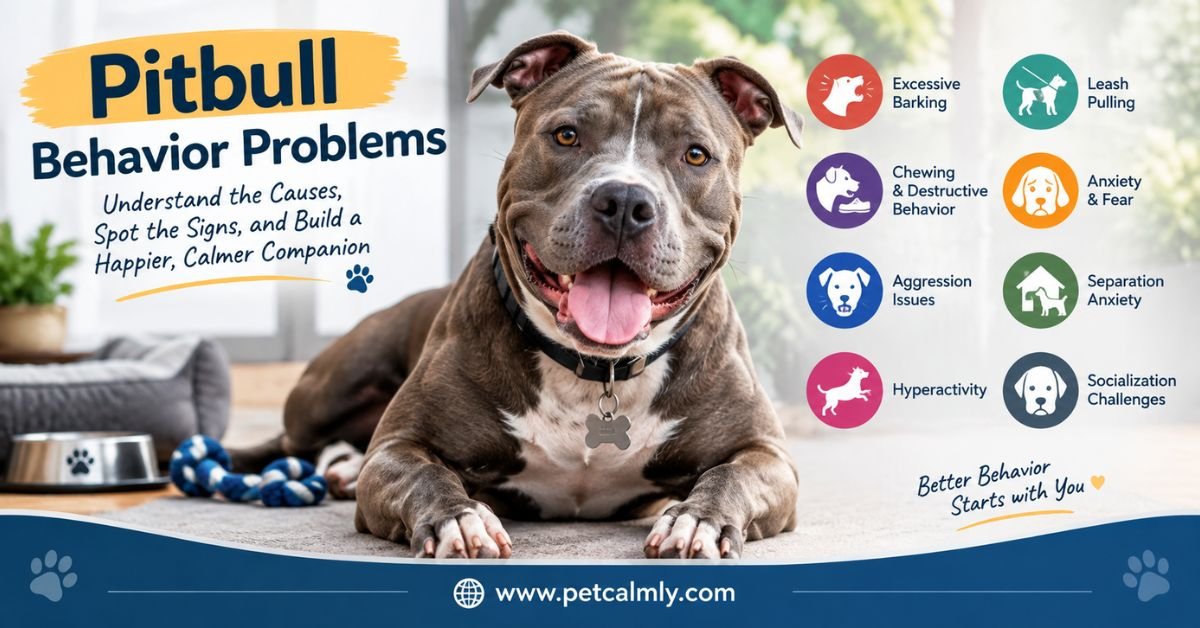
Most pitbull behavior problems come from unmet needs, not a “bad” dog. Common issues include leash reactivity, jumping, destructive chewing, separation anxiety, resource guarding, and tension with other dogs. The usual causes are too little exercise, too little mental work, missed socialization, and unclear routines. Most improve with daily structure, reward-based training, and good management. Sudden changes or any aggression need a vet check and a qualified trainer.
If you’re reading this, you probably love your dog. You may also be tired, embarrassed, or a little scared after a rough walk or a chewed-up couch.
First, take a breath. You are not alone, and your dog is not doomed.
Pitbull behavior problems are some of the most searched dog issues online. Part of the reason is that these dogs are strong, smart, and eager to please, and all of that can backfire without direction. Part of it is that pitbulls carry a lot of myths. Owners often feel judged before they’ve even asked for help.
This guide takes a calmer approach. We’ll look at why these behaviors show up and which ones are normal versus worrying. You’ll also get a practical plan you can start today.
One note first. “Pitbull” isn’t a single breed. It’s an umbrella term that usually covers the American Pit Bull Terrier, American Staffordshire Terrier, Staffordshire Bull Terrier, and similar mixes. Because individual dogs vary so much, this article focuses on patterns you can actually observe in your own dog.
What Are the Most Common Pitbull Behavior Problems?
Most owners deal with the same handful of issues. Here is a quick overview before we go deeper.
| Behavior | What it looks like | Most common reason |
|---|---|---|
| Leash reactivity | Lunging, barking, or whining at dogs or people | Frustration, excitement, or fear |
| Jumping and mouthing | Hopping up, grabbing hands or sleeves | Over-arousal, lack of manners training |
| Destructive chewing | Shredded furniture, torn bedding | Boredom, teething, or anxiety |
| Separation anxiety | Howling, panting, escaping when alone | Distress about being left |
| Resource guarding | Stiffening or growling over food or toys | Insecurity about losing something valuable |
| Dog-to-dog tension | Stiff posture, staring, scuffles | Poor social skills, arousal, or overwhelm |
| Pulling on the leash | Dragging you down the street | Strength plus excitement plus no training |
Notice that most of these behaviors have a feeling behind them: excitement, worry, frustration, or boredom. When you treat the feeling, the behavior usually improves.
Why Pitbulls Develop Behavior Problems
Understanding the “why” changes how you respond. A dog who is scared needs a different approach than a dog who is bored.
1: Energy and Mental Needs
Many pitbulls are athletic, enthusiastic dogs with a lot of stamina. A short walk around the block rarely covers it. Dogs with unspent energy find their own outlets, and those outlets tend to be your shoes, your sofa, or your neighbor’s fence.
Mental effort matters just as much as physical effort. A bored, smart dog is a creative dog, and not in a helpful way.
2: Genetics, History, and Individual Personality
Some dogs in this group were historically bred for tasks that required drive and persistence. Others were bred as family companions. Many pitbull-type dogs today are mixes with unknown backgrounds.
Genetics can influence tendencies, such as how intensely a dog focuses. Still, the AVMA has noted that breed alone is a poor predictor of how an individual dog will behave. Upbringing, health, training, and environment all matter a great deal.
3: Socialization Gaps
Puppies go through a sensitive period for learning about the world, roughly the first three to four months of life. Dogs who miss good experiences with people, dogs, sounds, and surfaces during that window can grow into adults who feel unsure.
This is common with rescue dogs. Many pitbulls in shelters have unknown histories, so no one can say what they did or didn’t experience early on.
4: Pain, Illness, and Medical Causes
This one gets overlooked. Ear infections, joint pain, dental disease, skin allergies, and thyroid problems can all change a dog’s mood. A dog who suddenly snaps when touched may be hurting, not “turning mean.”
Pitbull-type dogs are often stoic, so pain can hide well. If a behavior appears out of nowhere, a vet visit comes first.
5: Inconsistent Rules
Dogs learn through patterns. If jumping gets attention on Monday and a scolding on Tuesday, your dog can’t figure out the rule. Consistency isn’t about being strict. It’s about being predictable.
6: Pitbull Aggression and Tension With Other Dogs
This is the topic that worries owners most, so let’s handle it carefully.
Some pitbull-type dogs are social butterflies. Others get less tolerant of other dogs as they mature, often between one and three years old. This is true of many breeds, and it deserves honest attention rather than denial.
7: Early Warning Signs to Watch For
Dogs communicate long before a fight. Look for:
- A hard, fixed stare
- A stiff, still body
- A closed, tight mouth
- A tail held high and rigid
- Raised hackles
- Freezing before approaching another dog
Many owners miss the early signs and only notice the lunge. Learning to read your dog’s body language is one of the best safety skills you can build.
What to Do Instead of Hoping It Works Out
Don’t force greetings. Dog parks can be risky for dogs who are selective, because you can’t control who else is there or how they behave.
Try these safer options instead:
- Walk parallel to a calm, known dog at a comfortable distance.
- Choose quiet times and places for exercise.
- Reward your dog for looking at another dog and then looking back at you.
- Keep greetings short and optional.
- Work with a qualified trainer or veterinary behaviorist if tension is growing.
What to Do If a Fight Starts
Stay as calm as you can. Never reach between fighting dogs or grab a collar with your bare hands, because you are likely to get bitten, even by a dog who loves you.
Instead, use a barrier like a board, a large piece of furniture, or a car door. A loud noise or a blast of water from a hose can also break their focus. Afterward, have both dogs examined by a vet, since puncture wounds can hide under short coats.
How to Stop Pitbull Leash Reactivity
Leash reactivity is one of the most common pitbull behavior problems. It looks aggressive, but it often isn’t.
Why Dogs React on Leash
A leash takes away a dog’s choice. A dog who would normally walk away from something unsettling can’t, so the dog barks and lunges to make it leave. Other dogs are simply frustrated because they want to say hello and can’t.
Either way, the dog is overwhelmed, not “dominant.” The old dominance theory has largely been set aside by modern behavior science.
A Simple Distance-Based Approach
Think of your dog’s comfort zone as a bubble. The goal is to work just outside it.
- Spot a trigger, such as another dog, before your dog reacts.
- Stop at a distance where your dog still notices but stays calm.
- Say “yes” the moment your dog looks at the trigger, then give a treat.
- Move away calmly before the dog escalates.
- Over many sessions, gradually decrease the distance.
This takes patience. Sessions of five to ten minutes beat long, stressful walks.
Gear That Helps
A well-fitted front-clip harness can reduce pulling and give you better control. A head halter works for some dogs once they’re introduced to it slowly. Avoid prong, choke, and shock collars. These tools can increase fear and frustration, and veterinary behavior groups like the AVSAB recommend reward-based methods over punishment.
Pitbull Separation Anxiety and Destructive Chewing
Pitbulls are often called “velcro dogs,” and that’s not an exaggeration. Many bond tightly and want to be wherever you are.
How to Tell Anxiety From Boredom
Both can cause chewing, but the details differ.
A bored dog usually chews at random times, often near the toys or furniture he can reach. An anxious dog often becomes destructive right after you leave, especially around doors and windows. He may also pant, drool, pace, howl, or have accidents despite being house-trained.
If you’re unsure, set up a camera and watch what happens in the first thirty minutes.
What Helps Mild Cases
- Exercise your dog before you leave, not just after.
- Give a long-lasting chew or food puzzle only when you go out, so it becomes a signal that alone time is okay.
- Practice very short absences, such as walking out for ten seconds, and build slowly.
- Keep departures and arrivals low-key.
- Use a crate only if your dog already finds it comforting. A crate can make true separation anxiety worse.
True separation anxiety is a panic response, not misbehavior. Punishing it makes it worse. If your dog is hurting himself, breaking out of crates, or not eating while alone, ask your vet about a behavior plan, which may include medication alongside training.
Chewing as a Normal Need
Chewing is also a natural, healthy behavior, especially for pitbull-type dogs, who tend to have strong jaws. Instead of trying to stop chewing, redirect it. Offer sturdy rubber toys and rotate them weekly so they stay interesting. Always supervise new chews, and remove anything your dog could swallow in pieces.
Jumping, Pulling, and Mouthing Problems
These behaviors are rarely about aggression. They’re about enthusiasm without a plan.
Jumping Up
Dogs jump because it works. People look, laugh, push, or talk, and all of that counts as attention.
Instead, turn away and wait quietly. The moment all four paws are on the floor, calmly reward. Ask visitors to do the same. Teaching “sit” as the default way to say hello gives your dog something to do instead.
Mouthing and Rough Play
Pitbull puppies mouth a lot, and it can hurt. When teeth touch skin, pause the game for a few seconds, then restart with a toy. Don’t wrestle with your hands, since that teaches your dog that skin is a toy.
Pulling on Walks
Pulling is the result of strength plus excitement plus years of being rewarded for it, because pulling gets the dog where he wants to go. Change that equation: stop when the leash goes tight, and move again when it softens. It’s slow at first, but it works.
Resource Guarding in Pitbulls
Resource guarding means a dog protects food, toys, a bed, or even a person. It’s normal canine behavior, but it can become dangerous if ignored.
What It Looks Like
Early signs are subtle: eating faster, stiffening, freezing, covering the bowl with the body, or giving a side-eye. A growl is a warning, and it’s valuable information.
What Not to Do
Don’t take food away “to show who’s boss.” Dogs who feel threatened often guard harder. Don’t punish growling either, because a dog who stops growling may skip the warning and bite.
What to Do Instead
Teach your dog that people approaching is a good thing. Walk past the bowl and drop in something better, like a bit of chicken. Trade valuable items for something even better. Keep young children away from eating dogs entirely.
If your dog has bitten or seems intense about guarding, get help from a certified trainer or veterinary behaviorist rather than DIY.
Pitbull Puppy vs. Adult Dog: What’s Normal at Each Stage
Age matters when you judge behavior.
Puppies (up to about 6 months): Expect nipping, chewing, accidents, and lots of energy. This is the best time to build positive experiences with people, sounds, and calm dogs.
Adolescents (about 6 months to 2 years): Many owners say their dog “forgot everything.” That’s typical teenage behavior. Training can feel like it’s going backward, but staying consistent pays off.
Adults (2+ years): Dogs mature, and some become pickier about other dogs. This is a good time to reassess exercise, routines, and any new reactivity.
Seniors: Pain, hearing loss, or cognitive changes can cause irritability or confusion. A vet visit is a good idea if behavior shifts.
Mistakes That Make Pitbull Behavior Problems Worse
Even well-meaning owners fall into these traps.
- Using punishment. Yelling, leash jerks, and “alpha rolls” increase fear and can damage trust.
- Skipping socialization. Safe, positive exposure matters, but it doesn’t mean throwing a dog into a chaotic dog park.
- Relying on exercise alone. A tired dog can still be a stressed dog. Mental work counts too.
- Expecting overnight change. Behavior change takes weeks to months.
- Ignoring body language. Your dog is always communicating.
- Letting family members use different rules. Confusion slows progress.
- Assuming it’s just the breed. That belief can stop owners from looking for medical or training solutions.
Plan to Fix Pitbull Behavior Problems at Home
If you don’t know where to start, use this order.
- Book a vet visit. Rule out pain, thyroid issues, allergies, and other medical triggers.
- Name one problem. Pick the most urgent behavior rather than fixing everything at once.
- Manage the environment. Use gates, leashes, and closed doors to prevent rehearsal of the behavior while you train.
- Build a daily routine. Predictable walks, meals, and rest reduce stress.
- Teach a few core skills. Sit, look at me, leave it, and a solid recall go a long way.
- Reward what you want. Treats, toys, and praise work better than corrections.
- Track your progress. A simple note each day shows trends you might miss.
- Get help early. A certified trainer (look for credentials like CPDT-KA or CCPDT) or a veterinary behaviorist can save months of frustration.
Daily Checklist for a Balanced Pitbull
Use this as a quick reality check:
- At least one proper walk with sniffing time
- A short training session (five to ten minutes)
- A puzzle toy, snuffle mat, or food-dispensing chew
- Play that involves a toy, not just rough wrestling
- Quiet downtime in a safe resting spot
- Calm attention from you
Exact exercise needs vary by age, health, and individual dog, so ask your vet what’s appropriate for yours.
Real-Life Example: A Reactive Rescue Dog
Picture a two-year-old rescue named Roxy. She’s friendly with people but lunges at every dog on walks, and her owner dreads going outside.
Her owner starts by switching to a front-clip harness and walking at quiet times. Rather than correcting the lunging, she rewards Roxy for noticing dogs from far away. After a few weeks, Roxy can pass a dog across the street without a fuss.
Roxy never became a dog-park dog, and that’s fine. She became a dog who could walk calmly, and her owner became far more confident. That’s a realistic win.
When Should You Worry About Your Pitbull’s Behavior?
Some behaviors are annoying. Others are red flags. Here’s how to tell the difference.
Call Your Vet Soon If:
- The behavior changed suddenly, with no clear trigger
- Your dog yelps or snaps when touched in certain spots
- He’s eating, drinking, or sleeping differently
- He seems disoriented, restless at night, or unusually fearful
- You see limping, scratching, head shaking, or other physical signs
Get Professional Behavior Help If:
- Your dog has bitten a person or another dog
- Growling, snapping, or lunging is getting more frequent or intense
- You’re afraid of your dog, or family members are
- Your dog guards objects, spaces, or people with real intensity
- Separation anxiety is causing self-injury or major destruction
- Training hasn’t helped after several weeks of consistent effort
Treat as an Emergency If:
- A bite breaks skin on a person, especially a child
- A dog fight causes deep wounds or bleeding
- Your dog collapses, has a seizure, or shows sudden severe changes in behavior
For human bites, seek medical care and follow local reporting rules.
What Pet Owners Should Do Right Now
If things feel stressful today, here is a short, safe plan.
- Prevent, don’t punish. Use leashes, gates, and distance to avoid situations your dog can’t handle yet.
- Make a safe space. A quiet room or bed where your dog can decompress helps.
- Supervise kids and dogs. Never leave young children alone with any dog, however gentle.
- Skip high-risk places. Dog parks, crowded events, and tight sidewalks can wait.
- Introduce a muzzle slowly if needed. A basket muzzle, taught with treats, is a humane safety tool. It isn’t a sign of failure.
- Check local rules. Some areas have breed-related regulations or insurance requirements, so it helps to know yours.
- Ask for support. A good trainer will help you, not judge you.
Conclusion
Pitbull behavior problems can feel heavy, but they rarely come from a dog who is “bad.” Usually, they’re signs of energy that needs a job, worries that need comfort, or skills that haven’t been taught yet.
Start with the basics: a vet check, a steady routine, and reward-based training. Learn your dog’s body language, manage risky situations, and be honest about when to ask for help. Progress may be slow, but it’s real, and the bond you build along the way is worth it.
You don’t have to fix everything this week. Choose one behavior, take one small step today, and keep going.
More Information About Pets, Please Visit Our Website: Why Does My Dog Hide Under the Bed?
Why Does My Dog Destroy Toys?
How to Stop Dog Whining for Attention
How to Crate Train a Puppy During the Day
How to Stop Dog Digging Under Fence
How to Stop Dog Separation Anxiety Barking
Frequently Asked Questions
1: Are pitbulls naturally aggressive?
No. Pitbull-type dogs aren’t automatically aggressive toward people. Aggression depends on genetics, early experiences, health, training, and environment. Some individuals do become less tolerant of other dogs as adults, so supervision and management matter.
2: Why is my pitbull suddenly acting aggressive?
A sudden change often points to pain, illness, fear, or a major change at home. Start with a veterinary exam. If the vet finds nothing, a veterinary behaviorist or certified trainer can help identify triggers.
3: How do I stop my pitbull from pulling on the leash?
Use a front-clip harness and stop moving when the leash tightens. Reward your dog when the leash is loose, and keep walks short and consistent at first. It takes patience, but most dogs improve with practice.
4: Can a pitbull be left alone all day?
Most dogs shouldn’t be left alone for very long stretches. Pitbulls often form strong bonds and may struggle with isolation. If you work long hours, consider a midday walker, daycare, or a trusted friend, and make sure your dog gets exercise and enrichment.
5: At what age do pitbulls calm down?
Many dogs begin to settle between two and three years old, though this varies. Exercise, training, and enrichment shape how calm your dog is far more than age alone.
6: When should I hire a trainer for my pitbull?
Reach out as soon as you see biting, escalating growling, severe reactivity, or anxiety that disrupts daily life. Early help is easier and cheaper than waiting for a problem to deepen. Look for trainers who use reward-based, force-free methods.