Short direct answer
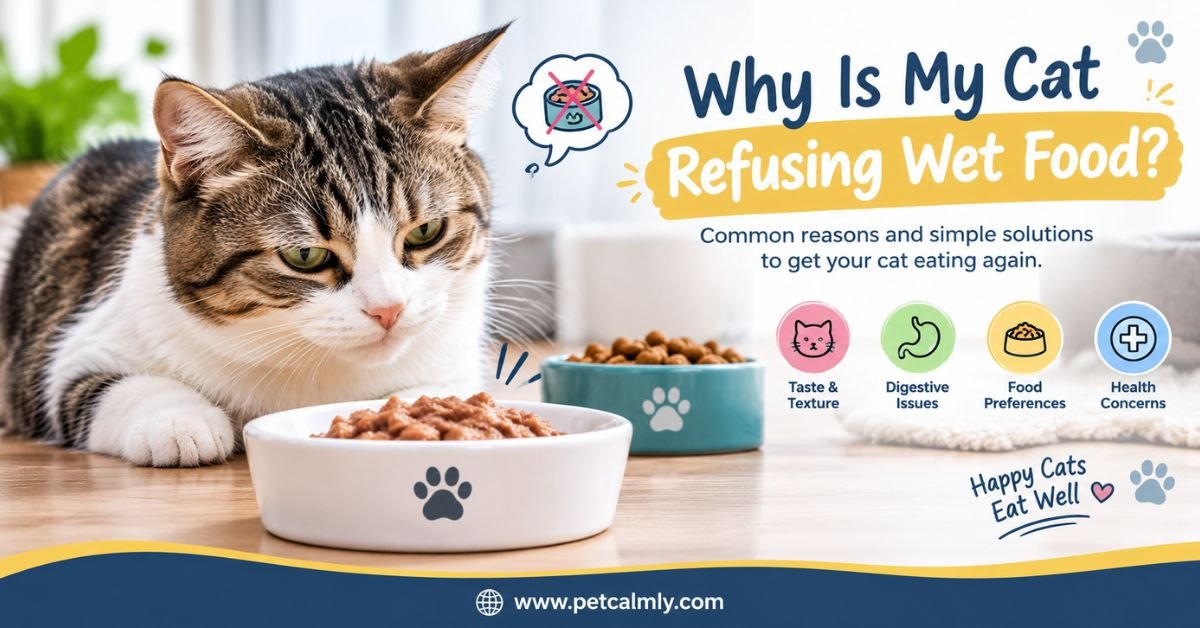
Why is my cat refusing wet food? Most often it comes down to texture, smell, temperature, freshness, or a recent change in routine. Stress, free-feeding dry kibble, and picky habits play a role too. Sometimes, though, a medical problem like dental pain or nausea is behind it. If your cat is otherwise bright and active, try the simple fixes below. If she skips meals for more than a day, call your vet.
What a Refused Meal Really Means
Few things worry a cat owner like a full bowl of untouched food. You open a fresh can, your cat sniffs it, and she walks away. Then you wonder what you did wrong.
Here is the reassuring part. Cats are famously particular about food, and a single refused meal is usually not an emergency. Their senses of smell and taste are tuned to detect freshness, and their instincts make them cautious about anything unfamiliar. Refusal is often a message rather than a crisis.
Still, cats are not like dogs. A cat that stops eating for too long can develop serious liver problems. That is why this guide does two things. It helps you work out the likely cause, and it shows you where the line sits between “try a few tweaks” and “call the clinic.”
Throughout this article, you will find practical steps you can start today. You will also find the warning signs that deserve professional attention.
Why Is My Cat Refusing Wet Food? 5 Most Common Everyday Causes
Start with the simple explanations. They are far more common than medical ones, and you can often fix them in a day or two.
1: The Texture Is Wrong for Her
Wet food comes in pâté, shreds, chunks in gravy, flaked styles, and mousse. To you, these might look similar. To your cat, they feel completely different in the mouth.
Many cats develop a strong preference early in life. A cat raised on smooth pâté may turn away from chunks in gravy. Another may hate the slippery feel of jelly.
Try a different texture before you give up on a brand. Buy one small can of each style rather than a full case. Then watch which one disappears first.
2: The Smell Has Faded or Changed
Cats rely on scent far more than most owners realize. A cat with a stuffy nose may refuse food that smells like nothing to her. On the other hand, a cat with a sensitive nose may reject food that smells slightly “off” to her, even when it seems fine to you.
Cold food from the fridge has less aroma. That is a very common reason a cat walks away from a meal she ate happily the day before. Gently warming the food helps release the smell, and we cover how to do it safely later.
3: The Food Has Been Sitting Out Too Long
Wet food dries out and changes quickly at room temperature. The surface forms a crust. The smell shifts. Bacteria can also grow, especially in warm weather.
Many cats will refuse food that has sat out for a while, and that instinct protects them. As a general guide, most pet food guidance suggests removing uneaten wet food after a short period. Check your food’s label for specifics. Then cover and refrigerate opened cans, and use them within the timeframe the manufacturer recommends.
4: The Bowl Is Bothering Her
Some cats dislike deep or narrow bowls. Others dislike plastic, which can hold onto old food smells even after washing. A few prefer a wide, shallow dish where they can eat without crowding.
Try a flat ceramic or glass plate for a few days. Wash it with hot water and unscented soap. Lingering scents from dish soap or old meals can put a cat off before she even tastes the food.
You may have also heard of “whisker fatigue.” The idea is that deep bowls overstimulate sensitive whiskers. It is a popular explanation, but it is not firmly proven. Even so, a wider dish costs almost nothing to test.
5: The Location Feels Unsafe or Uncomfortable
Cats are both predators and prey, so they like to eat where they feel secure. A bowl placed next to a noisy washing machine, a busy hallway, or a dog’s feeding area can make mealtime stressful.
Likewise, many cats dislike having their food close to the litter box. Move the bowl somewhere calm and see if her interest returns.
Behavioral Reasons Your Cat Won’t Eat Wet Food
If the basics check out, the next place to look is behavior. These causes are especially common in healthy cats.
Cats Are Naturally Wary of New Foods
Many cats show what behaviorists call neophobia, which simply means fear of new things. In the wild, an unfamiliar food could be dangerous. Your living-room cat still carries that instinct.
This is why a sudden switch to a new brand often fails. She is not being stubborn. She is being careful.
Stress and Routine Changes
Cats thrive on predictability. A new baby, a visiting relative, a move, a new pet, or even rearranged furniture can dampen appetite.
Consider a real-world example. An owner moves a sofa to make room for a Christmas tree. Two days later, the cat eats only a few licks of her usual wet food. Nothing is wrong with the food. The cat is simply unsettled.
In these cases, patience and routine matter most. Keep mealtimes at the same hours, and give her a quiet space.
She Is Holding Out for Something Better
This one surprises many owners. If you have ever responded to a refused meal by offering tuna, chicken, or a treat, your cat may have learned that refusing works. Cats are smart. They notice what earns a reward.
This does not mean your cat is manipulative. It means she has learned a pattern. The fix is gentle consistency, which we cover in the guide below.
Too Many Treats or Free-Fed Kibble
A cat who grazes on dry food all day is rarely hungry at mealtime. Wet food then feels like an optional extra. Similarly, a handful of treats an hour before dinner can quietly cancel out her appetite.
Many cats also get used to the crunchy texture of kibble. Over time, wet food can start to feel strange to them.
Medical Reasons Your Cat Is Refusing Wet Food
Sometimes the problem is not about preference at all. Cats hide discomfort very well, so a change in eating can be the first visible sign that something hurts.
Dental Pain
Dental disease is very common in adult cats. Inflamed gums, loose teeth, or painful lesions can make chewing uncomfortable. Interestingly, some cats with mouth pain eat wet food more readily than dry. Others find the cold, sticky texture painful against sore gums, so they back away.
Watch for drooling, bad breath, pawing at the mouth, or dropping food while eating. If you see these signs, book a dental check.
Nausea and Digestive Upset
A nauseated cat often sniffs her food and turns away. She may lick her lips, swallow repeatedly, or hide. Hairballs, a sensitive stomach, or an intestinal issue can all cause this.
Because nausea can come from many conditions, a vet is the best person to sort it out.
Kidney Disease, Thyroid Disease, and Other Conditions
Chronic kidney disease, hyperthyroidism, diabetes, and liver or pancreatic problems can all change appetite. Some cause a lower appetite, while others make cats hungrier but pickier. These conditions are more common in middle-aged and senior cats.
You cannot diagnose these at home. However, you can notice patterns, such as weight loss, increased thirst, or a dull coat. Share those details with your vet.
Stuffy Nose and Upper Respiratory Infections
A cat with a cold cannot smell her food well, and smell drives her appetite. Sneezing, watery eyes, and nasal discharge are clues. Warming the food can help a little, but a vet visit is wise if symptoms last.
Pain, Constipation, or Medication Side Effects
Joint pain, constipation, and other discomfort can reduce appetite. Some medications also cause nausea or change taste. If your cat started refusing food soon after beginning a medication, tell your vet. Do not stop the medication on your own.
Cat Refusing Wet Food but Eating Dry: What Is Going On?
This is one of the most common versions of the problem, and it deserves its own answer.
Why Dry Food Wins So Often
Kibble is crunchy, always available, and easy to nibble. Many manufacturers also coat it with flavor enhancers that cats find very appealing. If your cat has eaten mostly dry food for years, she may simply prefer what she knows.
Importantly, this does not always mean something is wrong. Plenty of healthy cats eat only dry food. However, many veterinarians like to see wet food in a cat’s diet because it adds water. Cats have a low natural thirst drive, so moisture from food can support urinary and kidney health.
Is It Bad if My Cat Only Eats Dry Food?
Not necessarily. A complete and balanced dry diet can meet a cat’s needs. Still, wet food offers extra hydration, and it can help with weight control for some cats. Ask your vet what suits your cat’s age, weight, and health.
If you do want to add wet food, take it slowly. The next section shows how.
How to Get a Cat to Eat Wet Food: A Step-by-Step Guide
A gentle, steady approach works much better than forcing the issue. Follow these steps in order.
Step 1: Rule Out Health Problems First
If your cat has stopped eating completely, skip the experiments and call your vet. If she is still eating other foods and acting normal, you can proceed.
Step 2: Warm the Food Slightly
Warming wet food releases its aroma and makes it more appealing. Place a small portion in a microwave-safe dish and heat it for just a few seconds. Stir well and test the temperature with your finger. It should feel lukewarm, around body temperature, never hot.
Hot spots can burn a cat’s mouth. So always stir and check before serving.
Step 3: Serve Fresh, Small Portions
Offer a small amount in a clean, shallow dish. Fresh food looks and smells better. If she does not eat it within a short time, remove it and try again at the next meal.
Step 4: Mix In Slowly
For a cat who prefers dry food, mix a teaspoon of wet food into her kibble. Increase the amount gradually over one to two weeks. Many vets suggest transitioning foods slowly over about 7 to 10 days to protect the stomach, and the same logic applies here.
Step 5: Try Different Textures and Flavors
Buy small cans or pouches in a few styles. Keep notes on what she accepts. Often you will find a clear pattern, like “she loves fish pâté but hates chicken chunks.”
Step 6: Set Regular Meal Times
Cats with a routine tend to show up hungry. Offer meals at the same times each day. Pick up uneaten food after a short window. Over several days, she learns that meals come on schedule.
Step 7: Stay Calm and Consistent
Do not hover over the bowl or coax her anxiously. Cats pick up on tension. Put the food down, walk away, and let her approach in her own time.
Quick Fixes at a Glance
| Problem | What to Try |
|---|---|
| Food seems cold or bland | Warm it for a few seconds and stir |
| Cat dislikes texture | Test pâté, shreds, and chunks in small cans |
| Bowl may be the issue | Switch to a shallow ceramic or glass dish |
| Cat grazes on kibble | Switch to set mealtimes |
| Food is new | Mix a little with the old food gradually |
| Cat seems stressed | Move the bowl to a quiet area |
Common Mistakes That Make Cats Refuse Wet Food
Even well-meaning owners slip into habits that make the problem worse. Here are the most frequent ones.
Switching foods too quickly. An abrupt change can upset her stomach and trigger distrust of the new food.
Offering a “better” food every time she refuses. This teaches her that holding out pays off. Instead, keep the choices limited and consistent.
Leaving food out for hours. Stale wet food is a major reason cats turn away.
Serving it straight from the fridge. Cold food smells weak. Take the chill off first.
Using strongly scented cleaners on bowls. Residue can linger and repel her.
Hiding medicine in her only wet food. If she tastes the medicine, she may avoid that food altogether. Ask your vet about other options.
Forcing or pushing her face toward the bowl. This creates a negative link with mealtime.
Ignoring the problem for too long. Waiting and hoping can be risky. Cats should not go without food for extended periods.
Real-Life Examples: What This Looks Like at Home
Seeing the problem in everyday situations can make it easier to recognize your own.
The grazer. Mia, a four-year-old tabby, has a bowl of kibble available all day. Her owner starts offering wet food at dinner, but Mia ignores it. The fix here was not a new brand. Her owner switched to two measured kibble meals and offered wet food at the same times. Within about a week, Mia began finishing her wet portions.
The stressed cat. A cat in a newly adopted household stops eating her wet food after a houseguest arrives. Her appetite returns after the guest leaves and her routine settles. The lesson is that stress can mimic fussiness.
The quiet warning sign. An older cat who normally loves her wet food begins leaving most of it. She also seems thinner. This pattern suggests a medical problem, and a vet visit is the right call rather than more food experiments.
These examples are illustrative. Each cat is an individual, so use them as a guide rather than a rule.
When Should You Worry About a Cat Not Eating Wet Food?
This is the most important section of the article. Refusing one brand of wet food is usually minor. A cat who is eating very little overall is another matter.
Call Your Vet Promptly If You Notice:
- Your cat has eaten nothing for 24 hours or more
- Your cat is lethargic, hiding, or unusually quiet
- She is vomiting or has diarrhea
- She is losing weight
- You see drooling, mouth pawing, or bad breath
- She is drinking or urinating much more than usual
- She is straining in the litter box
- Her eyes or gums look yellowish
- She is a kitten, a senior, or has a known health condition
Why Cats Cannot Fast Safely
Cats are very different from many other pets in this respect. When a cat goes without enough food, her body mobilizes fat quickly, and the liver can become overwhelmed. This condition is called hepatic lipidosis, or fatty liver disease. It is especially a risk for overweight cats, but it can affect others too.
For this reason, veterinary sources generally advise getting help if a cat has not eaten for a day or two. Do not wait for several days.
Please Do Not Self-Medicate
Never give your cat human medicines or appetite supplements without veterinary guidance. Many common human drugs are toxic to cats. Your vet may recommend tests, appetite support, or other treatment based on the cause.
What Should Pet Owners Do Today? A Simple Action Plan
If your cat is refusing wet food right now, work through this checklist.
- Check her overall condition. Is she alert, moving normally, and drinking? If not, call the vet.
- Look at the food. Is it fresh, within date, and properly stored?
- Warm it gently and stir before offering.
- Switch to a clean, shallow dish in a quiet spot.
- Offer a small portion and give her space.
- Try one different texture or flavor rather than a dozen at once.
- Remove leftovers after a short time and offer a fresh serving at the next meal.
- Track what she eats for a day or two, including treats.
- Call your vet if she refuses all food, or if the refusal lasts beyond a day or two.
Writing things down helps more than you might expect. A short log of meals, behavior, and litter box changes gives your vet useful clues.
How to Prevent Wet Food Refusal in the Future
Once your cat is eating well again, a few habits can protect her appetite.
Introduce Variety Early
Kittens and young cats who try many textures and flavors tend to be less picky as adults. If your cat is already grown, introduce variety slowly, one new item at a time.
Keep Mealtimes Predictable
Regular feeding times build a strong appetite rhythm. They also make it easy to spot when something is off.
Store Food Properly
Refrigerate opened cans in an airtight container or with a pet-food lid. Use them within the label’s recommended time, and discard anything that smells or looks wrong.
Schedule Regular Vet Checkups
Routine exams, including dental checks, catch problems before they affect eating. Senior cats especially benefit from regular bloodwork, as your vet advises.
Watch Treat Intake
Treats are fine in moderation. Most guidance suggests keeping them to a small share of daily calories. Your vet can tell you what is right for your cat.
Conclusion
So, why is my cat refusing wet food? In most cases, the answer is simple. The food may be cold, stale, or the wrong texture. A routine change or stress may be affecting her. Or perhaps she has simply grown used to grazing on dry kibble.
Start with the easy fixes. Warm the food, try a shallow bowl, offer small fresh portions, and keep to a steady schedule. Be patient and avoid turning mealtime into a battle.
At the same time, remember that appetite changes can signal illness. If your cat goes more than a day without eating, or shows other symptoms, call your vet. Acting early is always better than waiting.
With a little observation and a lot of calm consistency, most cats get back to enjoying their meals. You know your cat best, so trust your instincts.
More Information About Pets, Please Visit Our Website: How Often Should Cats Eat Wet Food
How Long Can a Cat Go Without Food?
Cat Refusing Wet Food But Eating Dry Food?
Why Is My Cat Drooling So Much?
Do Cats Need More Food in Winter?
Homemade Cat Treats Recipes Vet Approved
Best Cat Food for Indoor Cats with Sensitive Stomachs
Frequently Asked Questions
1: Why is my cat suddenly refusing wet food she used to love?
A sudden change usually points to something specific. The food may have a new recipe, the batch may be off, or her routine may have shifted. Dental pain, nausea, or a stuffy nose can also be the cause. If it lasts more than a day or two, or she seems unwell, see your vet.
2: How long can a cat go without eating wet food?
A cat should not go without food for long. Veterinary sources generally advise calling your vet if a cat has eaten nothing for 24 hours, and sooner for kittens, seniors, or cats with health conditions. Skipping a single brand is different, as long as she eats other food.
3: Is it okay if my cat only eats dry food?
Often, yes. A complete and balanced dry diet can meet her needs. However, wet food adds moisture, which supports hydration. Ask your vet whether adding some wet food makes sense for your cat’s age and health.
4: Should I warm up my cat’s wet food?
Yes, a little warmth can help. Heat it for a few seconds until it is lukewarm, then stir well. Always check the temperature, because hot food can burn her mouth.
5: Can stress make a cat stop eating wet food?
Yes. Moving, new pets, visitors, and loud noises can all reduce appetite. Keep her routine steady and provide a quiet feeding spot. If her appetite does not return within a day or two, contact your vet.
6: Why does my cat lick the gravy but not eat the chunks?
Many cats love the smell and flavor of gravy but dislike the texture of chunks. Try a smooth pâté or a finely shredded style. If she also drops food or chews oddly, have her mouth checked for dental pain.