Short direct answer
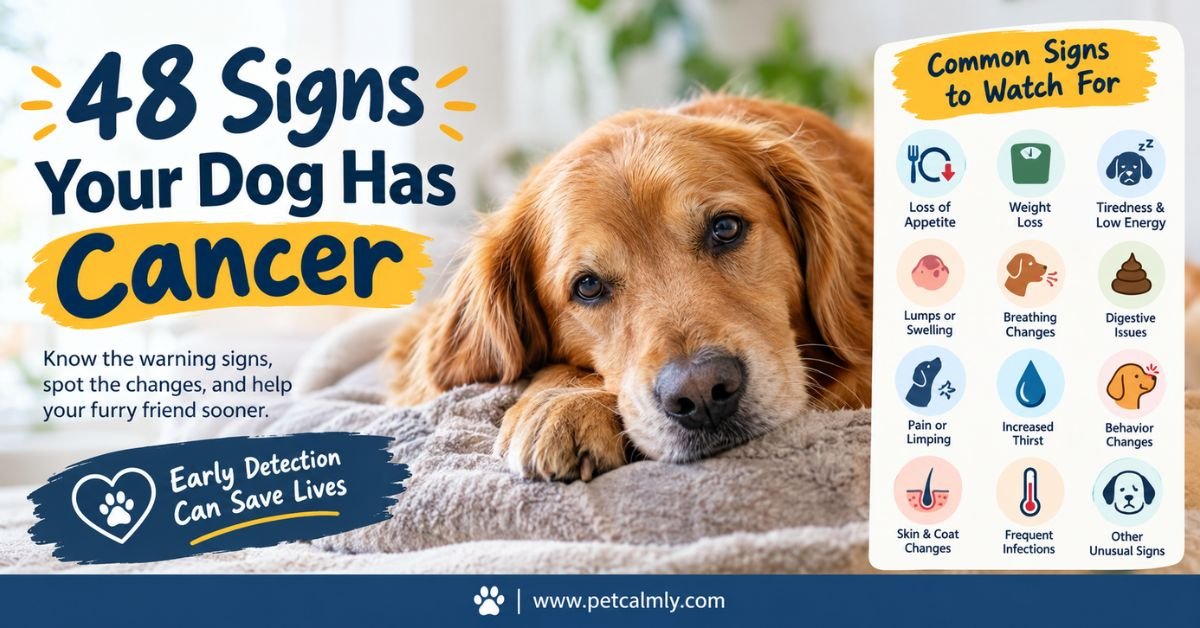
The most common signs your dog has cancer include a new or growing lump, unexplained weight loss, a drop in appetite, a sore that won’t heal, and a loss of energy. Other warning signs are persistent limping, bleeding or discharge, bad odor, and trouble eating, breathing, or going to the bathroom. None of these prove cancer on their own. If any of them lasts more than a week or two, book a vet visit.
If you’re reading this, something about your dog probably feels off. Maybe you found a bump while scratching their chest. Maybe they’ve slowed down on walks, or they’re leaving half their dinner. That knot in your stomach is normal.
Take a breath. Most lumps and symptoms in dogs turn out to be something other than cancer. Still, cancer is common in dogs, especially as they age, and catching it early often gives you more options. You don’t need a medical degree to notice the early signs. You just need to know what to look for and when to call the vet.
This guide walks you through exactly that. You’ll learn which symptoms matter, which are easy to miss, and what happens at the vet. It also covers what you can do at home while you wait for answers.
What Are the Most Common Signs Your Dog Has Cancer?
Veterinary organizations, including the Veterinary Cancer Society, list a similar set of warning signs. Here are the ones you’ll see mentioned most often:
- A lump or swelling that is new, growing, or changing
- A sore or wound that doesn’t heal
- Weight loss you can’t explain
- Loss of appetite or sudden pickiness
- Bleeding or discharge from the nose, mouth, eyes, or other body openings
- A strong or unusual odor, especially from the mouth or a wound
- Difficulty chewing, swallowing, or breathing
- Trouble urinating or passing stool, or blood in either
- Lameness or stiffness that doesn’t go away
- Less stamina, or a new reluctance to exercise or play
Notice how ordinary many of these look. A dog with an upset stomach can lose weight. A dog with arthritis can limp. That’s why the pattern matters more than any single sign.
Two things should make you take a symptom more seriously: it lasts longer than expected, or it keeps getting worse. A lump that appears and shrinks in a few days is usually less worrying than one that quietly grows over a month.
Early Signs Your Dog Has Cancer That Are Easy to Miss
The early stage is the hardest to spot, because dogs rarely look sick at first. Many owners say later, “Looking back, there were small clues.”
Here are the quiet ones:
- Eating more slowly. Your dog still eats but chews on one side or drops food. This can point to a mouth problem.
- Drinking and urinating more. Some cancers affect calcium levels or organs, which can increase thirst. This is also a classic sign of diabetes or kidney disease, so it needs a check either way.
- Mild weight loss under a good appetite. Your dog eats normally, but their ribs or spine feel bonier.
- Sleeping more. Older dogs nap a lot, but a dog who stops greeting you at the door deserves a second look.
- Bad breath that suddenly gets worse. Dental disease is the usual cause. A tumor in the mouth can smell similar, so don’t assume.
- Hiding or clinginess. A dog who feels unwell may withdraw or follow you everywhere.
Think of it like a smoke detector with a low battery. One chirp isn’t a fire, but you’d still check it. If you notice two or three of these together, don’t wait for the next annual exam.
Why Dogs Hide Cancer Symptoms So Well
Dogs are wired to hide weakness. In the wild, a visibly sick animal becomes a target. Your pet golden retriever lives on your couch, but that instinct hasn’t gone anywhere.
Because of this, many dogs keep wagging, eating, and fetching even when something is wrong inside. Pain often shows up as subtle changes rather than crying or limping. You might see:
- A stiff way of standing up
- Panting while resting
- Licking one spot repeatedly
- Pulling away when touched in one area
- Less interest in the toys they used to love
This is also why “but he’s acting fine” is not a reliable test. Cancer can grow for a long time before it changes behavior. If your gut tells you something is different, trust it. You know your dog’s normal better than anyone, including your vet.
Physical Signs Your Dog Has Cancer: Lumps, Wounds, and Swelling
Lumps get the most attention, and for good reason. Skin and soft-tissue tumors are some of the easiest cancers to catch because you can feel them.
Run your hands slowly over your dog’s whole body. Check the chest, belly, armpits, groin, legs, neck, and under the tail. Part the fur and look at the skin too.
Pay attention to:
- New lumps of any size
- Growth. A lump that gets bigger, even slowly
- Texture changes. Hard, fixed lumps, or ones that feel attached to deeper tissue
- Skin changes. Color changes, ulcers, scabs, or crusts that don’t heal
- Swollen limbs or jaws. Swelling around a bone can be a sign of bone cancer
- Enlarged lymph nodes. These feel like firm, movable bumps under the jaw, in front of the shoulders, or behind the knees
How to Tell a Normal Lump From a Worrying One
Here is the honest answer: you can’t tell by touch. Even experienced vets can’t. A soft, movable lump can be a harmless fatty growth called a lipoma. It can also be a mast cell tumor, which is one of the most common skin cancers in dogs and can look like almost anything.
The safest rule is simple. Any new lump should be checked, and a vet can often find out what it is in minutes with a fine needle aspirate. That means using a thin needle to collect a few cells and looking at them under a microscope. Many vets use the “pea-sized, one month” guideline, so if a lump is larger than a pea or has been there for a month, get it checked.
Behavior Changes That Can Be Signs Your Dog Has Cancer
Your dog can’t tell you where it hurts, so behavior often does the talking. Cancer pain and general illness can change how a dog acts in ways that look like “attitude” or “getting old.”
Watch for these shifts:
- Low energy. Shorter walks, lagging behind, or quitting a game of fetch halfway through
- Restlessness at night. Pacing, panting, or being unable to settle
- Irritability. A normally gentle dog snapping when touched in one spot
- Loss of interest. Ignoring treats, toys, or visitors
- Changes in house habits. Accidents in a dog who was fully trained
- Avoiding stairs or jumping. Pain often shows up here first
Here’s a realistic example. Imagine a 9-year-old Labrador who suddenly stops jumping into the car. The family assumes it’s age. A vet visit finds a painful growth in a back leg. This is an illustration, not a real case, but it matches how owners often describe these stories. The change looked like aging, and it was actually a signal.
Behavior changes don’t always mean cancer. They do mean something is wrong, and that deserves an exam.
Signs Your Dog Has Cancer in Different Parts of the Body
Cancer can start almost anywhere, and symptoms depend on the location. This table shows what owners may notice.
| Body Area | Possible Signs | Example Cancers |
|---|---|---|
| Skin | New lumps, sores that won’t heal, color changes | Mast cell tumor, melanoma |
| Lymph nodes | Firm swellings under the jaw, shoulders, or behind the knees | Lymphoma |
| Bones | Persistent limping, swelling on a leg, pain when touched | Osteosarcoma |
| Mouth | Bad odor, drooling, bleeding, trouble eating | Oral melanoma |
| Spleen or liver | Swollen belly, weakness, pale gums, sudden collapse | Hemangiosarcoma |
| Bladder | Blood in urine, straining, frequent small urination | Transitional cell carcinoma |
| Lungs or chest | Coughing, labored breathing, tiring easily | Primary or spread lung tumors |
| Mammary glands | Lumps along the belly or chest | Mammary tumors |
A few of these deserve a closer note.
Hemangiosarcoma often hides inside the spleen. It can grow silently, then bleed suddenly. A dog may seem fine in the morning and collapse by afternoon. That makes it an emergency.
Bladder cancer is tricky because it looks like a urinary tract infection. If your dog keeps getting “UTIs” that return after treatment, ask your vet about further testing.
Lymphoma commonly causes enlarged lymph nodes. The lumps are usually not painful, so dogs often act normal at first.
Why Do Dogs Get Cancer? Causes and Risk Factors
Dog owners often blame themselves. Please don’t. In most cases, no single cause is found.
Cancer happens when cells start growing in an uncontrolled way. Several factors can raise the odds:
- Age. The older the dog, the higher the risk, simply because cells have had more time to make mistakes.
- Genetics. Some breeds carry a higher risk of certain cancers.
- Sun exposure. Dogs with thin fur or pale skin, especially on the nose and belly, can develop skin cancer.
- Secondhand smoke. Dogs in smoking homes may face higher risks of some cancers, according to veterinary sources.
- Chemical exposure. Some studies have linked lawn and garden chemicals to certain cancers, though research is still developing.
- Obesity. Extra body fat is linked to inflammation and other health problems.
- Hormones and reproduction. The timing of spaying or neutering may affect risk for certain cancers in certain breeds. Talk with your vet about what suits your dog.
Veterinary groups often cite that roughly one in four dogs will develop cancer at some point, and that the rate is higher in senior dogs. Treat that as a rough guide rather than a precise figure. The takeaway is that cancer is common enough that regular checks make sense, especially as your dog ages.
Dog Breeds and Ages With a Higher Cancer Risk
Any dog can get cancer, including mixed breeds and puppies. Still, patterns exist.
Breeds often mentioned for higher cancer rates include:
- Golden Retrievers
- Boxers
- Bernese Mountain Dogs
- Rottweilers
- Flat-Coated Retrievers
- Scottish Terriers
- Great Danes and other giant breeds (higher bone cancer risk)
Most cancers show up in middle-aged and senior dogs, often after age 7 or 8. Giant breeds can reach “senior” status earlier, around 5 or 6.
If you have one of these breeds, you don’t need to panic. You just need to be a bit more consistent with monthly body checks and twice-a-year vet visits once your dog is older. Knowing your breed’s tendencies helps you spot trouble sooner.
Not Every Symptom Is Cancer: Other Possible Causes
This part matters for your peace of mind. Almost every cancer sign has a more common, less scary explanation.
- Lumps: lipomas (fatty growths), cysts, warts, abscesses, or insect bites
- Weight loss: worms, dental pain, thyroid issues, diabetes, or digestive disease
- Limping: arthritis, torn ligaments, or a sprain
- Coughing: kennel cough, heart disease, or allergies
- Bad breath: gum disease or a broken tooth
- Low energy: infection, anemia, heat, or pain from another condition
So the question isn’t “Is it cancer?” The better question is, “What is causing this, and how soon should I find out?” Only your vet can answer that, usually with a physical exam and a few simple tests.
You can’t diagnose this from home, and you shouldn’t try. Looking up symptoms at 2 a.m. can send your mind to the worst place. Use what you learn here to decide how fast to act, not to reach a conclusion.
When Should You Worry? Signs Your Dog Has Cancer That Need a Vet Soon
Not every symptom is an emergency, but some are. Use this as a guide.
Book a vet visit within the next few days if you notice:
- A new lump, or a lump that is growing or changing
- Weight loss over several weeks
- A sore that hasn’t healed in two weeks
- Ongoing appetite changes
- Persistent limping
- Increased thirst or urination that lasts more than a few days
- Bad odor from the mouth, ears, or a wound
Go to an emergency vet right away if you see:
- Sudden collapse or extreme weakness
- Pale or white gums
- A swollen, tight belly
- Labored or open-mouth breathing while resting
- Repeated vomiting or vomiting blood
- Heavy bleeding from the nose, mouth, or rectum
- Inability to urinate, or straining with nothing coming out
- Seizures
Pale gums plus collapse can signal internal bleeding, which sometimes happens when a tumor on the spleen ruptures. Time matters in these cases. Don’t wait to see if it passes.
If you’re unsure which category your dog falls into, call your vet. Staff would much rather answer a call that turns out to be nothing than hear about a problem that waited too long.
What to Do If You Notice Signs Your Dog Has Cancer
If you’ve spotted something, here is a calm, practical plan.
- Write it down. Note what you saw, the date, and any changes. Take a photo of any lump with a coin next to it for scale.
- Check the rest of your dog. Feel the whole body, look at the gums, and check the mouth and skin.
- Track the basics. Note appetite, water intake, bathroom habits, and energy for a few days.
- Call your vet and book an exam. Tell them what you’ve noticed, and ask how urgent it is.
- Bring your notes and photos. They help your vet far more than memory does.
- Ask about next steps. Find out what tests they recommend and what each will tell you.
- Don’t give human medicine. Common pain relievers such as ibuprofen and acetaminophen can be dangerous for dogs.
What Happens at the Vet Visit
Your vet will start with a physical exam. They’ll feel lymph nodes, check the belly, look in the mouth, and examine any lumps.
Depending on what they find, they may suggest:
- Fine needle aspirate. Quick, usually done without sedation, and often gives a first answer.
- Biopsy. A small piece of tissue is sent to a lab for a more definite answer.
- Blood and urine tests. These show how organs are working and can reveal other problems.
- X-rays or ultrasound. These help check the chest and belly for tumors or spread.
- Referral to a veterinary oncologist. If cancer is found, a specialist can explain treatment choices.
A diagnosis isn’t a death sentence. Treatment options vary widely depending on cancer type and stage. These can include surgery, chemotherapy, radiation, or comfort-focused care. Many dogs do well for a good while. Your vet or an oncologist can explain what is realistic for your dog.
7 Common Mistakes Owners Make When Noticing Signs Your Dog Has Cancer
Most of these mistakes come from love, fear, or hope. They’re all very human.
- Waiting to see if it goes away. A week or two is fine for a mild upset stomach. It isn’t fine for a growing lump.
- Assuming it’s just old age. Aging is real, but pain and illness aren’t normal parts of it.
- Judging a lump by its feel. Soft doesn’t mean safe, and hard doesn’t always mean dangerous.
- Searching for home remedies. Supplements and “natural cures” can’t replace a diagnosis. Some can interact with medication.
- Skipping the follow-up. A lump that was tested once may need rechecking if it changes.
- Delaying because of cost fears. Ask your vet about payment plans, pet insurance claims, or care options. A fine needle aspirate is often much cheaper than people expect.
- Blaming yourself. Guilt doesn’t help your dog. Action does.
A Few Realistic Scenarios
These are illustrative examples based on common owner experiences, not specific patient cases.
The “just a lump” scenario. An owner finds a soft bump on their dog’s side during a belly rub. It’s been there a few weeks. A quick needle test shows it’s a lipoma. The owner goes home relieved, with a plan to monitor it.
The “slowing down” scenario. A senior dog starts skipping stairs and sleeping more. The owner assumes arthritis, but a vet exam and X-ray reveal a bone tumor. Because it was caught while the dog still walked comfortably, the family has time to talk through options.
The “recurring UTI” scenario. A dog gets treated for urinary infections three times, and each time the symptoms return. The vet recommends imaging, which shows a mass in the bladder. The pattern was the clue.
Each story has the same lesson. Small changes, noticed early and checked by a professional, give you information and options.
Keeping Your Dog Comfortable While You Wait for Answers
Waiting for test results can feel endless. These steps support your dog without replacing veterinary care.
- Keep routines steady. Dogs feel safer with predictable meals, walks, and sleep.
- Offer easy-to-eat food. If your dog’s appetite is low, try warmed wet food, but ask your vet before making big diet changes.
- Provide a soft, low bed. Make it easy to get on and off.
- Keep walks gentle. Short and slow beats long and tiring.
- Watch pain signals. Panting at rest, shaking, or reluctance to move should be reported to your vet.
- Keep fresh water nearby. Hydration matters, especially if your dog is eating less.
- Give extra calm time with you. Your presence helps more than you think.
If your dog seems to be in pain, call your vet. They can prescribe safe pain relief. Never use your own medicine cabinet as a shortcut.
Can You Prevent Cancer in Dogs? Ways to Lower the Risk
No one can promise prevention. Still, a few habits may lower risk or help you catch problems earlier.
- Keep your dog at a healthy weight. Ask your vet what a good body condition looks like.
- Avoid tobacco smoke around your dog.
- Limit sun exposure for light-skinned or thin-coated dogs, and ask your vet about pet-safe sun protection.
- Be careful with lawn chemicals. Follow label directions, keep pets off treated grass for the recommended time, and consider pet-safe options.
- Talk to your vet about spay and neuter timing, especially for breeds with known risks.
- Schedule regular exams. Yearly for adult dogs, and twice a year for seniors.
Your Monthly Dog Body Check
Once a month, take five minutes with your dog in a calm moment:
- Run your hands over the whole body for lumps or sore spots
- Check lymph nodes under the jaw and behind the knees
- Lift the lips and look at the gums and teeth
- Look at the skin for sores, scabs, or color changes
- Check eyes, ears, and nose for discharge
- Weigh your dog or note body shape
- Write down anything new
Making this part of cuddle time keeps it low-stress, and your dog may enjoy it. You’ll also build a clear picture of what is normal for them.
Conclusion
Learning the signs your dog has cancer isn’t about expecting the worst. It’s about noticing early, acting calmly, and giving your dog the best chance at good care.
Remember the key points. Lumps, weight loss, appetite changes, non-healing sores, limping, and low energy all deserve attention when they last or worsen. Most of these turn out to be something treatable. Only a vet can sort out which is which, so don’t try to guess at home.
If something feels off, make the call. Your instincts are often the first and best warning system your dog has.
More Information About Pets, Please Visit Our Website: Heatstroke in Dogs Signs and Symptoms
Dog Not Eating but Drinking Water and Sleeping a Lot?
Senior Dog Arthritis Treatment
Dog Shivering or Trembling
Why Does My Dog Cry in His Sleep?
Why Is My Dog Panting and Pacing at Night?
How Much Benadryl to Give a 100 Lb Dog?
Puppy Sleeping After Vaccination
How to Stop Reverse Sneezing in Dogs
Frequently Asked Questions
1: What are the first signs your dog has cancer?
The first signs are often subtle. They include a new lump, mild weight loss, eating less, or tiring more quickly on walks. Some dogs show no early signs at all, which is why regular vet exams matter.
2: How do I know if my dog’s lump is cancerous?
You can’t tell by looking or feeling. Benign and cancerous lumps can look alike. A vet can often check with a quick fine needle aspirate or a biopsy, so have any new or changing lump examined.
3: How long can a dog live with cancer?
It depends on the cancer type, the stage, and the treatment. Some dogs live for years, and others have less time. A vet or veterinary oncologist can give you a realistic outlook for your dog’s specific diagnosis.
4: Can a dog have cancer and act normal?
Yes. Many dogs act normal for a long time because they instinctively hide discomfort. That’s why you shouldn’t wait for obvious illness before booking an exam.
5: Is my dog in pain if he has cancer?
Not always, but some cancers are painful, especially bone cancer. Signs of pain include panting at rest, restlessness, reluctance to move, or snapping when touched. Talk to your vet, because effective pain relief is available.
6: Can blood tests detect cancer in dogs?
Blood tests can show clues, such as anemia or organ changes, but they usually can’t confirm cancer alone. Vets often combine blood work with imaging and tissue sampling to reach a diagnosis.