Short direct answer
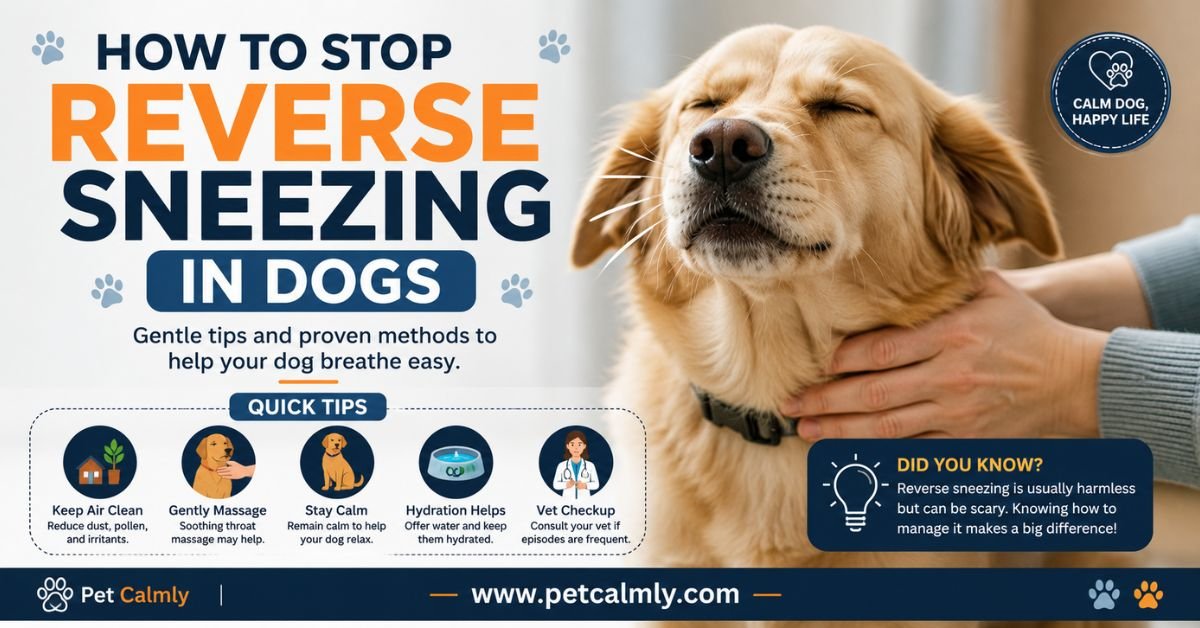
Reverse sneezing is a brief, involuntary inhalation that sounds alarming but is usually harmless. To stop a reverse sneezing episode, remain calm and gently stroke your dog’s neck or throat, keep them cool, and avoid sudden movements. Most episodes resolve within seconds to a few minutes on their own. If episodes become frequent, last longer than a few minutes, involve gagging or vomiting, or affect your dog’s breathing, contact your veterinarian.
Why Dog Owners Search for This (And What You Really Need to Know)
If you’ve ever heard your dog make a sudden, repetitive honking or snorting sound—almost like they’re gasping backward—you’ve probably felt that spike of panic. Is your dog choking? Sick? In distress? The sound is genuinely unsettling, even though the truth is usually much less dramatic than it sounds.
I’ve worked with hundreds of dog owners who’ve experienced this exact moment, and nearly all of them report the same thing: worry that quickly turns to relief once they understand what’s actually happening. Reverse sneezing is one of those behaviors that sounds serious but typically isn’t. That said, knowing the difference between a normal episode and something that actually warrants veterinary attention is what separates anxious guessing from confident, informed pet ownership.
This guide walks you through everything you need to know: what reverse sneezing actually is, why it happens, what you can do right now to help your dog, and most importantly when it’s time to call your vet.
What Is Reverse Sneezing in Dogs?
Reverse sneezing isn’t actually a sneeze at all. It’s a sudden, involuntary spasm of the throat and diaphragm that causes rapid inhalation through the nose. When it happens, your dog draws air inward instead of expelling it, which creates that distinctive honking, snorting, or gasping sound that sounds like your dog is desperately trying to breathe.
The medical term is pharyngeal gag reflex or paroxysmal respiration, but you don’t need to remember that most vets and dog owners just call it reverse sneezing. It’s a reflex, not a disease, and it’s surprisingly common, especially in small-breed dogs.
Here’s what makes it different from regular sneezing:
- Regular sneezing: Air expelled outward; usually a sign of irritation or allergies
- Reverse sneezing: Air drawn inward rapidly; usually a throat reflex
The key thing to understand is that reverse sneezing almost never indicates a serious medical problem. Your dog isn’t choking, isn’t having a heart attack, and usually isn’t in pain. They’re having an involuntary throat spasm that startles both of you equally.
Why Do Dogs Reverse Sneeze? Common Triggers and Causes
Reverse sneezing happens because something irritates your dog’s throat, soft palate, or nasal passages, triggering a protective reflex. Think of it like your dog’s body trying to clear an irritant, except the mechanics work backward.
Environmental Irritants
Dust and pollen are among the most common culprits. When your dog sniffs around a dusty corner, outdoors during high pollen season, or near smoke or strong cooking smells, particles can irritate the back of their throat. That irritation triggers the reflex.
- Household dust and dust mites
- Outdoor pollen and grass
- Smoke (cigarette, cooking, fireplace)
- Perfumes and aerosol sprays
- Strong cleaning product fumes
- Incense or scented candles
Excitement and Activity
Believe it or not, excitement is a huge trigger. Some dogs reverse sneeze during play, when greeting you at the door, or during walks. Why? Rapid breathing, temperature changes, and the physical excitement can irritate the soft palate. This is one reason you might notice it happens right after your dog tears around the house or during a play session.
Eating and Swallowing Issues
Quick eating or trying to swallow treats too fast can irritate the throat and trigger an episode. So can sudden temperature changes like your dog drinking ice-cold water on a warm day, or sniffing around the freezer.
Allergies and Postnasal Drip
Dogs with seasonal or environmental allergies often experience more frequent reverse sneezing episodes. Their irritated nasal passages and postnasal drip create ongoing irritation that makes the reflex more likely to happen.
Anatomical Factors
Certain breeds are more prone to reverse sneezing, particularly small breeds with compressed airways and elongated soft palates:
- Pugs
- Bulldogs (English and French)
- Chihuahuas
- Toy Poodles
- Shih Tzus
- Maltese dogs
- Boston Terriers
This doesn’t mean large breeds never reverse sneeze they do but brachycephalic (short-nosed) breeds experience it more frequently because of their natural anatomy.
Less Common Triggers
- Pressure on the collar or neck (tightness)
- Sudden temperature changes
- Nasal mites (rare)
- Mild throat infection or irritation
How to Recognize Reverse Sneezing: What You’ll Actually See and Hear
If you’ve heard it once, you won’t mistake it again. But if this is your first time, knowing what to expect can help you stay calm.
What reverse sneezing sounds like:
- A rapid series of honking sounds
- Snorting or gasping
- Sometimes described as a “goose honk” or “squeaky toy” sound
- Continuous for several seconds to a few minutes
- Rhythmic and repetitive
What it looks like:
- Your dog stands still (sometimes with front legs extended)
- Their head may stretch forward or neck may extend
- They may have a panicked or confused expression
- Their eyes may bulge slightly
- No actual air is being expelled—air is being drawn in
- Their body may tremble slightly from the effort
- It ends as suddenly as it started
What it doesn’t look like:
- Gagging or retching
- Coughing
- Choking (where your dog is struggling to breathe)
- Wheezing or labored breathing
- Drooling or foaming at the mouth
The biggest relief most owners feel is realizing that during a reverse sneezing episode, your dog CAN breathe. They’re not suffocating. They’re experiencing an uncomfortable reflex, but not a life-threatening emergency.
Immediate Techniques to Stop a Reverse Sneezing Episode
When your dog is in the middle of an episode, here’s what actually works:
Calm Reassurance First
Your dog picks up on your energy. If you panic, they sense it and may become more distressed. Take a breath. Remember: this will pass in seconds to a few minutes, and your dog is okay.
Speak in a calm, quiet voice. Gentle touch can help—pet their side or chest slowly, or simply sit next to them.
Gently Stroke the Throat
One of the most effective interventions is gentle pressure on the throat and neck. Slowly stroke downward from your dog’s chin toward their chest using light, soothing pressure. This can sometimes interrupt the reflex and help relax the throat muscles.
Don’t squeeze or apply hard pressure that’s the opposite of what you want. Think gentle massage, not pressure point.
Create a Calm Environment
If your dog is having an episode:
- Move them away from whatever irritant triggered it (smoke, dust, strong smells)
- Reduce sudden movements or loud noises
- Don’t rush them or agitate them further
- Let them stand or sit comfortably
Try the “Swallow Trigger”
Some vets recommend briefly pinching your dog’s nose closed (very gently) for just a second or two, which can trigger a swallow reflex and interrupt the reverse sneezing. Do this only if your dog is comfortable with it and only for a second—this isn’t a technique for every dog, but some owners find it effective.
Similarly, offering your dog water or a small treat can encourage swallowing, which sometimes stops the episode.
Cool Temperature or Fresh Air
If your dog has been excited or playing hard, allowing them to cool down and breathe fresh air can help. Move them to a cooler room or outside for a moment of calm.
What NOT to Do
- Don’t panic or act frightened. Your dog will sense your alarm.
- Don’t shake or forcefully manipulate your dog. This can make it worse.
- Don’t cover their nose. They need to breathe, even during an episode.
- Don’t assume they’re choking. Choking is different and requires immediate intervention.
- Don’t try to grab at their mouth or throat. This can cause injury and increase stress.
The honest truth: Most episodes stop on their own without any intervention. Your calming presence is often the most effective “treatment.” The episode will typically end within 30 seconds to a couple of minutes.
Prevention Strategies: Reducing How Often It Happens
While you can’t eliminate reverse sneezing entirely in most dogs, you can significantly reduce how often it occurs by managing triggers.
Keep Your Home Environment Clean and Fresh
- Vacuum regularly to reduce dust and dander
- Use air purifiers in rooms where your dog spends a lot of time
- Avoid strong household cleaners; opt for pet-safe alternatives
- Keep humidity at a comfortable level (too dry irritates nasal passages)
- Minimize artificial fragrance products
Control Allergen Exposure
If your dog has seasonal allergies:
- Rinse your dog’s nasal passages with a saline solution on high-pollen days
- Wash paws and face after outdoor time to reduce pollen
- Consider asking your vet about allergy management during peak seasons
- Keep windows closed during high pollen counts
Manage Excitement Levels
This might sound impossible, but you can reduce the intensity of excitement that triggers episodes:
- Take multiple shorter play sessions rather than one intense session
- Encourage calm greetings instead of excited excitement (no racing around the house)
- Use toys that engage mentally rather than physically intense play
Adjust Eating Habits
- Feed your dog in a calm environment
- Consider using slow-feeder bowls if your dog eats too quickly
- Break treats into smaller pieces
- Avoid giving very cold water immediately after activity
Check the Collar and Neck Area
- Make sure your dog’s collar isn’t too tight (you should be able to fit two fingers under it)
- If you use a harness, ensure it’s properly fitted and not restricting neck movement
- Consider using a harness instead of a collar for leash walks if your dog is prone to pulling
Avoid Irritants
- Keep your dog away from smoke and cooking fumes
- Don’t use scented candles, incense, or air fresheners near your dog
- Be cautious with perfumes and aerosols
- Protect them from extreme temperature changes when possible
When Should You Actually Worry? Red Flags That Need Veterinary Attention
Here’s where clear guidance matters: most reverse sneezing is harmless, but some situations do warrant a call to your vet. Here’s how to tell the difference.
Occasional episodes (a few times a month or less) = Usually normal
If your dog reverse sneezes occasionally during excitement, after play, or during allergy season, and the episodes are brief and don’t affect their daily life, this is normal and generally doesn’t require treatment.
Frequent episodes or changes in pattern = Time to call your vet
Contact your veterinarian if:
- Frequency increases significantly (from occasional to several times daily)
- Episodes last longer than 30 seconds (normal is typically 5–30 seconds)
- Reverse sneezing is accompanied by other symptoms like coughing, gagging, or actual vomiting
- Episodes happen during rest (when your dog isn’t excited or playing)
- Your dog seems distressed or in pain during episodes
- New symptom appears like nasal discharge, bleeding, or labored breathing between episodes
- Your dog loses appetite or seems lethargic around the time episodes start
- Episodes seem to be getting worse or longer over time
When to seek immediate veterinary care
Call an emergency vet or animal hospital if:
- Your dog is having difficulty breathing between episodes
- Your dog is choking (gasping, drooling excessively, unable to swallow)
- Your dog is coughing up blood
- Your dog has blue-tinted gums or tongue
- Your dog collapses or loses consciousness
- Your dog shows signs of severe distress or pain
Why these red flags matter
Conditions that can mimic or accompany reverse sneezing include:
- Kennel cough (contagious respiratory infection)
- Nasal mites (rare but possible)
- Throat infection or inflammation
- Laryngeal paralysis (more common in older large-breed dogs)
- Collapsing trachea (especially in small breeds)
- Heart conditions affecting the lungs
- Nasal polyps or masses (uncommon)
None of these are reversed sneeze itself, but they can occur alongside it or present similarly. Your vet can examine your dog, listen to their lungs and heart, and determine whether further diagnostics are needed.
6 Common Mistakes Dog Owners Make
Mistake #1: Assuming Every Strange Breathing Sound Is Reverse Sneezing
Not every honking sound is reverse sneezing. If your dog is also coughing, has nasal discharge, or the sound persists for hours, it might be something else. Reverse sneezing episodes are brief and self-limiting.
Mistake #2: Over-treating a Normal Behavior
Some owners rush to the vet at the first episode, spend hundreds on diagnostics, and discover it was just reverse sneezing. Know the difference between occasional normal behavior and something that warrants evaluation. If it’s infrequent and doesn’t affect your dog’s quality of life, it probably doesn’t need treatment.
Mistake #3: Panicking or Showing Fear During Episodes
Your dog’s anxiety will spike if yours does. Stay calm, and you’re already helping.
Mistake #4: Ignoring Patterns or Changes
If your dog has a handful of episodes each year and suddenly has several per day, that’s worth mentioning to your vet—even if reverse sneezing itself isn’t serious. The change might indicate something else is going on.
Mistake #5: Using the Wrong Prevention Strategies
For example, if your dog’s reverse sneezing is triggered by excitement, controlling excitement won’t help if the actual trigger is seasonal allergies. Understanding your dog’s specific triggers is key.
Mistake #6: Neglecting Your Dog’s Allergies
If reverse sneezing correlates with allergy season or specific environments, managing the underlying allergies can reduce episodes significantly. Talk to your vet about allergy management options.
Does Your Dog Need Treatment? What Your Vet Might Recommend
In most cases, no treatment is necessary. Reverse sneezing doesn’t require medication or intervention—the episodes stop on their own.
However, if your dog’s episodes are:
- Extremely frequent (several times daily)
- Severe or distressing to your dog
- Accompanied by other symptoms
- Affecting your dog’s sleep or quality of life
Your vet might recommend:
Antihistamines or anti-inflammatory medications if allergies are suspected as the underlying trigger. These address the root cause (inflammation) rather than the reverse sneezing itself.
Environmental management like air purifiers, dehumidifiers, or dietary changes if specific triggers are identified.
Further diagnostics (imaging, endoscopy, or laboratory work) only if your vet suspects an underlying condition contributing to the episodes. This isn’t routine for simple reverse sneezing.
Behavioral modifications (like training to reduce excitement-related episodes) if your dog’s pattern suggests excitement as the primary trigger.
Most vets will not prescribe medication specifically “for reverse sneezing” because the condition itself isn’t a disease that requires drug treatment.
Reverse Sneezing vs. Other Conditions: How to Tell the Difference
Reverse Sneezing vs. Coughing
Reverse sneezing: Rapid inhalation, honking sound, very brief, dog stands still
Coughing: Expulsion of air, harsh sound, may last longer, dog may seem more distressed
Reverse Sneezing vs. Choking
Reverse sneezing: Dog can breathe between episodes, no drooling or gagging, alert, episodes stop on their own
Choking: Difficulty breathing, excessive drooling, gagging, dog may paw at mouth, requires immediate intervention
Reverse Sneezing vs. Kennel Cough
Reverse sneezing: Isolated episodes, no other symptoms, dog behaves normally otherwise
Kennel cough: Persistent dry cough lasting days or weeks, dog may cough even during sleep, often accompanies other respiratory symptoms
Reverse Sneezing vs. Collapsing Trachea
Reverse sneezing: Brief episodes triggered by identifiable causes, normal breathing between episodes
Collapsing trachea: Persistent dry cough, worse with excitement or pressure on neck, may be accompanied by difficulty breathing
Frequently Asked Questions
1: Is Reverse Sneezing Painful for My Dog?
Most dogs don’t seem to experience pain during reverse sneezing episodes, but some do show signs of discomfort or confusion. Your dog might look startled or distressed, but this is usually more about the strange sensation than actual pain. Think of it like a sudden involuntary muscle spasm—uncomfortable and startling, but not painful in the way an injury would be.
2: Can I Prevent Reverse Sneezing Completely?
No. If your dog is prone to reverse sneezing due to their anatomy (like most small breeds), you can’t eliminate it entirely. You can reduce frequency by managing triggers, but complete prevention isn’t realistic for most dogs. This is actually fine occasional reverse sneezing is normal and harmless.
3: Should I Rush to the Emergency Vet During an Episode?
Only if the episode lasts longer than 5–10 minutes, your dog seems unable to breathe, or your dog is showing signs of severe distress. Most episodes resolve within 30 seconds to 2 minutes on their own. If it’s your first time seeing it and you’re unsure, it’s okay to call your regular vet’s after-hours line for guidance rather than making an expensive emergency visit.
4: Do All Dogs Reverse Sneeze, or Is It Rare?
It’s not rare at all. Small-breed dogs especially experience it frequently many small-dog owners will tell you their dog does it regularly. It’s one of those normal behaviors that occurs in many dogs but doesn’t get talked about much until it happens to you and you panic.
5: Can Allergies Cause Reverse Sneezing?
Yes. Dogs with environmental or seasonal allergies often experience more frequent episodes because their nasal passages and throat are already irritated. Managing allergies can significantly reduce reverse sneezing episodes in allergic dogs.
6: Is Reverse Sneezing a Sign of Something Serious Like Heart Disease?
Reverse sneezing itself is not a sign of heart disease. However, if your dog is also showing other symptoms like difficulty breathing, letharness, or exercise intolerance, those symptoms could indicate something serious. The key is to look at the bigger picture, not reverse sneezing in isolation.
More Information About Pets, Please Visit Our Website: Home Remedy for Reverse Sneezing in Dogs
Reverse Sneezing in Dogs
Dog Allergy Symptoms Eyes
Why Is My Dog Coughing Like Something is Stuck in his throat?
Dog Vomiting Yellow Foam Treatment at Home
Dog Yeast Infection Treatment
How to Treat Dog Ear Infection Without Vet
What You Should Do Right Now: A Quick Action Plan
If your dog is currently having a reverse sneezing episode:
- Stay calm and breathe normally yourself
- Gently stroke their neck or throat
- Don’t restrain them or panic
- Offer water or a small treat
- Wait for it to pass (usually within a few minutes)
- Resume normal activity
If your dog reverse sneezes occasionally (a few times a month or less):
- No action needed—this is normal
- Keep an eye on frequency and duration
- Continue with your normal pet care routine
If reverse sneezing episodes are increasing in frequency or severity:
- Note when episodes happen and what triggers them
- Mention it to your vet at your next routine visit
- Describe the episodes (duration, frequency, accompanying symptoms)
- Don’t assume it’s urgent unless your dog shows other concerning symptoms
If your dog shows concerning symptoms alongside reverse sneezing:
- Contact your vet for guidance
- Have information ready about frequency, duration, and any other symptoms
- Ask whether a visit is necessary or if you can monitor at home
Conclusion
Reverse sneezing is one of those dog behaviors that startles you the first time you encounter it, but the vast majority of dogs who experience it are completely healthy. Your dog’s alarming honking sound is their body doing exactly what it’s supposed to do protecting their airway from irritation.
What matters most is understanding the difference between normal, occasional reverse sneezing and something that actually warrants veterinary attention. Most dog owners who understand this distinction stop panicking and start simply managing their dog’s comfort during episodes.
Your presence, your calm response, and your awareness that this will pass that’s genuinely the most important “treatment” your dog needs. And if you ever do need your vet’s expertise, you’ll know exactly what to describe and whether it’s truly urgent.
Your dog is probably fine. They just need you to stay calm and know that this strange sound will stop as quickly as it started.